Since we decided to become beekeepers I have read many recommendations about what to plant for the bees including the above picture. I feel very strongly that it is important for the health of the bees that they have a variety of foods (plants) to forage. Although it is not our only consideration when deciding what to plant, planting for the bees is something that we have been doing since we bought the farm and decided to become beekeepers.
Other things we take into consideration are:
1. Is the plant annual or perennial? Except for food and herbs we usually don’t plant annuals.
2. To know if a perennial will survive it is important to know the hardiness zone that you live in. Some plants that are perennial will not survive the colder temperatures of our winter and some will not even grow long enough to blossom.
3. It is also good to know the growing conditions that the plant requires – type of soil, wet or dry, and sun or shade are all important considerations when deciding where to plant something.
4. I love things that have multiple purposes. So I consider other uses for the plant – are they edible, medicinal, a good cover crop that will nourish the soil, or simply planted for their beauty ?
5. I also have to consider what critters will eat these plants before either the we or the bees can benefit from them. I have found some plants that the deer and rabbits simply don’t bother with, yet there are many others that have to be fenced in order to protect them.
6. When planting for the bees, another thing to consider is the bloom time of the plant. It is good to have plants that blossom at different times of the year. Early spring is probably the time when the bees are most in need. As they emerge from their hives in the spring, their winter food stores are running low if not depleted, they need to be able to find food in order to survive.
What we have planted:
Lavender was a plant of choice before we ever knew we were going to become bee keepers. I originally planted lavender at the house because I loved the plant, loved the fragrance, loved the dried flowers that could be made into sachets, sleep pillows, tea, or infused into oil. I also add them to my chamomile/lavender soap. It was on the plants at the house that I first observed honey bees foraging and realized what a good bee plant it was. When we bought the farm, planting lavender was a no-brainer and it is now a large part of our prayer garden. Another thing that I appreciate about lavender is that deer and rabbits leave it alone.

Thyme is also grown in our prayer garden. It is a low creeping plant that makes a nice ground cover. It has both culinary and medicinal uses. http://www.delallo.com/articles/thyme Last spring, when the thyme was flowering, I noticed that the honey bees were all over it. I was happy to see this because thyme essential oil is recommended as a natural treatment for varroa mites. While I haven’t seen it written anywhere, my theory is that by feeding on thyme, perhaps, the bees can extract the thymol that is reported to be effective for controlling the varroa mites, thus not requiring human intervention. Thyme is another plant that is not bothered by deer or rabbits. This year I will divide the roots and spread thyme throughout the prayer garden.
Sage and Salvia are of the same family. This link provides a growing guide for the different types. http://www.bhg.com/gardening/flowers/perennials/guide-to-salvias/ When planting sage/salvia it is important to note the hardiness zone for the variety you are planting. I have grown several varieties of sage. They grow well during the summer, and I have been able to harvest their leaves, but since they are not hardy in our (zone 5) growing area they have never blossomed and have not survived our winters. Since they do not flower they are not useful to the bees. On the other hand I do have a salvia plant (I’m not sure what variety it is) that has beautiful purple spiked flowers in the spring and summer. I have had it for three years and the honey bees love it. Salvia and sage seem to be plants that the deer and rabbits leave alone.
Basil – I have grown basil for many years. I use it fresh during the summer and dry it to have on hand year round. I pick the leaves off before it begins to flower and continue to pick them until I want it to flower and go to seed. Late last summer, when I let the basil plants flower, I noticed the honey bees were heavily foraging them.
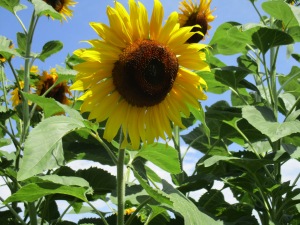
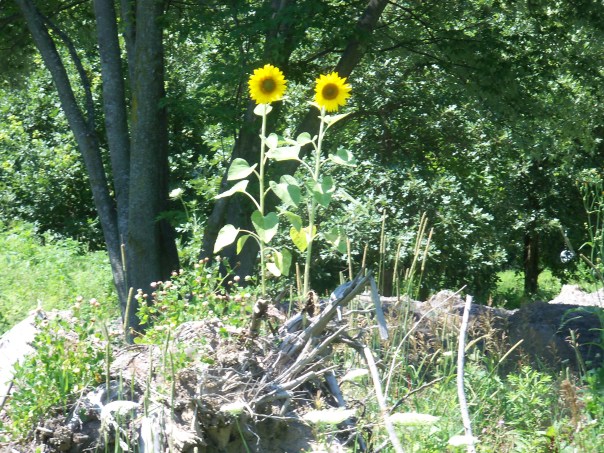
Sunflower is one of the annuals that we grow. I can not speak for all varieties of sunflowers but our bees visit the Grey Stripe Mammoth variety often.

After planting sunflowers once, don’t be surprised if they come up voluntarily in surprising places as these did. They always made me smile 🙂
Coneflowers – Also know as Echinacea, is a plant I grow for its medicinal purposes, that the bees also like. http://www.gardenexperiments.com/echinacea-species-flowering-plants-for-bees-butterflies-and-birds/
Asters grow wild in our field. They blossom in the late summer and fall and last year we witnessed the bees feeding heavily on them.
Clover is the one thing that we plant most often, that is great bee food. We sometimes use clover as a cover crop to nourish the soil for future crops, but most often we use it combined with grass seed when we landscape areas. Call me crazy, and you might if you’ve been paying a lawn care company to keep your lawn weed free, but I feel that white clover compliments the grass. It grows at a similar rate, it fixes nitrogen that helps the grass grow, and it is soft to walk on. I also like that if I mow the white clover when it is blossoming, it will blossom again.
Buckwheat – Another plant that we have used as a cover crop that the bees seem to enjoy. Buckwheat makes a dark honey with a strong flavor. It also makes a good cover crop as it grows fast and is said to choke out competing weeds.
Last summer my husband and I were in the garden center department of one of the local home improvement stores. I was looking for more of the salvia plant that I have, but was unable to find any. We noticed honey bees visiting several different flowering plants. You should probably know that for me going to a garden center and not buying plants is almost like going to the Dairy Queen and not buying ice cream. I absolutely hate shopping and the only exception is going to a green house or garden center. I could spend way too many hours and way too much money in these places. That being said we ended up buying some of the plants that we saw honey bees visiting.
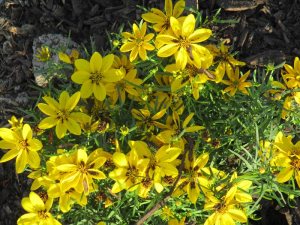
They included a Coreopsis also known as Tickseed.
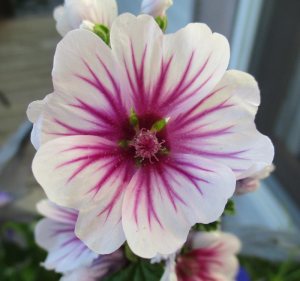
A Mallow
and a Balloon Flower that I don’t have a picture of. After planting these in our prayer garden I didn’t notice any bees on them. I suspect that there were so many other things blossoming in the area that the bees did not pay any attention to these flowers. Thus, the lesson I take from this is that my focus should be 0n sticking to what we already have. I will add more lavender, (I started some by seed) I will divide the thyme and let it spread, and perhaps I will divide my salvia in order to have more plants. I will cherish the clover, the asters and the golden rod that grow wild in our field, and I will not curse the thistle (much).