The idiom “chickens come home to roost” may be difficult to understand. It is used to relate the fact that actions will always have a consequence and normally applied in a negative way. https://idioms.thefreedictionary.com/chickens+come+home+to+roost Making a connection between chickens roosting and consequences to your actions can be quite a stretch. In order to make this connection there is one thing that you need to realize – chickens always come home to roost.
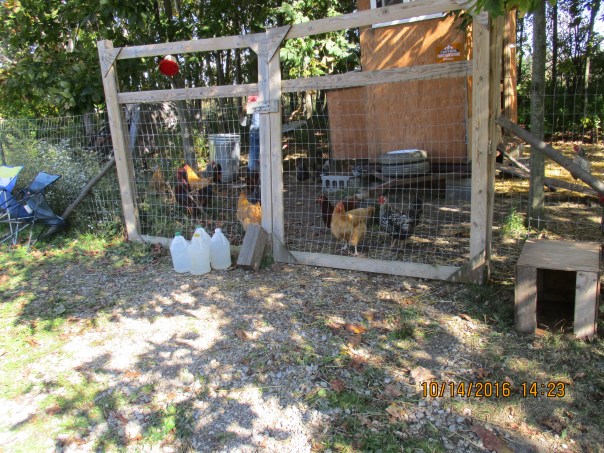
I admit this was one of my fears when we first started raising chickens – how are we going to get all on those chickens in the coop every night? Well it really doesn’t take much training for the chickens to learn that the coop is their nighttime home. If chicks are raised by a hen then the hens does all of the training. When we raise chicks this is what we do – we introduce the chicks to the coop at the farm once they have feathered out, usually around four to six weeks. We set up a small pen near the coop where the chicks can spend their days. You can read about that here. At night we can then gather them up to put them in the coop. The young chicks huddle together at night usually in one of the nest boxes. We continue this routine for about 5-7 days or until the chicks learn to get into the coop on their own. After that when darkness falls the chicks will naturally go to the coop each night. It will become their safe space.
Eventually they will outgrow the nest box, and the need to huddle together at night, and will spend their nights sleeping perched on a roost within the coop. Our coop has roosts at various heights and the chickens tend to seek out the higher roosts. It is a chicken’s instinct to roost high up at night.
We have been raising chickens on the farm for five years and it has been our experience that with few exceptions the chickens always come home to roost. Exceptions – every rule seems to have them so let me share the exceptions that we have found for this rule.
Why The Chickens Don’t Come Home To Roost:
Each night we do a head (beak) count to assure that all of the chickens have returned and are safely inside the coop. If any are missing we do a search. Occasionally we have discovered that a hen has fallen prey to a wild predator and we have found either a headless body or a pile of feathers.
On other occasions we have found that one or more hen(s) have gotten into one of our fenced garden areas because someone, either intentionally or (oops) unintentionally, left the gate open. If given enough time they will usually find their way back to the gate and out of the garden, but when darkness is closing in their instinct is to head in the direction of their coop (the gate is in the opposite direction) and they keep running into the fence trying to get home. (You may have heard that chickens are stupid.)
One other thing that we have experienced, that is really only a partial exception, is when the a hen decides that rather go into the coop she would rather roost in one of the trees outside the coop for the night. The reason that this is only a partial exception is that we have never had a hen try to roost in a tree elsewhere on the farm. They first return to the coop area, then fly up onto what ever tree branch they can get to. Possibly because the branches are higher than the roosts inside the coop, they think this is a good option. It is not! Some nighttime predators can climb trees and we have lost a couple of hens when we have allowed them to roost in a tree at night.
There is one other scenario that, although we have not experienced it, I think is worth mentioning. It is a broody hen. A hen may lay several (or even a whole bunch of) eggs in a secluded area and when she thinks the time is right will begin to brood (sit on the eggs). She will not leave the nest at night to return to the coop. I have read stories of hens disappearing and then showing up three weeks later with a bunch of chicks. What a surprise that would be.
Now if you were thinking about raising free range chickens but worried about having to play chicken rodeo every night, do not fear – chickens come home to roost.
Thanks for reading. 🙂
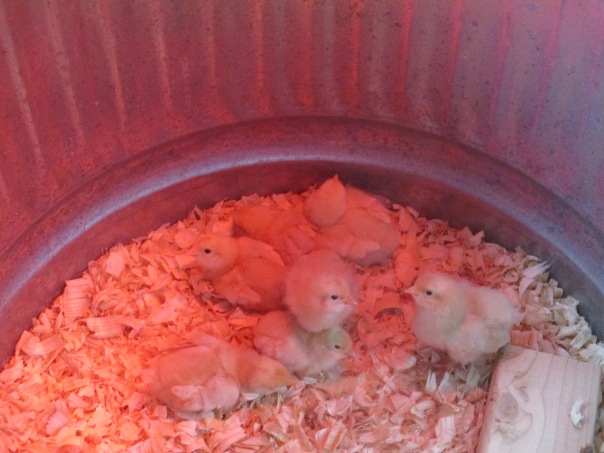


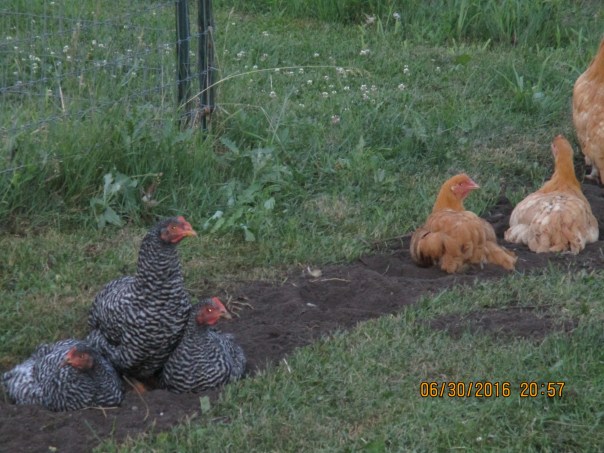
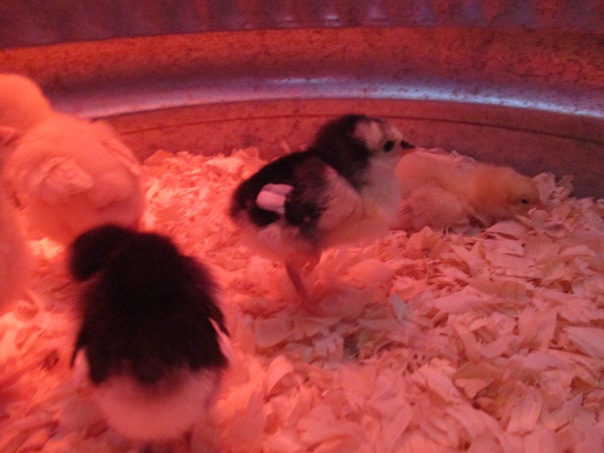 Black Australorps. This breed is supposed to be much like the Orpington except harder to spell. Just kidding, they supposedly lay more eggs than the Orpington. They certainly are adorable chicks.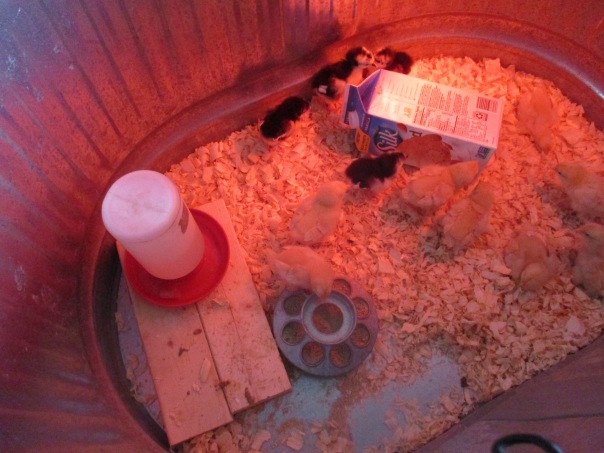


 Don't Eat It! Soap and Skin Care