Plantain: wonderful or weed?

The other day, while rescuing a portion of my garlic bed from weeds that were threatening to over take it, I realized that some of the “weeds” that I was discarding were in fact valuable plants. Remember the definition weed  from Merriam Webster.

1weed  n \ˈwēd\

Definition of WEED

1
a (1) :  a plant that is not valued where it is growing and is usually of vigorous growth; especially :  one that tends to overgrow or choke out more desirable plants

This does not say that that the plant has no value, just that it is growing in the wrong place.

So, while pulling “weeds” from the garlic bed I realized that I was pulling out a lot of plantain and throwing it aside. I decided to stop right there, work ahead and pull the plantain and save it. Then I went back and pulled the rest of the weeds.

Plantain, Latin name:  Plantago Major, is one of the valuable plants that most people see as a nuisance and is not given the respect it deserves. It has multiple health benefits, but if you like the nice manicured lawn look you are probably poisoning it with herbicides. This link will show you what it looks like and describe some of it’s uses.

http://www.stylecraze.com/articles/amazing-benefits-plantain-skin-hair-health/

A few years ago when I started studying the benefits of different wild plants and herbs I learned about using crushed plantain leaves on a bee sting to stop the pain. So for the past few years whenever I, or someone I was with, got stung by a bee I would grab some plantain leaves (they grow almost everywhere) and crush them up so some of the juice was coming out, then rub it on the bee sting. Almost instantly the pain would stop, and in most cases the pain did not return. As a bee keeper this is very valuable information to have.

This year I decided to try to incorporate this in my products by making it into a balm. So I infused some olive oil with plantain leaves and am currently testing my Bug Bite Balm before I actually have it for sale.

This most recent bunch of plantain leaves, that I harvested from my garlic bed, is being infused in alcohol to make a medicinal tincture, so that we might take advantage of some of plantain’s other health benefits. (it’s not legal for me to sell this, so you will have to make your own). Next I will pick some to dehydrate so that I can make plantain tea as well.

If you visit our farm you might notice the spot in one of our gardens where my husband decided to transplant this important plant, so while it might be a weed when it is coming up in my garlic bed, it is certainly a wonderful, respected plant in it’s own little garden spot.

Although, I pat myself on the back for saving those valuable “weeds”, I am also feeling a little guilty that I did not save the dandelion leaves for my salad.

A Busy Morning

This morning I pickled 5 pints of garlic scapes and made 4 jars of jam. All before noon.

What are Garlic scapes? See the previous blog entitled Garlic Scapes.

What kind of jam? Well I guess you could call it mixed berries. Yesterday we picked our fruit that was ripe; some currants, raspberries, strawberries and cherries. I didn’t have enough of any of the berries to make a batch of jam so I just decided to combine them all. Unfortunately there was no recipe for this in the Ball Canning Book, the Betty Crocker Cookbook, or the package of sure jell. So I kind of had to wing it. I found a recipe that called for mixed berries, and while it listed different types of berries than what I had, I used the proportions for that recipe. When I came up a little short on the berry amount, I added a partial package of frozen raspberries that were hanging out in my freezer. Well, the results are fabulous. While this is not the way Betty Crocker would do it and I’m sure it’s not the way Martha Stewart would teach you, I am certain this is the way my grandmother (and probably yours) would have done it.

Just don’t ask me for the recipe.

Summer Is Here!

WOO HOO! Summer has arrived, and I hope you, like me, have lots of activities planned in the great outdoors.

Now, visit my store to make sure you have everything you need to care for your skin this summer. These handcrafted soaps will not dry your skin, can be used to wash your hair, and they are nice to use when shaving your legs. The face, hand and body balms are great moisturizers, and the zinc oxide in the sunscreen is said to protect against UVA and UVB rays. Don’t forget to stock up on lip balm, and grab a keychain-lip balm holder, so you always know where to find your lip balm (no more trips through the washer for them).  All of these products can be used on the kids, and because they are not highly perfumed the guys like them too. So be sure get enough for the whole family.

Happy Summer! 🙂

Lye

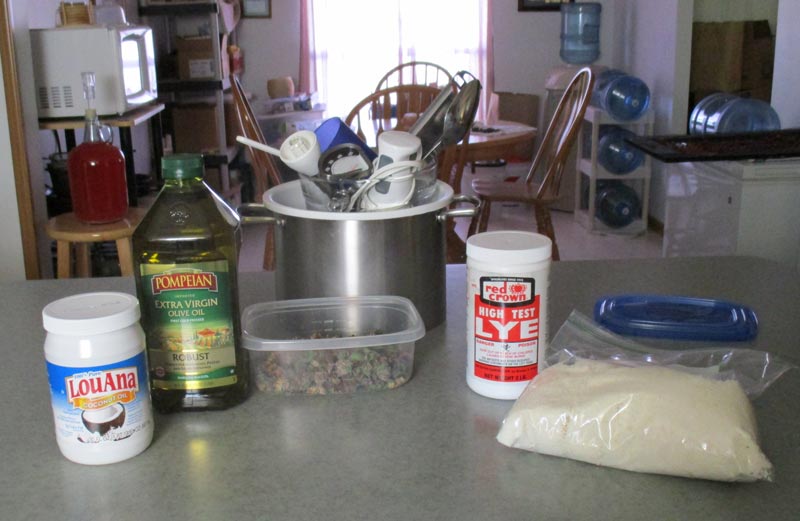
Lye is the key ingredient in turning fat and oils into soap.

Lye is actually a common name for two different chemicals, sodium hydroxide (NaOH) and potassium hydroxide (KOH). Both of these forms of lye can be used in making soap, however they are not the same chemical, and are not interchangeable in soap recipes. This means they are required in different amounts in a recipe and will produce a different type of soap. While sodium hydroxide will produce a hard bar-type soap, potassium hydroxide is more often used in making a liquid or soft soap. Sodium hydroxide has a PH of 14 while potassium hydroxide is reported to have a PH between 12 and 14.

Sodium hydroxide was once readily available in grocery stores and hardware stores, most commonly packaged as Red Devil Lye, it was used mostly as a drain cleaner. Because of it’s illegal use in the production of methamphetamines, it has become harder to find. While I’ve read that it is illegal to sell in retail stores in the U.S., I have been able to purchase it in a few stores. The easiest way to purchase it is online through soap making suppliers.

Potassium hydroxide is made from wood ash and water. I have not yet made soap using potassium hydroxide, but this is on my to-do list.

Because of it’s high PH lye is a dangerous chemical and must be use with caution. If it comes in contact with bare skin it can cause severe burns. It will erode some metals, but it is safe to use in glass, plastic or stainless steal containers. If mixed improperly or with certain substances it can create dangerous gases.

Once lye has been properly mixed with the liquid and oils and the chemical changes occur lye becomes safe to use on the skin. Soap should have a PH between 7 and 10.

You don’t see lye, sodium hydroxide, or potassium hydroxide listed as ingredients on commercial soap products. Instead you will see thing like sodium cocoate, which would be the combination of coconut oil and sodium hydroxide after the chemical change, known as soaponification, has occurred. Other examples would be or sodium palmate or potassium tallowate.  I, like many handcrafters, list the ingredients as the raw materials put into the soap even though the chemical change does occur before the product is finished.

Olive Oil

Olive oil is another ingredient I use when making soap and skin care products. Like coconut oil it is readily available at the grocery store and in my kitchen.

The definition of “castile soap” used to be soap that was made with 100% olive oil. Apparently through the years the definition has evolved, first to mean any soap that contained olive oil as an ingredient, and now apparently to mean any soap that contains only vegetable oils. I have seen soap that is made from 100% coconut oil labeled as “castile soap”. So in my opinion the term “castile soap” has absolutely no meaning, and the only way to know what you are getting is to read the ingredients on the label (if you can see them).

In soap making olive oil makes a creamy, conditioning and moisturizing bar.  I have found that olive oil in the right combination with coconut oil makes the perfect soap. The proper ratios of these two oils can make a bar of soap with just the right degree of hardness, it is a cleansing soap that is creamy and lathers like crazy.

In skin care products olive oil offers vitamins A and E and has great moisturizing properties. Olive oil is also a great oil to infuse with herbs that can be beneficial to skin care.