All posts by ruthsoaper

Making Maple Syrup

The warm temperatures on Friday and Saturday were great for sap flow, so by the end of the day Saturday my husband had collected approximately 10 gallons or 40 quarts of sap. While collecting the sap from the sap buckets into plastic 5 gallon pails he filtered the sap through a honey filter that sits in the top of the 5 gallon bucket. This removed any solids that found their way into the sap. Overnight temperatures were cool enough to store the sap outside without it spoiling.

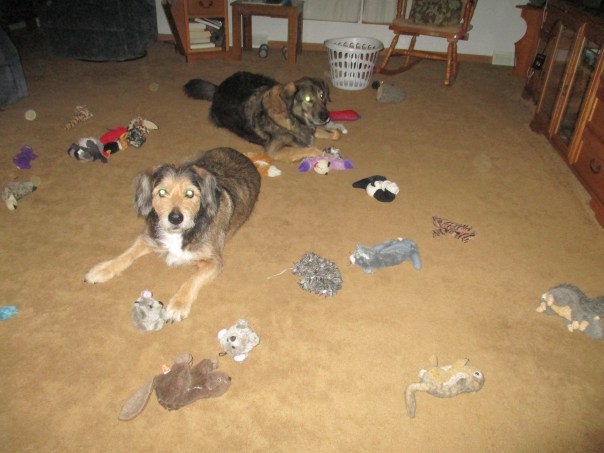
Yesterday morning he set out for the farm with the equipment he needed for cooking the sap. I didn’t get pictures of this part of the process yet, but hopefully I will as we collect and cook more sap. For equipment he took  a 30 quart stainless steel pot for cooking the syrup and a long handle stainless steel spoon for stirring. He also took a second pot that the hot syrup would be transferred to in order to bring it home. He packed a lunch for himself and some treats for Scout and Trooper.

Since we don’t have a sugar shack or sap house for processing the sap indoors, it was a blessing that the weather was favorable for keeping an outdoor fire going. In preparation for this my husband had constructed a special fire pit, in a high and dry location, and split several wheel barrels full of fire wood. He began his syrup making mission by getting the fire going around 10 A.M. with a goal of having some finished product by days end. Keeping the fire burning and the pot boiling were his main objectives. He first thought that boiling small amounts at a time (filling the pot 1/4 full) would speed up the process, but he quickly learned that each time he would add more cold sap the temperature would drop so dramatically that it would take 10-12 minutes to return to a boil. Realizing the whole pot was hot, he decided to fill he pot closer to the top and maintain the boil while adding only smaller amounts of sap as it boiled down. He said it took about two hours before it came to a rolling boil.

In mid afternoon he made a quick trip back to the house to bring Scout and Trooper (who apparently just wanted to lay in the van) and to grab some hot dogs that he could cook over the fire for dinner. At this point he was anticipating that it could be as late as 8 P.M. before he was done cooking down the sap.

Reality was that around 6 P.M., a long  eight hours after he began, and just in time for the chickens to be closed in their coop for the night, the sap had boiled down enough that the rest of the process could be done in the kitchen.

When he returned home we poured the cooked-down sap into a much smaller pan.

IMG_0690
Well On It’s Way To Becoming Syrup

We heated it for a few minutes before deciding this would be a good time to filter it. We had decided to use a juice (or jelly) bag, that I had on hand for filtering the “sand”(a byproduct of boiling sap) out of the syrup. This seemed to work well. We then returned the sap to a boil and watched closely as it continued to boil down. My husband also told me to take some bacon out of the freezer to cook with tomorrows waffles for breakfast.

Once it seemed to be thickening I put in a candy thermometer. It needed to be brought up to 219 degrees  fahrenheit or 7 degrees above the boiling point of water.

IMG_0692
Watching The Temperature Closely

While I watched the thermometer, my husband used a spatula dipped in the syrup to check for sheeting – the syrup forms a sheet on the spatula instead of running off in droplets.

IMG_0694
Woo Hoo! It’s Syrup!

When the syrup was sheeting on the spatula and the temperature reached 219 degrees, which happened about the same time, we poured the syrup into sterilized ball jars.

IMG_0696
A Little More Than 1 1/2 Pints of Syrup

Of course we had been tasting our product along the way, and I can honestly say that, while I don’t have a long history of tasting pure maple syrup, this is the best maple syrup that I have ever tasted.

This mornings breakfast menu included bacon and blueberry waffles, (with frozen blueberries from last springs harvest and our farm fresh egg), and of course our own maple syrup. Yumm!

http://andersonsmaplesyrup.com/index.php?page=nutritionalinformation  This link has some really good nutritional information about real maple syrup.

While we don’t call it a bucket list, making maple syrup has certainly been on our to-do list for quite a long time and we are thrilled that we have done it. 🙂

Since the weather has cooled again the sap is not flowing, this weird weather pattern has only left us wondering when the next sap will flow and how much syrup we might end up with this year. But in the mean time we have realized why real maple syrup costs so much.

Tapping Maple Trees

We have been using a lot of maple syrup lately. It’s delicious on our French toast or waffles that we have been having for breakfast several times a week, but have you shopped for maple syrup lately? I’m talking about real maple syrup not, the corn syrup that is flavored up to taste like maple syrup. It’s expensive. So much so that we have recently opted for the fake stuff in effort to keep our grocery bill down. Real maple syrup has truly become a delicacy. A quick check at the Walmart website showed me prices ranging from 54 cents up to 94 cents per ounce. 54 cents might not seem like much but you don’t buy just one ounce. 12 ounces at 54 cents is $6.48, a quart which is 32 ounces at 54 cents would be $17.28, and a gallon which equals 128 ounces at 54 cents per ounce comes to $69.12. Keep in mind those are the low end prices; at 94 cents an ounce a gallon would cost over $120.

So considering this, and that fact that we have had the equipment needed for tapping the trees and collecting the sap, stored in our shed for the past few years, tapping some maple trees was a no-brainer.

We have been watching the weather forecast for about the last two weeks, since sap flow is dependent on the weather. Basically sap flows from trees that are still dormant when temperatures rise above freezing during the day but fall back below freezing at night. For a thorough explanation click here   http://maple.dnr.cornell.edu/produc/sapflow.htm    Since todays temperature was forecasted to be in the high 40’s or low 50’s and daytime temperatures for the next week to be mostly above freezing, it seemed like a good day to get the trees tapped.

After breakfast, we started out by tapping some sugar maples.

IMG_0670
Tapping A Sugar Maple

We used manual drill, and when I did the tapping of one of the trees I was surprised at how easy it was to drill the hole. A few things to note about drilling are that it should be done at a slight upward angle and drilled no more than 2 inches into the tree. I’m not sure if you can see in the picture that the drill bit had a piece of tape on it to mark the 2 inch mark. Recommended height is a height that is comfortable, so reaching up or bending down is not necessary. Also the ideal spot is one that has not been previously tapped and has no visible scars.

IMG_0672
Spile In Place

After drilling the hole the spile is tapped into the hole. Again I was somewhat surprised at how easy it was. It only took a few gentle taps with a light hammer and the spile was securely in place.

IMG_0674
Sap Bucket Hanging From Spile

The next step was to hang the sap bucket. The bucket has a small hole in it, and the spile has a hook below the spout that is designed to hold the bucket. When the bucket is hung from the hook the spout then reaches over the top edge of the bucket. When the sap flows from the tree it runs down the spout and into the bucket.

IMG_0675
Sap Bucket With Lid

The final step in the tapping process is to install the lid. Fortunately we had figured out how to assemble these a few days prior to doing the tapping, as it was a bit of a puzzle. The back edge of the lid is folded over but cut out in the center. There is a very thin metal rod that gets inserted through the first half of the fold. It then goes through two holes that were drilled into the top of the spile, then lastly through the second half of the fold on the lid. At this point the lid is secured to the spile, and it only rests on the lip of the bucket. The lid sits on an angle and has quite a bit of overhang, so it does serve to keep rain, potential snowfall, and anything else falling from above, out of the bucket. It does not sit tight on the bucket, so there is still a chance that things such as bugs or anything coming at it from the proper angle might get in. Those things can be filtered out later. This design allows for the bucket to be removed from the spile, for empting, without having the lid in the way. A very clever design.

IMG_0678
Some Trees Can Have More Than One Tap

http://maple.dnr.cornell.edu/FAQ.htm  gives this information to determine how many taps a tree can support.  “How many taps should you have on a maple tree?
A healthy tree 10-17 inches in diameter (31-53 inch circumference) should have no more than one tap. A tree 18-24 inches in diameter (57-75 inch circumference) should have no more than two taps. A tree larger than 25 inches in diameter (79-inch circumference) should have no more than three taps.”


IMG_0679
Tapping A Sugar Maple

We put half of our 18 buckets on sugar maples, but we also wanted to tap our silver maples at the farm. While silver maples indeed produce sap, it is said that they are not idea because the sugar content is lower than that of the sugar maple, thus requiring more sap to make the syrup. They also bud out earlier, therefore they have a shorter sap flow season.

IMG_0684
Silver Maple

The first thing we noticed when tapping the silver maples was that the sap began to flow immediately when the tree was drilled. Because it is clear it doesn’t show up in this picture, but there is sap coming out.

IMG_0686
Tapped Silver Maple

Unlike sugar maples that have a single large trunk growing straight up, the silver maple tends to have many trunks growing from near ground level. They grow outward on an angle. Because of this the buckets do not hang very straight. They will need to be emptied more often to prevent the sap from spilling over the side.

Upon seeing the sap run from the tree my husband tasted it. This was no surprise to me since he has a long history of tasting sap. As a kid he worked for a neighborhood maple syrup operation, and ever since I’ve know him, whenever he sees sap coming out of cut wood, even if it’s burning in the fire place, he dips his finger in the sap and tastes it. When he tasted the sap from the silver maple he responded with “it’s sweet, it has good sugar content.” I then tasted then sap and learned that my palate is not as refined as his. To me it tasted like water with just the slightest hint of sweetness. This makes sense to me because the sugar content of the sap from and sugar maple is reported only to be between 2 and 3% and the sugar content of the silver maple sap is  between 1.5 and 1.75%.


IMG_0687
Curious Creatures

As with most things we do at the farm the chickens had to investigate. (and who doesn’t love a good chicken picture)

Tapping the trees is only the beginning, and I might add the easy part, of making syrup. With that statement I must correct the comments made on my earlier post. https://donteatitsoap.com/2016/02/17/can-you-guess-what-we-are-doing/   Erin’s comment was, “Dad says gathering maple syrup” and I replied “Dad is correct”. What I should have said is that dad has the gist of what we are doing, but technically (and I’m sure Dad knows this) you don’t simply gather maple syrup from a tree. The sap buckets will be checked at least twice a day, and the sap that is collected in the buckets will only become syrup after a long boiling process. It will take 40-50 gallons of sap to boil down into one gallon of syrup. So as we continue to collect sap and make syrup I will post updates on our progress. I hope you will check back to see how it goes.


Happy Anniversary

A few weeks ago an advertisement from one of our local jewelry stores, apparently one where we have shopped in the past, came in the mail. They had personalized the ad with our names on it. While I don’t wear jewelry a lot, I loved the advertisement, so I cut it out and hung it on the refrigerator.

Today I am sharing it, as I wish a very Happy Anniversary to Dominic, my husband, my best friend, my partner in crime and the love of my life.

IMG_0669

It’s been a great nine years and I am looking forward to many more.

I Love You Sweetie!

Can You Guess What We Are Doing?

It seems our life has become a series of experiments. If I’m not experimenting with new soap recipes or food recipes, I may be making and testing herbal oil or tinctures. Although we have been bee keeping for three years we are still in the experimental stages and even with gardening and raising chicken it seems as if we are often trying something new.

So here is a clue to the project that we will begin this week. It is something that has been done for centuries, but this will be our fist time trying it. Do you recognize the object in the photo below? Can you guess what we are up to?

IMG_0668I do plan on taking lots of pictures an writing about it as we go so check back later this week to see how things are going.

Don’t Try This

I decided to make my husband a special dessert today for Valentines Day. Well to be honest, I would have made it for him any day, just because I love him and he loves desserts. I was inspired by the Foxfire Book http://www.foxfire.org/thefoxfirebooks.aspx   that I was reading last night. When I read about fried pies, I got to thinking that they would probably be similar to Hostess Fruit Pies. My husband likes those little pies a lot, so I was pretty excited thinking that I could make him some.

Since the directions in the book were very vague, I did a internet search this morning and found this recipe http://thepioneerwoman.com/cooking/fried-fruit-pies/   I don’t really know why I bothered, because I already knew what I was going to do.

I took a bag of frozen mixed berries out of the freezer along with half a bag of frozen blueberries. I like to say these were all homegrown, but our berry crops did not do quite that well last year. I also took two store bought pie crusts out of the freezer. I put the berries in a pan, added about 2/3 cup of sugar and a couple tablespoons of cornstarch, and put them over low heat to cook.

IMG_0652
Mixed Berries for Pie Filling

I cooked the berries until they thickened up.

IMG_0653
Mixed Berries for Pie Filling

While the berries were cooking I took the pie crusts out of their pans and rolled them out.

IMG_0654
Pie Crusts

I decide that I was going to fry these in lard, so I started heating the lard in to pan.

IMG_0655
Melting the Lard

Once I got the pie crust rolled out so it was pretty flat and somewhat rectangle shaped, I cut it into wide strips and spooned some pie filling on it. I folded it over and pressed the edges to seal them.

IMG_0656
Pie Filling on the Pastry

Once the lard got to 350 degrees I dropping my pastry in with great anticipation. Instead of watching my pie turn a lovely shade of brown, this is what I saw.

IMG_0657
Doesn’t Look Much Like Pie

The pastry just disintegrated, and I was left with small particles of pastry and pieces of fruit frying in hot grease. While I wanted to cry, I am not that easily defeated. I got out a baking stone and preheated the oven. I filled the rest of the pastries and put them on the stone.

IMG_0658
Ready To Go Into The Oven

I baked them for about a half hour at  350.

IMG_0659
Out Of The Oven

I then put on a light glaze made out of powdered sugar and water. The end product was more like toaster pastry. My husband, who also like toaster pastries, said these were really good. When I saw him eating a second one I was convinced.

While the pastries were baking I did a little detective to find out why frying these was such a failure. I knew it must be something with the ingredients, so I read the ingredients on the package for the pie crust. It was basically made of flour, water and lard. I realized that there was nothing to hold the combination together. No egg. Sure enough when I went back to the recipe that I had viewed this morning, on The Pioneer Woman website, it included egg.

Well one would hope that I would learn a lesson from this, and that I would start following actual recipes  instead of just doing what I think will work. I wish I could say that is true. Maybe I will, sometimes, but I do so enjoy experimenting.

I think the real lessons for me is to have a back-up plan. It also shows me how much my husband loves me (not that I had any doubt about that), he not only tolerates my weird, quirky ways of doing things, he encourages them. He is my biggest fan.

Oh, and if case you are wondering, I’m sure the chickens will enjoy the fried pastry crumbles and fruit, so they will not go to waste.