Hello and Welcome. WOW! July is upon us and already the year is half over. Today I’m sharing some inspiration for our gardening season.
“A garden is a grand teacher. It teaches patience and careful watchfulness; it teaches industry and thrift; above all, it teaches entire trust.” – Gertrude Jekyll
“Gardens are not made by singing ‘Oh, how beautiful!’ and sitting in the shade.” – Rudyard Kipling
“A garden requires patient labor and attention. Plants do not grow merely to satisfy ambitions or to fulfill good intentions. They thrive because someone expended effort on them.” – Liberty Hyde Bailey
“Gardening is cheaper than therapy and you get tomatoes.” – Unknown
“The Earth laughs in flowers.” – Ralph Waldo Emerson
“If you have a garden and a library, you have everything you need.” – Cicero
Hot weather moved in before summer actually arrived. It was time to make the pond more welcoming, so on Monday, June 16 I started by raking some of the weeds and leaves out of the beach area before rototilling the beach.
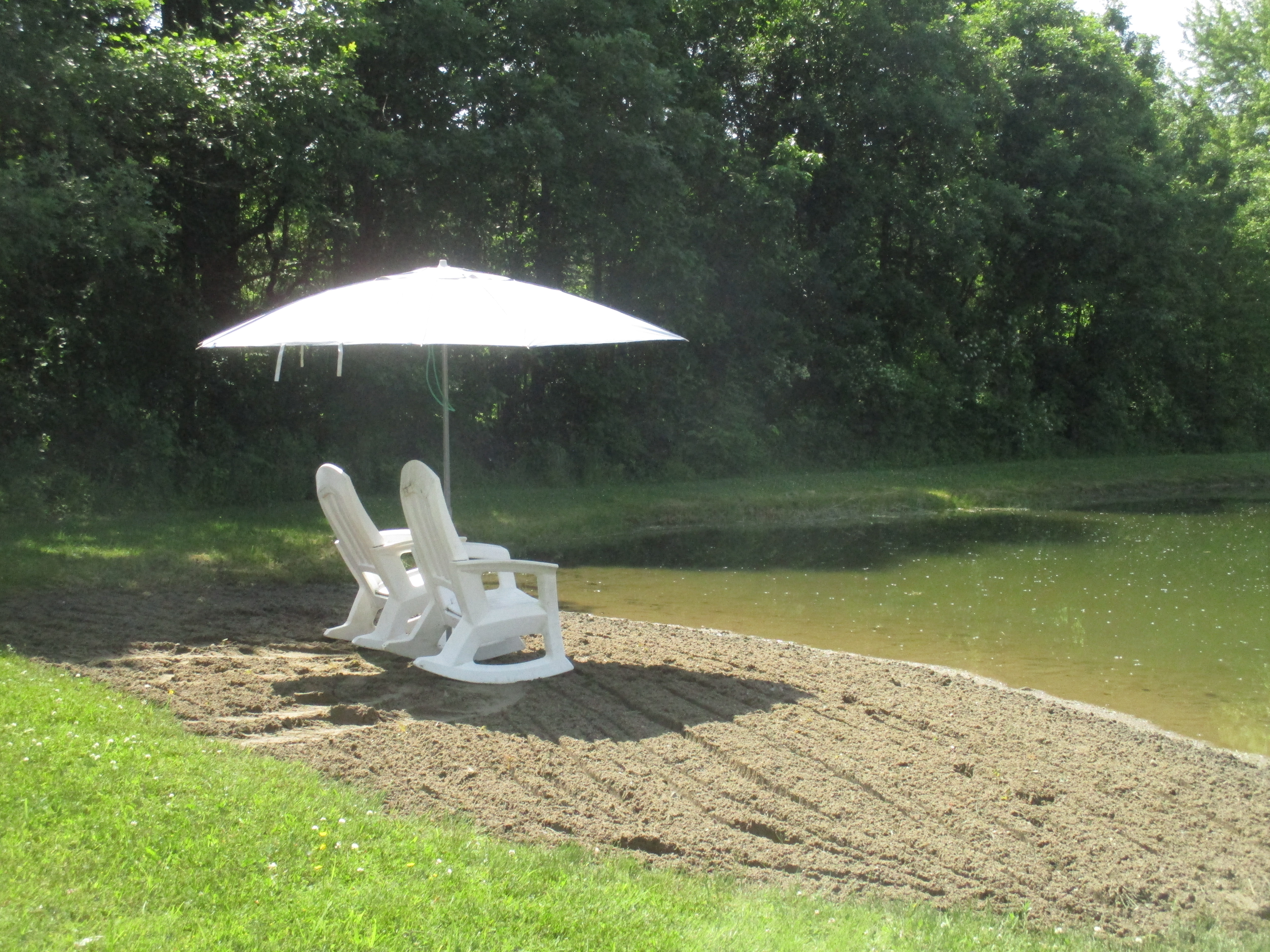
My husband brought out the beach chairs and I cleaned them up. Then we set up the chairs with the umbrella and a small table on the beach.
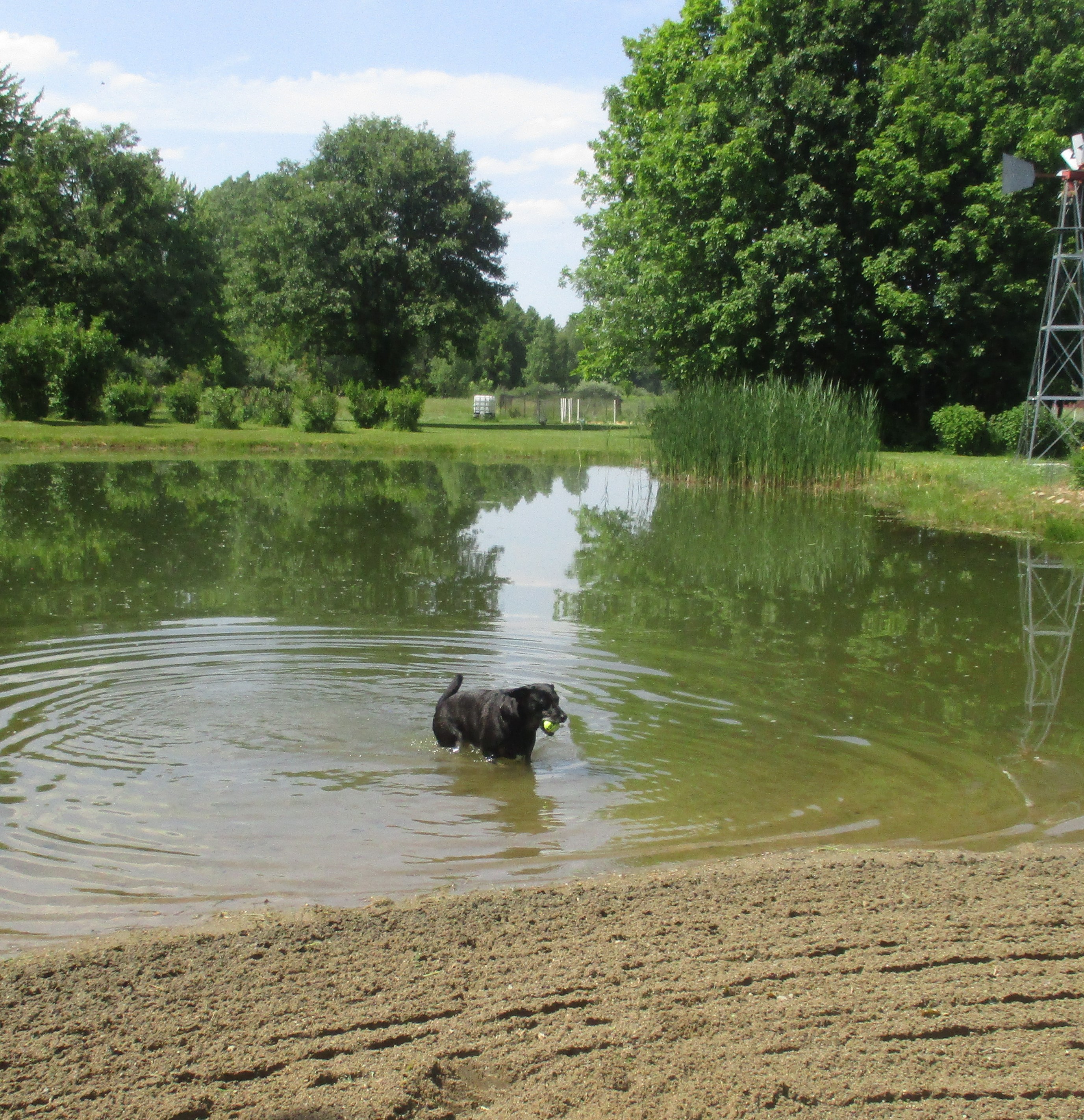
Ruby enjoys the pond as much as I do. She brings her ball the beach so we will throw it in the water for her to retrieve.
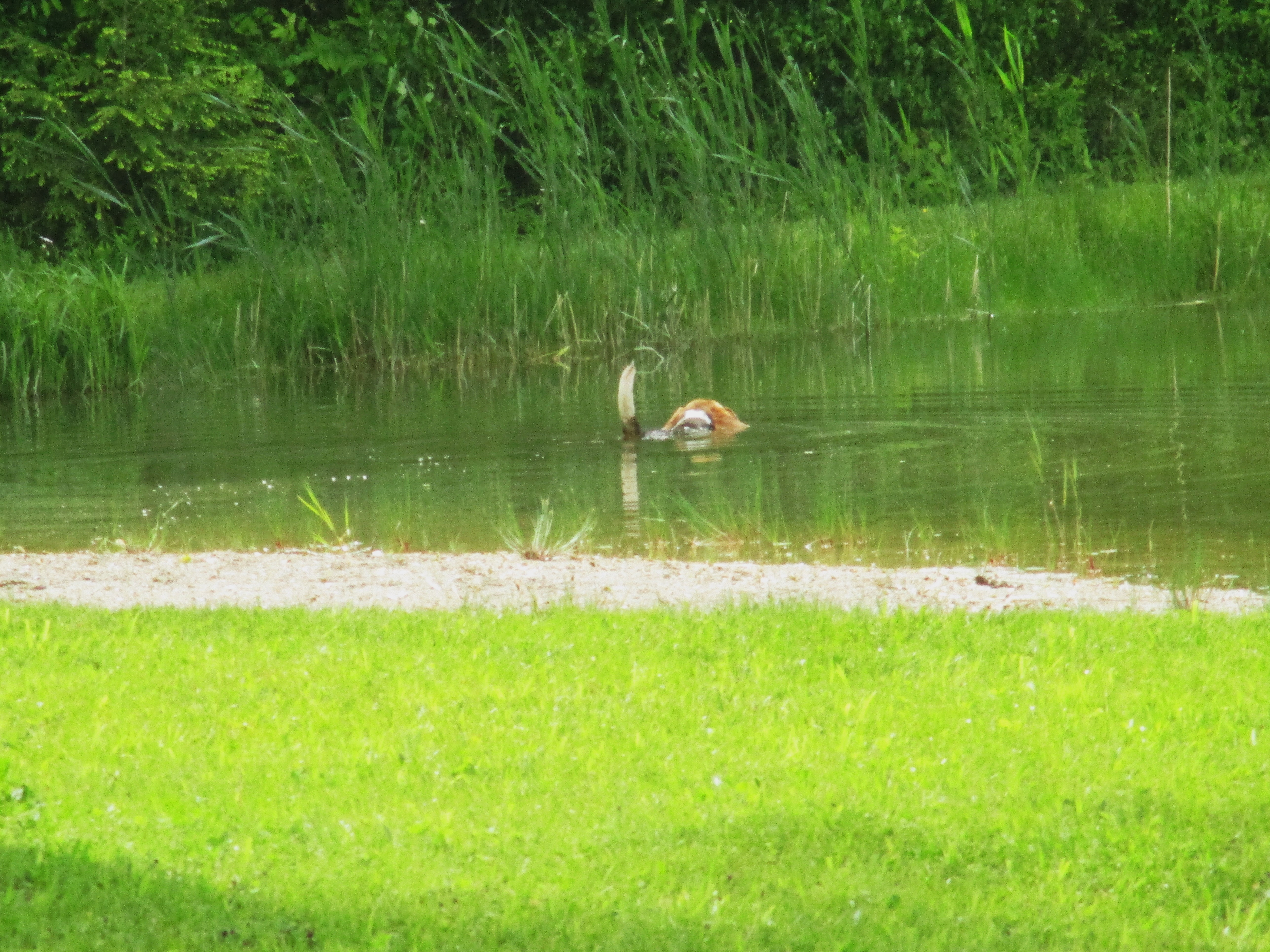
And Ranger, AKA our beagle fish, goes for regular swims just to cool off.
I’m not really a swimmer. I like to be in the water, but I don’t like my head under water..
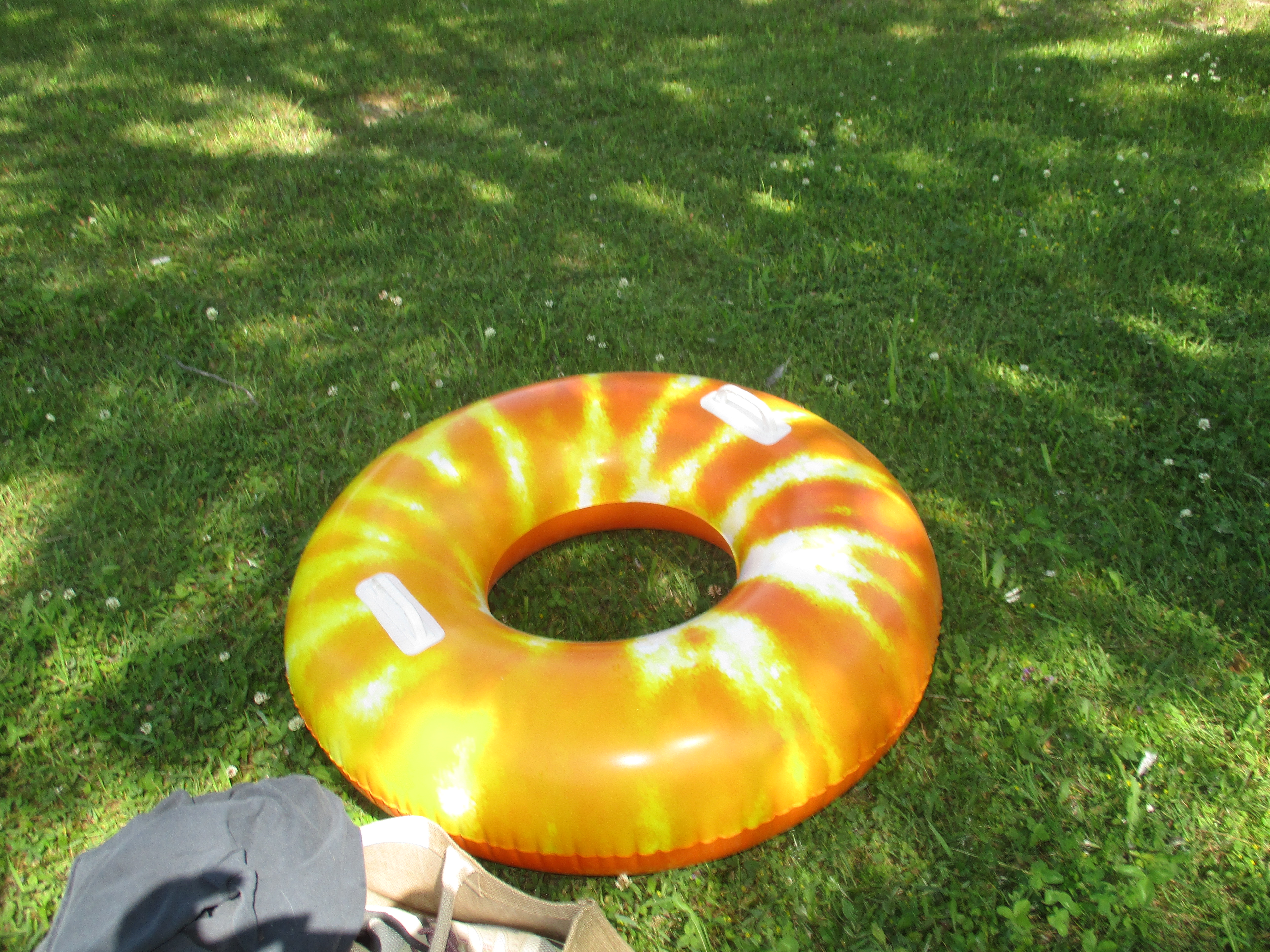
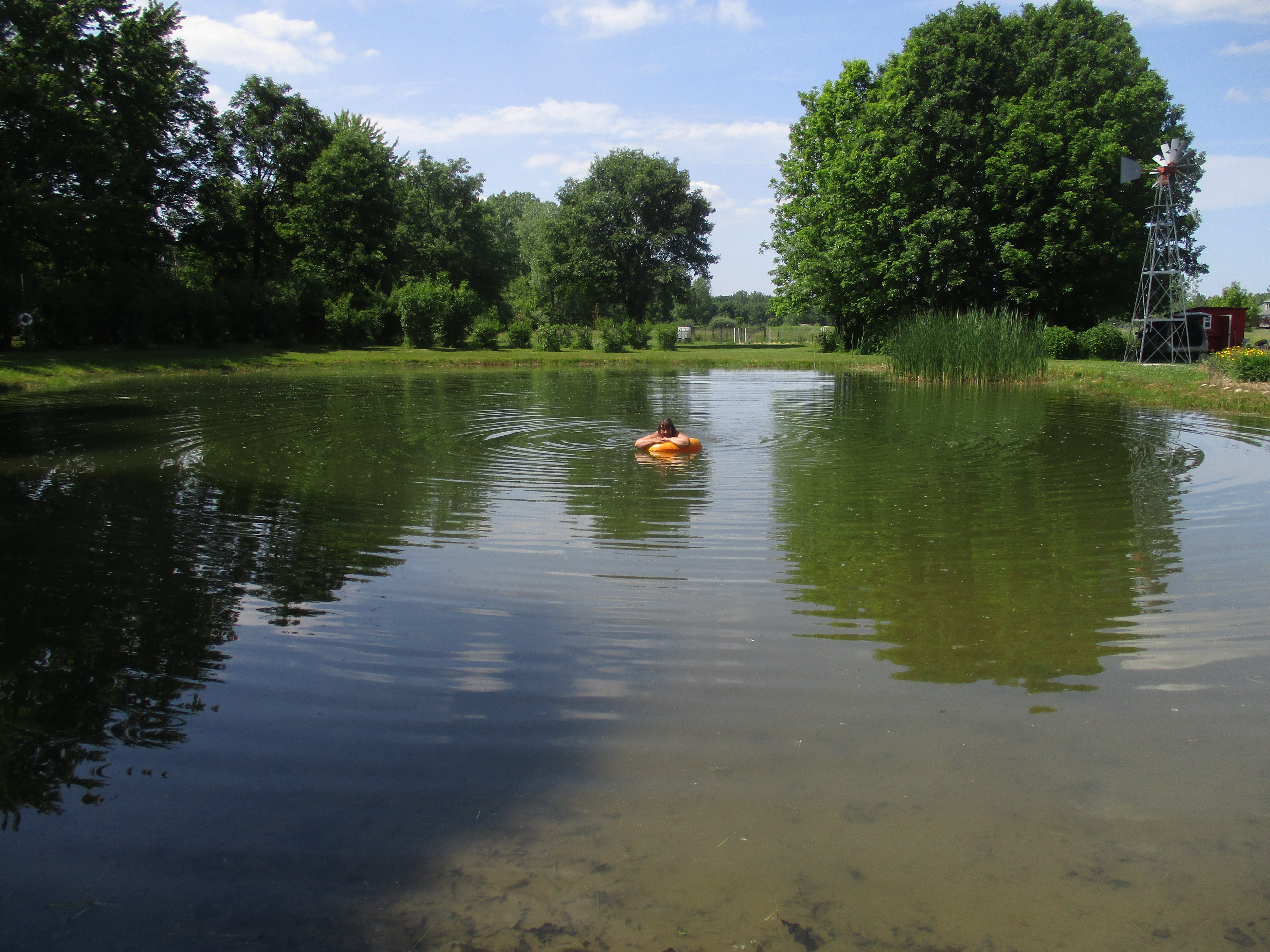
I use this floating ring as my watercraft. With my upper body floating on the ring and my legs kicking in the water I find I can get a good lower body workout. Probably as good as the recumbent or stationary bike. So, my goal, as often as possible this summer, is 30-60 minutes in the pond each day.
My first time in the pond this year. In spite of my objections my husband took my picture. At least he didn’t figure out how to use the zoom.
Chickens
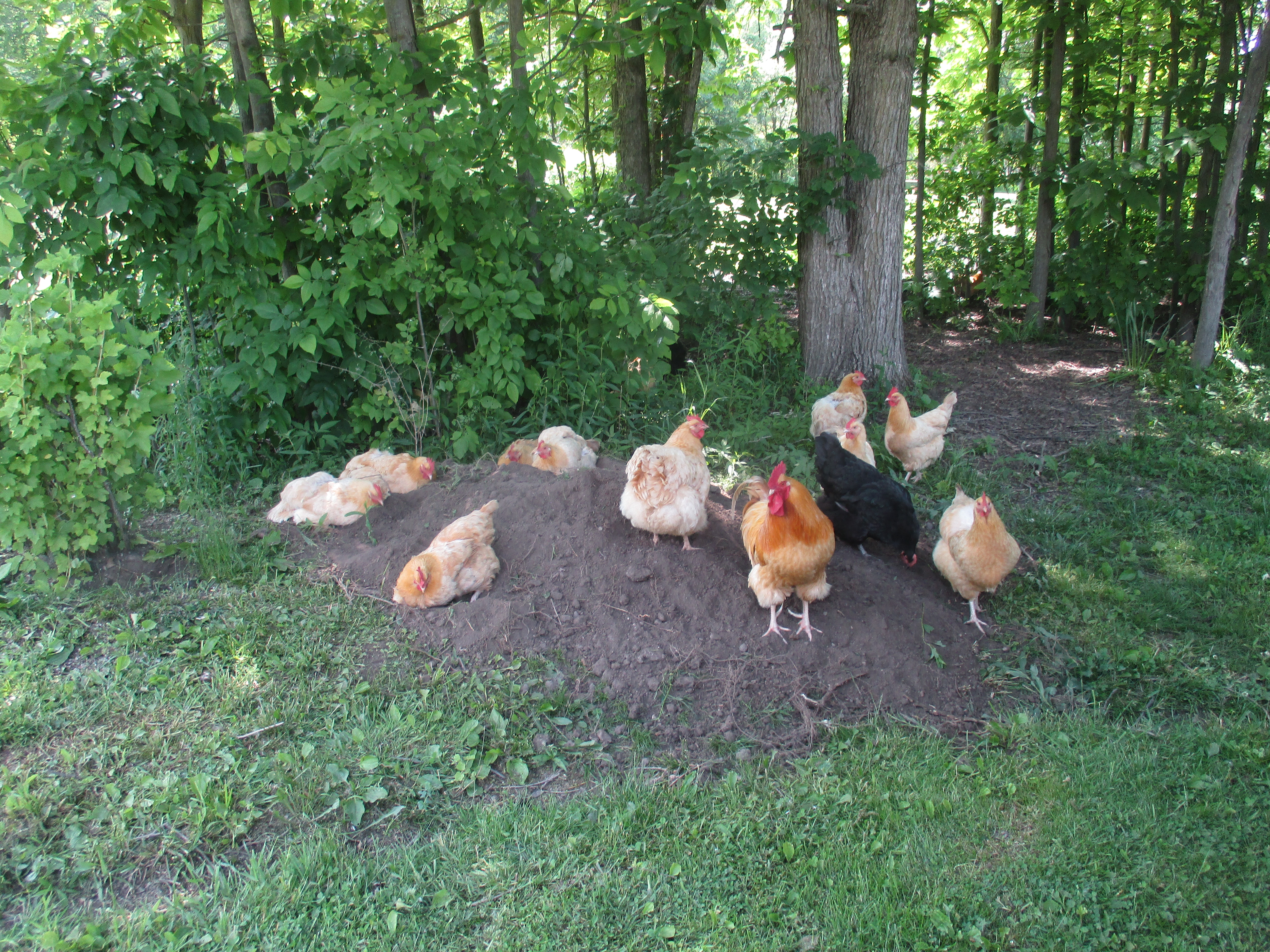
My husband gave the chickens a mound of fresh topsoil to bathe in. We had a very happy flock.
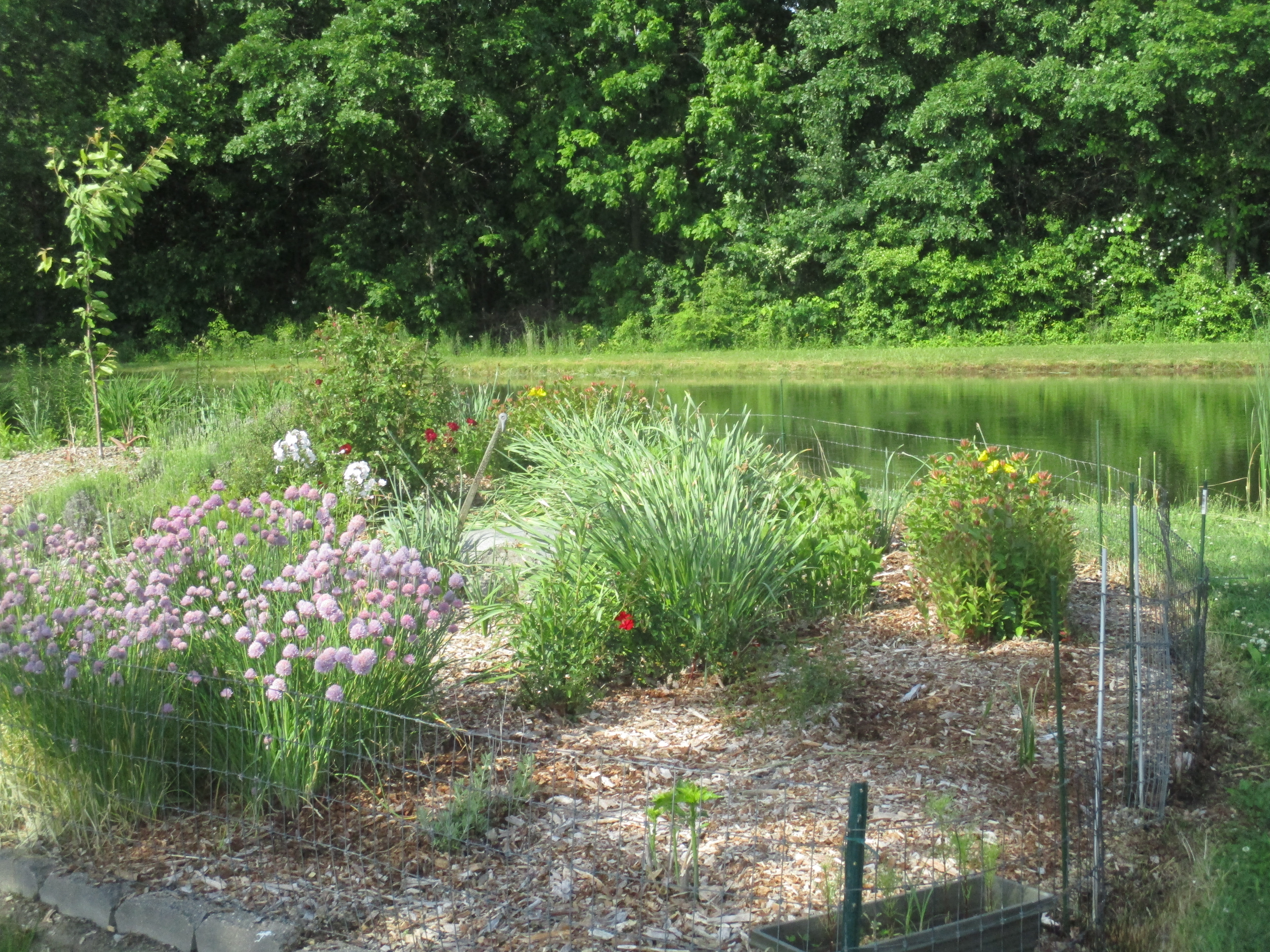
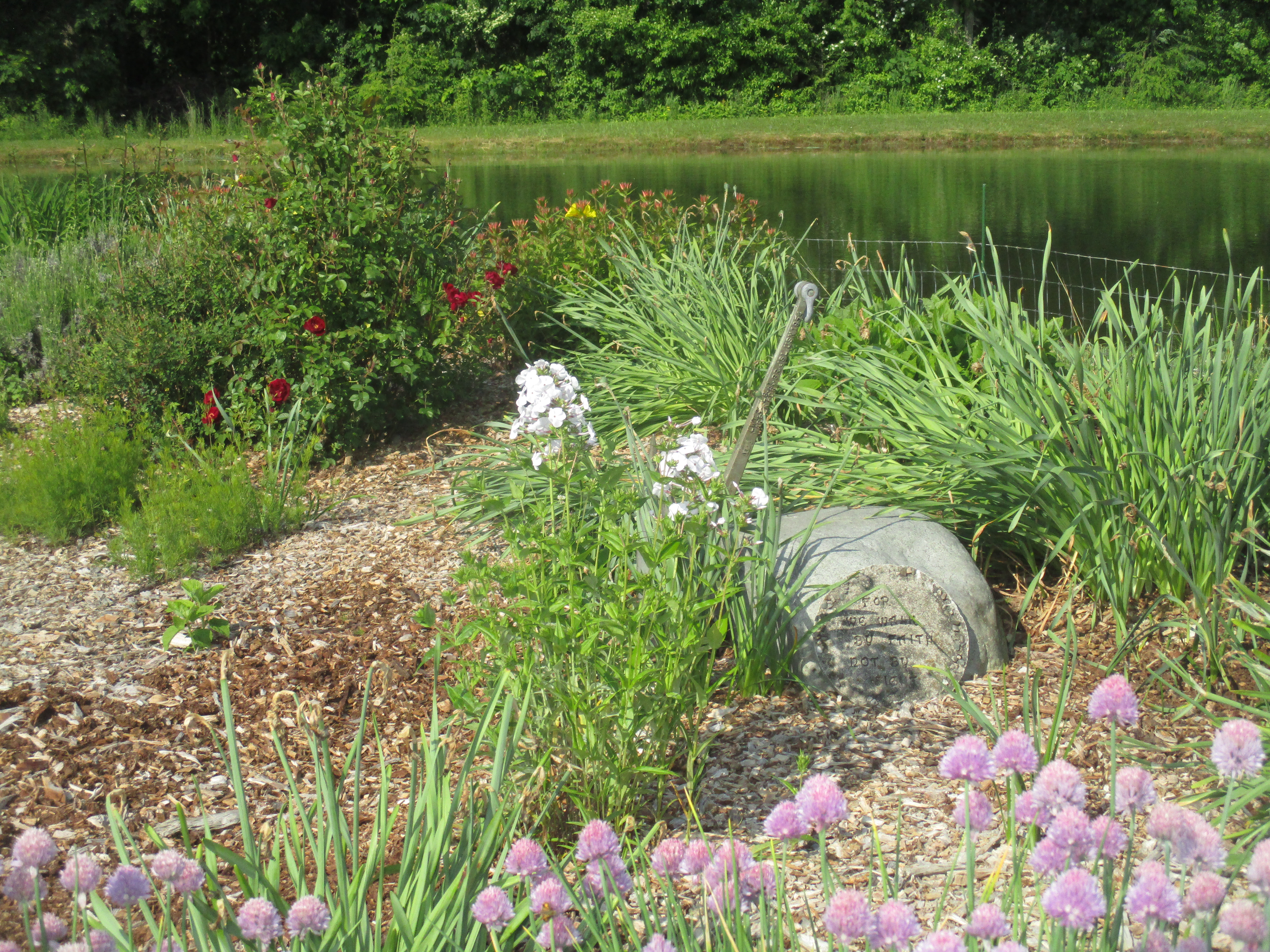
Prayer Garden
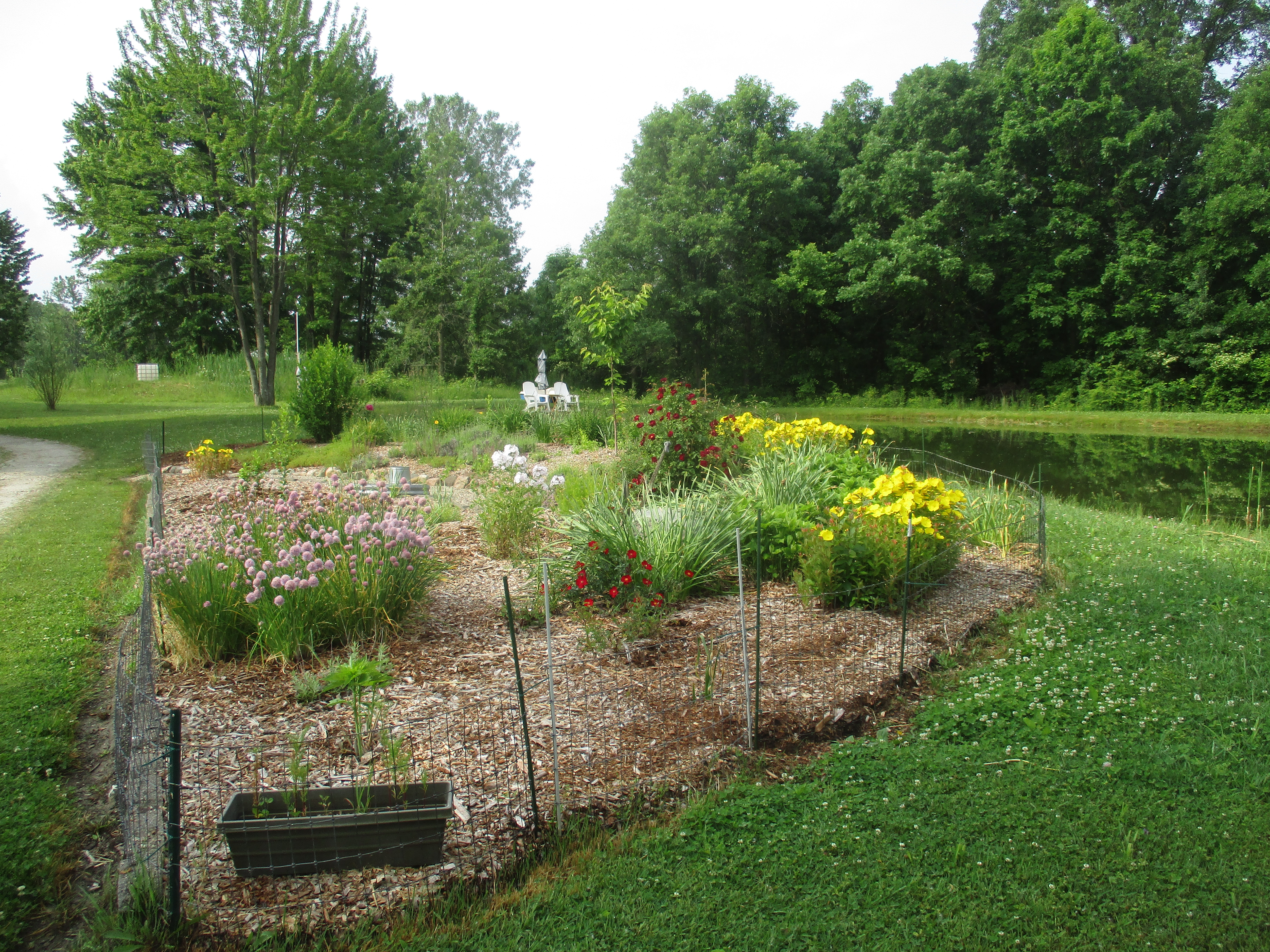
Abundant color.
So pretty.
Killdeer Update
I didn’t get any pictures, but on Tuesday afternoon we saw our young killdeers take flight. They are still hanging around the garden area which is fine with us because they do eat a lot of bugs.
Despite the storms that brought high winds and torrential rain both of the other killdeer are still dutifully sitting on their nests.
Sweet Cherries
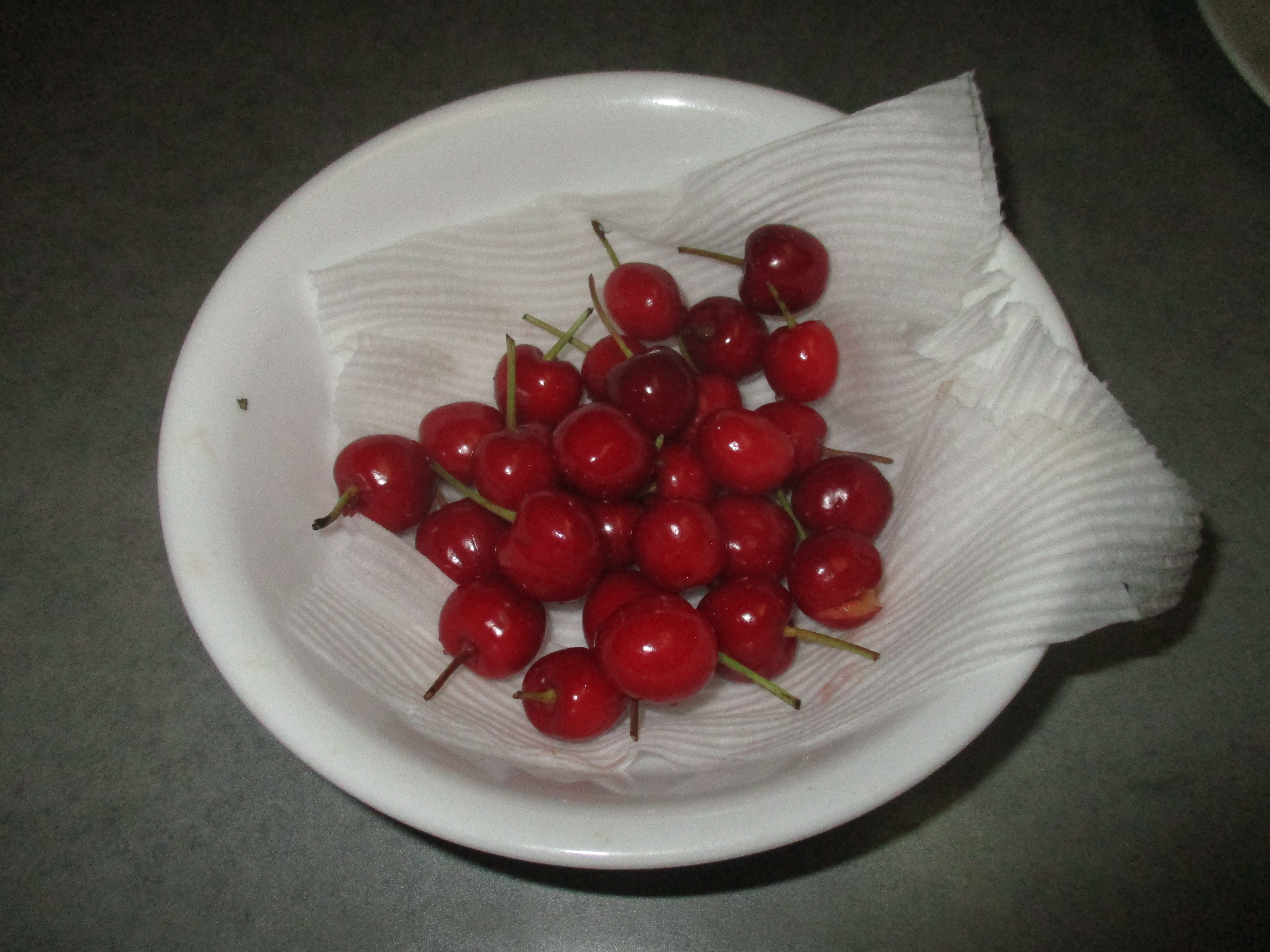
The second sweet cherry tree that we planted last year was more productive than the first. I harvested these on Wednesday morning. Enough to have with lunch. And that concludes our sweet cherry harvest for the year.
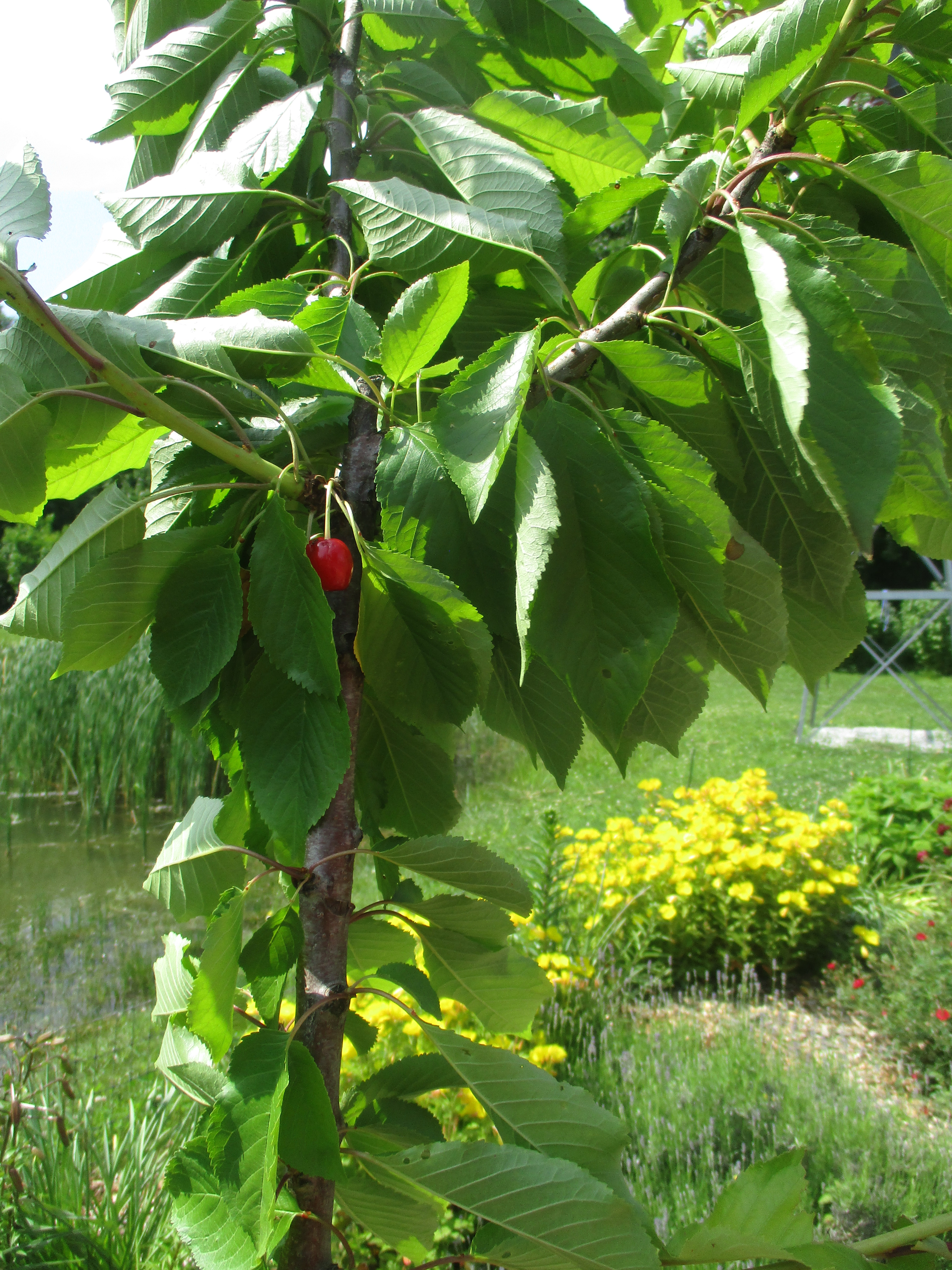
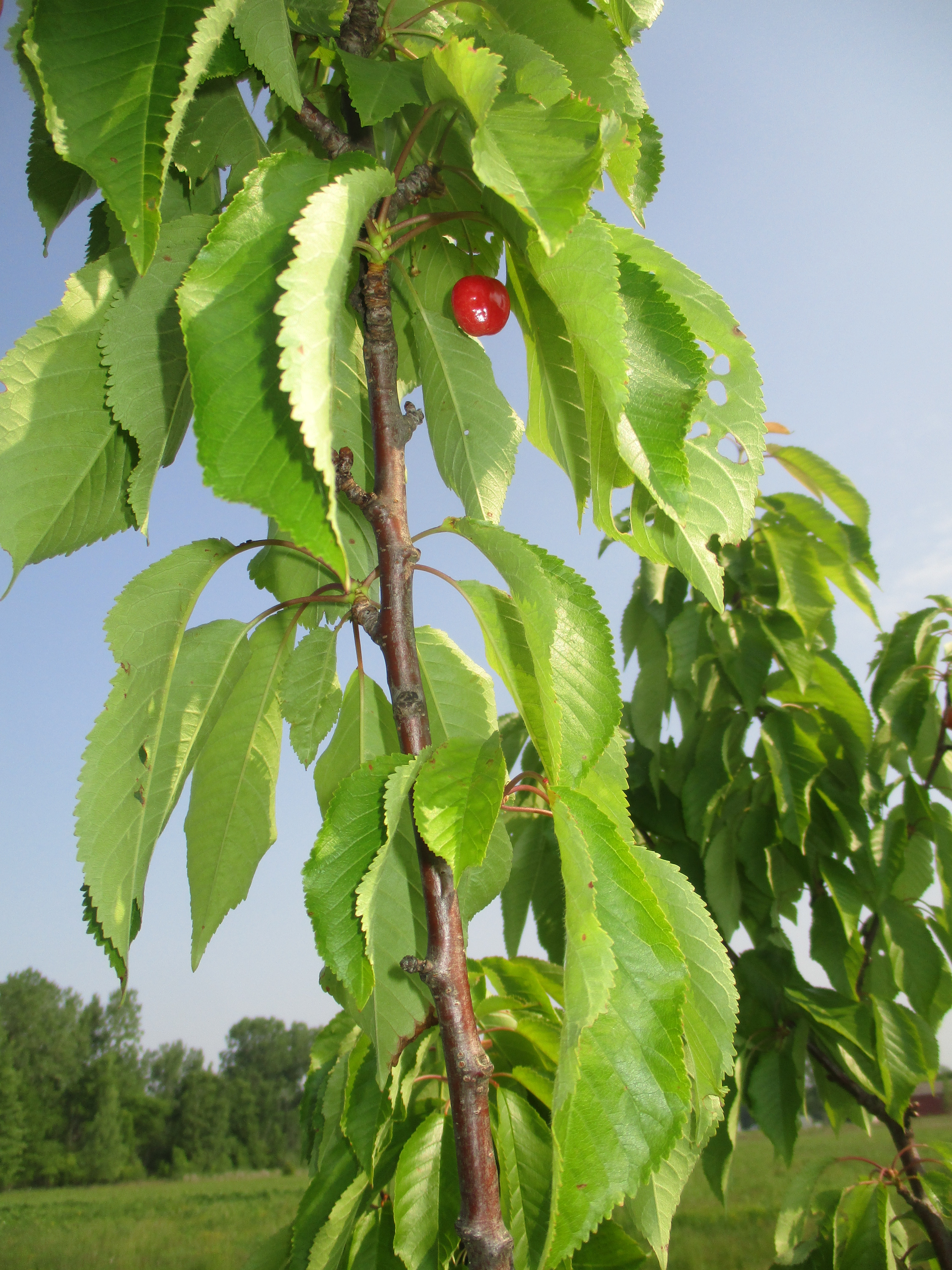
Except for this lone cherry that my husband discovered on our youngest tree (third tree). I never even saw any blossoms on that tree this year. I did pick and eat this last sweet cherry.
Before The Storms
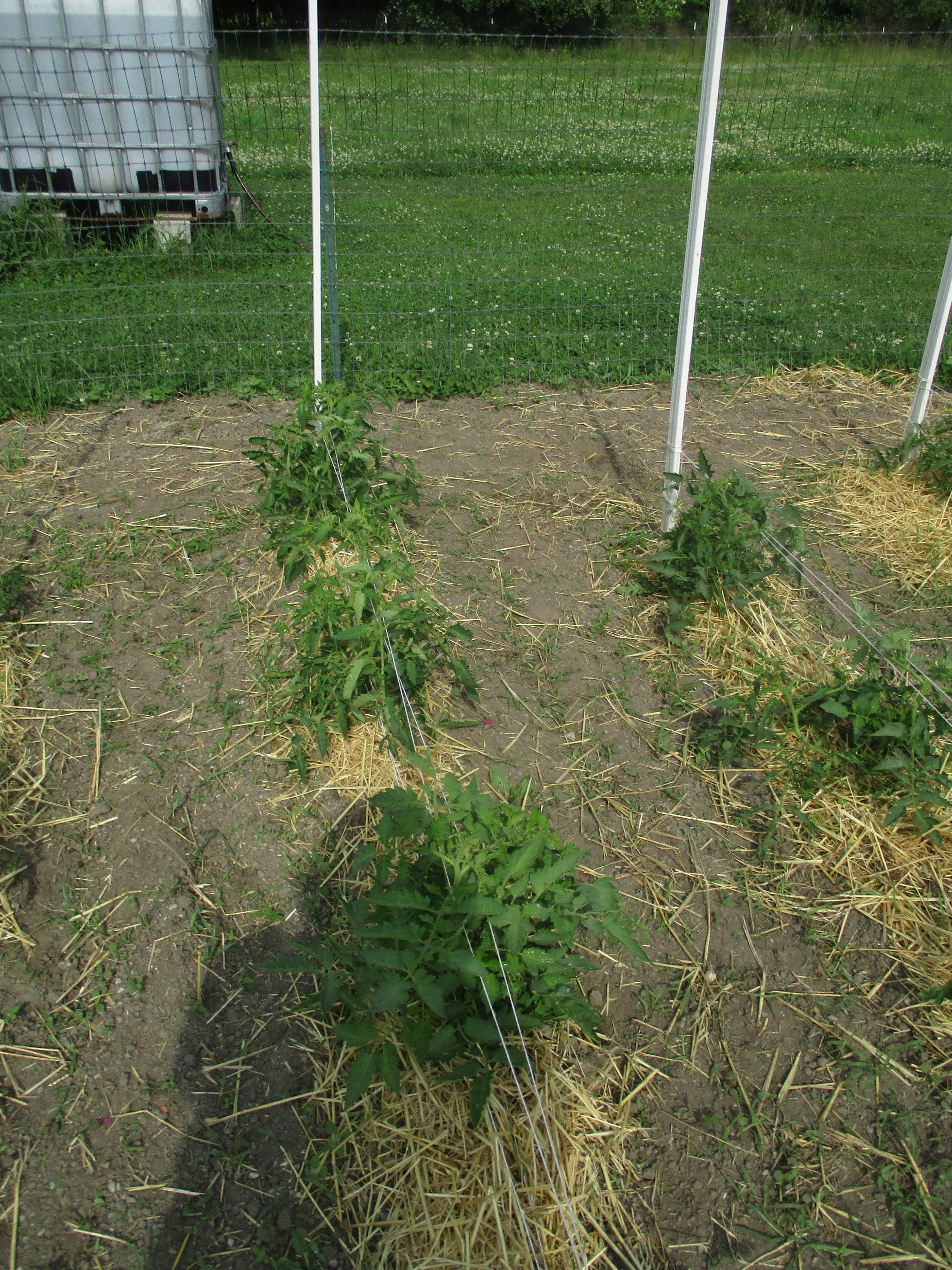
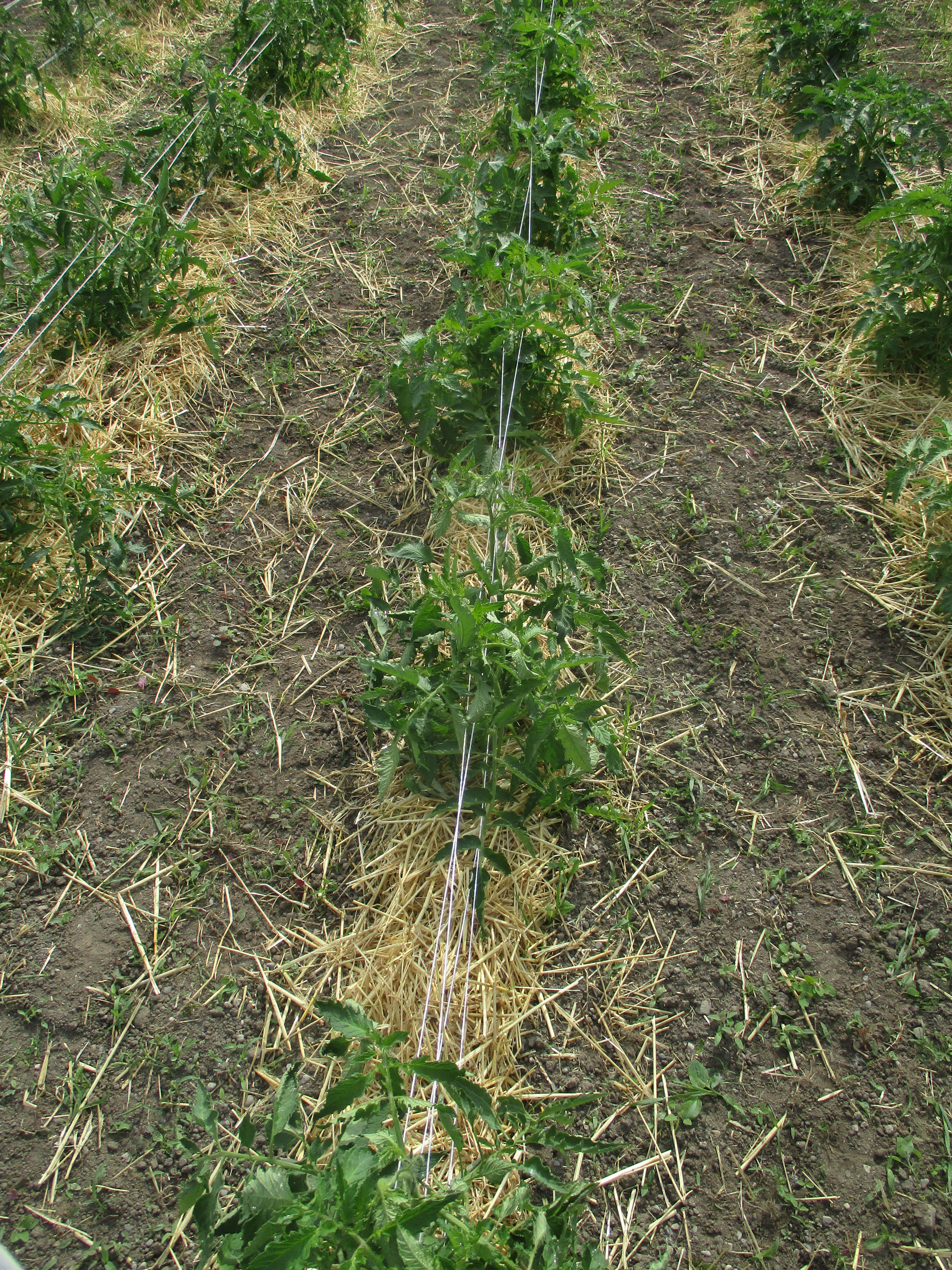
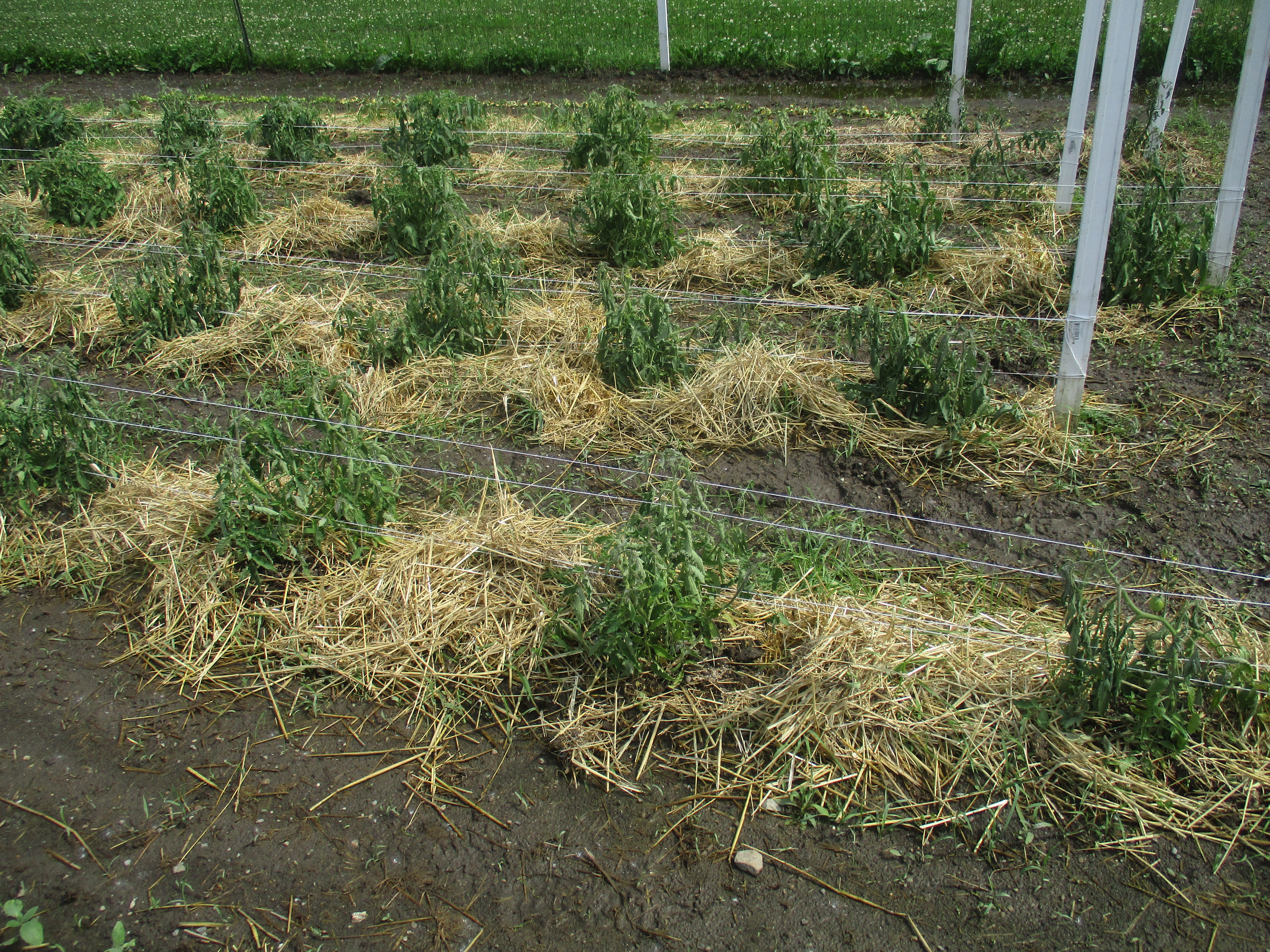
With heavy storms in the forecast for Wednesday afternoon we wanted to make sure the tomato plants were supported. Last year my husband discovered a method called tomato weaving. No more cages or staking each tomato to keep them upright.
To weave tomatoes, you need a stake at each end of the row. You also need a spool of twine or heavy string. You tie the twine/string to the stake at one end of the row then string it out weaving it in and out of the tomato plants. (On the right side of one plant then the left side of the next all the way down the row.) Make sure that the string is up against the main stem of each tomato plant. At the end of the row pull the string tight, wrap it around the stake a couple times, then weave it back down the row in the opposite direction, making sure that the string is on the opposite side of each plant and up against the stem of each plant. At the end of the row pull the string tight wrap it around the stake and tie it off.
As the plants grow taller you can add another layer of weaving higher up on the stake.
Once we were done with the tomatoes I spent about an hour pulling weeds in the garden.
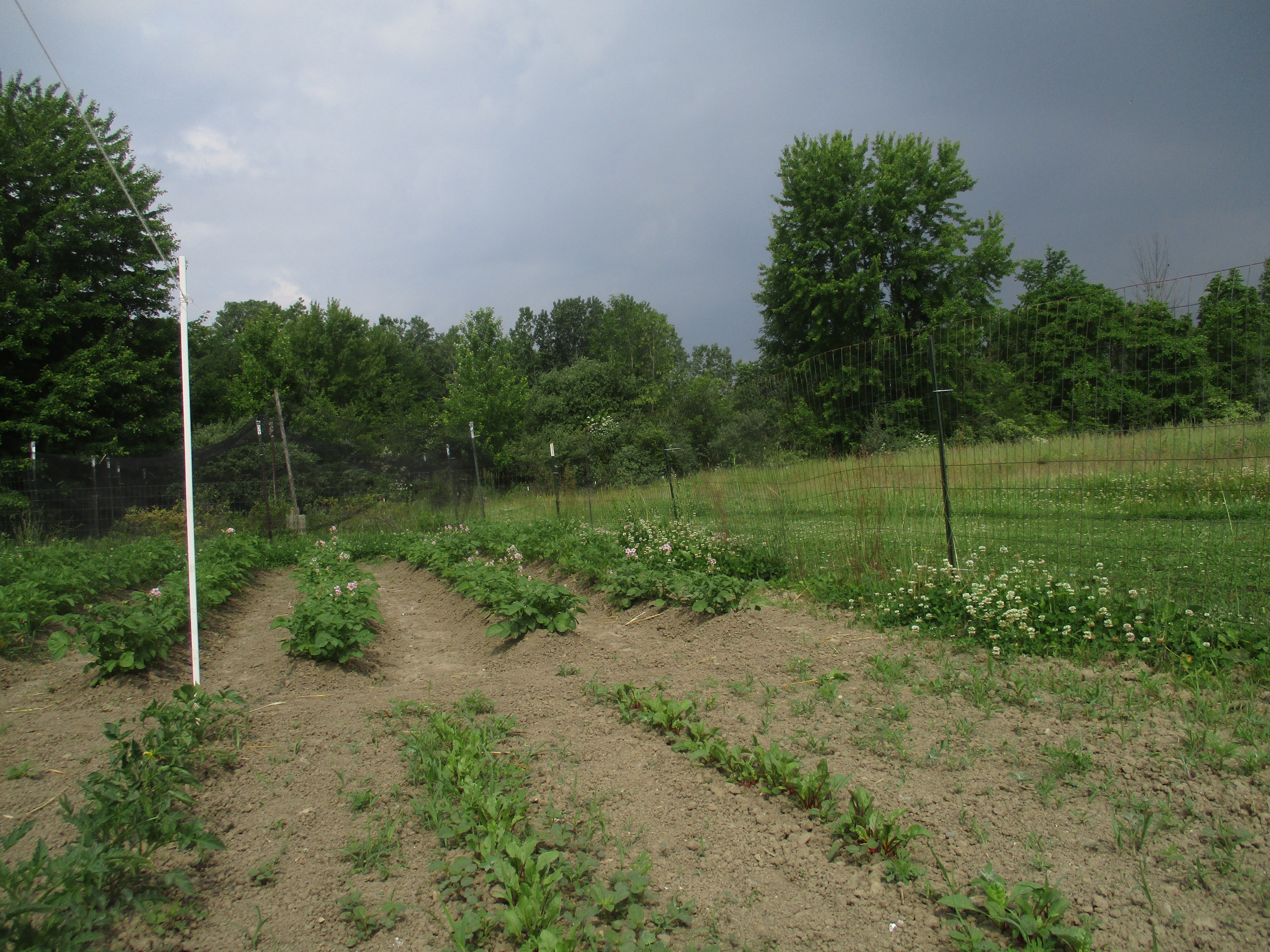
Here are some views from when I was on my knees in the garden.
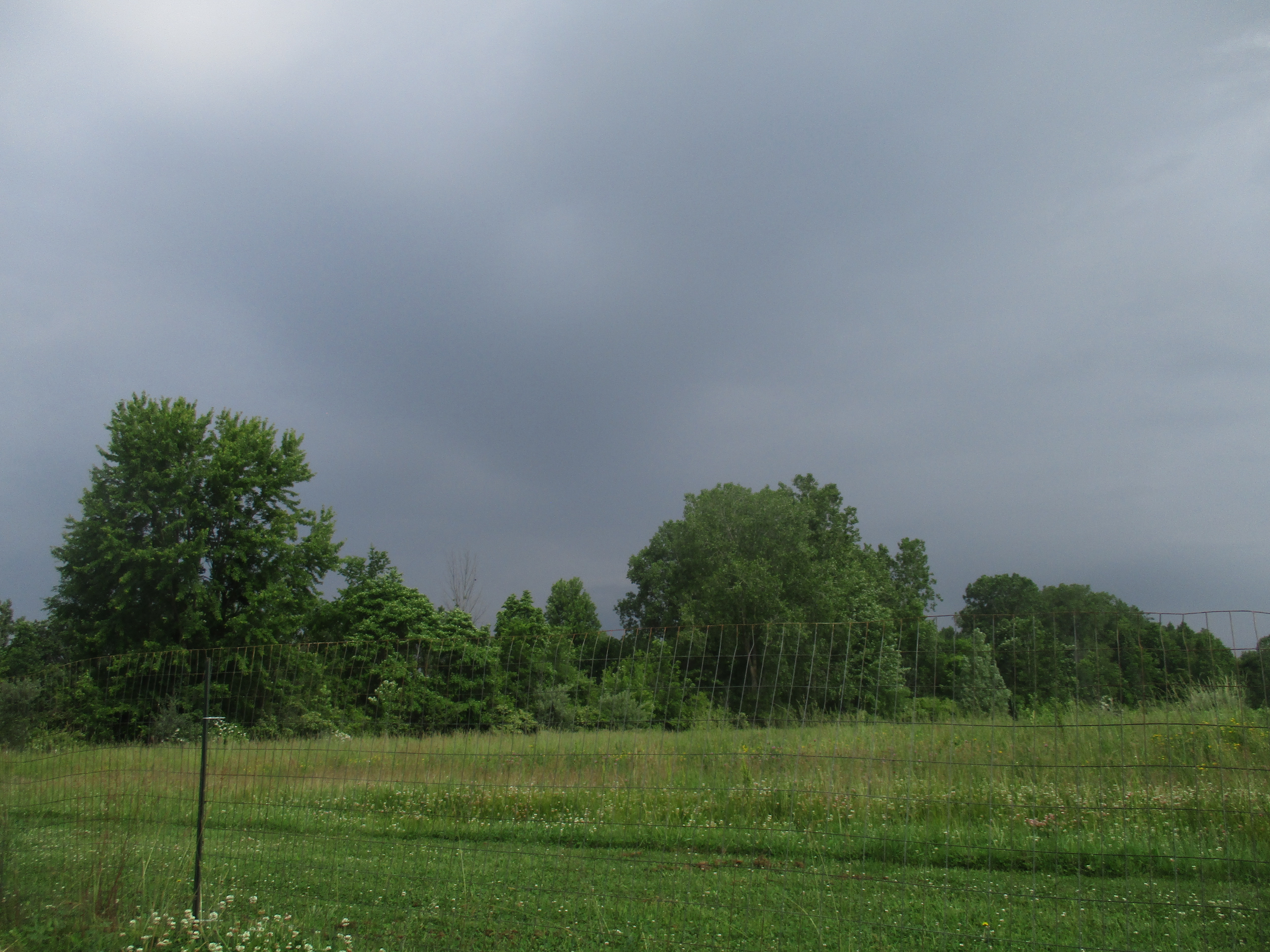
This storm went to the north of us. It was after we went home for lunch that the storms hit our place.
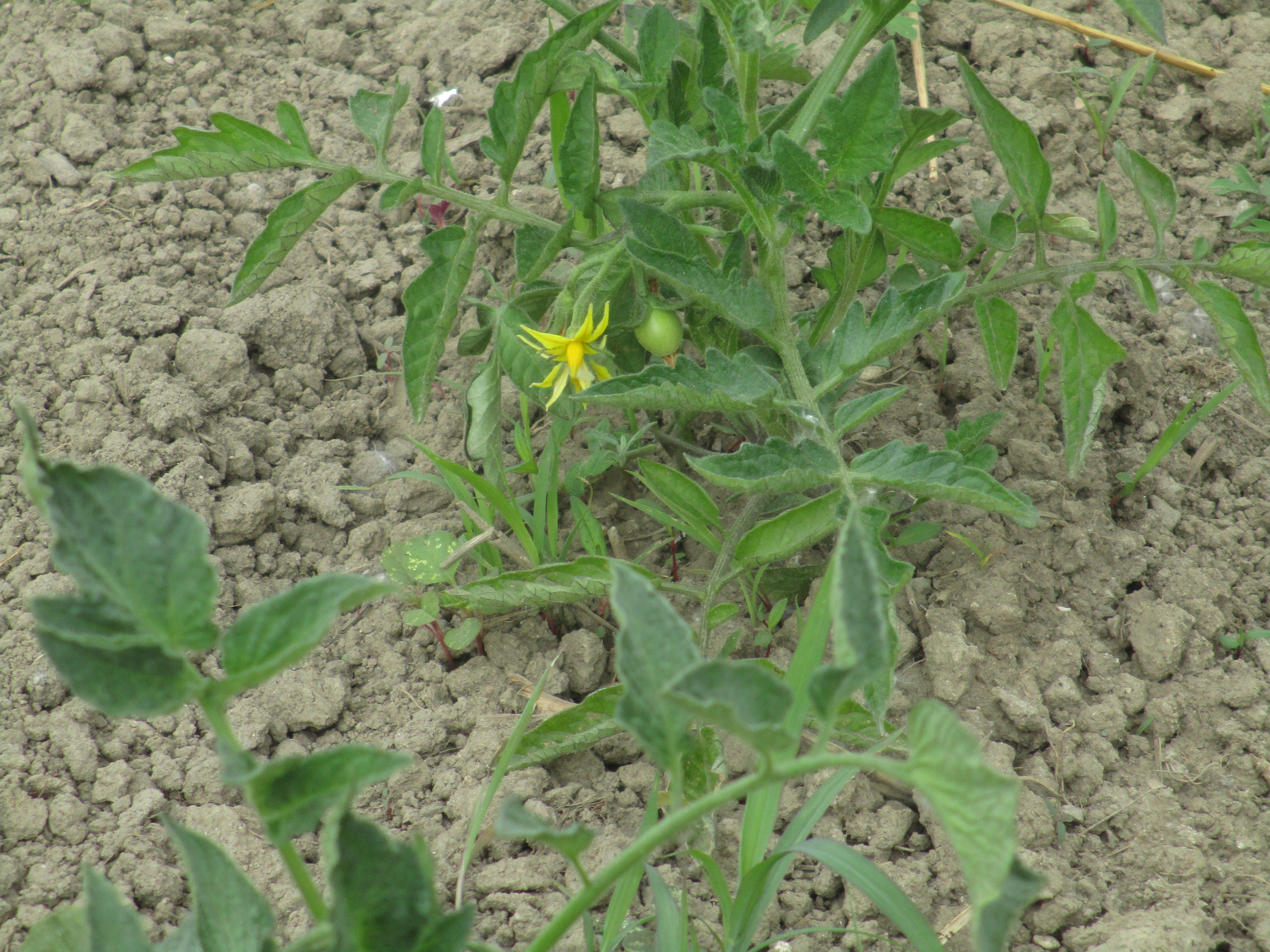
A baby tomato, I would not have noticed had I not been on my knees in the dirt. 🙂
Sweet Peas
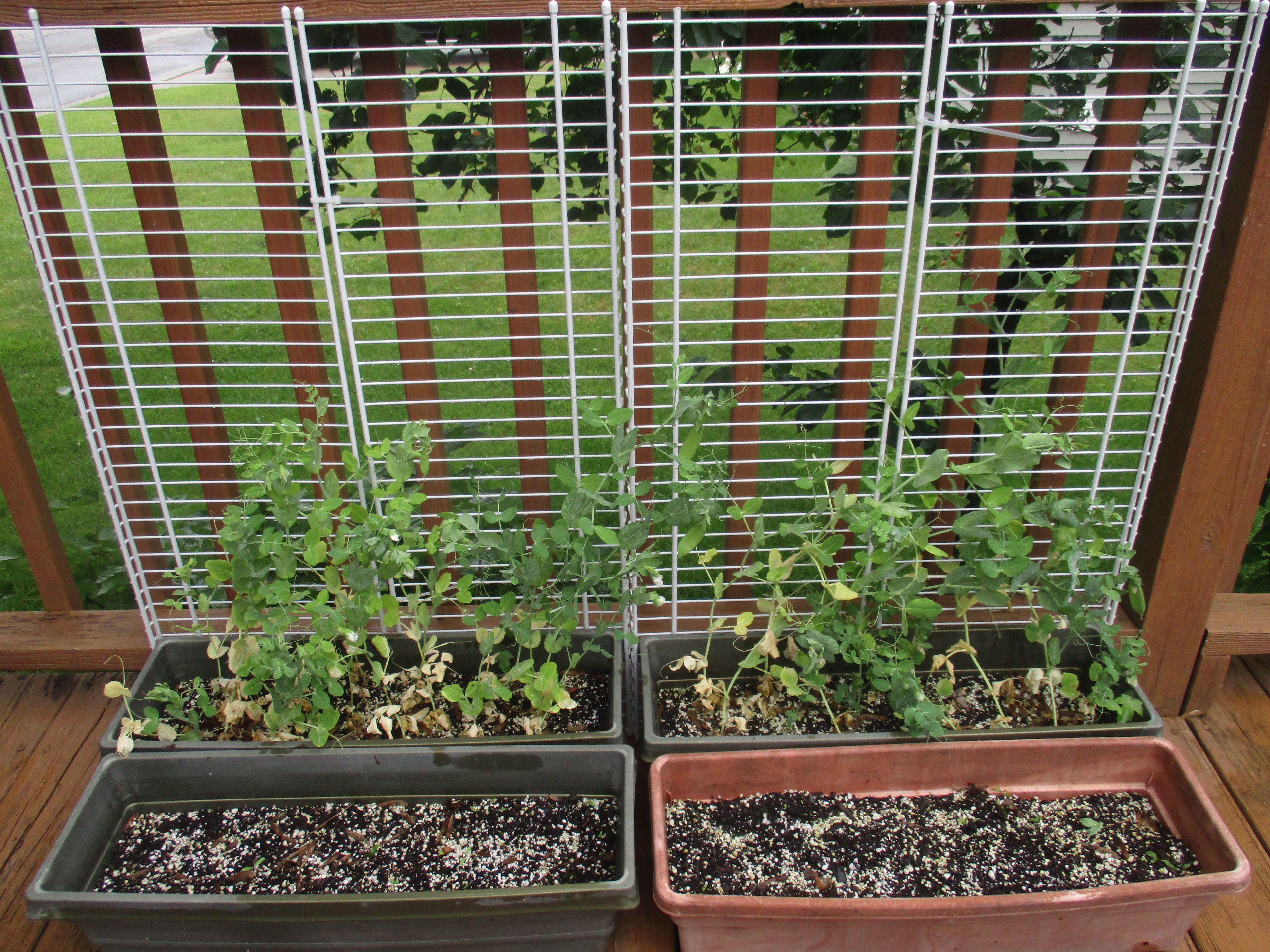
In April I planted sweet peas in two planter boxes on our deck.
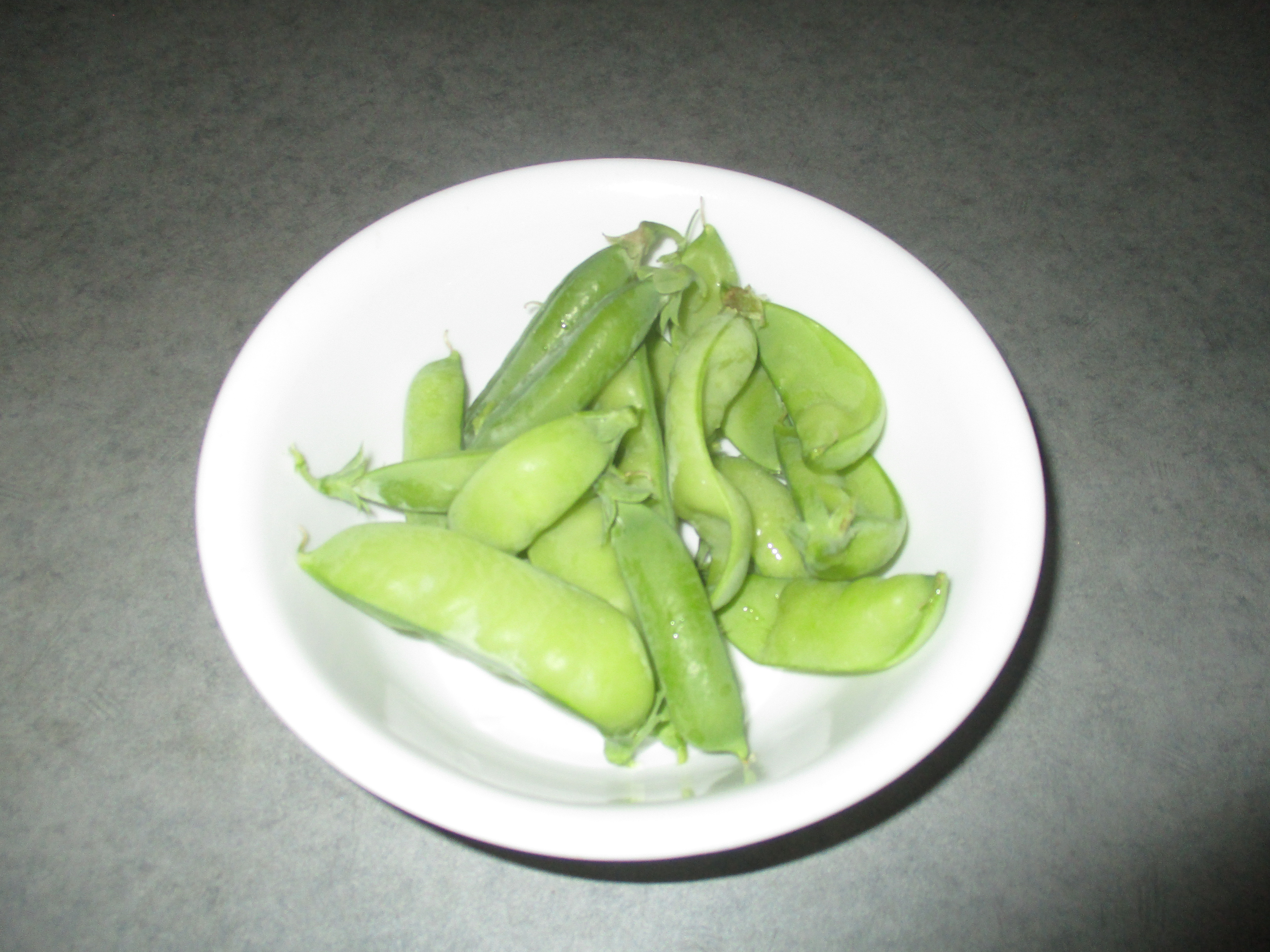
This week’s harvest.
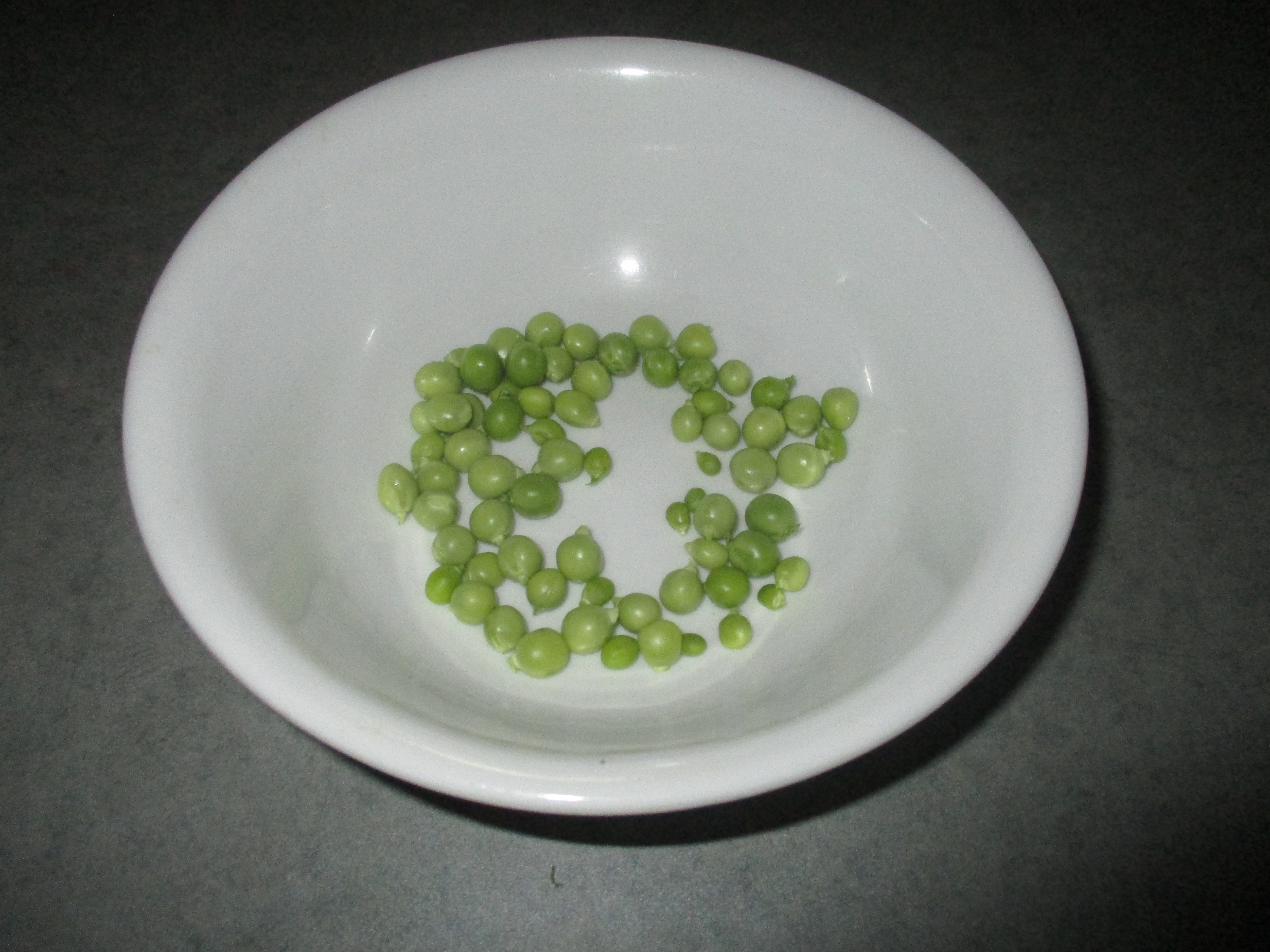
After hulling. We normally don’t grow peas because you have to grow alot to get a decent yield. I ate these raw with my lunch. 🙂
After The Storms
On Wednesday the storms dumped three inches (7.62 cm) of rain on us. We didn’t have any flooding, but the ground was saturated with standing water in areas. We got more rain Thursday, Friday and Saturday.
Our gardens that were doing so well are now struggling. We will likely lose some tomato plants – hopefully not all.
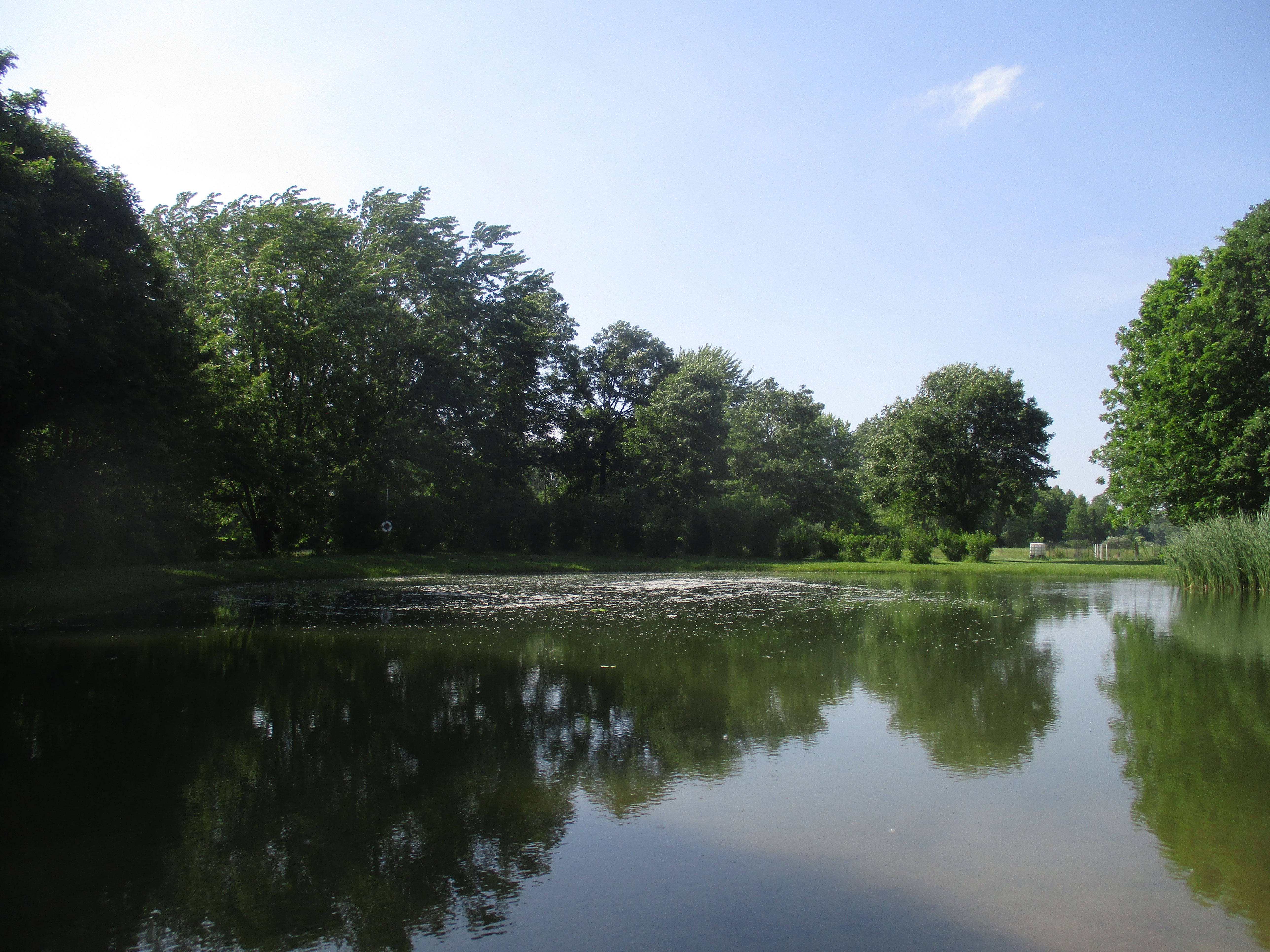
The water level in the pond is up. It is littered with cottonwood seeds but the water is refreshing.
We are currently in the middle of a heat wave, experiencing record high temperatures and intermittent power outages but that’s a story for another day.
Hello and welcome! It’s a beautiful morning and I thought you might like to join me for a walk at the farm.
We are seeing new blossoms every day.
The white phlox that we added to the prayer garden last year are flowering.
The primrose are beginning to bloom.
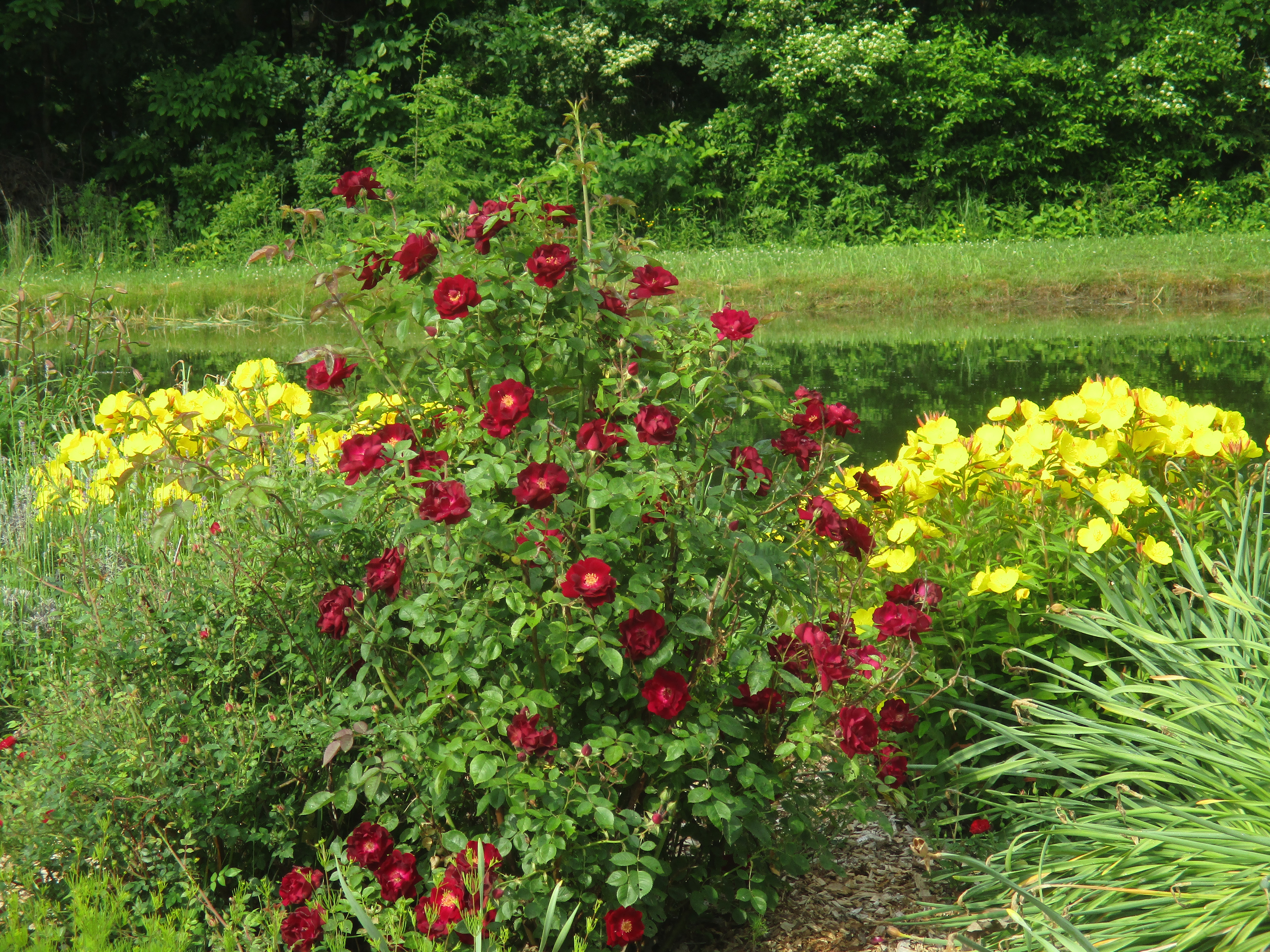
and the roses are blooming.
Our peony has only a single flower this year, but it sure is a beautiful one.
We will be picking strawberries later.
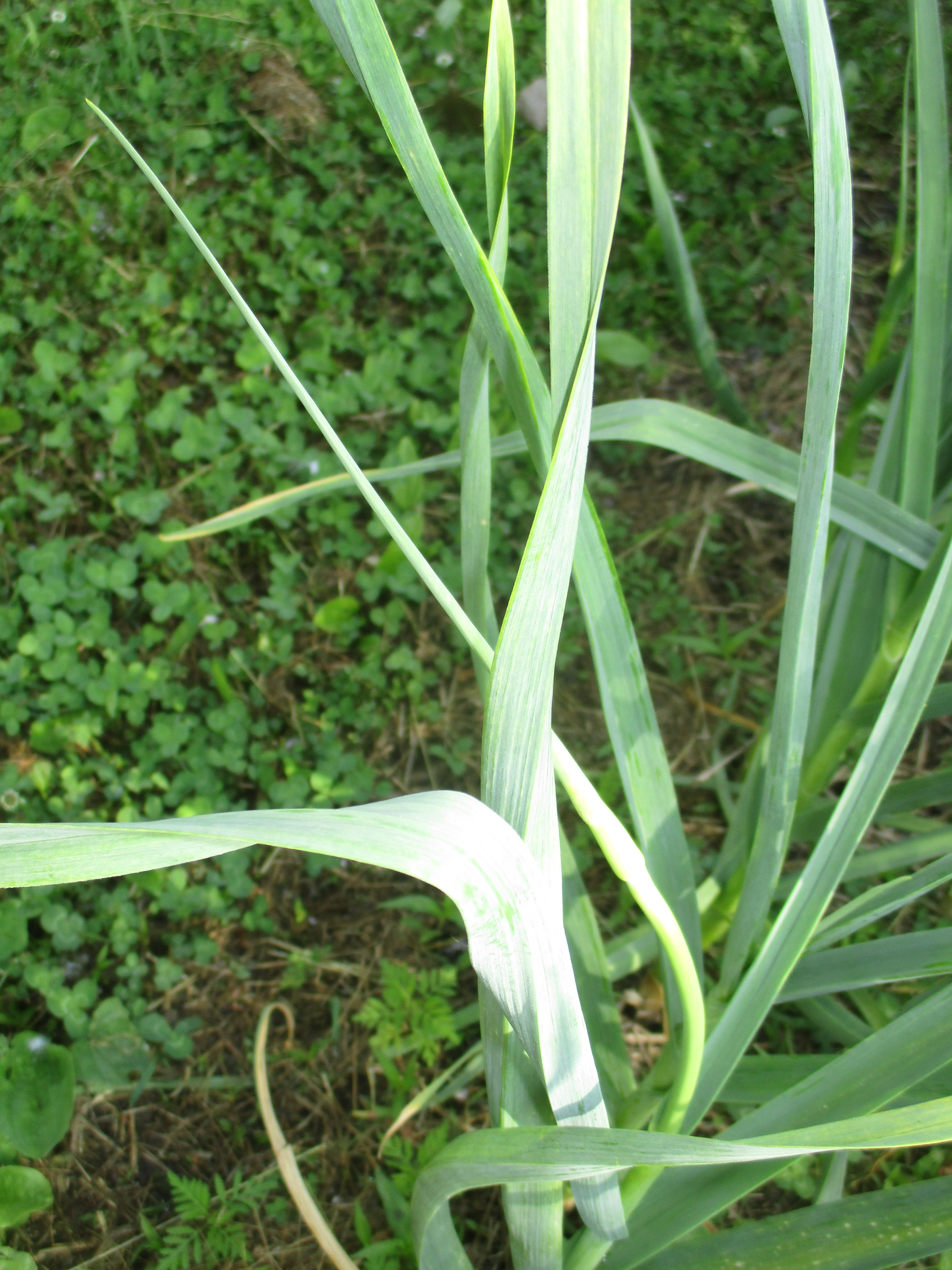
But we won’t be cutting garlic scapes for about a week. The scape is the light colored, curved shoot in the middle. They are just beginning to form.
The wild roses are in full bloom. They are very fragrant – in fact you might have smelled their lovely scent before you saw the blossoms.
Daisies scattered here and there.
A flowering shrub that I have not identified. It does have a light pleasant fragrance.
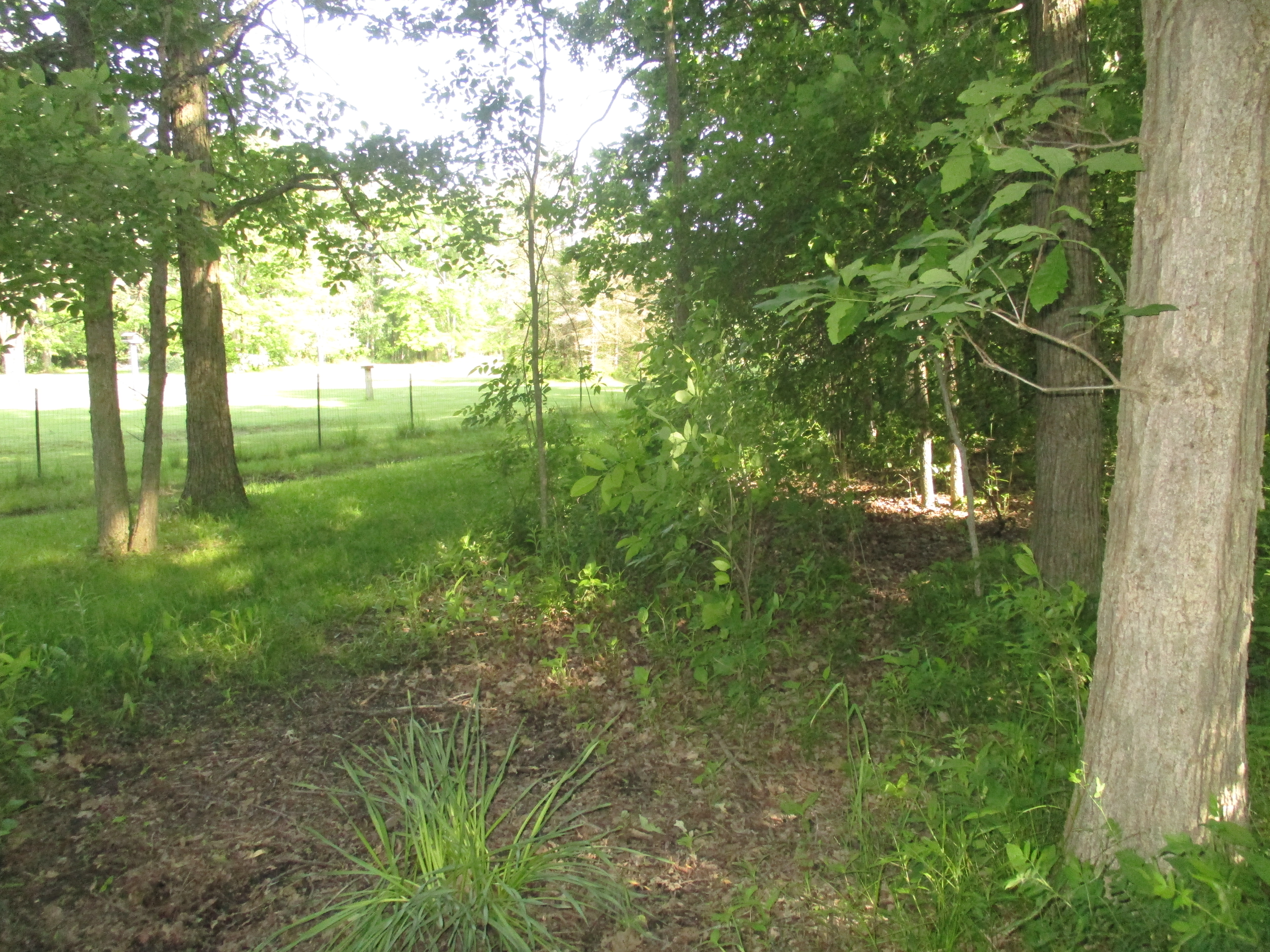
A short stroll through the woods is shady and lush.
Beyond the woods the sun shines on the neighbor’s yard.
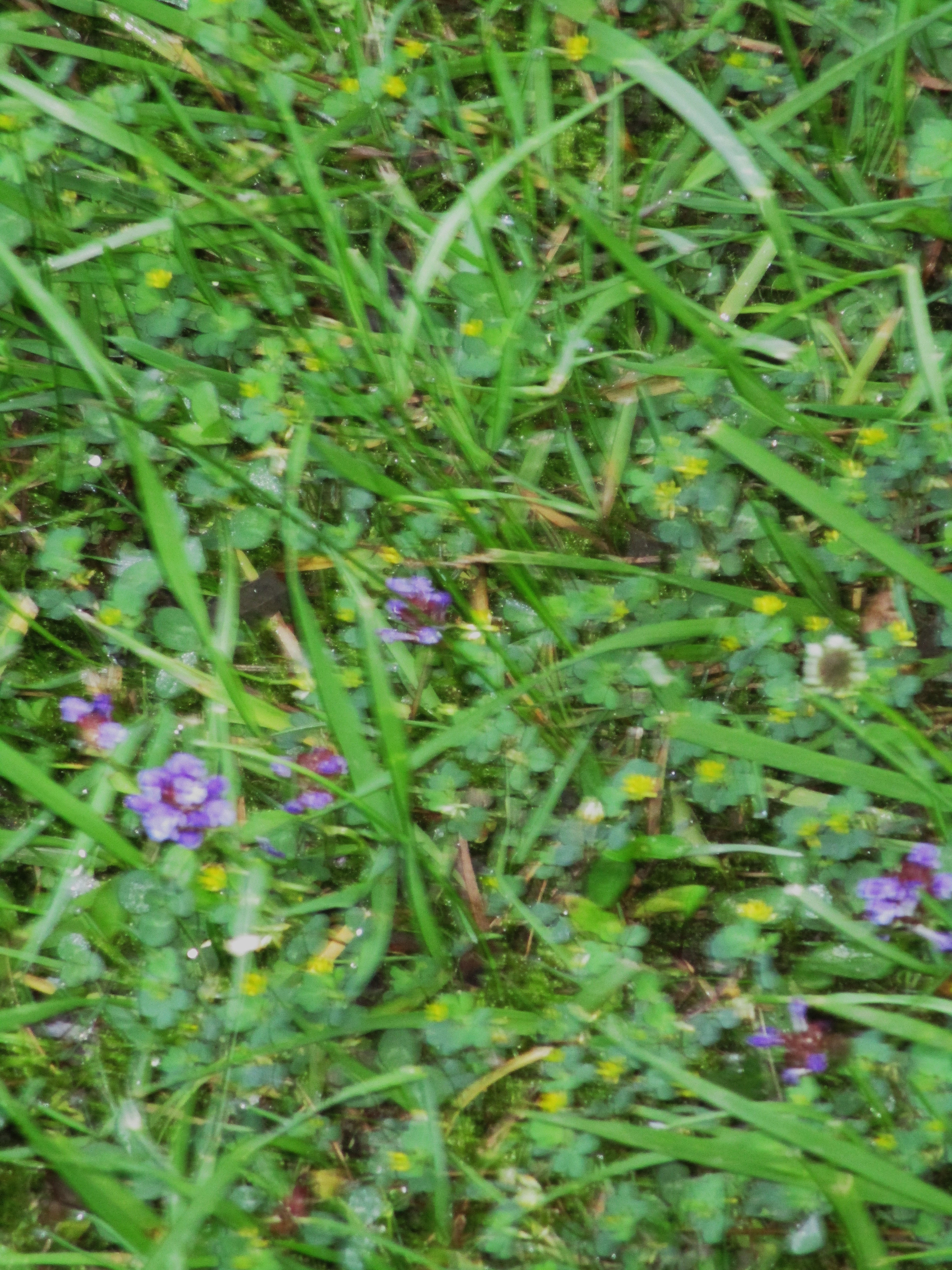
Mixed among the grasses you might notice wild plants such as selfheal (the purple flowers) and black medic (the yellow flowers). Both are edible and medicinal.
Fleabane is a common daisy-like wildflower in our area.
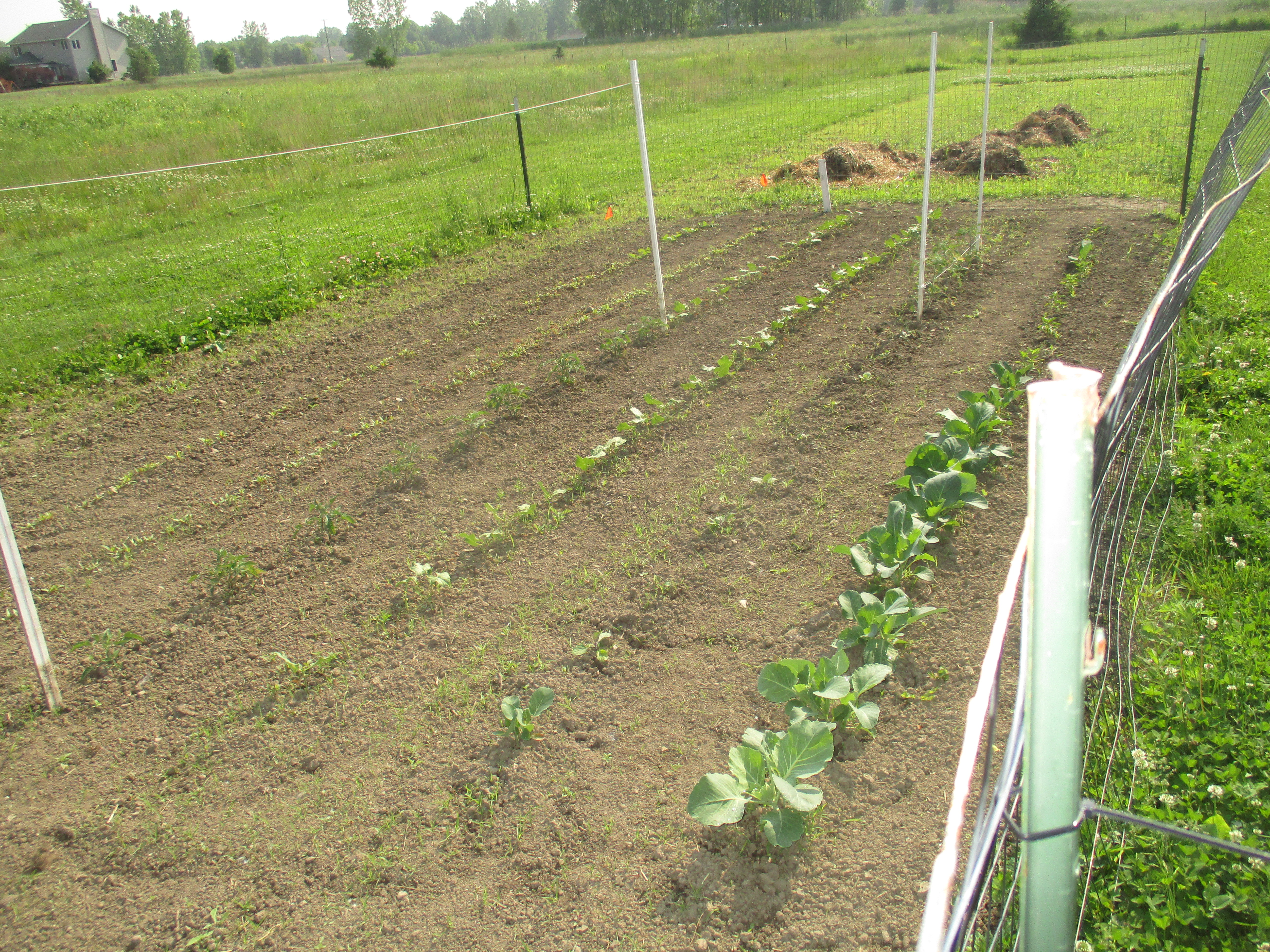
Our gardens are doing well so far. Some of the tomatoes have blossoms already.
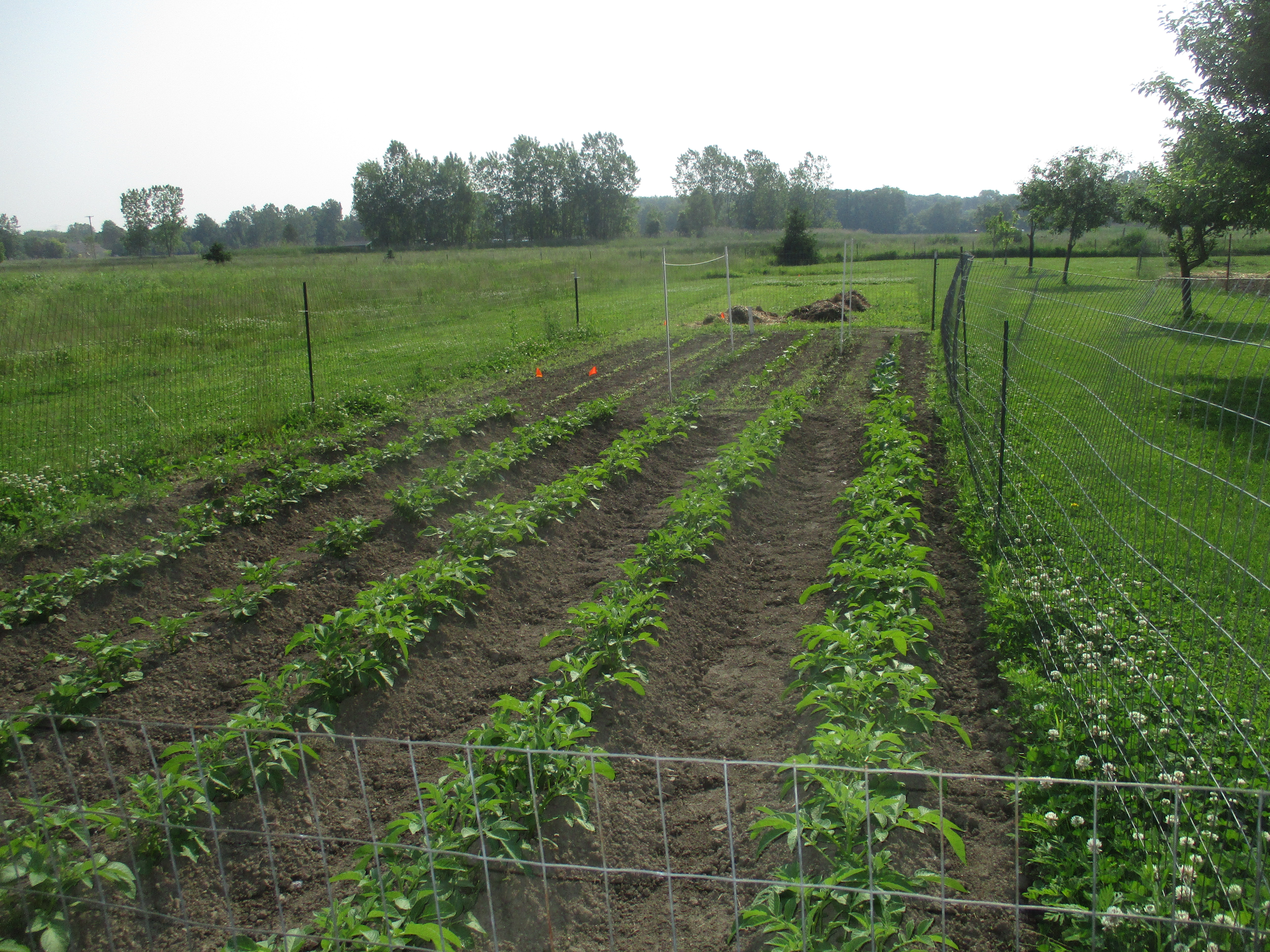
Potatoes are also doing well.
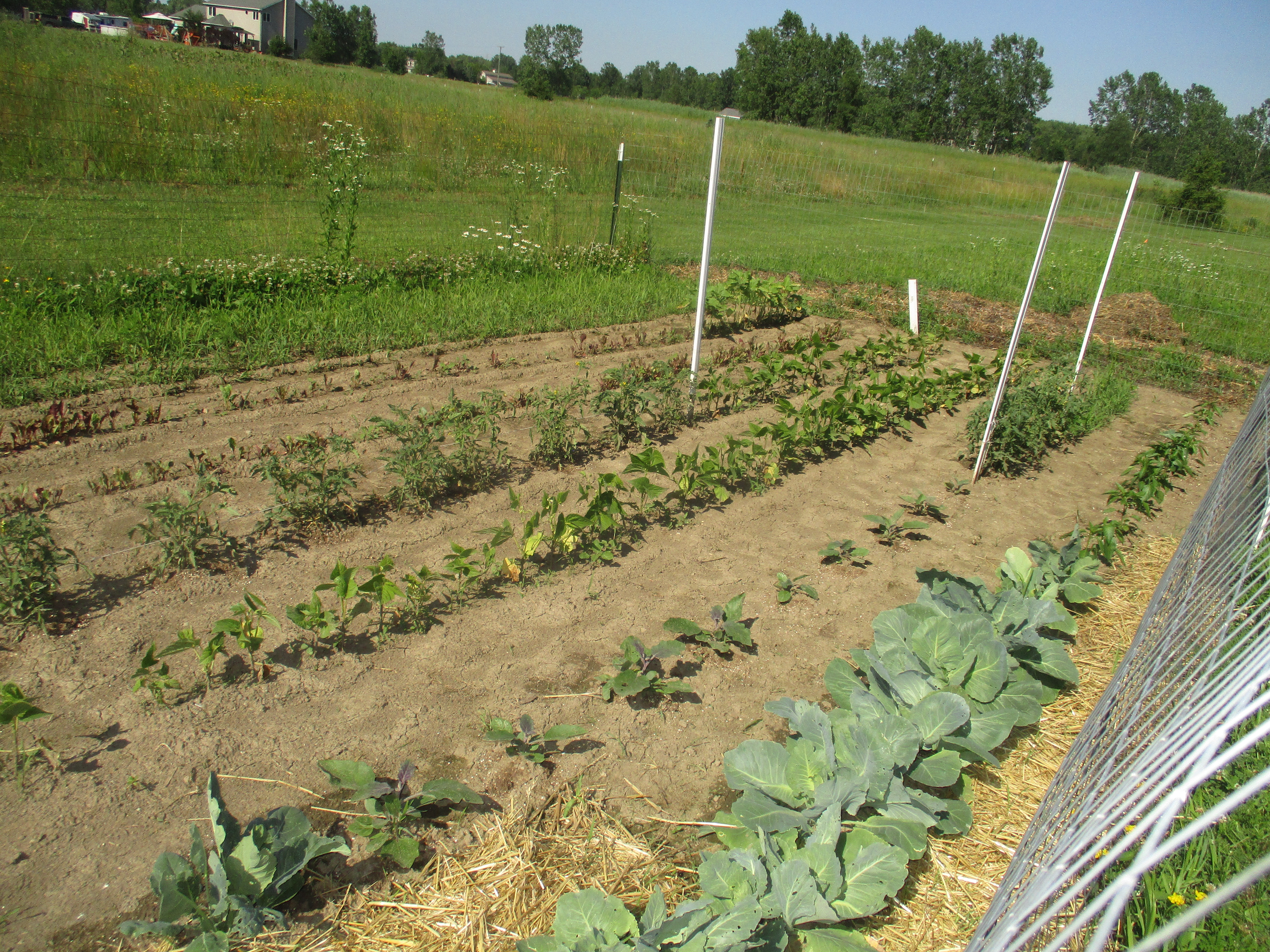
Cabbage is coming along nicely. There are also green beans, eggplant and a few other things in this patch.
Our apple trees are loaded with apples this year. It’s looking like a we may have a bumper crop this fall.
Ripe cherries on one of our new trees. I harvest three wonderful, sweet cherries from this tree. Hoping for a bigger harvest next year.
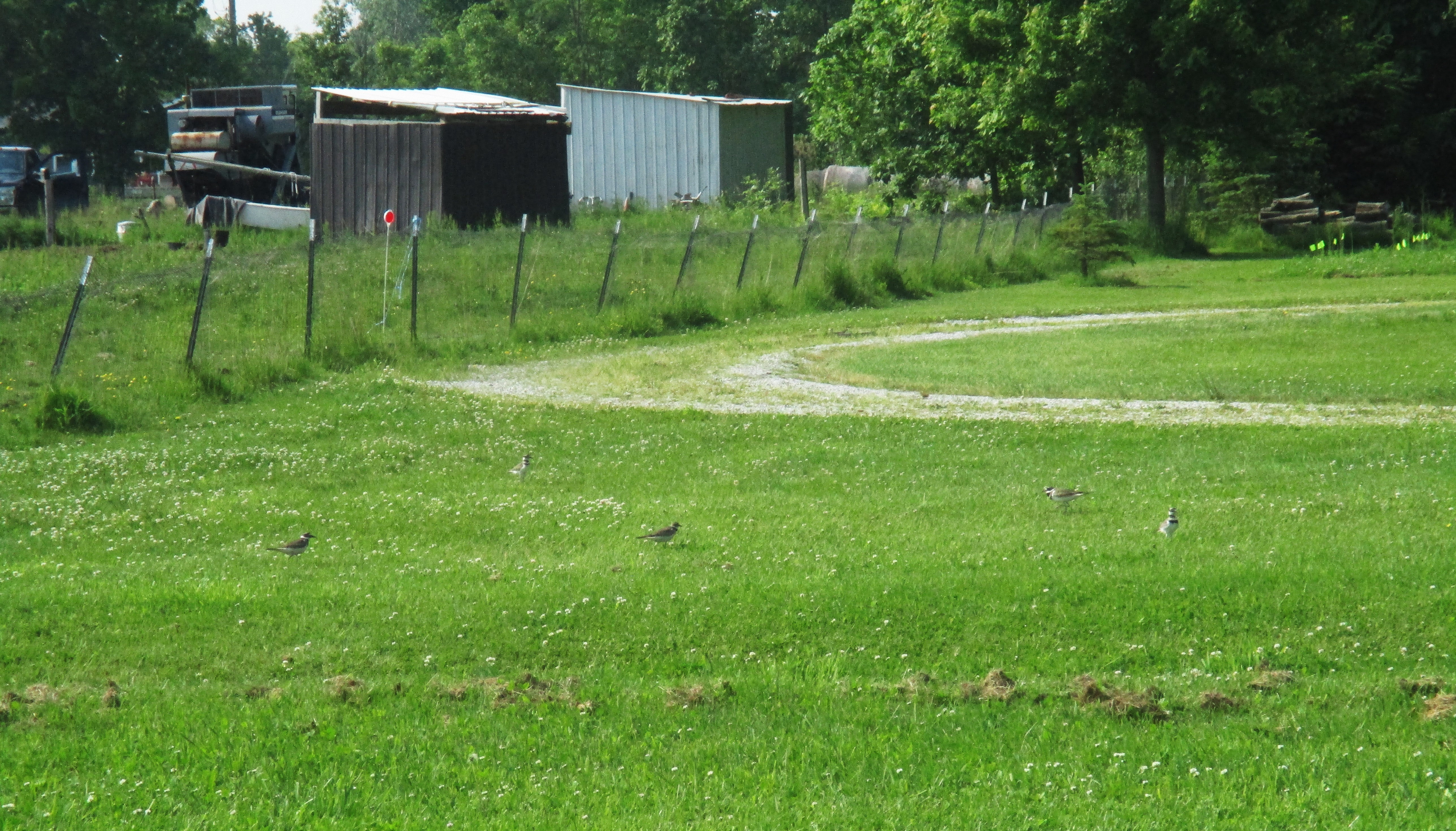
The killdeer quadruplets are still running around. They are nearly as big as the parents so I expect they will be flying off soon.
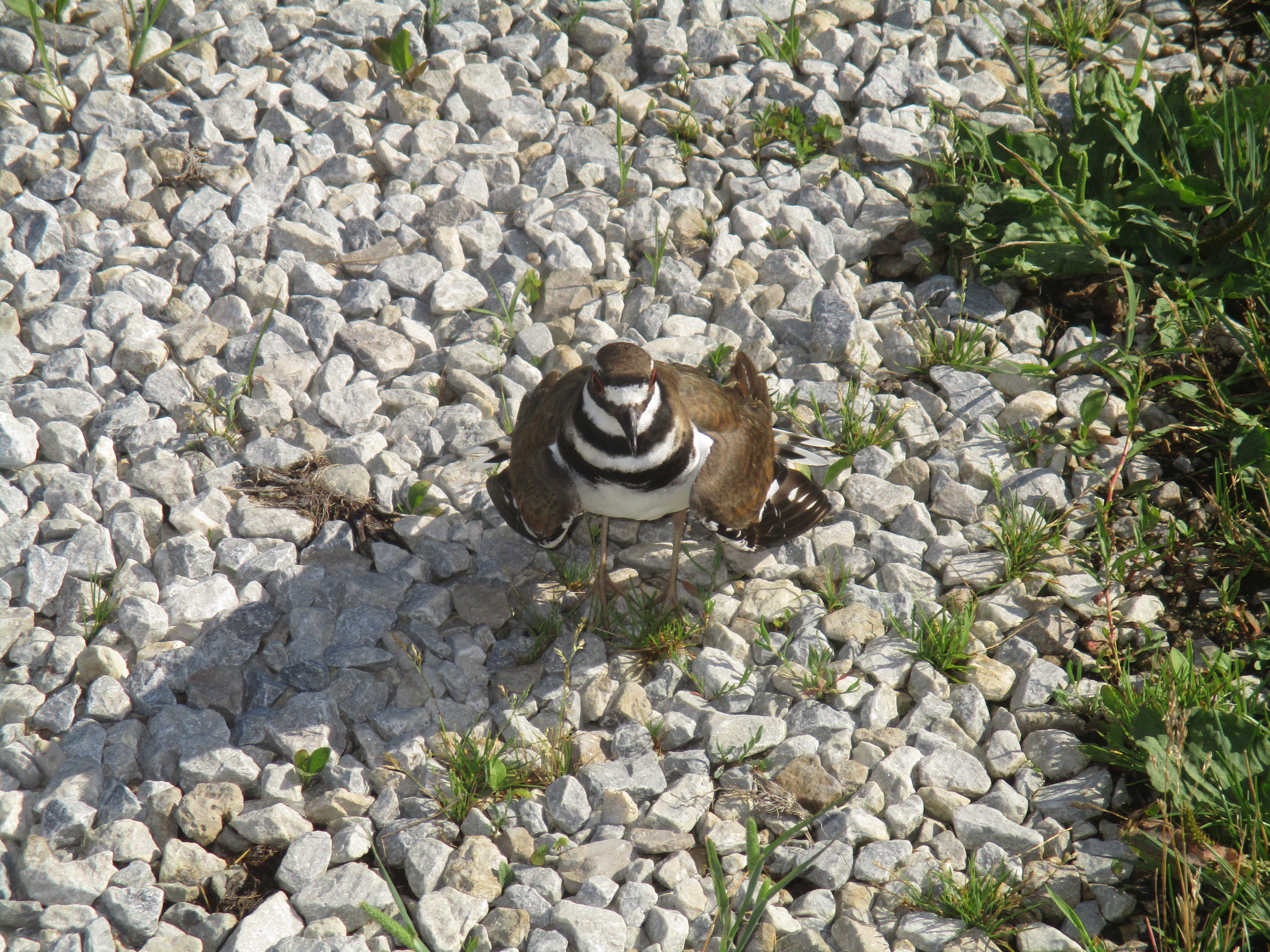
But in about a week this killdeer and its mate, who decided to nest in the middle of our driveway (forcing us to detour around the area) should have four more babies running around.
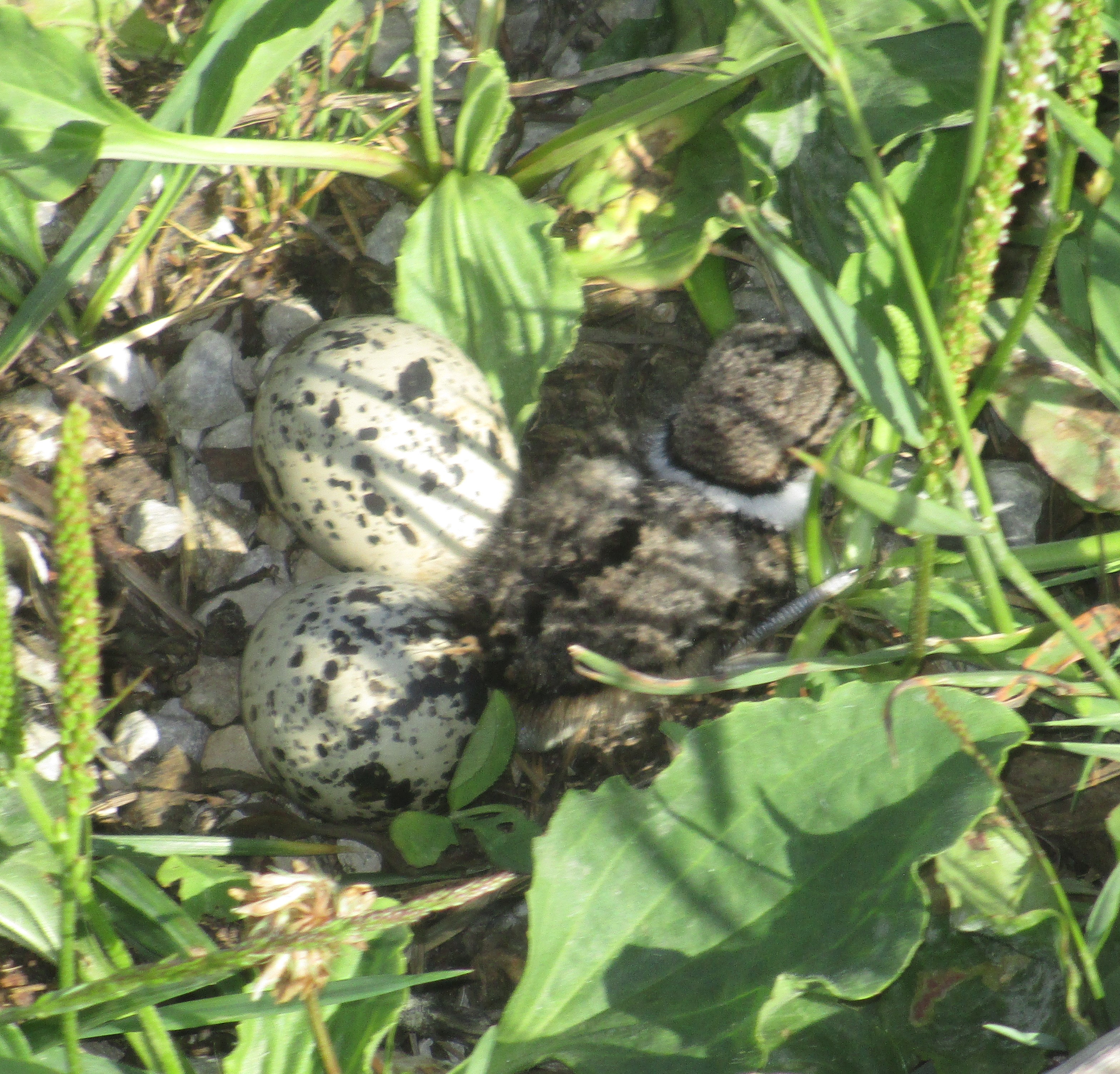
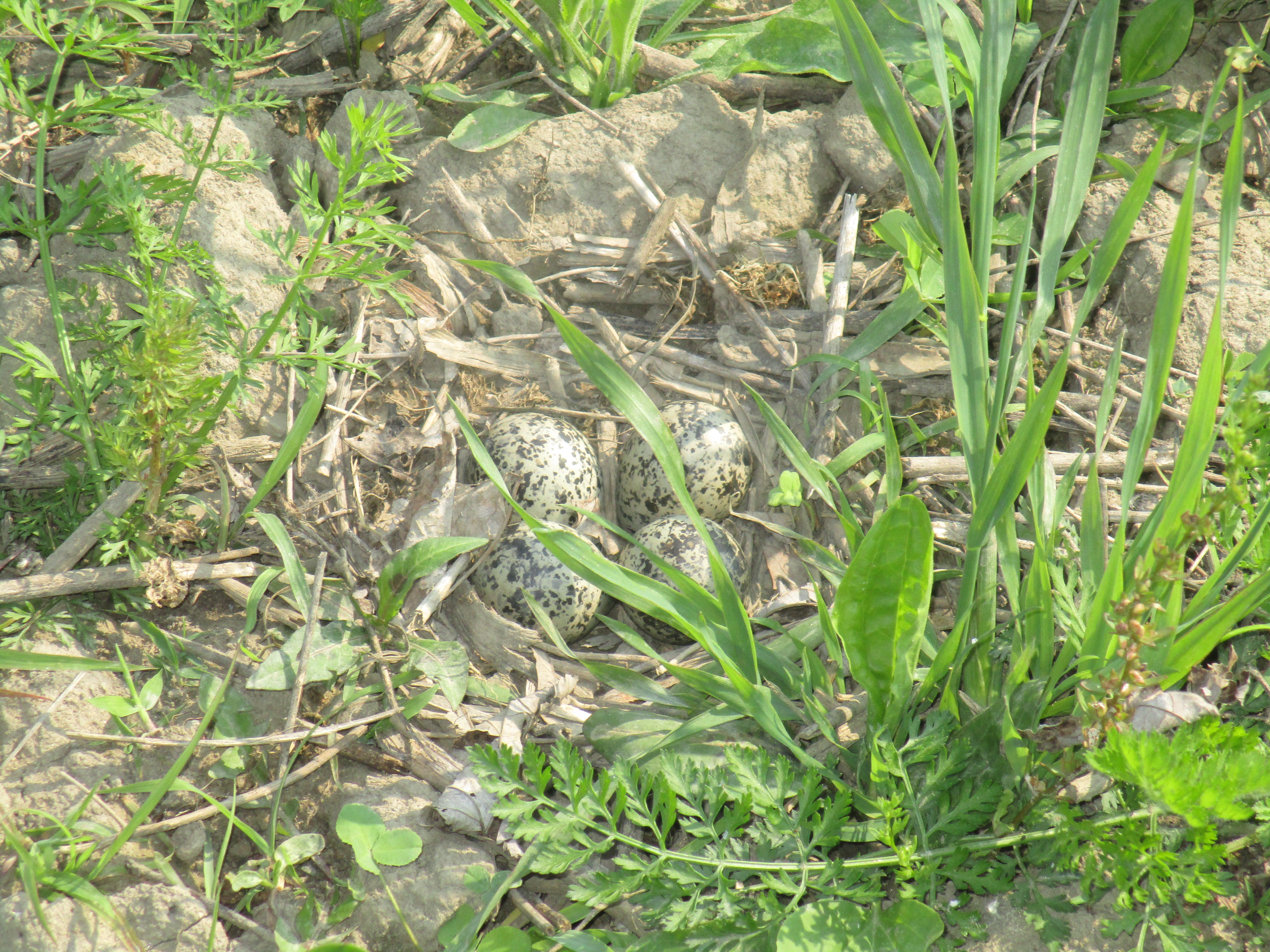
And about a week after that these four killdeer eggs, that are being incubated in an unused area of the garden, should be hatching.
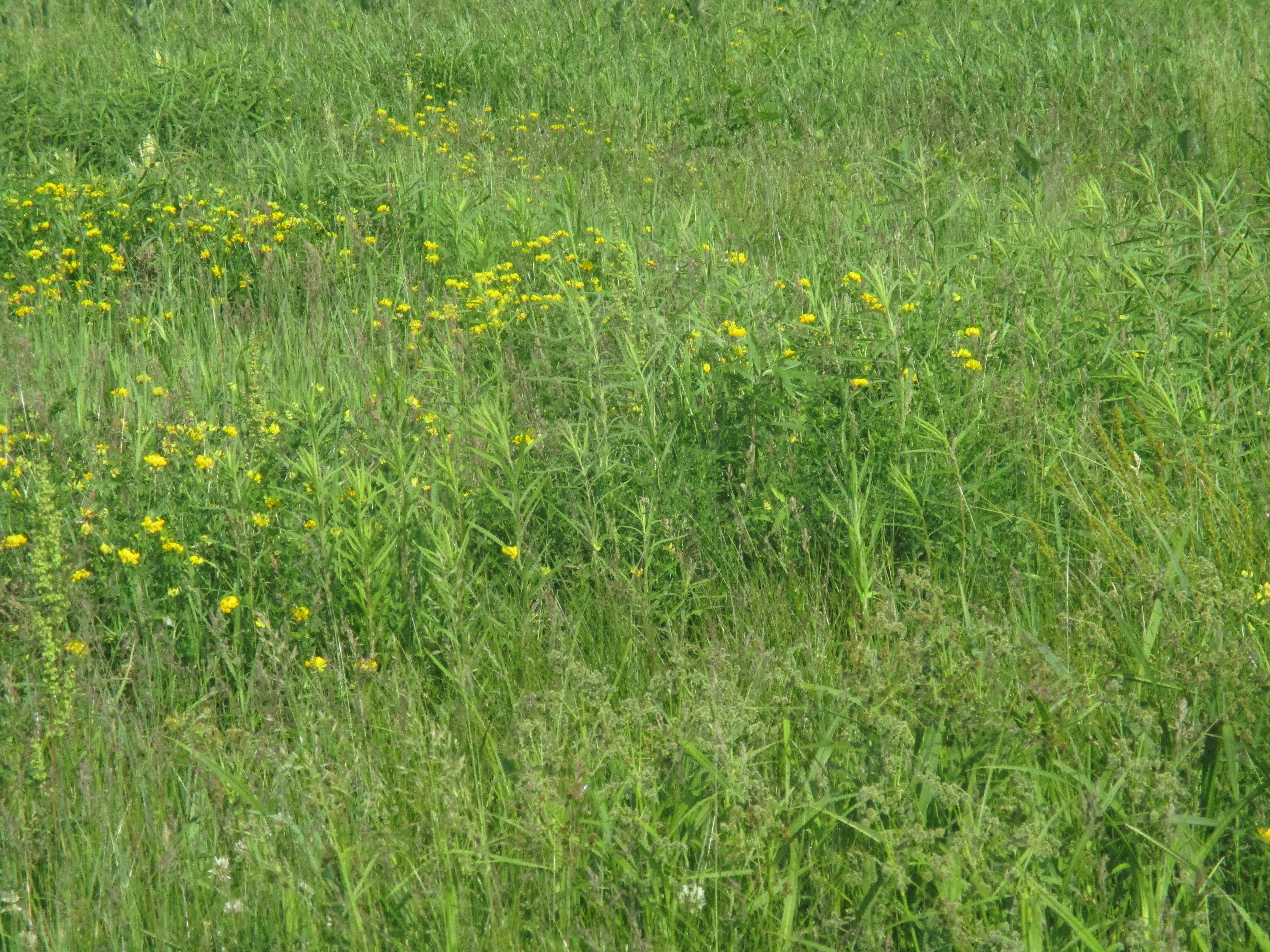
In the back field we see clover,
and these yellow flowers birdsfoot trefoil.
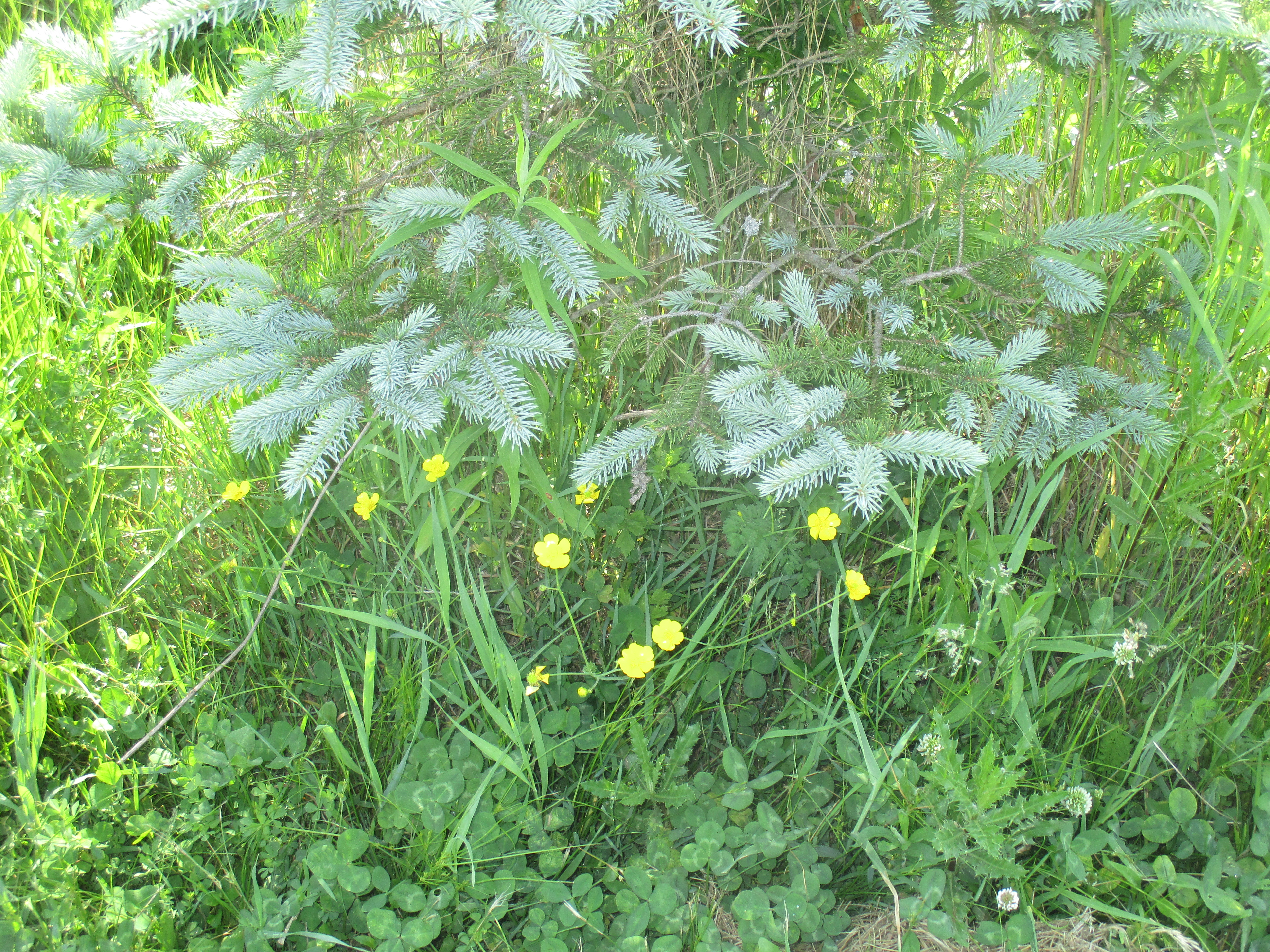
Butter cups under the spruce tree.
And look at those pinecones.
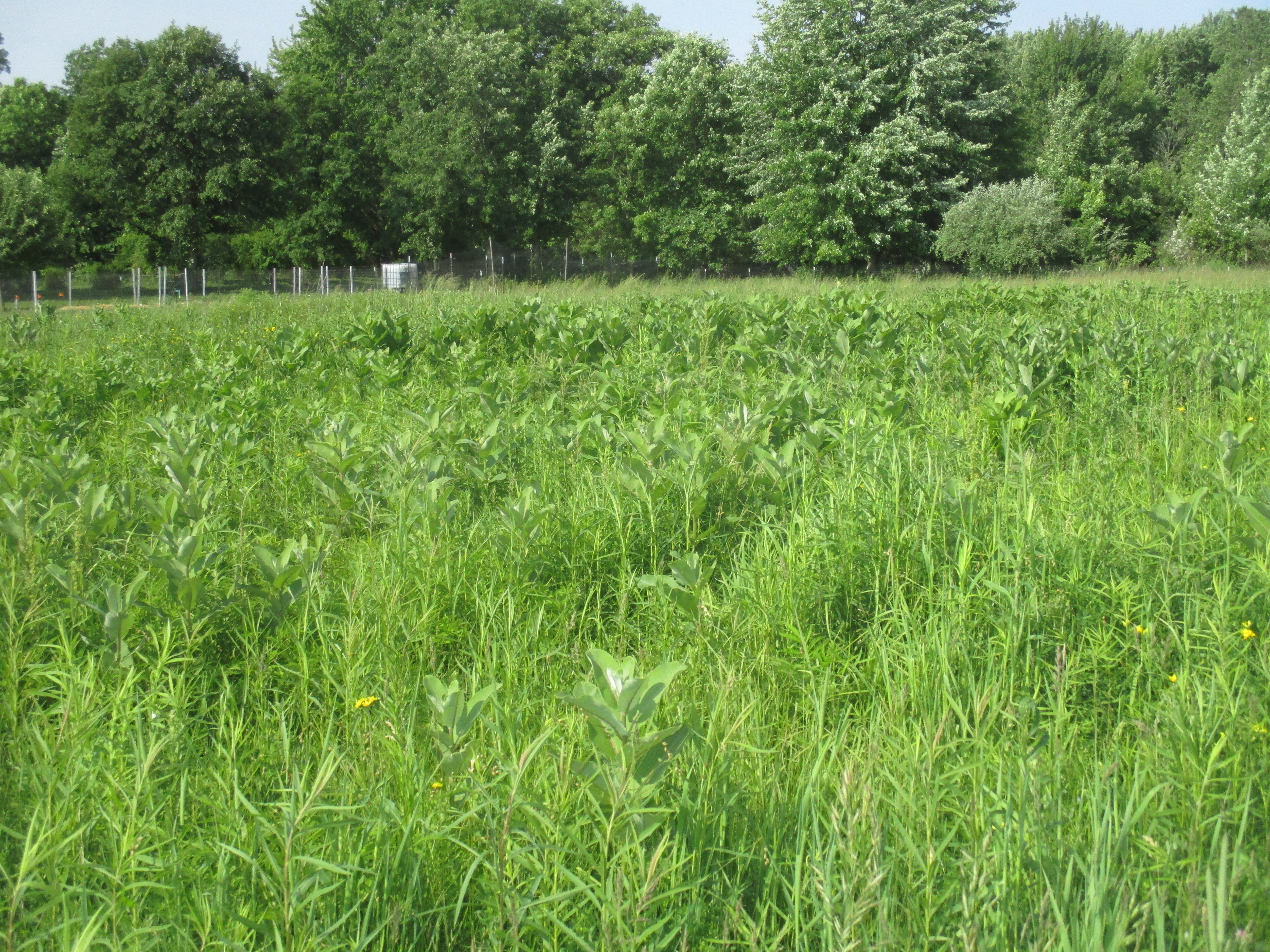
We have a large patch of milkweed in the back field. I have seen a couple of monarch butterflies in the area, so they likely have laid eggs as their caterpillars feed on milkweed leaves once they hatch.
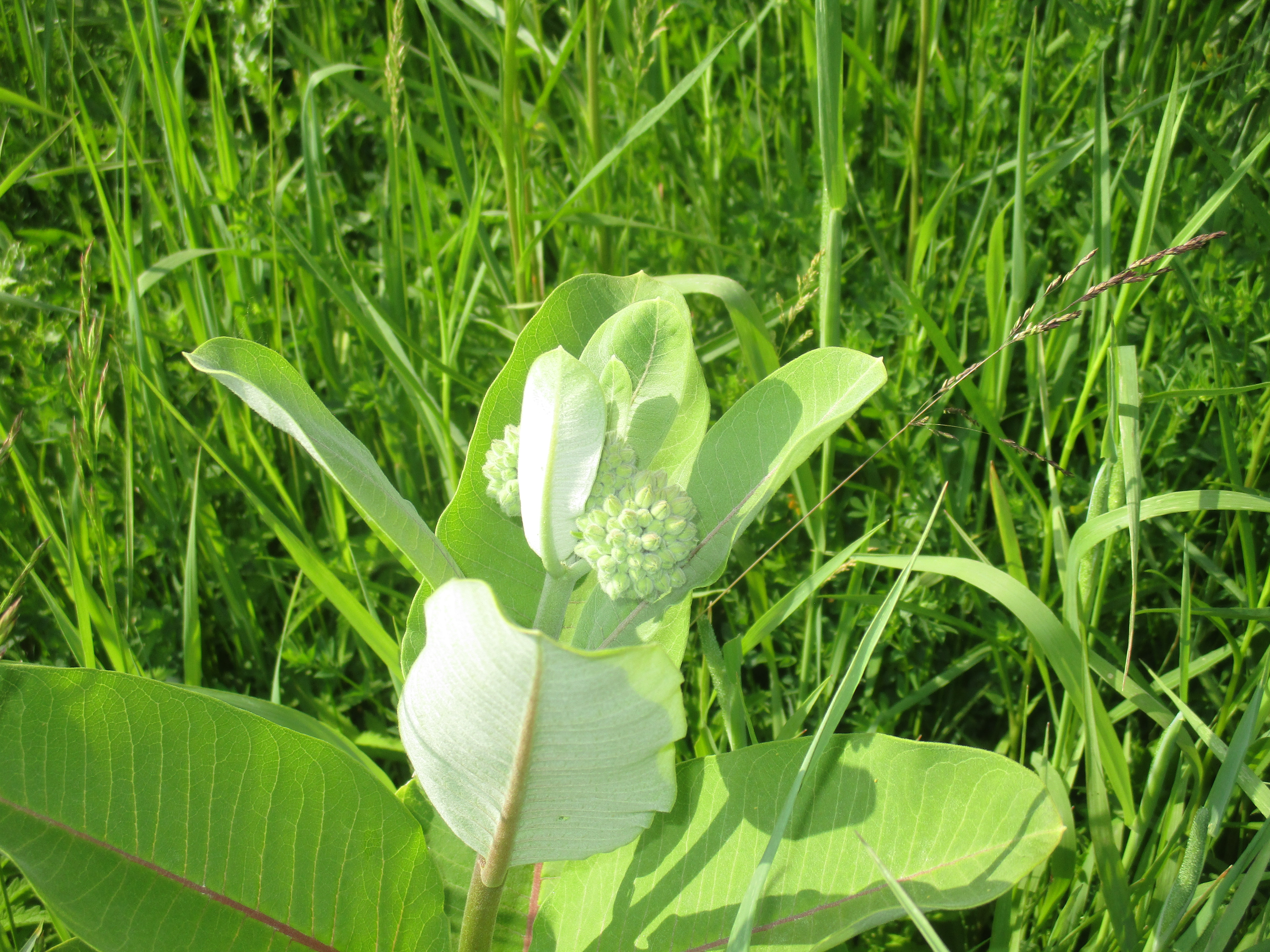
Milkweed.
I believe this yellow flower is called common cat’s ear. It is scattered throughout the field.
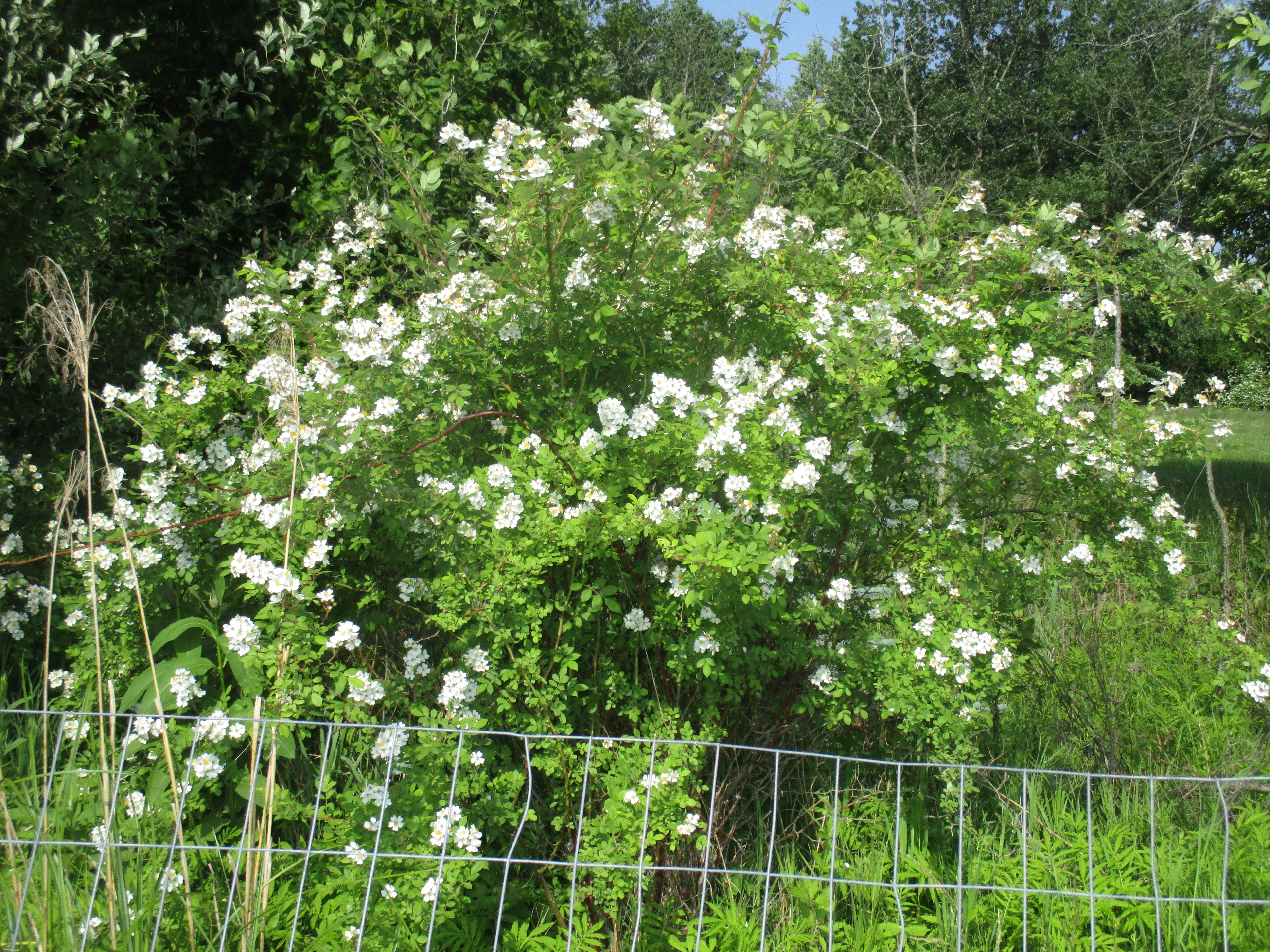
More wild roses in the wood line. Enjoy their lovely fragrance.
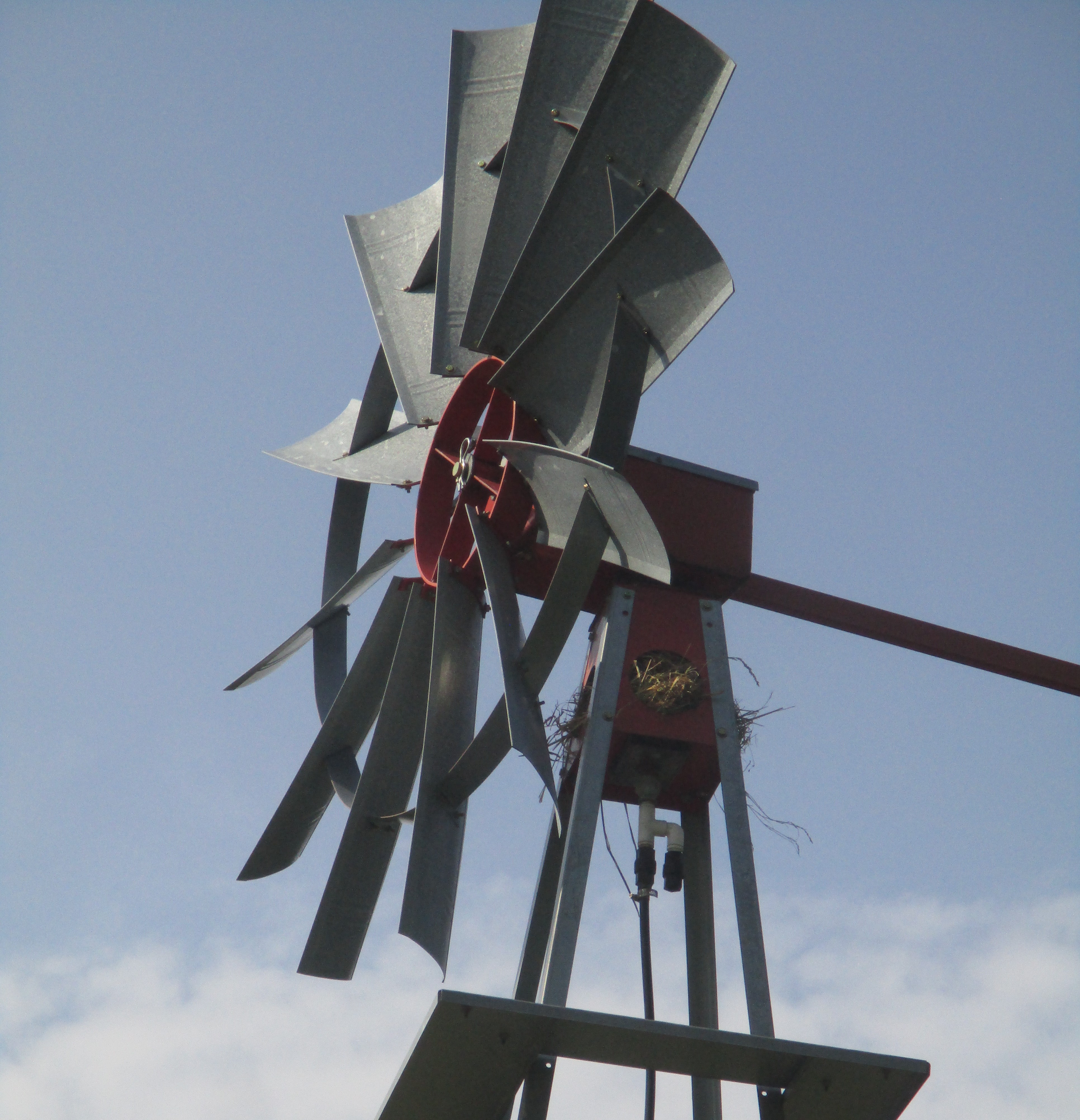
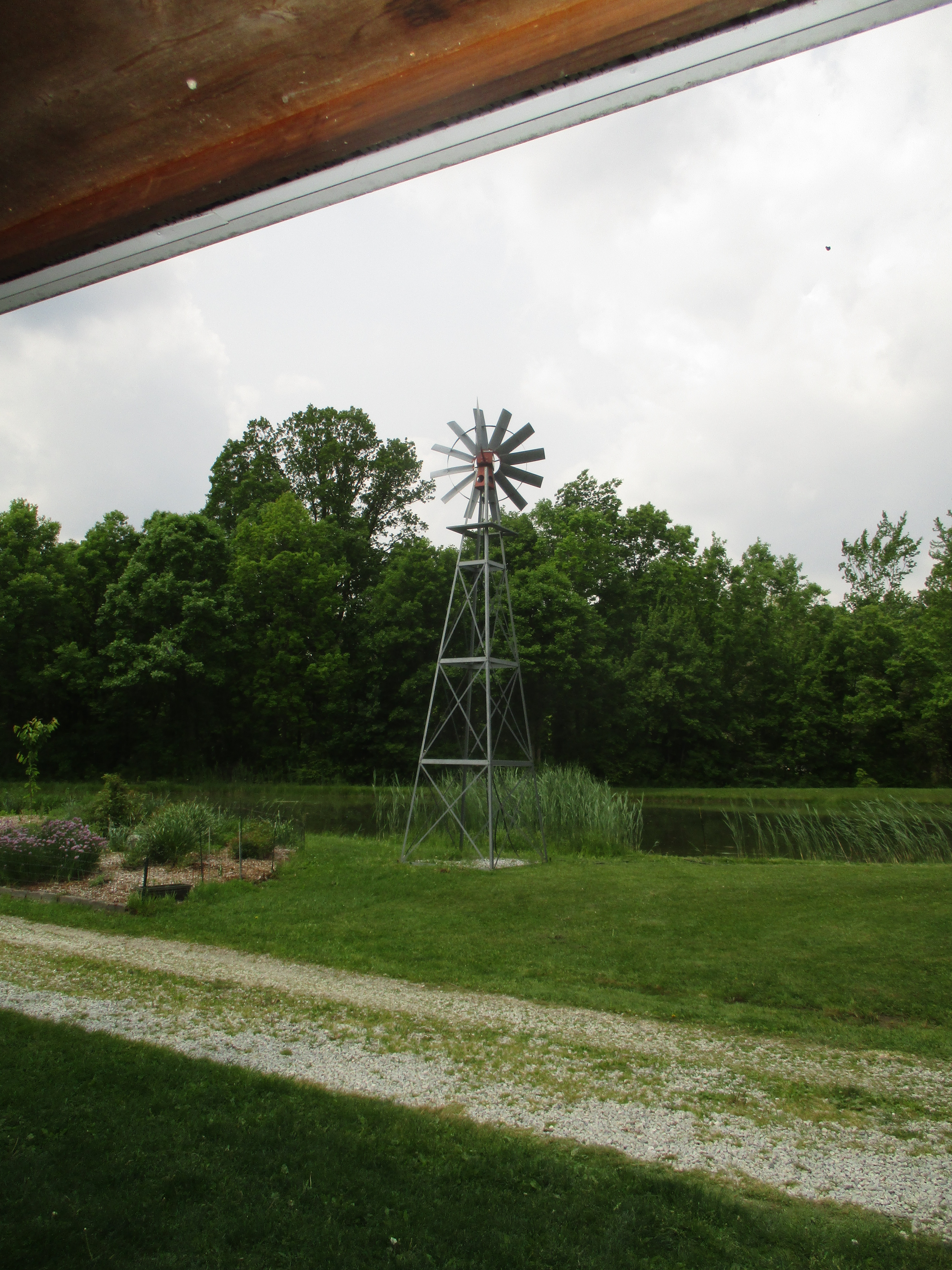
When we arrive back by the prayer garden my husband points out the nest that some birds (sparrows I think) have built in the top of the windmill. That was not there two days ago. Fortunately, it does not interfere with the operations of the windmill.
Thanks for joining me for a spring walk at the farm. I hope you enjoyed it as much as I did.
As a special treat for spending this time with me I am sharing this rare glimpse of the mourning dove who is nesting in the maple tree above our deck. It has been there about two weeks now and I have tried taking pictures many times but mostly I can’t see it through the leaves. I finally got a good photo. I have not seen its mate around, but I read that mourning doves take turns sitting on the nest with males usually there during the daytime and females on the nest at night.
In a previous post I mentioned that we would soon be putting the pump in the pond so we could water our gardens when necessary. I also told you that my husband had said it was my turn this year to put the pump in. Let me start by explaining how this works.
Each spring when it’s getting close to time to put the pump in the pond we have a conversation like this:
My Husband: It’s your turn to put the pump in the pond.
Me: Okay as soon as we have 3 consecutive days of 80-degree F (26.6C) temperatures so the water warms up.
My Husband: Puts the pump in the pond even though the water is still colder than is comfortable.
OR
My Husband: It’s your turn to put the pump in the pond.
Me: No. It was my turn last year.
My Husband: I did it last year.
Me: I know, but it was still my turn last year, so it is your turn this year.
My Husband: Puts the pump in the pond.
THIS YEAR
My Husband: Are you ready to put the pump in the pond tomorrow?
Me: I told my readers I would take pictures and blog about it. I can’t take pictures while I’m in the pond.
My Husband: Puts the pump in the pond.
The truth is while I know how to put the pump in the pond and could probably do it if I had to, it’s one of those jobs that my husband is willing to undertake. (He’s a great guy!)
Dual Purpose Windmill
If you’ve been following my blog for a while you have likely seen pictures of our windmill. Some readers might also remember that our windmill is used both to aerate the pond and pump water out of the pond for irrigating our crops.
Aeration
The windmill works to aerate the pond year-round.
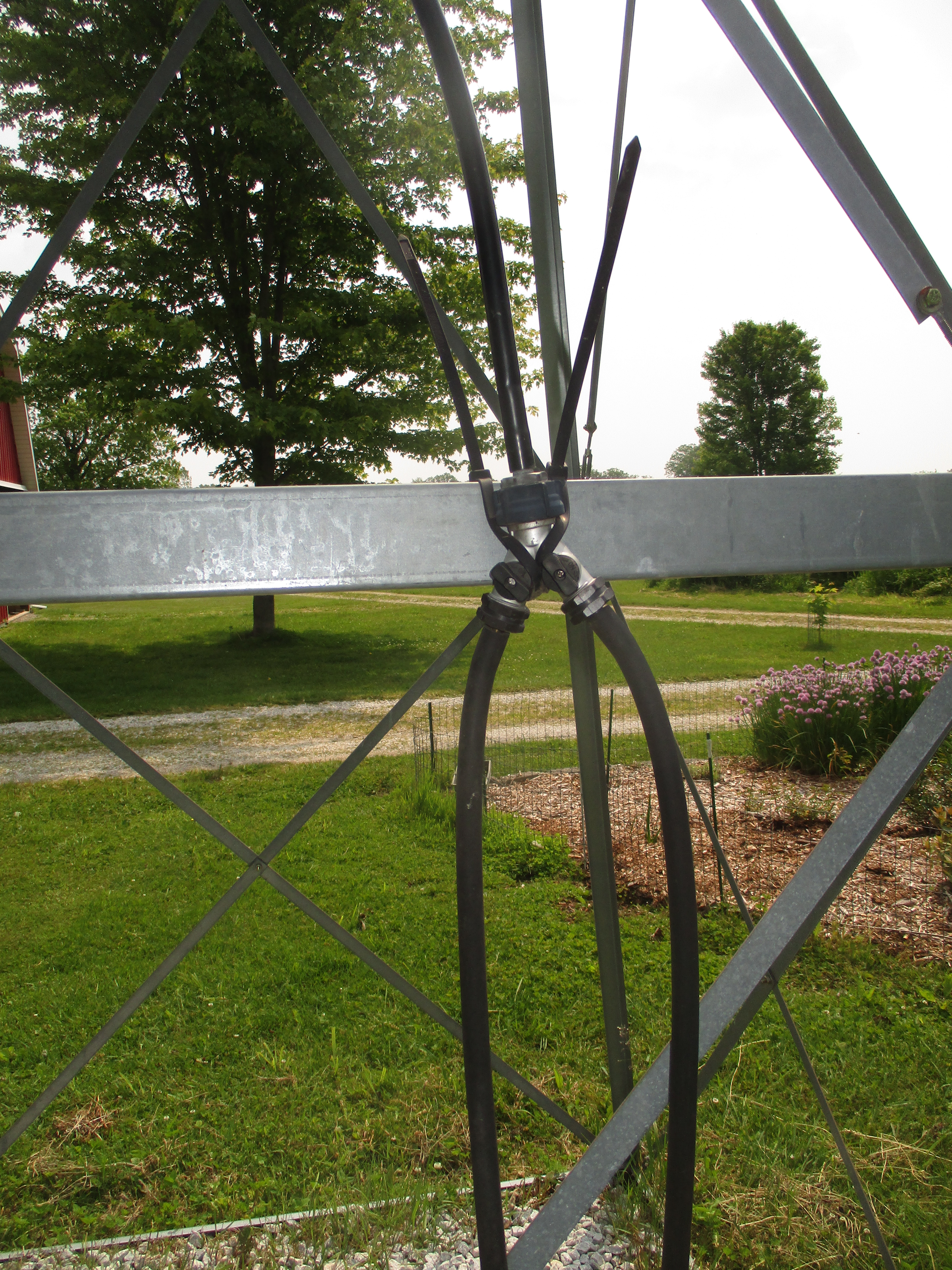
In the above photo the bubbles in the water are cause by the windmill.
In the above photo the hoses attached to the windmill run down into the pond where they are attached to porous devices called stones. We have two stones located in different areas of the pond. When the wind makes the windmill turn, air is pumped through the hoses and comes out the stones and into the water, thus providing much needed oxygen.
Irrigation
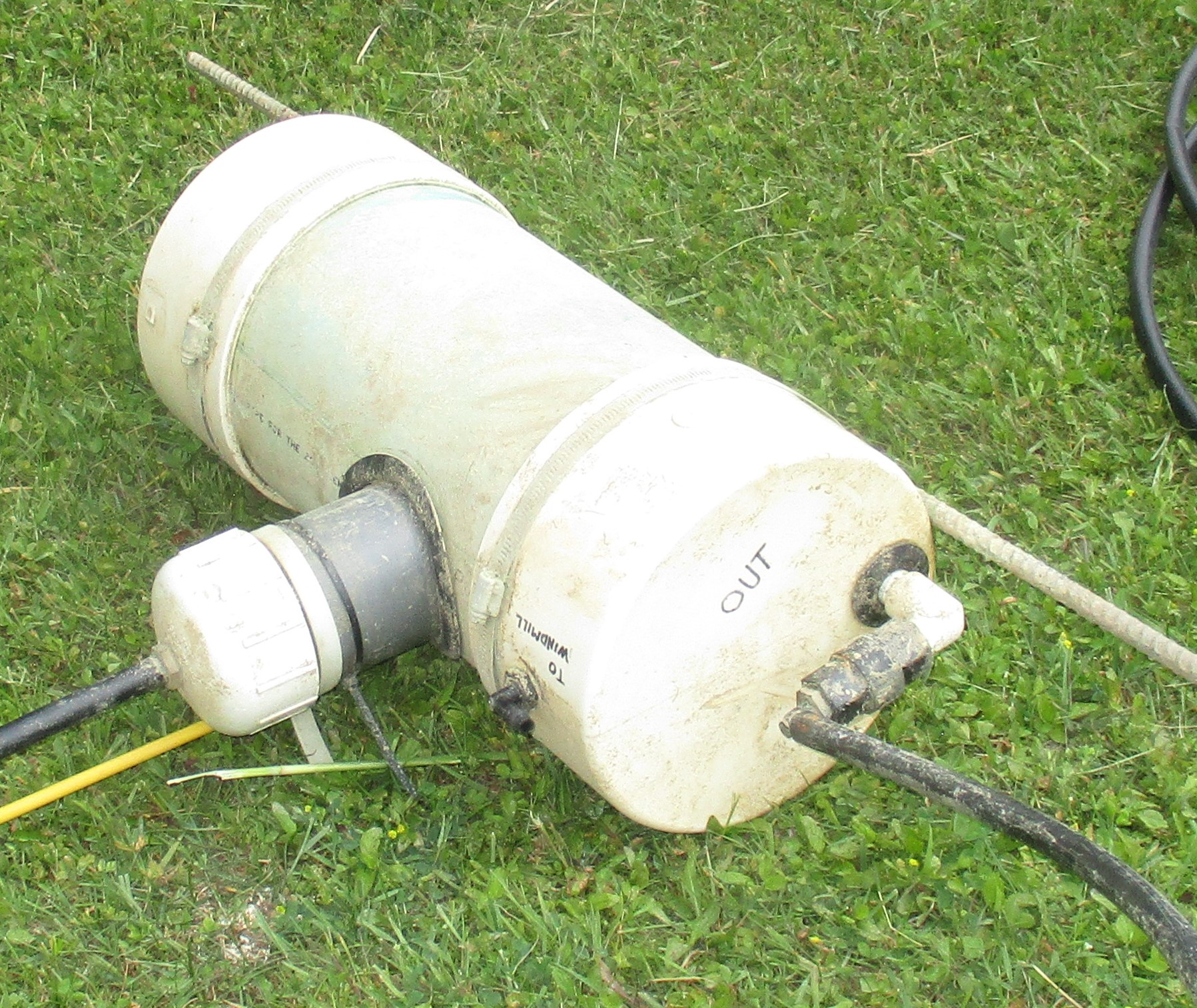
We only pump water for irrigation during spring and summer (the growing season). This year we put the pump in the pond on Wednesday, June 4. Below is a picture of the pump that we use in the pond.
Notice there are two valves. The one to the left is marked “To Windmill” (the words are upside down in the picture). A hose attaches to that valve and the other end of it attaches to one of the valves on the windmill. We unhook one of the aeration hoses since we do not aerate and pump water out at the same time.
The valve on the end is marked “out”. That is where the water is pumped out. A different hose is attached to that valve.
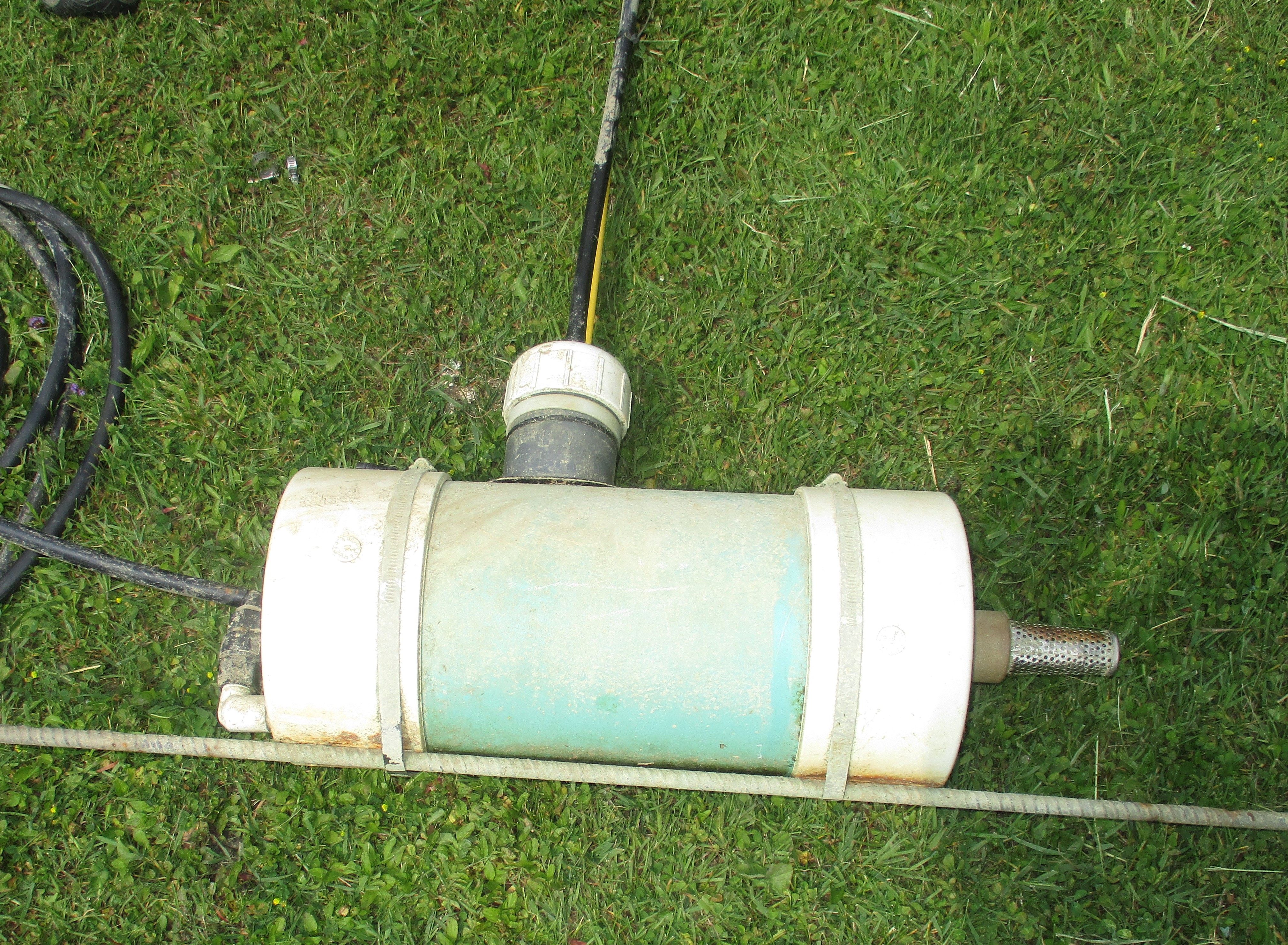
That metal piece on the right end has many small holes in it and is where water flows into the pump. The tube attached to the cap-like piece on the top is a vent.
When the pump is in the pond, bricks are placed on top of that long bar attached to the bottom to hold the pump in place.
Both hoses are attached before the pump is put in the pond.
This year the water wasn’t too cold. The pump will be fully submersed in several feet of water
expect for the vent tube.
I regret that I can’t show you, or tell you, how the magic works inside the pump. I just know that when the windmill pumps air in, water comes out. If the windmill is not turning, water does not come out. Also, when the windmill starts turning again a small amount of water squirts out the vent tube in the pond.
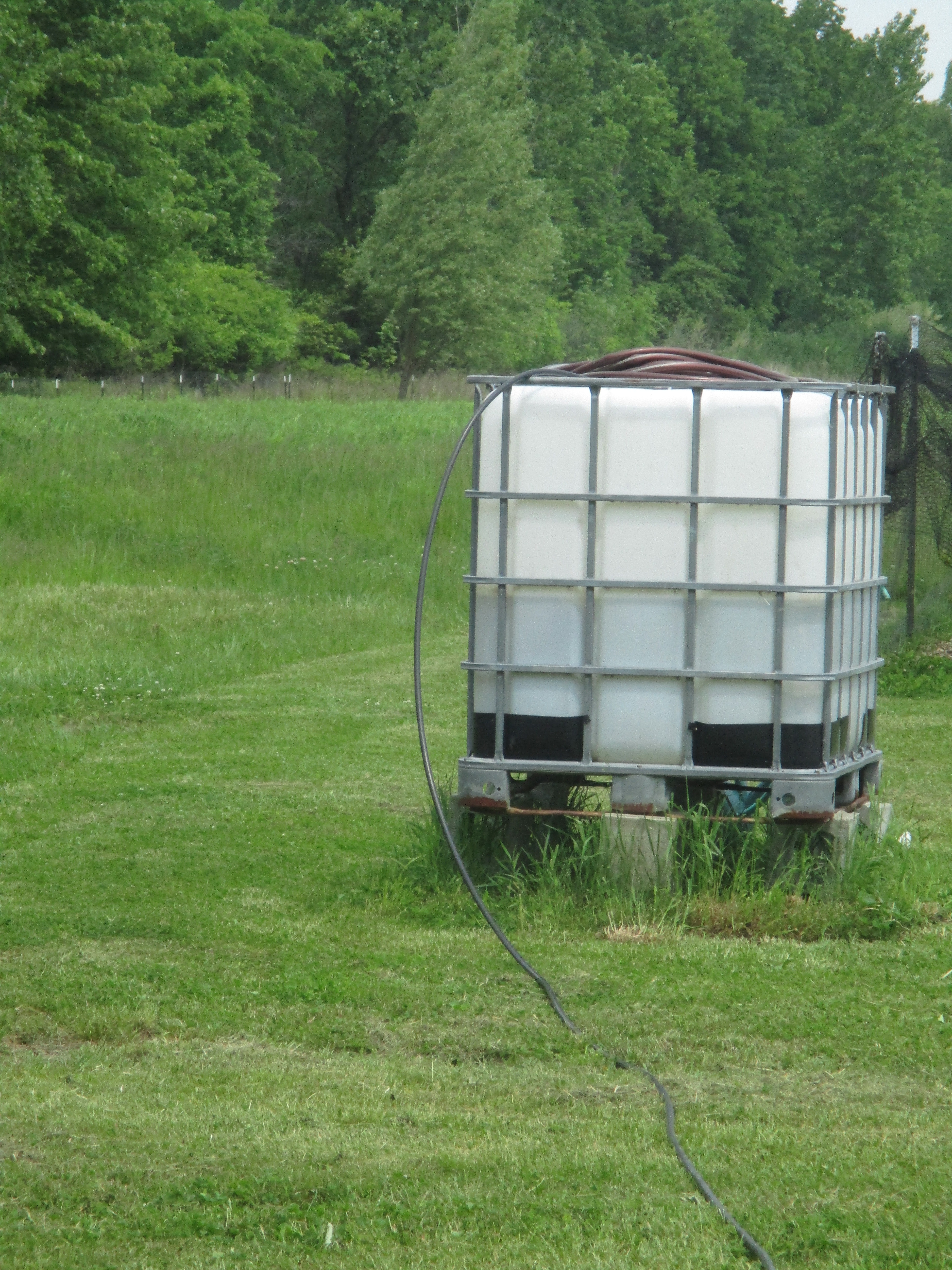
The hose that the water comes out of is run to one of our holding tanks. We have three tanks strategically located.
The hose is about 120 feet long, which is more than enough to reach any of the tanks.
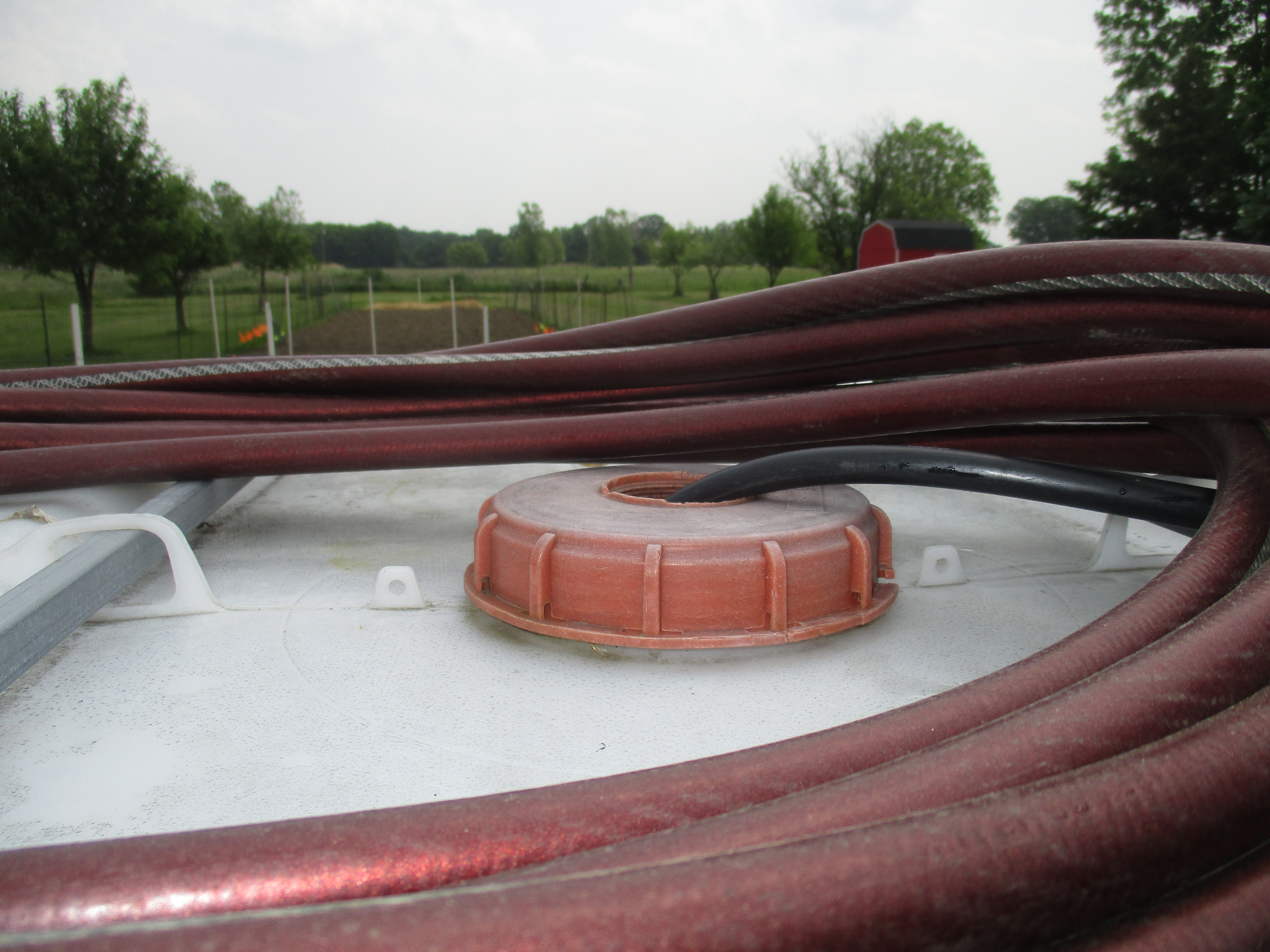
The tank is filled through an opening in the top.
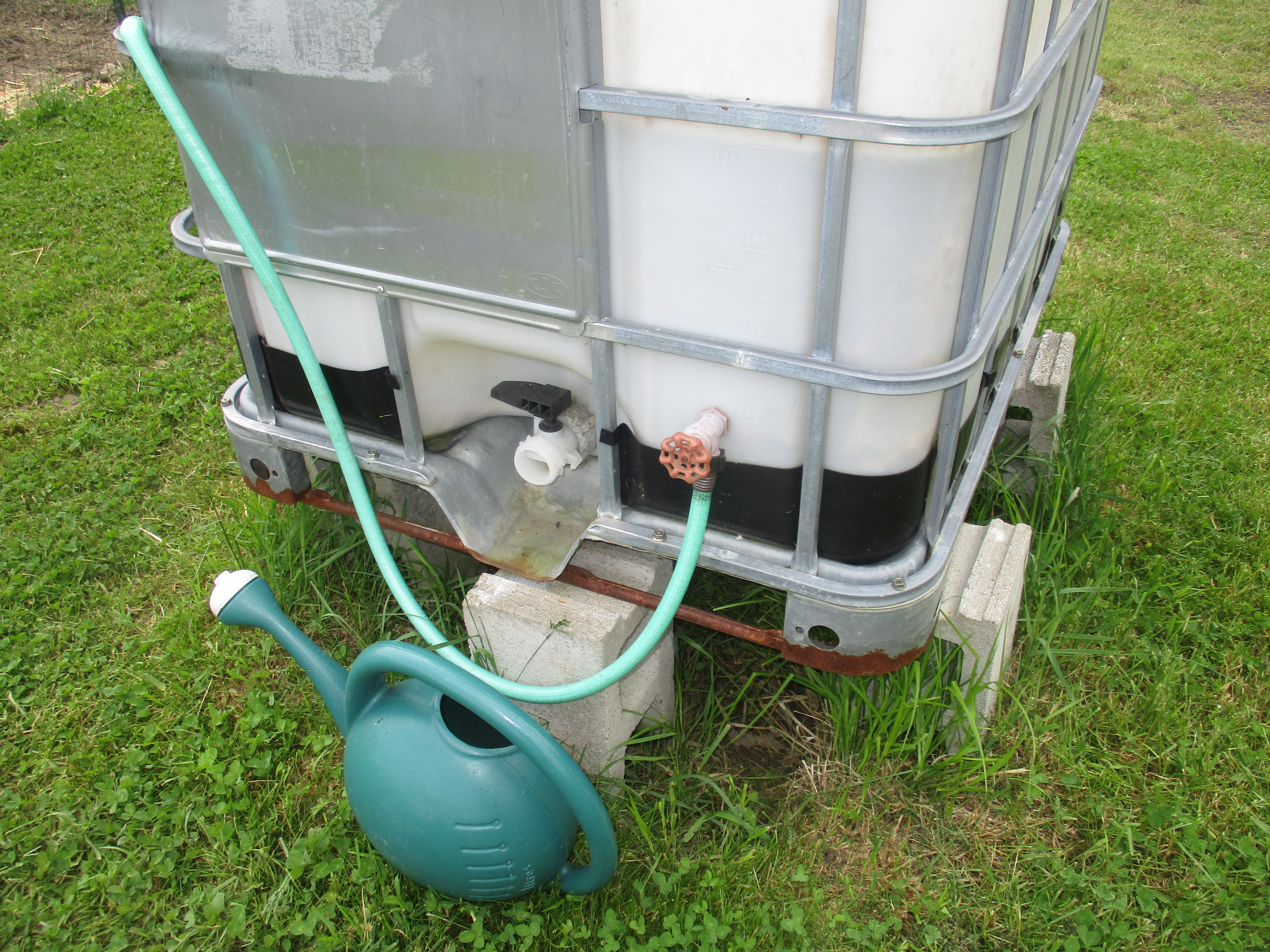
My husband installed spigots near the bottom of the tanks so we can attach a garden hose. We can use the garden hose to fill watering cans or sometimes we water plants directly from the hose.
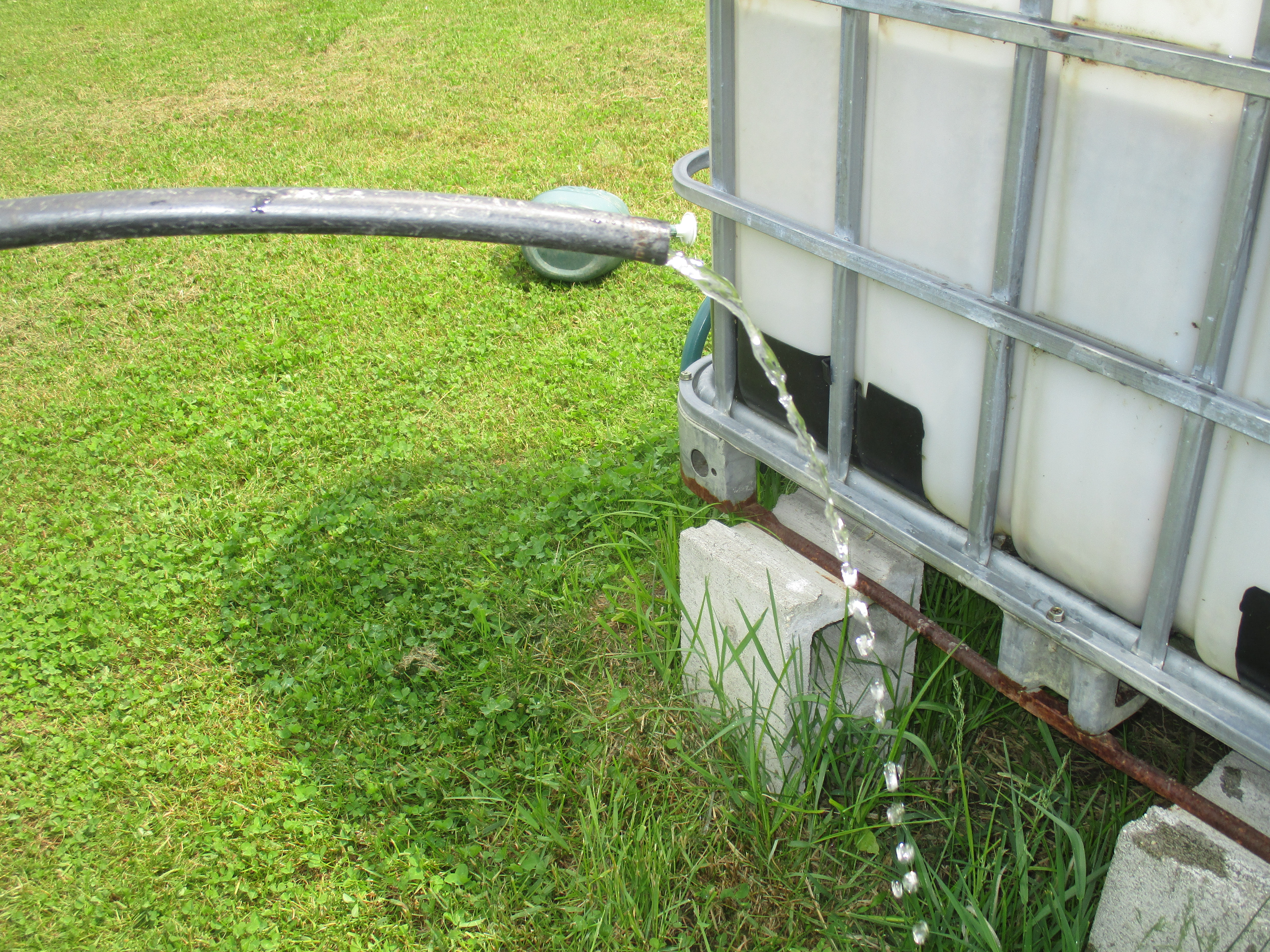
Within a few minutes of having the pump installed water was running through the hose.
How fast we can fill a tank depends on how much wind we get and the wind direction. When we do not get enough rain to keep things watered, wind is the next best thing.
Thanks for visiting.
P.S. My husband just informed me that next year is my turn to put the pump in the pond. Uh, no. This year was my turn. 😉

















 Don't Eat It! Soap and Skin Care