Category Archives: Buff Orpingtons

Don’t Count Your Chickens Before They Hatch

Here in the U.S. Sunday, May 12, was Mother’s Day. It is also the day our two broody hens became mothers.

On Sunday we had four out of ten eggs hatch. We found three under the Jersey Giant and one under the Buff Orpington.

Oddly enough the three Buff Orpington chicks were under the Jersey Giant and the Jersey chick was under the Buff hen.

We waited until Tuesday morning but when none of the other eggs hatched my husband disposed of them. I will admit that we were a bit disappointed that we only had four chicks hatch.

The two hens are raising the chicks together, but it does seem like the Jersey hen is taking on more of the mothering role, teaching the chicks how to peck and scratch. The Buff stays nearby and definitely helps protect the chicks.

Today, Thursday, was their first day out of the coop.

Sometimes it seems like other hens are helping with the chicks as well.

At one point when Ranger decided the check out the babies. Both momma’s, several other hens and the rooster let him know that he was not welcome. They squawked and flew at him to chase him away. After being chased off again today Ranger has decided it’s best to avoid the group.

On Saturday we gave one of the other hens 5 eggs to sit on. This hen is so determined to brood. She has been sitting on a nest for about three weeks and each day my husband takes one or two eggs out from underneath her, trying to break her broodiness. It hasn’t worked. She just sits on her nest in the corner all day and hisses or squawks when he takes the eggs from her. After my husband gave her the 5 eggs she made some very happy clucking noises. So, in a few weeks we might have more babies (and more cute pictures). But we won’t count our chickens before they hatch.

Thanks for visiting.

If I Were A Bird

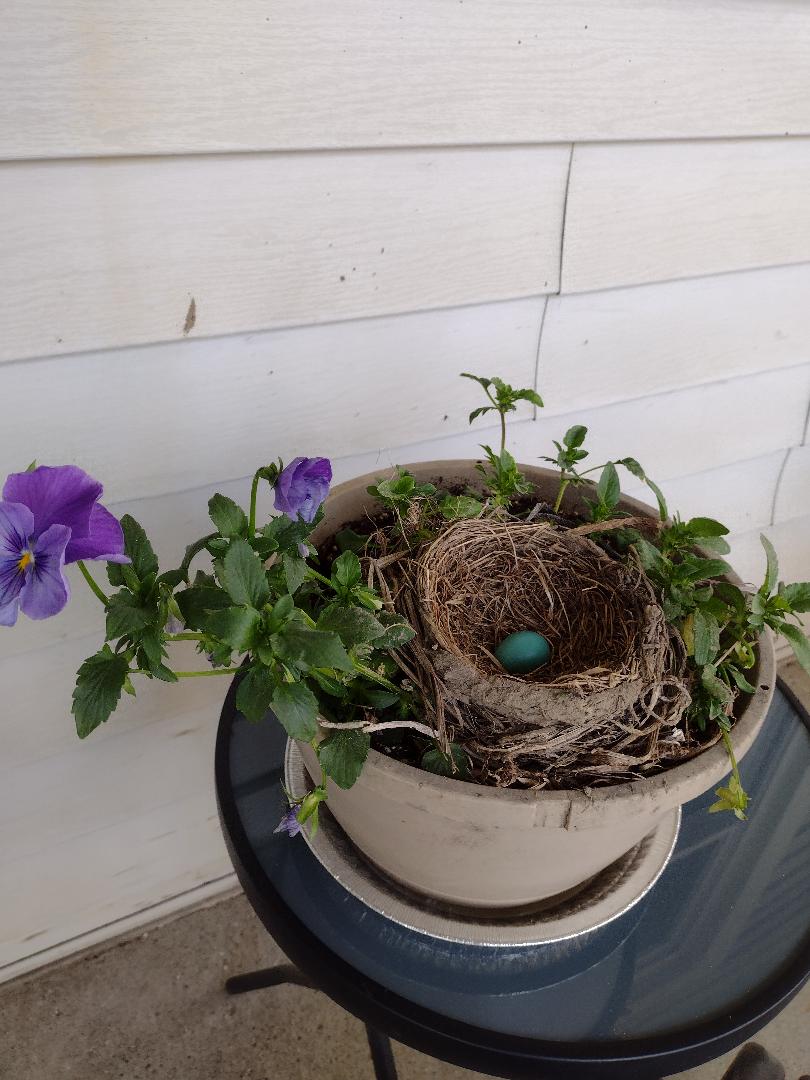
A few weeks ago I gave my sister a pot of pansies. She has had it on her porch on a table between the chairs that she and her husband sit in to enjoy the outdoors. Last weekend she sent a picture of the nest a robin had built in the pot of pansies. I told her “If I were a robin I would build my nest there.” She wasn’t sure if the robin would lay eggs and raise babies there because she and her husband sit there often. Apparently, the robin is undeterred. 🙂 When I last talked to her there were two eggs in the nest.

If I were a bird I would not want to be a kildeer. On Thursday my husband and I witnessed a pair of kildeer with their three young babies. If you are not familiar with kildeer you can learn more about them here. I didn’t have my camera with me, but I doubt if I would have gotten any good photos as they were always in motion. The babies, which are up and running around within hours of hatching, are so cute, but boy do those parents have their wings full keeping track of the babies. It’s a good thing that both parents raise the young together as they usually have 3-5 babies (running every which way) and while the babies feed themselves, they are unable to fly until they are about 25 days old, thus they need protection from predators.

If I were a bird, I would likely be a chicken – in fact I’m sure I was called a mother hen more than once when my ‘chicks’ were young. 🙂 Much like kildeer, baby chickens are up and out of the nest very quickly. They also eat and drink on their own but rely on their mother (or humans) for warmth and protection. The rooster does not help raise chicks, but mother hens are generally very attentive and protective of their chicks.

We currently have several hens that are broody. If Buff Orpingtons have any fault, it’s their tendency to go broody. About two weeks ago we gave 10 eggs to one of the hens, the Buff Orpington in the corner of the picture below. Since then one of our Jersey Giants (the black hen pictured below) decided to share the parenting responsibilities.

Most of the time when the buff was on the nest the jersey would nestle up beside her. Sometimes the jersey would sneak a couple of the eggs and put them under herself. If the buff would leave the nest the jersey would take over. We did mark the original 10 eggs because sometimes we find an extra egg or two in the nest. Saturday my husband split the eggs giving each hen 5 eggs and so far the hens seem content that they each have their own clutch. We don’t know how long that will last.

We have about a week to wait until the babies are due to hatch. It will be interesting to see how this all plays out. I would love to have some little chicks running around and watch momma(s) raising them. I’ll keep you posted.

If you were a bird what kind of bird would you be? What kind of bird would you not want to be?

Chicken Fun

A couple of readers commented on my last post about the fun of watching our chicks grow. Those comments reminded me and my husband of the fun flock we had in 2017 so I thought you might enjoy seeing some pictures of them.

That year we had 10 buff orpington chicks, the same breed we have this year. We have found this breed to be the friendliest and most social of any of the chickens we have had.

In the pictures below I think they are about 10 weeks old. My husband was ready with the camera because he knew what I was in for. He had the same experience the previous evening.

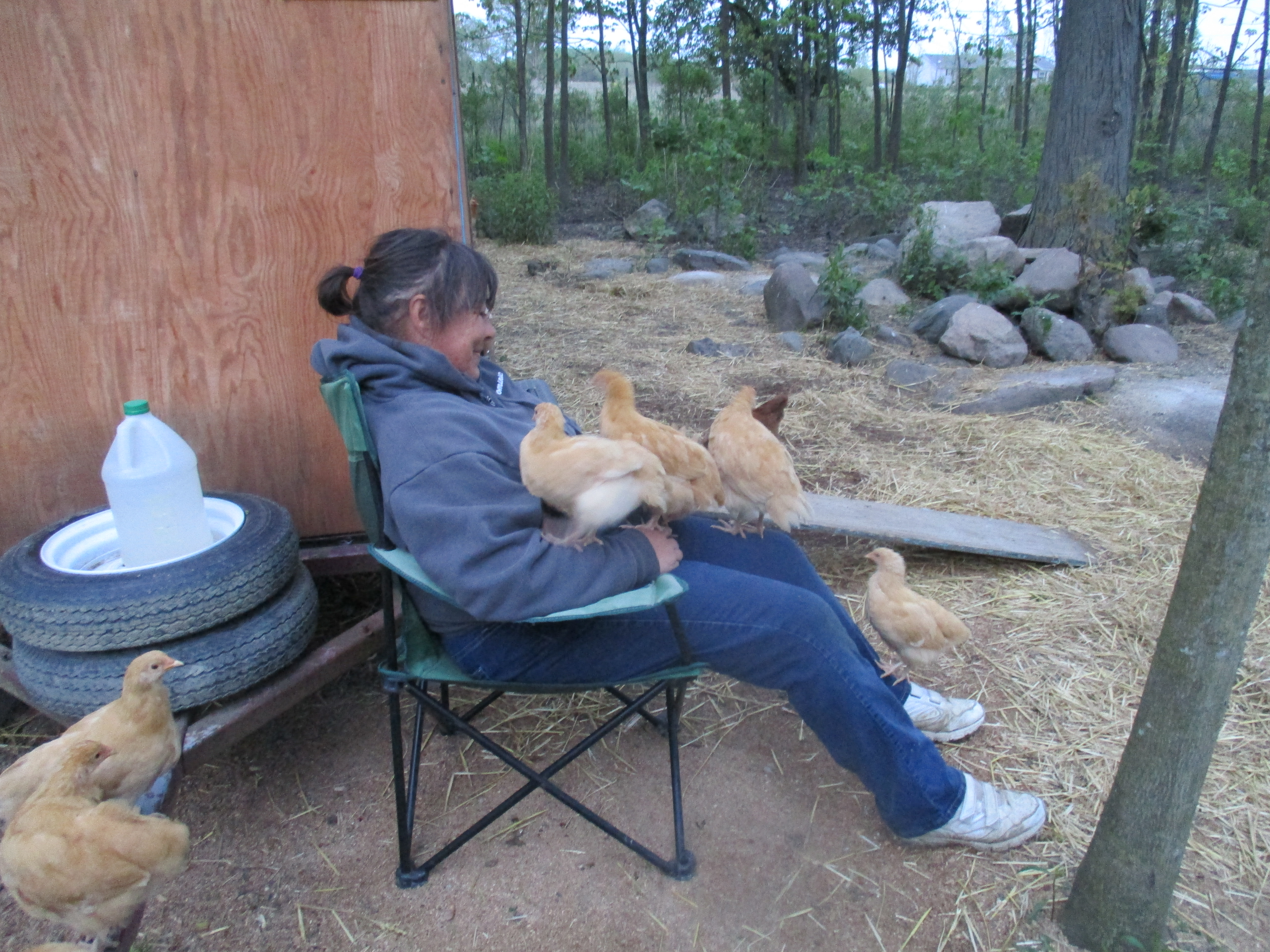
As I sat outside the coop watching the flock (an activity otherwise known as chicken TV) and waiting for them to go in for the night, a couple of the young ones decided to join me.

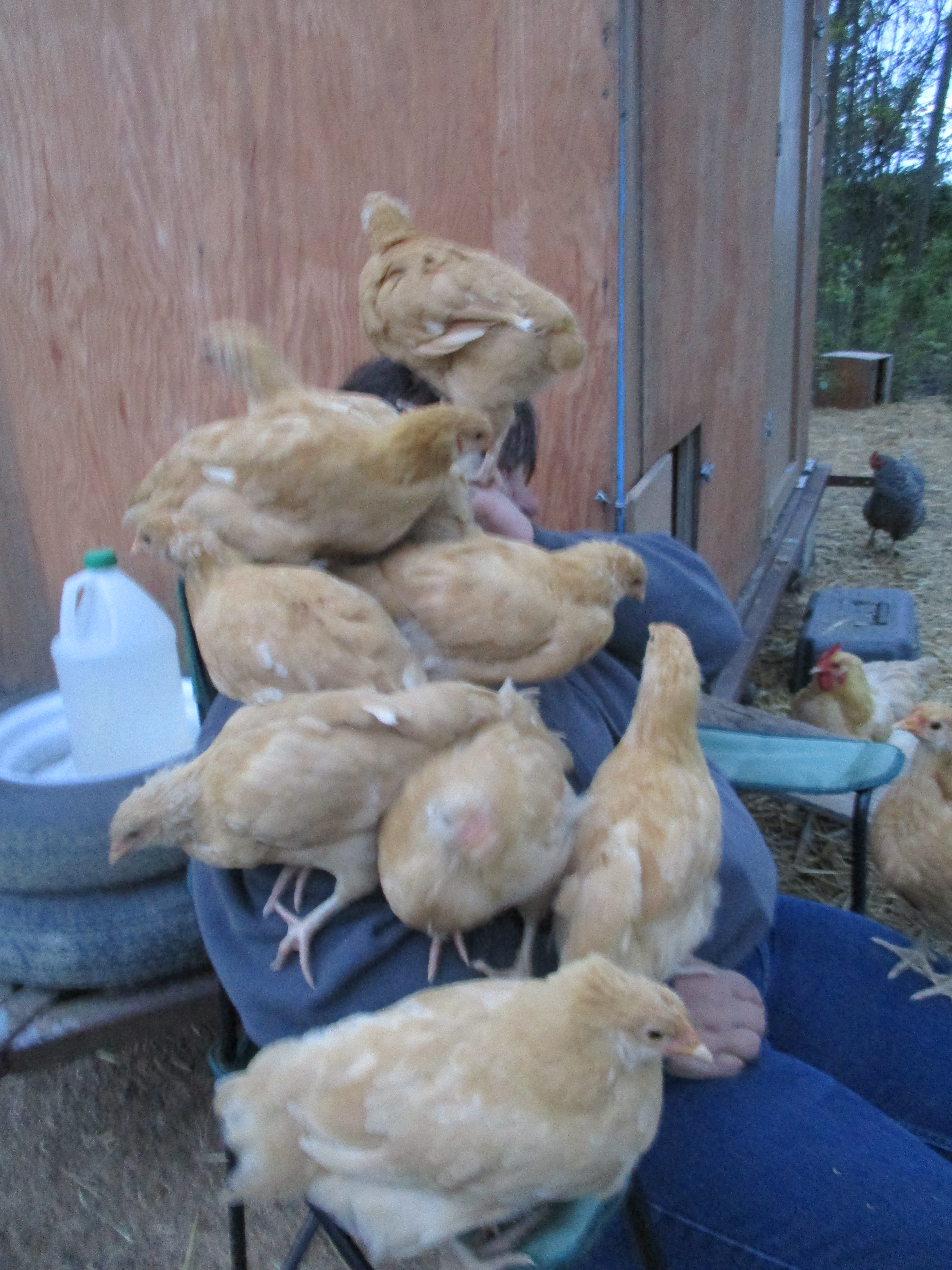
Then a couple more. I didn’t mind them sitting on me, but I knew I needed to protect my eyes.

I suddenly became the star of the show and before it was all done, I had all 10 young hens sitting on me while my husband took pictures and I laughed hysterically.

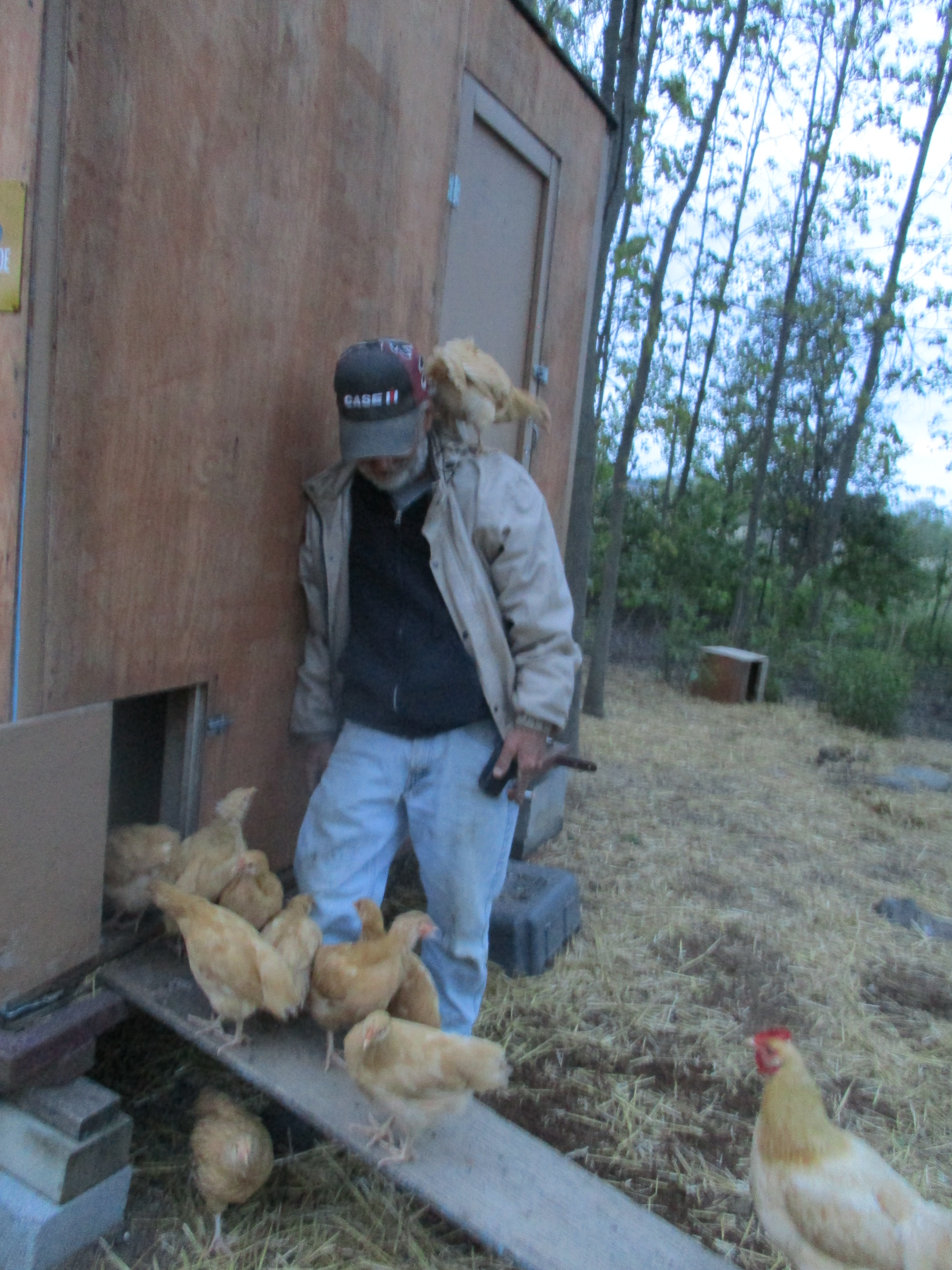
Then one of the hens decided that my husband’s shoulder was the place to be as he was trying to teach them to use the ramp to get into the coop.

Throughout the summer, when we would sit near the coop in the evenings three or four of these hens would come and sit on our laps, and on the nights that we did not “watch chicken TV” one of these hens would wait outside until we showed up to pick her up and put her in the coop at night.

Thinking about that group makes me wonder what fun we will have with this next group. I think it’s gonna be a fun summer. 🙂

From Peepers to Laying Hens – Right On Track

When we got our new chicks this past April I estimated it would be some time in August that they would start laying eggs. My estimate was based on our previous experience with Buff Orpingtons; they have pretty consistently started laying eggs at around 18 weeks of age.

Yesterday when my husband gave me the eggs he had collected I was thrilled to discover that the young ones (or at least one of them) had began laying.

If you are not familiar with raising chickens, you may be wondering how I concluded that the young ones were laying by just seeing the eggs. Nope – hens do not sign their eggs or even leave a trade mark. Without monitoring the nest boxes all day long we have no way of knowing who lays what eggs. (We don’t watch the nest boxes all day.)

But…

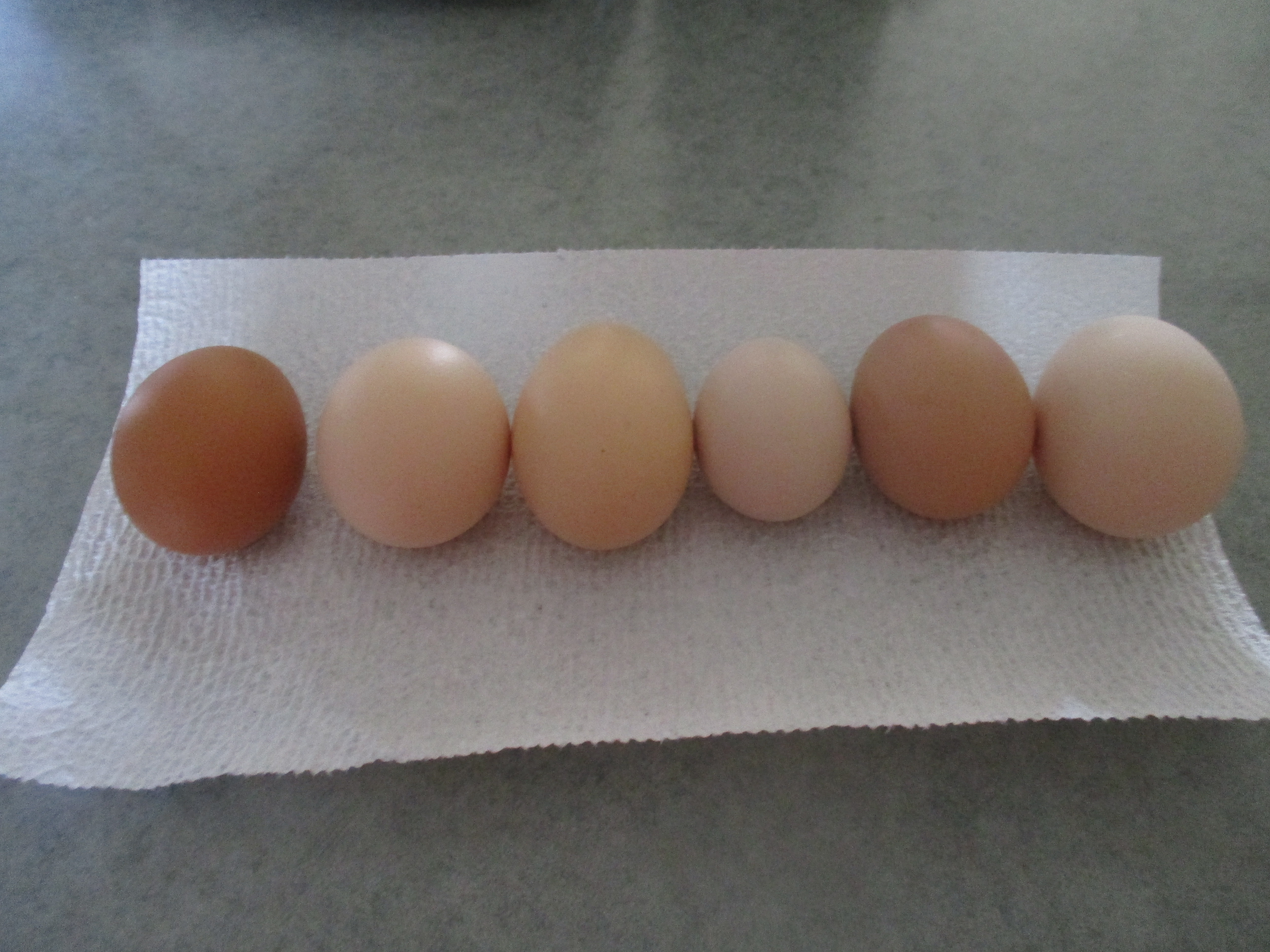
IMG_4407

when a hen first starts laying she lays mini-eggs, eggs that are much smaller than normal. In the photo above the smallest egg is from one peepers turned laying hen.

I suspect that it is one of our Buff Orpingtons who gave us this egg, because it is much like the mini eggs we have gotten from Buffs in the past, but the truth is we have never raised Austrolorps before so I am uncertain how soon to expect them to start laying or what their eggs will look like. Some of the other breeds we have raised have produced mini eggs that are much smaller than this one and when opened they only have a small dot of yolk while the rest is egg white. When opened this egg contained both yolk and white that were proportionate to a regular egg.

Today my husband brought home a second mini egg which makes me wonder if a second hen started laying or the same hen gave us small eggs two days in a row. I expect over the next few weeks we will have several mini eggs as all of the girls become regular with their laying.

It’s exciting that our “peepers” are growing up as we are counting on them to keep us in fresh eggs through the winter. 🙂

Thanks for reading. Until next time – be well.

What I Have Learned About Raising Chickens – Peep, Peep, Peep-Peep

If you walk into the local farm store this time of year you can generally hear them before you see them. Peep, Peep, Peep-peep, peep, peep-peep…………………………………It’s such a precious sound you can’t help but go take a look. If you are not in the market for chicks taking a look might not be a good idea because when you see how cute they are you will certainly want to take one or a dozen home.

Buying chicks from the farm store was actually what my husband planned when he went there on Tuesday. After some debate we decided to replace part of the flock we  lost. Even though the remaining flock is currently giving us between 8 and 12 eggs a day, far more than we need for our own use, most of the hens that remain are between 3 and 5 years old. The main reason we did decide to get more is because for about 6 to 8 weeks during the winter egg production slows down substantially. This past winter we observed that it was primarily our first year layers that were still laying eggs. During that time period they continued to give us enough eggs to meet our needs.  In looking ahead to next winter we decided that getting more chicks now was a good move.

He had to go to two different stores in order to find the breed(s) we wanted.

IMG_3843

Our first choice was Buff Orpingtons. Of the four breeds that we have raised so far these are our favorite. In addition to being a hardy breed, good layers and good foragers, they are docile and friendly.

They can be quite entertaining when we opt for an evening of chicken TV.

We also decided on a second breed that we have never raised before.IMG_3856Black Australorps. This breed is supposed to be much like the Orpington except harder to spell. Just kidding, they supposedly lay more eggs than the Orpington. They certainly are adorable chicks.
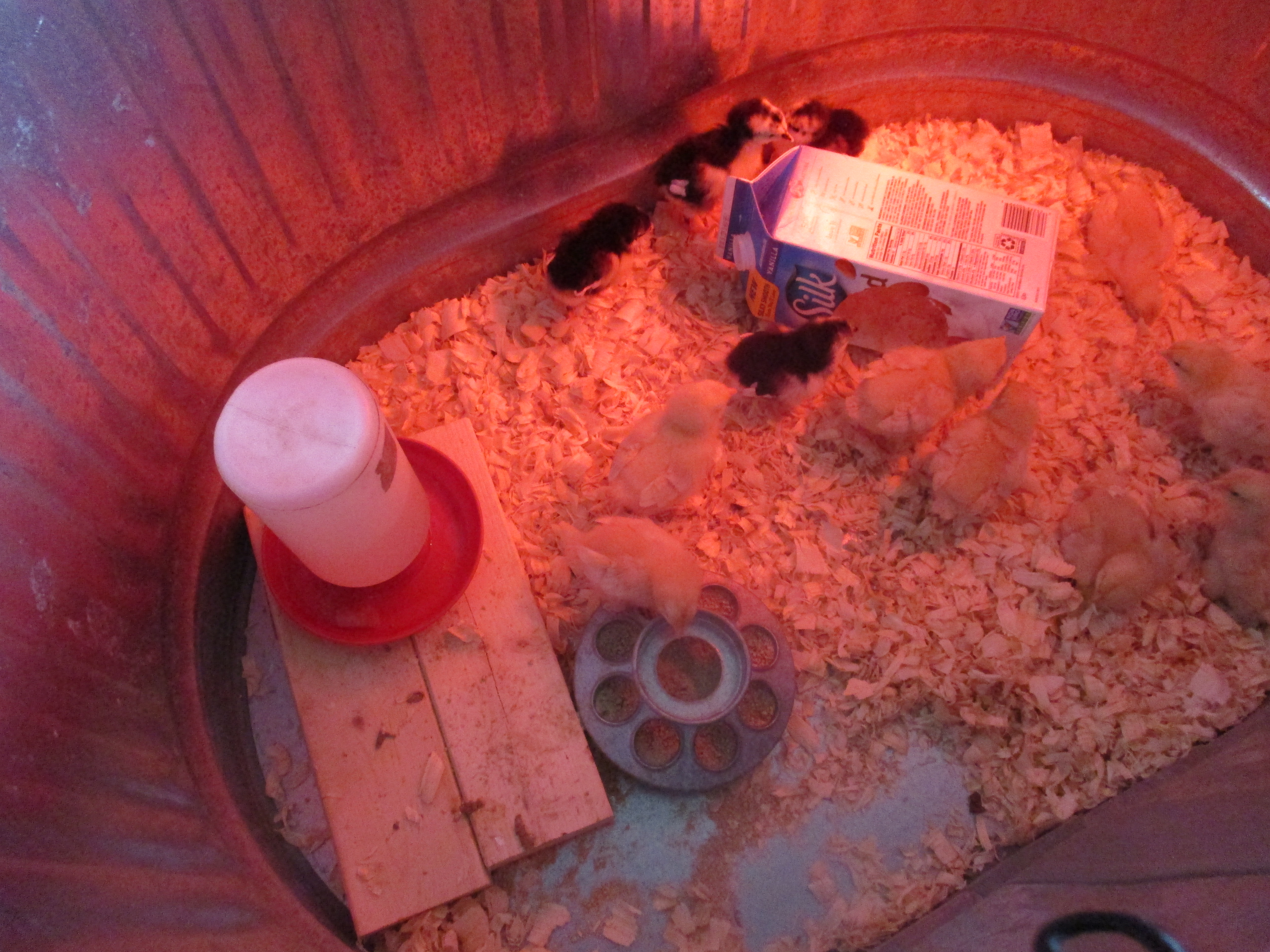
IMG_3860

Peep, peep, peep-peep, peep,peep, peep-peep, peep……………………………………

Acting as surrogate parents we got out a galvanized stock tank that works well as a brooder for the first couple of weeks. We used wood shavings for bedding and gave them food and water. I dipped each beak in the water because I was not certain if they had learned to drink yet. We use a heat lamp clamped to the stock tank to keep the chicks warm enough. I also checked each chick’s butt to see if they had poop on it. This is a condition called pasty butt, and if the poop blocks the chicks vent it can cause death. I did find two of the buffs with this condition, so I used a warm wet washcloth to soften the dried poop and remove it.

My husband always likes to make the chicks a little playhouse out of a Silk carton. He cuts a hole in a side so the chicks can go in and out. So far this group seems more fascinated by pecking at it. It’s pretty amazing how much noise those little beaks can make when they are pecking on something hard. It can actually sound like someone knocking on the door. They have started to hop on top of the carton, and I’m sure it won’t be long before the venture inside. It’s surprising how many of them can cuddle up inside that carton.

In about 2 weeks I expect we will see the peepers craning their necks trying to see the world beyond the stock tank. They will also have a lot of their feathers and be discovering their wings. They will be able to get on top of the container that holds their water and attempt to fly out of the brooder. Some might succeed. At this time we will have to move them to what I’ll refer to as our second stage brooder. I don’t have any pictures of this so I will give you an update with pictures when the move occurs.