Category Archives: Idioms

Idiom of the Week

Hello and welcome!

Since writing about idioms I’ve been paying a lot of attention to the things people say and their use of idioms. This week our idiom comes courtesy of my husband. It is his goose is cooked .

According to Idioms at the Free Dictionary.com one’s goose is cooked means:

1. One is thoroughly defeated, ruined, or finished.

2. One is facing inescapable punishment for some trouble one is in or has caused.

At the Grammarist.com I learned that the origin of this phrase is uncertain. They tell us: The origin of the expression goose is cooked is not really known; many stories that are not based in fact currently circulate on the internet. The most likely origin of the popular saying goose is cooked is the Aesop fable about the goose that laid the golden egg. In the story, greedy people are not content to wait for the goose to lay its golden eggs; they kill the goose in order to obtain the golden eggs immediately in order to have a lot of money all at once, and they find they have ruined their source of good fortune. However, even this origin story is dubious, because the famous phrase goose is cooked did not come into popular use until the mid-1800s. 

Whatever the case I hope you do not find yourself in a situation where “Your goose is cooked.”

Have you ever used this phrase?
This Week’s Idiom

Hello and welcome!

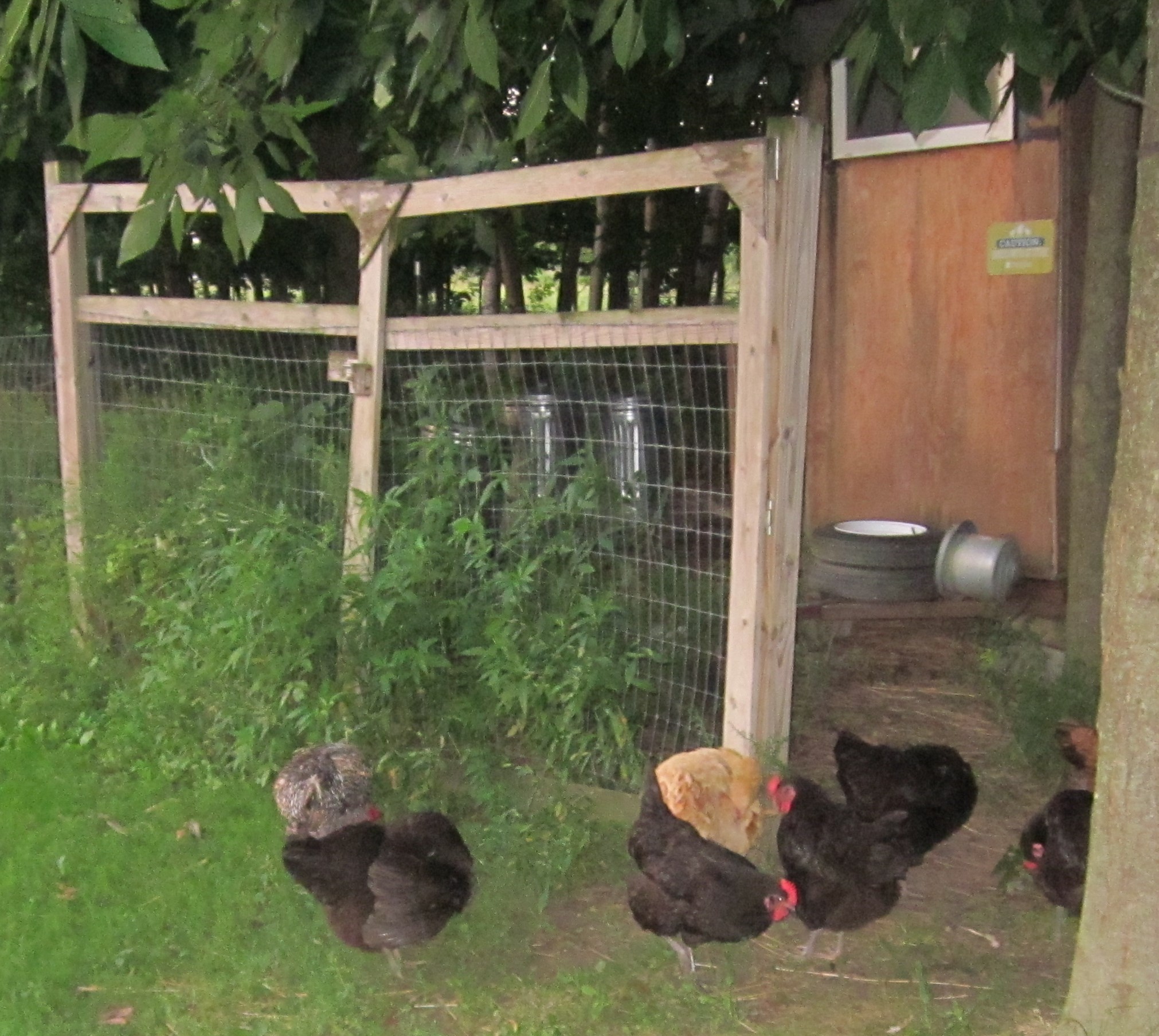
The hens preening themselves before going the coop at night.

Our idiom this week is on the ball – a phrase I found myself using this week while talking to my daughter.

Theidioms.com tells us that on the ball means:

alert to new trends, ideas, and methods

knowledgeable and competent

alert, in command of senses, attentive

understands the situation well

quick to understand and react to a situation

(Yes my daughter was on the ball 🙂 )

They also tell us: This phrase originated in sports, specifically in ball games where the players were asked to keep their “eyes on the ball.” The current usage of the expression began in the 1900s and it is a shorter version of the original term, ‘keep your eye on the ball.’ This phrase is first seen in sports, such as baseball, cricket, and golf. The oldest citation in prints dates back to 1864. Source: theidioms.com

Do you use this phrase?

This Week’s Idiom

Hello and welcome!

Hickory Nuts

Our idiom this week is a hard (tough) nut to crack.

The Idioms.com tells us this phrase means:

a problem that is difficult to solve

a person that is difficult to deal with

someone or something that is difficult to understand or

a person hard to get to know or to get close to

This expression is a metaphor alluding to the tough exterior of a nutshell and how hard they are to crack open. It has been in use since the 1700s.

Have you ever used this expression?

Word of the Week – Week # 30 (Changes Coming)

Hello and Welcome!

Our word of the week is Idiom.

Merriam Webster defines Idiom as:

1: an expression in the usage of a language that is peculiar to itself either in having a meaning that cannot be derived from the conjoined meanings of its elements (such as up in the air for “undecided”) or in its grammatically atypical use of words (such as give way)

2a: the language peculiar to a people or to a district, community, or class DIALECT b: the syntactical, grammatical, or structural form peculiar to a language

3: a style or form of artistic expression that is characteristic of an individual, a period or movement, or a medium or instrument

I choose this word today because I am still finding myself struggling to find a word each week and write about it, so I have decided to change horses midstream. Rather than write a word of the week I am going to share an idiom of the week. When they were in high school my daughters had a teacher who would write an idiom on the board each day and I believe they included that as part of the class discussion. All of the girls really enjoyed that part of class, so maybe we can have some fun with them too. 🙂

Can you guess what our first idiom is?

According to The Free dictionary.com

change horses in midstream means:

1. To choose a new leader during a period of upheaval or uncertainty.

2. To make major changes to a situation or course of action that is already underway.

and according to The Phrase Finder the idea of “Don’t change horses midstream” was used in an 1864 speech by Abraham Lincoln, in reply to Delegation from the National Union League who were urging him to be their presidential candidate. He cited ‘An old Dutch farmer, who remarked to a companion once that it was not best to swap horses when crossing streams.”

Thanks for reading.

Do you use idioms often?

Can you think of an instance when you decided to “change horses midstream”? Please share in the comments section below.