Category Archives: Parkinson’s Disease

April is Parkison’s Awareness Month

Parkinson’s disease (PD)

A neurodegenerative disorder that affects predominately the dopamine-producing (“dopaminergic”) neurons in a specific area of the brain called substantia nigra.

What are the symptoms of Parkinson’s disease?

Symptoms generally develop slowly over years. The progression of symptoms is often a bit different from one person to another due to the diversity of the disease. People with PD may experience:

  • Tremor, mainly at rest and described as pill rolling tremor in hands; other forms of tremor are possible
  • Slowness and paucity of movement (called bradykinesia and hypokinesia)
  • Limb stiffness (rigidity)
  • Gait and balance problems (postural instability)

In addition to movement-related (“motor”) symptoms, Parkinson’s symptoms may be unrelated to movement (“non-motor”). People with PD are often more impacted by their non-motor symptoms than motor symptoms. Examples of non-motor symptoms include: depression, anxiety, apathy, hallucinations, constipation, orthostatic hypotension, sleep disorders, loss of sense of smell, and a variety of cognitive impairments.

Cause

The cause remains largely unknown. Scientists believe a combination of genetic and environmental factors are the cause.

Treatment

Although there is no cure, treatment options vary and include medications, lifestyle adjustments and surgery. While Parkinson’s itself is not fatal, disease complications can be serious. The Centers for Disease Control and Prevention (CDC) rated complications from PD as the 14th cause of death in the U.S.

The first step to living well with Parkinson’s disease is to understand the disease and the progression.

It is possible to have a good to great quality of life with PD. Working with your doctor and following recommended therapies are essential in successfully treating symptoms by using dopaminergic medications. People with PD need this medication because they have low levels or are missing dopamine in the brain, mainly due to impairment of neurons in the substantia nigra.

It is important to understand that motor symptoms of PD only become evident later in the course of the disease, after 60% to 80% of the substantia nigra neurons have already been lost or impaired. Lewy bodies (accumulation of abnormal alpha-synuclein) are found in substantia nigra neurons of people with PD.

Parkinson’s Facts Everyone Should Know

Parkinson’s Awareness Month is the perfect time to brush up on your Parkinson’s facts. Here are 5 fast facts about PD: 

  1. Nearly 90,000 people in the U.S. are diagnosed with Parkinson’s each year. 
  2. Scientists believe a combination of environmental and genetic factors cause PD.
  3. People with Parkinson’s experience both movement and non-movement related symptoms.
  4. Symptoms can be managed through treatments like medications, lifestyle changes, exercise and in some cases, surgery.
  5. Early-onset Parkinson’s disease occurs in people younger than 50 years of age.

Facts from and more information at: Parkinson’s Foundation

PD and Me

While I usually don’t blog about it, long-time followers know that I was diagnosed with Parkinson’s Disease (PD) in 2018. Since this is Parkinson’s awareness month, I thought I would share about my condition and how I am managing it.

When I was first diagnosed with PD it seemed to me like the condition was progressing at an alarming rate. My symptoms, most of which I attributed to menopause included muscle aches and stiffness, what I called it “brain fog” for lack of a better term, and head and sometimes slight hand tremors. The tremors were the symptom the indicated that I was dealing with something more than menopause. Also, in hindsight, what I called “brain fog” was that I was having problems translating my thoughts into words. The thoughts were clear in my mind, but I would struggle to get the words out, and sometimes when they would come out, they were not what I meant to say. This difficulty translating thoughts into words applied to writing as well.

Over a period of about 6 months, I underwent several medical tests and eventually was diagnoses with PD through a DAT scan. After my diagnoses the neurologist told me that there were no medications that would help with the type of tremors that I had (head tremors). He thought that a procedure called deep brain stimulation (DBS) would likely help since he currently had 20 patients who had DBS, 18 of them with good results

Deep brain stimulation involves implanting electrodes into targeted areas of the brain. These electrodes deliver mild electrical currents that modulate abnormal brain activity, helping to improve symptoms. The electrical impulses are generated by a pacemaker-like device called an implantable pulse generator (IPG), which is placed under the skin, usually near the collarbone or upper chest, and connected to electrodes via insulated wires that run under the skin to the brain. I was not ready to have brain surgery and the thought of someone using a computer type devise to “control” my brain was just creepy. I went home telling the doctor I would think about it.

I didn’t think about it for long, but instead I started researching PD. My first question was what could have caused this. Most of what I read didn’t make much sense because for years I had used natural skin care products and cleaning supplies and we avoided herbicides and pesticides when gardening, so I really did not have excessive exposure to toxins. It was only when I came across an article about amalgam filling leaching mercury, and that the mercury could potentially cross the blood-brain barrier, that I had an aha moment. I had several amalgam fillings and some had been in my mouth for 35+ years.

I decided to have my amalgam fillings removed. When I consulted with my dentist, she reluctantly said that she would do the work, but she did not feel that my fillings had anything to do with the Parkinsons. “Not everyone who has silver (amalgam) fillings get Parkinsons,” she said. “Not everyone who has silver fillings has the same genes that I do,” I answered. Then I found a new dentist. One who was aware of the dangers of amalgam and did not use it in his practice. I fired my old dentist.

A few weeks after I had all of my amalgam fillings removed, I noticed some of my symptoms were no longer present. My handwriting, which had gotten really small, returned to its normal size and my arms began to swing again when I walked. These were symptoms that I did not identify until after I was diagnosed and began learning about PD. Also, the “brain fog” got better. My ability to communicate through speech returned to normal and while my writing requires more focus and takes more time than it used to, you can see that I am still at it. 🙂

Today, seven-and-a-half-years post diagnoses, I can honestly say that by the Grace of God I am still medication free and the Parkinsons has not progressed. I still deal with some of the symptoms of PD but I am doing well.

This disease is different for everyone, so what helps me may not help someone else with PD. Below are some of the things that I do to manage my condition.

Exercise is said to be the single most important thing for people with PD. I try to include at least 30 minutes of walking, recumbent bike, or work out in the pond (I’m looking forward to summer) each day. If I miss two or more days in a row, I notice my symptoms getting worse.

Gut health is important, so I get my daily dose of probiotics by drinking kombucha. There are also some foods I try to avoid.

Quality sleep is also important in managing PD and at times it’s hard to get enough. I use various methods to try to help me sleep. Sometimes they help but not always. I give myself a hand/foot massage before going to bed. I usually read a book in bed before falling asleep. I try to avoid eating anything for a least two hours before going to bed. I recently started including a tablespoon or more of extra virgin olive oil with my dinner and have noticed that I seem to be getting a more restful sleep, and I am having less issues with night sweats (another symptom) since starting the olive oil. I also leave time during the day (most days) to nap if I need to. I do know that if I get overly tired my symptoms get worse and I have a hard time functioning.

Managing or avoiding stress is important as stress will exacerbate the symptoms. I am blessed that my life is pretty routine and stress-free, but I realized recently that even though I am not feeling stressed, just being out of my comfort zone can make my tremors worse. In this case, I think just having an awareness of how my body is reacting is important, so I don’t do things like walk around with a cup of hot coffee and spill it all over the place.

I have tried many, and do take several, supplements, but since all of our needs are different, I’m not going to go into a lot of detail about them. I will say that the one supplement that I take that I am certain helps me is taurine. I have been taking it for several years and it helps prevent nighttime muscle cramping and stiffness/rigidity when walking. I know it works because I have run out of it a couple of times and after about three days, I begin experiencing these symptoms again.

I haven’t thought about it since last summer, but over-heating can become a problem, so making sure that I am well hydrated is important and drinking an electrolyte drink helps.

I know that I am very blessed that my condition has not progressed and I do not take this for granted. I am ever aware that this disease could worsen at any time, so I will continue to learn about treatments and ways to slow progression, and pray for strength, wisdom and continued grace.

Thanks for reading.
Spring Bouquet

I think it was our first fall at the farm when I planted a bunch of tulip bulbs in the area that has since become our prayer garden. I remember arriving at the farm one morning the following spring and being delighted that several of the tulips were blossoming. They were so pretty. Later that day when we returned for our afternoon walk all of the pretty blossoms were missing and all that remained were the stems and the leaves. I wanted to cry. Thus began our love-hate relationship with deer.

Our First Tulips

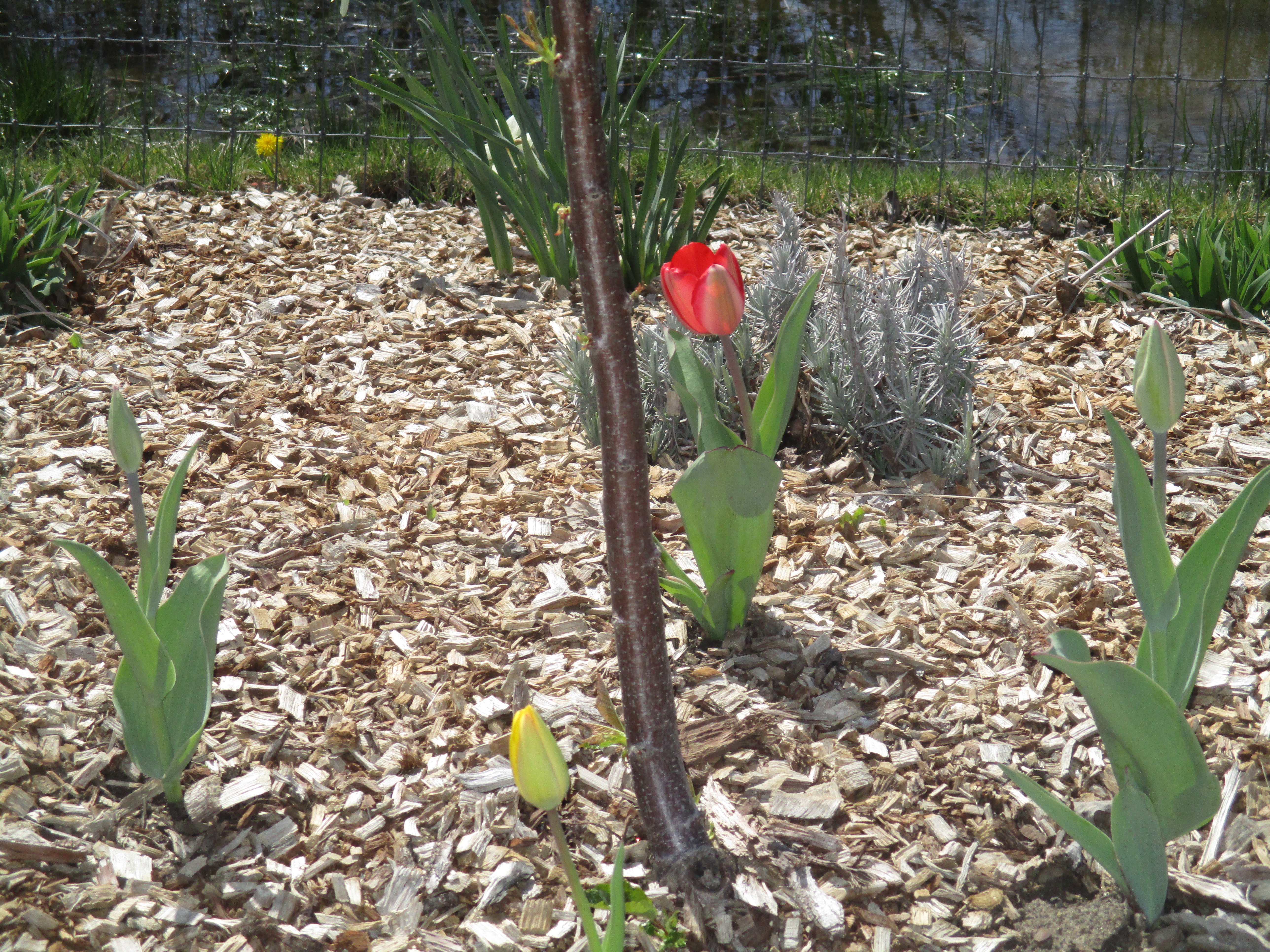
After fencing the farm two years ago and then fencing in the prayer garden last year, we thought it might just be safe to plant tulips. We planted 4.

The first one to open was red. I thought this fitting since the red tulip is a symbol for Parkinsons Disease awareness and April is Parkinsons Awareness month.

The yellow one opened one day later.

And a second red one opened today. I expect the last one will open tomorrow. It looks like it will be another red one.

White hyacinth with mini daffodils.

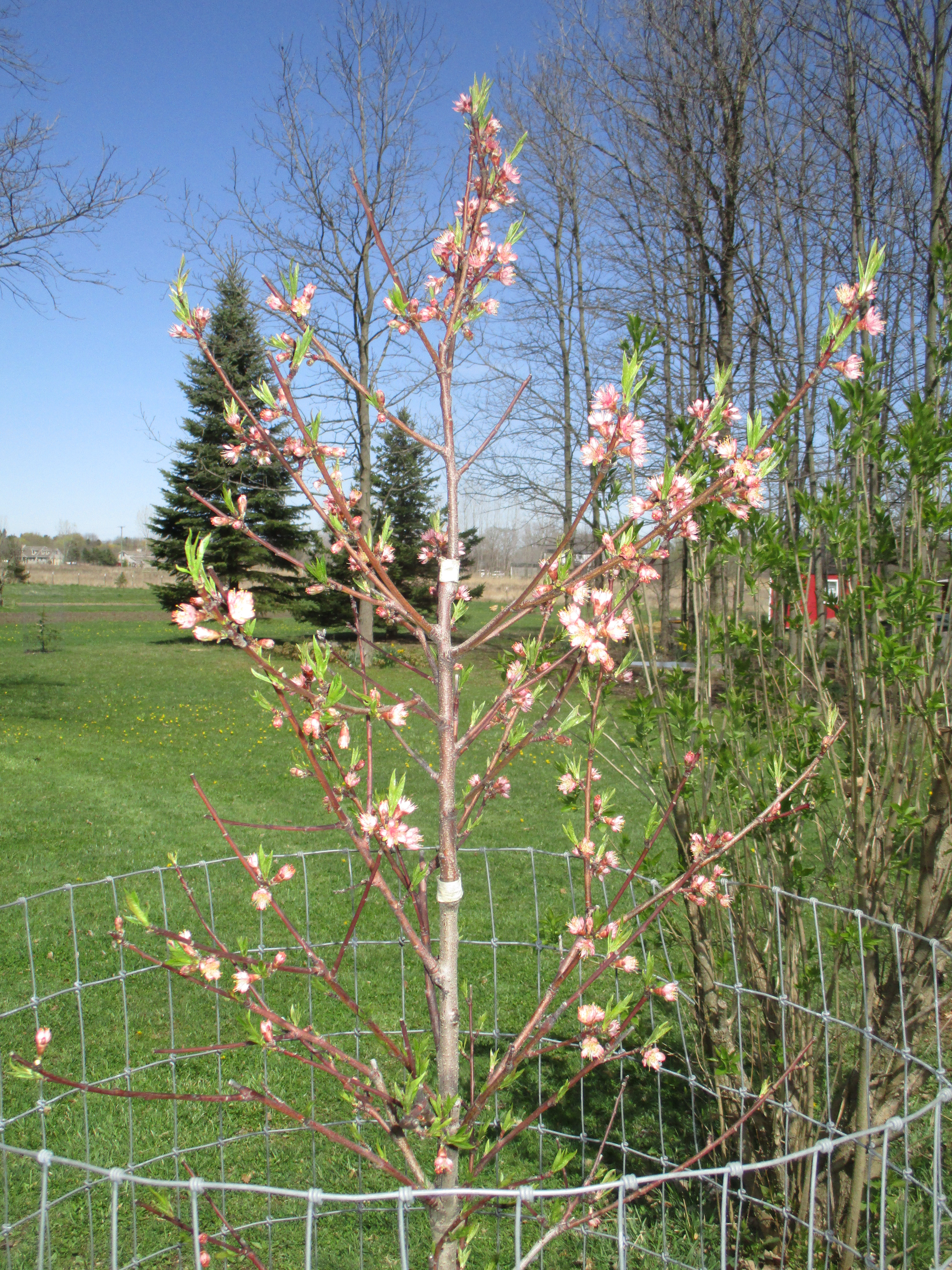
Peach Tree

We planted a peach tree last year and it was doing well this spring

Peach Tree

so, we decided to plant a second one. Both are blossoming. It would be nice to pick a few peaches in August.

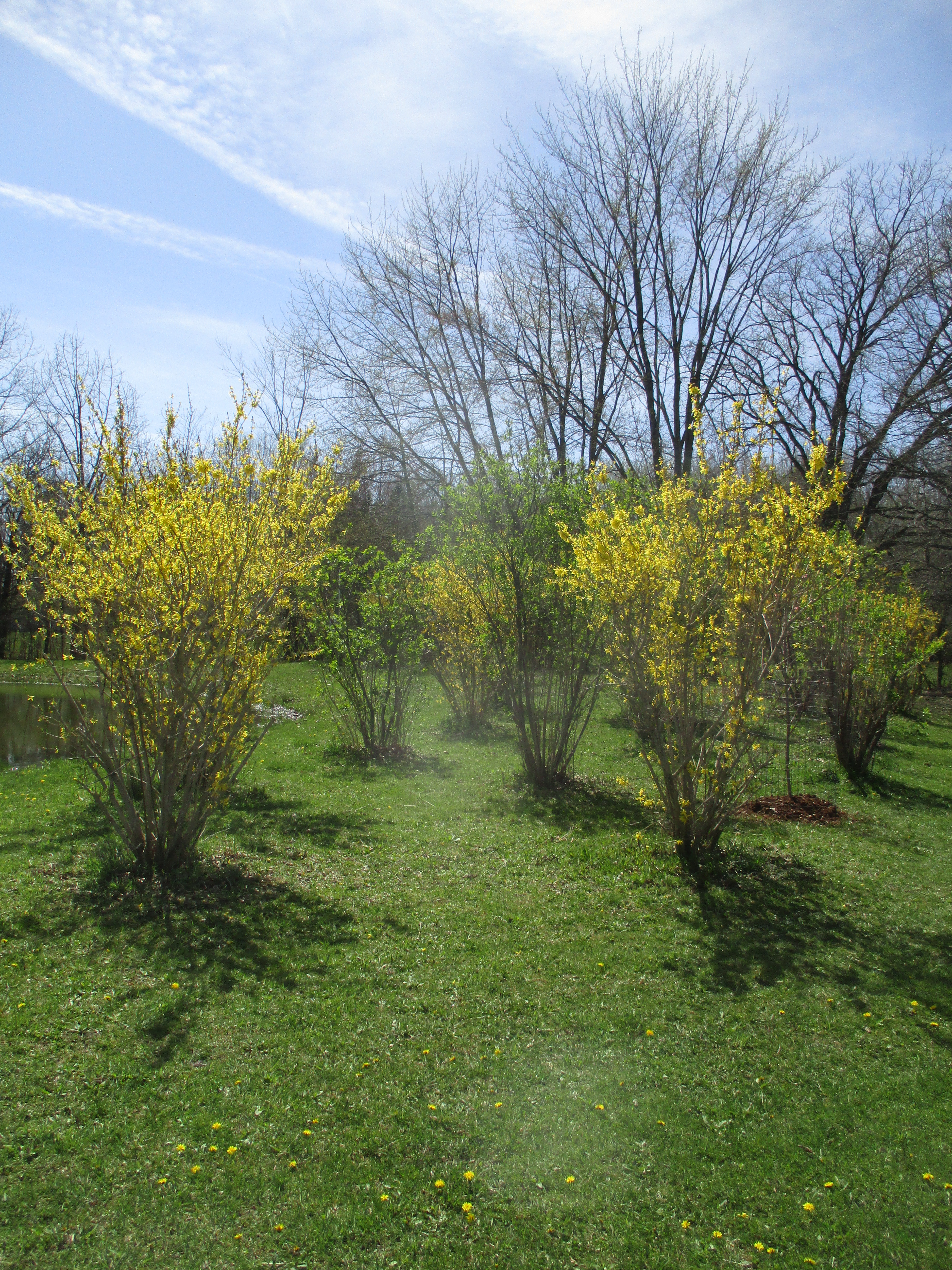
Forsythia

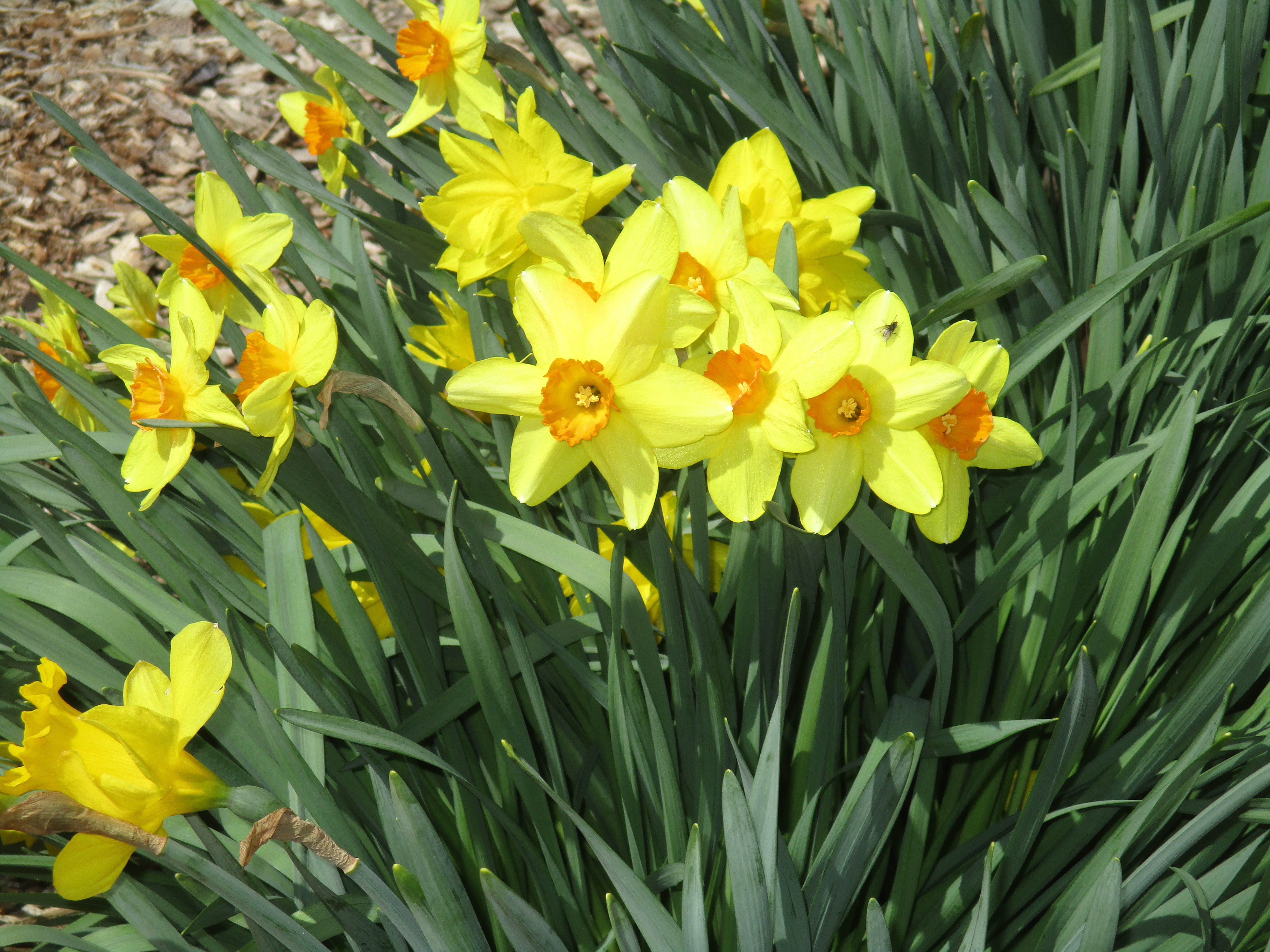
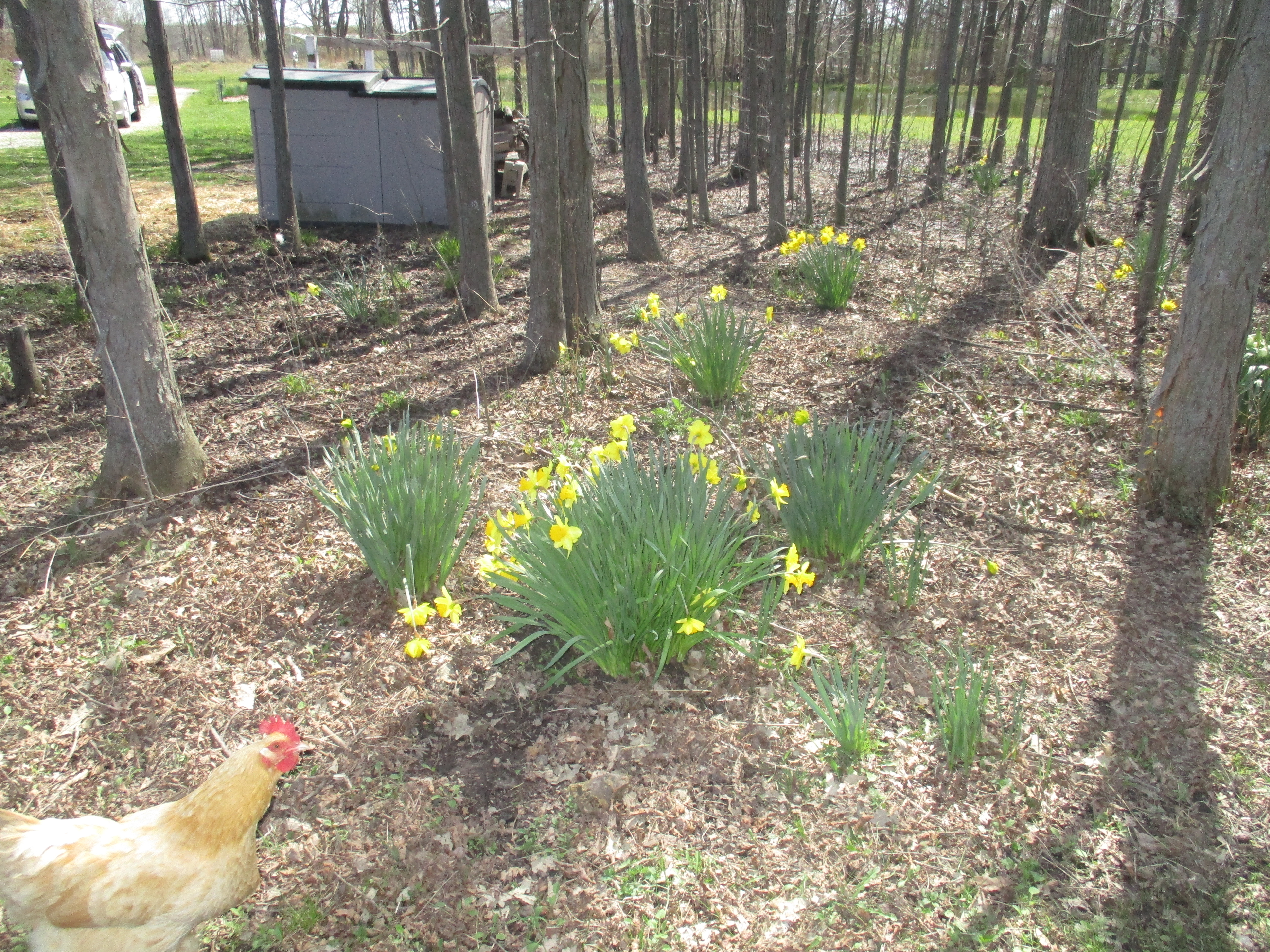
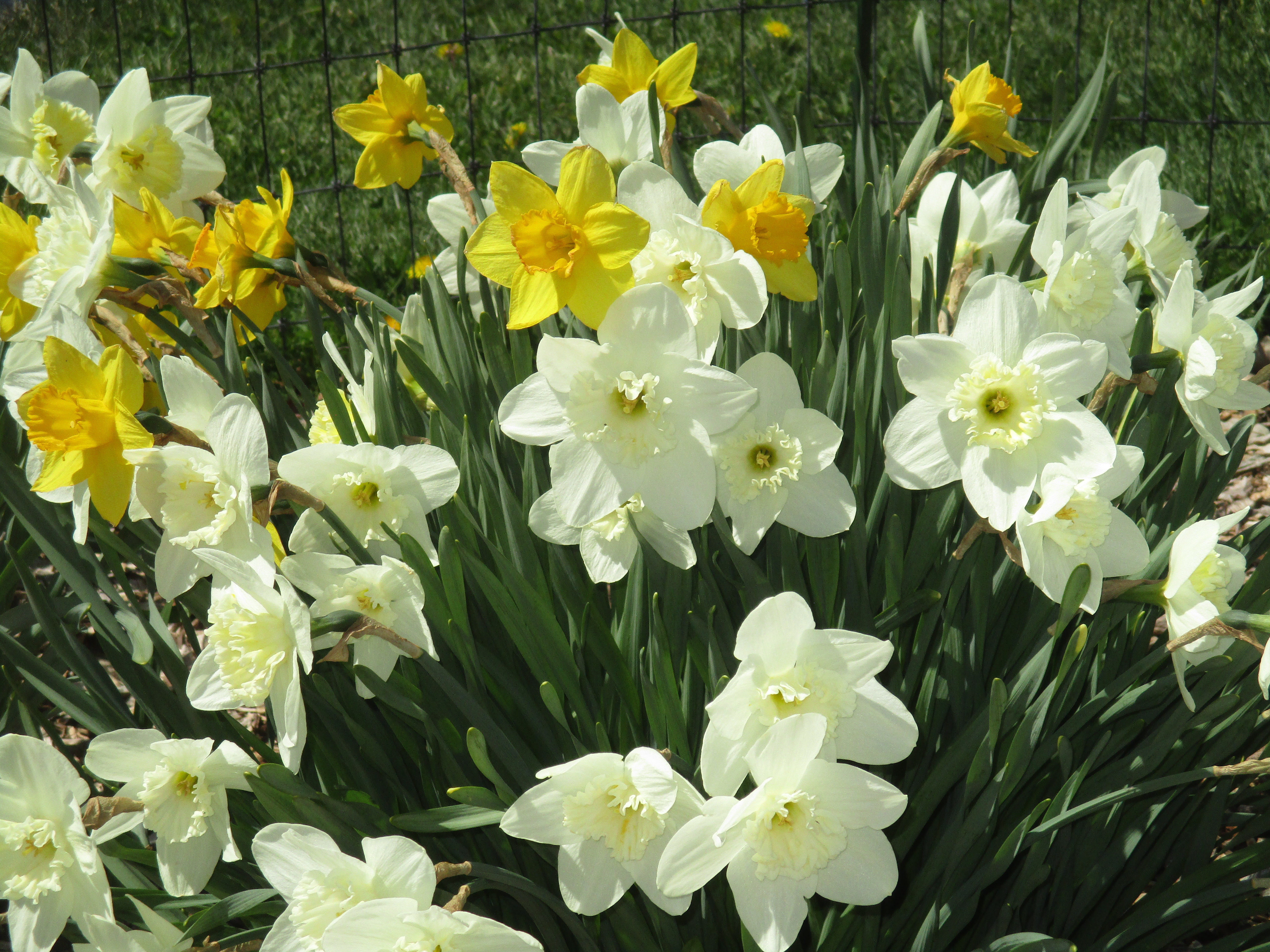
Lots of Daffodils
Sweet Cherry Tree

We planted three sweet cherry trees last year.

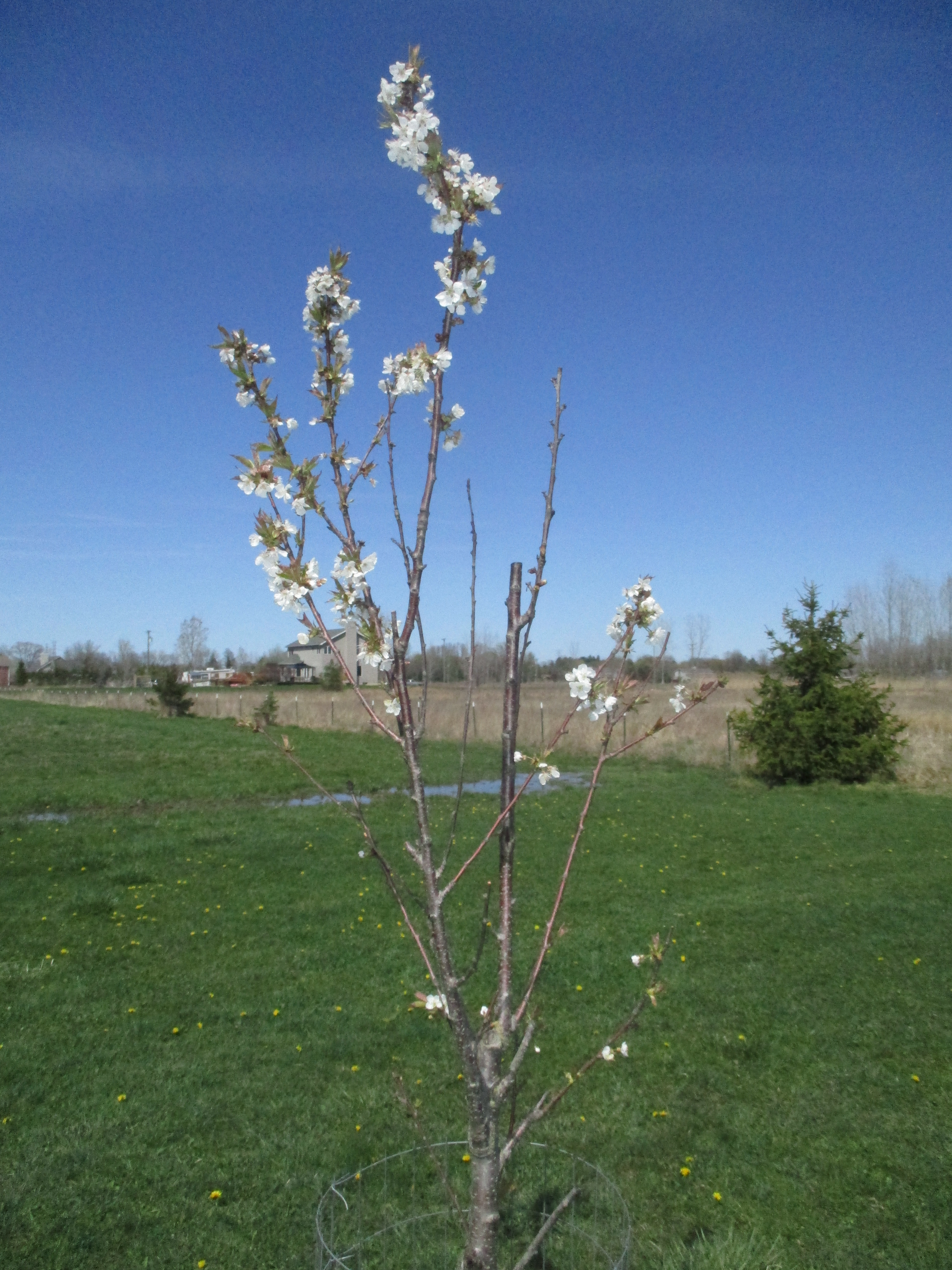
Sweet Cherry Tree

The above two have nice blossoms. I would be thrilled to pick a handful of sweet cherries this year.

A honeybee enjoying the dandelions. We lost our bees over the winter and decided not to start a new hive this year so it’s nice to know there are still bees in the area.

A wildflower that popped up and I am still trying to identify. If you know what it is, please tell me in the comments section.

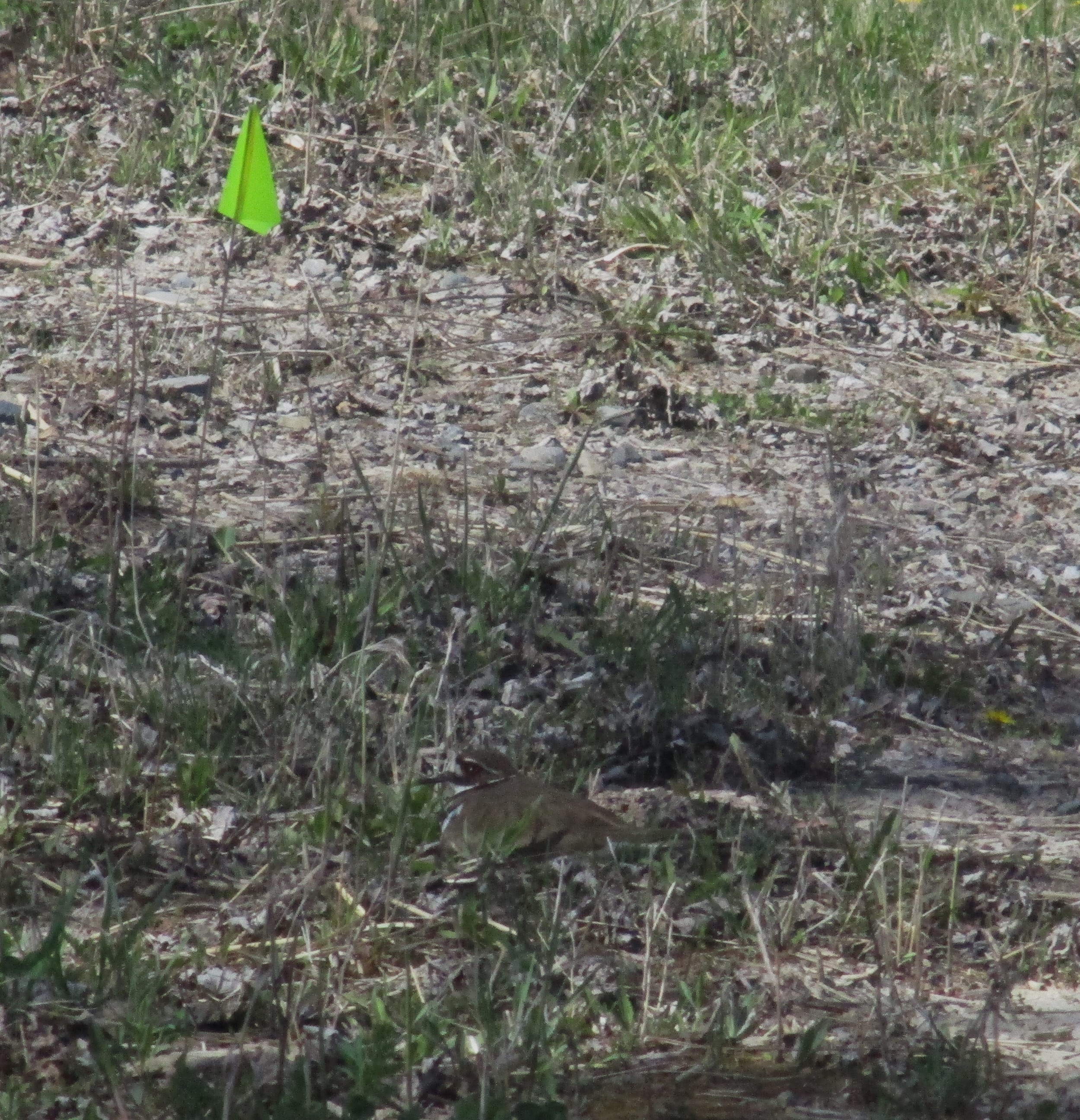
My husband found the killdeer sitting on her nest. There are four eggs in the nest. She is very camouflaged. Can you see her? (Look in the foreground.) He marked the area with the yellow flag so we remember to stay away from it.

Thanks for visiting! What’s blossoming in your area?

Catching Up

Parkinson’s Awareness Month

April is Parkinson’s Disease Awareness month so I will start by sharing this link to the Parkinson’s Foundation website that has a wealth of information and resources regarding Parkinson’s disease.

I am so blessed that 5 1/2 years post diagnosis my PD has not progressed. In fact, many of the symptoms I was experiencing when I was initially diagnosed have gone away. I am not on any medications, but I do take some supplements that help with the conditions that I still experience – mostly muscle cramps and head and neck tremors.

I’m not going to go into detail about everything I’ve tried and what I’ve found that helps, but if anyone would like more details leave me a comment and I’ll be happy to share.

Staying Healthy

In January I began my 60th trip around the sun. In pondering what I wanted to accomplish this year I decided my goal was ‘to be the best Me that I could be’. In order to do that I thought maintaining my health is probably one of the most important things that I can do. In order to maintain my health, however, there were some areas that I needed to change – first and foremost diet and exercise.

I wanted to make changes that would last a lifetime so in December I started forming new diet and exercise habits.

My diet changes look like this – I started cutting calories by cutting out sweetener in my coffee. Then I looked at how much I was eating. It seems I’ve spent a lifetime eating until I was full, and it occurred to me that I only need to eat until I am satisfied not until I am full. I started cutting down on portions. For example, for breakfast I will eat one egg, one piece of toast (instead of two), two pieces of bacon (instead of three), and 1/2 glass of orange juice (instead of a full glass). Similar cuts are made with lunches and dinners.

We have also begun eating a lot of tossed salads and fresh fruit. I still eat desserts but again I only eat enough to satisfy my sweet tooth. I find that usually about 5 bites is good.

I have also developed an exercise routine. Not only will exercise help me lose weight, build muscle and increase my metabolism, it is one of the things that is most recommended as far as treatments for Parkinson’s disease. I began in December by riding my recumbent bike a minimum of 20 minutes three times a week. I continued this through January, then in February I upped my game. I began riding almost every day and increased my time most days to 30 minutes. I might miss a day now and then but somedays I will ride extra minutes.

I am happy to say that since February 1st I have lost 15 pounds and just as happy that I I seem to have less muscle stiffness and cramping.

Eclipse

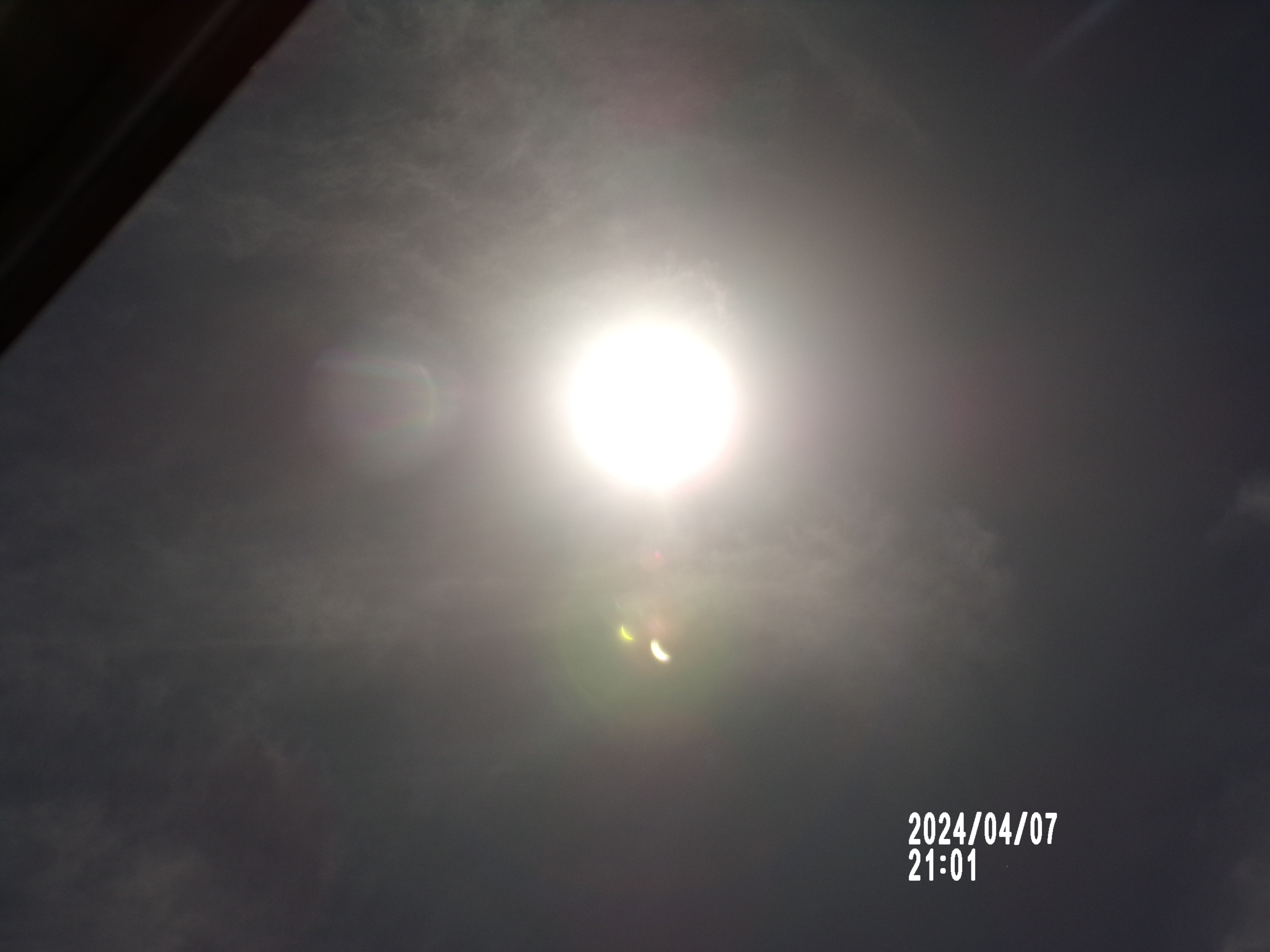
During the eclipse that was visible in parts of the US on April 8th my husband and I decided to go to the farm and experience it. We didn’t have eclipse glasses so we couldn’t actually watch the moon cross in front of the sun, but we wanted to see how dark it would get and how the chickens and wildlife (birds) reacted. We were not in the path of totality, but I think our area was reported to be 96-98%. The sky was mostly clear with only some thin wispy clouds.

Full coverage (98%) was supposed to be at 3:15 P.M. (Ignore the time and date on the photo. My camera is messed up and won’t let me into the menu to change the settings.) It didn’t get very dark out. It was like a cloudy day, yet it had an eerie feel to it. The birds continued to do what they were doing, and by the time the rooster began calling his hens, thinking night was coming, it was getting light again.

I stood under the barn porch and without looking I aimed my camera toward the sun to take some pictures. After I had taken several my husband told me that doing that could have ruined my camera because I was supposed to have some kind of filter on it. Oops! My camera doesn’t seem to be any worse off than it already was and below is a photo of what my camera saw at 3:15 on April 8th.

Spring Has Sprung

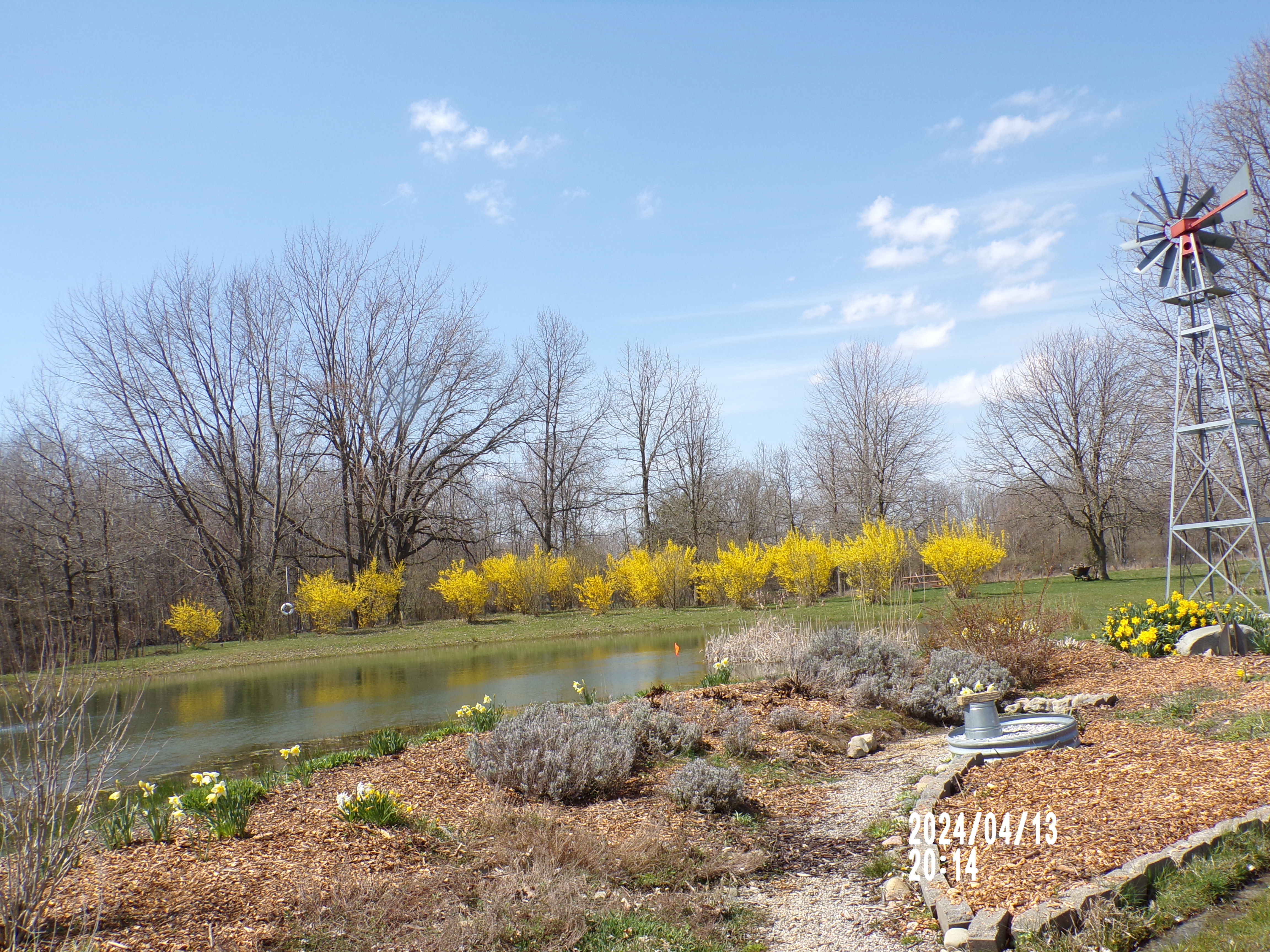
One of my favorite parts of spring is when our forsythias are in full bloom as they are right now.

A stunning display.

So brilliant and uplifting.

Daffodils are also in full bloom adding to the beauty of the season.

Some of the other things I loved about last week were seeing the first dragonflies of the year and hearing the mating songs of the toads. For more on toad mating see this post from last year.

Finishing Touches

After redoing the floor and the cabinets in our bathroom last month I still wasn’t satisfied. I thought the mirror frame needed updating. Since it was made out of a plastic or resin I wasn’t sure how well paint would adhere to it, so I took a different approach.

At the fabric store I found ribbon that was the perfect color and width. I used clear craft glue to attach the ribbon to the mirror frame.

Once I had the ribbon on the overlapping corners looked sloppy, so I needed to dress them up. I wasn’t sure what I was looking for when I went to the dollar store, but when I saw these butterflies, I knew that was it. They would complement both the ribbon and the flowered wallpaper.

We love the results.

Crochet

I finished the baby afghan I was making.

I also made this heart shaped stuffed octopus. The octopus is my own design. I am calling them octo-loves.

In Memory of Peanut

It was a sad day when our Dear Friend Peanut went to wait at the rainbow bridge.

“Just this side of heaven is a place called Rainbow Bridge.

“When an animal dies that has been especially close to someone here, that pet goes to Rainbow Bridge. There are meadows and hills for all of our special friends so they can run and play together. There is plenty of food, water and sunshine, and our friends are warm and comfortable.

“All the animals who had been ill and old are restored to health and vigor. Those who were hurt or maimed are made whole and strong again, just as we remember them in our dreams of days and times gone by. The animals are happy and content, except for one small thing; they each miss someone very special to them, who had to be left behind.

“They all run and play together, but the day comes when one suddenly stops and looks into the distance. His bright eyes are intent. His eager body quivers. Suddenly he begins to run from the group, flying over the green grass, his legs carrying him faster and faster.

“You have been spotted, and when you and your special friend finally meet, you cling together in joyous reunion, never to be parted again. The happy kisses rain upon your face; your hands again caress the beloved head, and you look once more into the trusting eyes of your pet, so long gone from your life but never absent from your heart.

“Then you cross Rainbow Bridge together….”

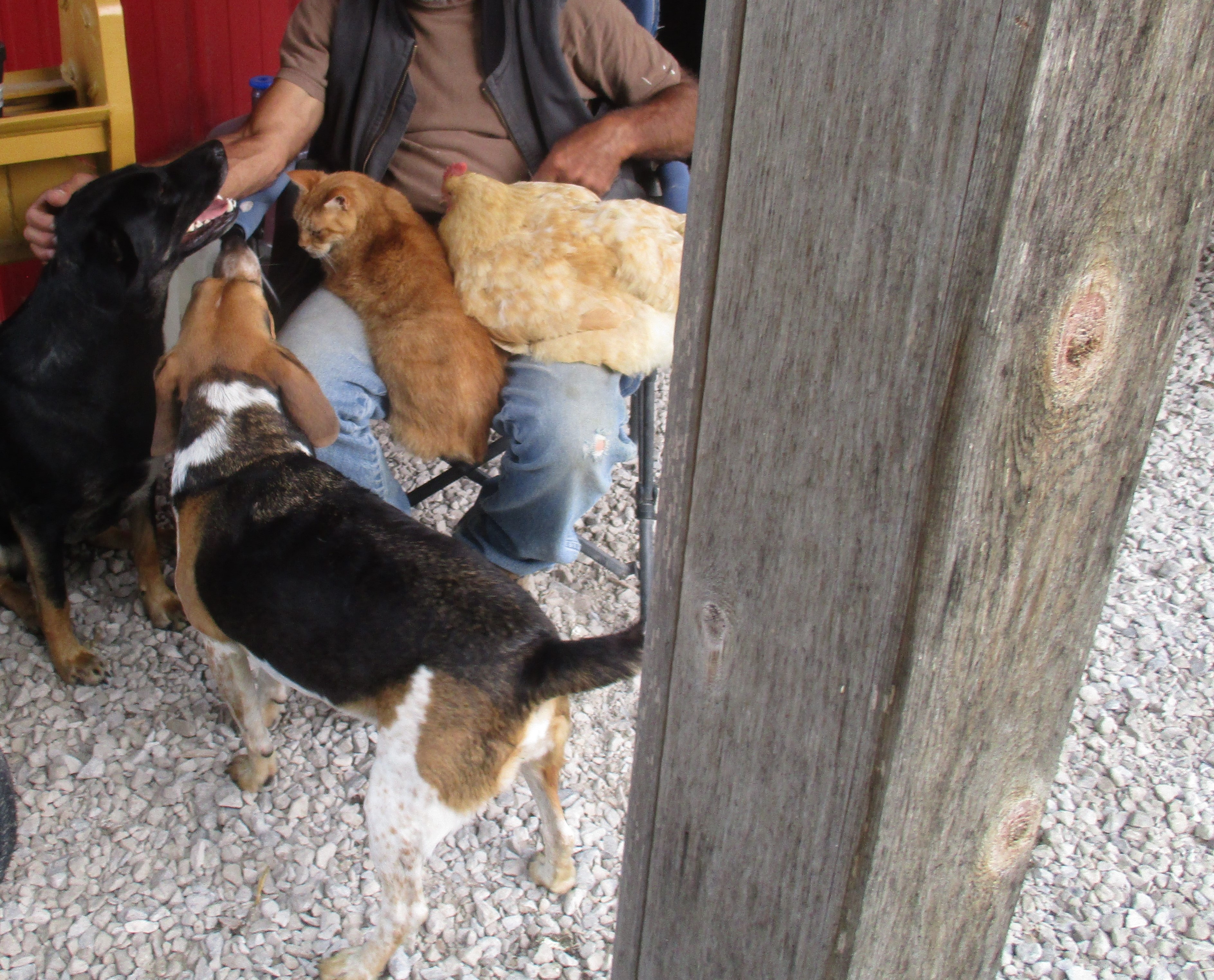
Peanut was a friend to all creatures great and small.

He couldn’t resist a comfortable lap to sit in.

To quote our granddaughter, Addie “Peanut is the best cat in the whole wide world.”

My husband honored Peanut with a special resting place for his remains.

He is dearly missed.

Thanks for visiting. What are you loving about spring?

April is Parkinson’s Disease Awareness Month – Please Read

If you are new to my blog or haven’t spent much time here, you might not realize that in 2018 I was diagnosed with Parkinson’s Disease. I generally don’t write about it because, thankfully, it hasn’t had to, nor do I allow it to, take center stage in my life. Today I have decided to write about it because April is Parkinson’s Awareness Month.

I’m going to start by sharing a link to the Parkinson’s Foundation website where you can learn a lot about the disease.

Since I do not use social media, other than my blog, and I don’t watch much news I’m not really certain how much awareness is being spread. Today I’m going to share a brief story as an example of how more awareness may benefit me and perhaps others with PD. Since every person with Parkinson’s experiences it differently I will do a future post to tell you more about my PD story.

Please Don’t Misunderstand Me

I need to preface this story by explaining that at this point my main Parkinson’s symptom and the only visible one is tremors. I am blessed that my tremors do not affect my limbs but are only present in my head and very, very slightly in my hands. Unfortunately, these completely involuntary head tremors, that at times I am not even aware are occurring, are often mistaken for a form of communication. They have in the past been interpreted as; shaking my head “No”, shaking my head in disgust, frustration, or anger, and one time I was asked if I was cold because the person thought I was shivering.

Most recently, I was shopping at our local dollar store. The store was not busy and there was only one person in front of me in line and no one behind me. The person in front of me finished paying and walked toward the exit, and the cashier began ringing up my items. As the person who had been in front of me in line was walking out, he stopped and asked the cashier if the carried powdered sugar. The cashier said “sometimes we do but I’m not sure if we have any. Let me check.” As she quickly left the register, the person said, “no, don’t bother. She’s shaking her head.” I’m not sure whether he thought I was indicating that they didn’t have the item, or that I was upset because the cashier had paused her service to me in order to attend to him. I attempted to explain to him that the tremors were involuntary and had nothing to do with his interaction with the cashier, but he didn’t seem to acknowledge me.

The cashier was back in a matter of seconds telling him they did not have what he was looking for. After he left, I told the cashier that it is frustrating when people assume that my tremors are something that they are not. I explained that the tremors are caused by Parkinson’s, and she understood, telling me that she thought that someone she knew was in the early stages of this disease.

In a day and age where people are highly sensitive and quick to react to a perceived offense, I often fear that someone, not understanding my condition, may take offence. I am sharing this story with you today because promoting awareness of Parkinson’s and perhaps wearing a button or clothing with the below emblem on it are the only things I can think of to help prevent these kinds of misunderstandings.

Please feel free to share this post and help promote Parkinson’s awareness.

Thanks for reading.

From Coping to Managing

I have read a lot of articles lately about how people are coping during the pandemic crises and even had some conversations with family members about it. Today I’d like to share my thoughts on the topic. While the terms coping and managing are often used synonymously they are two very different things.

The following story is how I came to that realization.

It was probably two months after first being diagnosed with Parkinson’s disease before I said the words “I have Parkinson’s disease”. Up until that point I was in, what I thought of as, a healthy state of denial. I would say things like “I have been diagnosed with…” or “they tell me I have…” but I was not ready to own it. I guess that was my way of coping.

I remember clearly the day I finally said the words “I have Parkinson’s disease”.  I was alone in the house (I wasn’t  ready to say those words to anyone else) standing at the kitchen sink washing some dishes thinking about what was happening to me. Then I said the words out loud “I have Parkinson’s”. As soon as I said it the voice in my head, God’s voice, said “Yah, you got this.” Then I said, “Yah, I’ve got this. It doesn’t have me. I have it.”

It was then that I remembered that I am the manager of my life. Regardless of the circumstances that come my way, I still get to make decisions about how I respond to them. You might remember from my first post about Parkinson’s disease that I’m not in this alone. I have a wonderful team to support me, but ultimately I am the manager of my life.

My message to you today is, if you find yourself struggling to cope with a situation (COVID 19 or other) remind yourself that you are the manger of your life. Take control, make good decisions for yourself, your family and others around you. Do not let the situation control you – you’ve got this!

Breathe Deep and Carry On!