Our farm is our haven. It is a place where we can kick back and relax but it is also where we work. It differs from most work places in that we do not answer to a human boss or employer; instead we answer to nature. The weather and the numbers of hours of daylight largely dictate what we need to do on the farm. Planting, watering, weeding, harvesting are all tasks that are based on the weather.
Our farm is also a haven for many other living beings. We often celebrate the wildlife on the farm as many of them aid in our farming efforts. Others as less celebrated and require more work from us as we have to guard crops and livestock against them. In this post I want show you many of the critters we share our farm with and discuss what we consider best practices (for us) to deal with them.
Rabbits
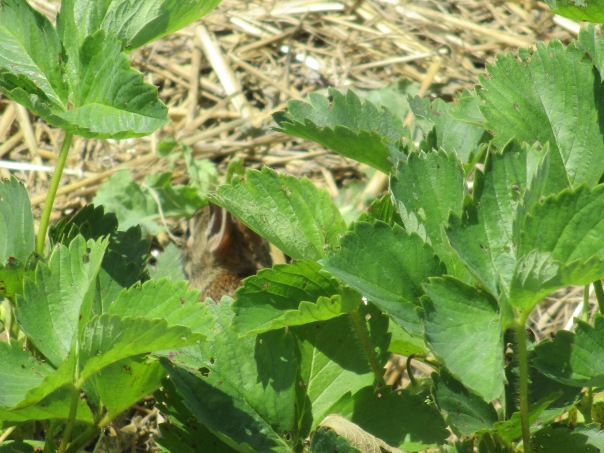
Our farm is home to a large rabbit population. One advantage to having rabbits on the farm is that they are preyed upon by many of the same animals that prey upon our chickens. If a hawk, owl or coyote can fill up on a rabbit perhaps they are less likely to go after our chickens. Secondly, even though we are not hunters, in a pinch hunting rabbit as a source of food would be an option.
The disadvantage to having rabbits is that they do enjoy eating many of the foods we grow. So far it has been our experience that rabbits may eat a partial row of greens here or there, but they have not completely destroyed any of our crops. Even the baby bunnies that we discovered living in our strawberry bed last year did not do much damage. I suspect that since there is so much wild vegetation growing on the farm the rabbits are well fed without needing to vandalize our gardens.
We are happy to share our farm with rabbits, and at this point we have not found the need to use any defensive measures against them; even the four babies that were living in the strawberry bed moved out quickly once we began frequenting the area to pick ripe berries.
Squirrels
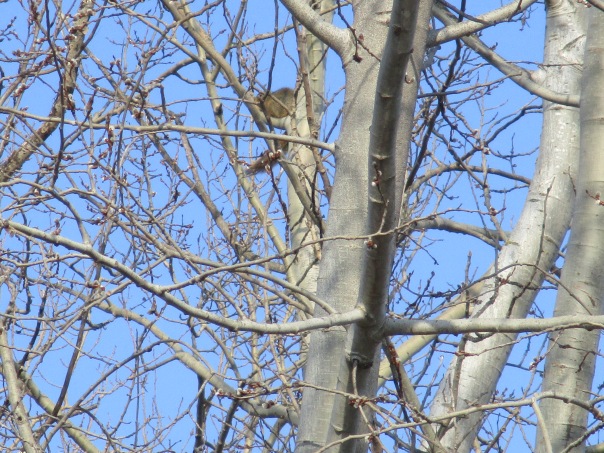
Squirrels are another critter that live on our farm. We have a lot of mature hickory and oak trees that provide the food that they need. Squirrels have not become a problem on the farm and they give Trooper a work out every now and then.
Birds
On any given day during the summer I would guess that we may see and/or hear thirty or more species of birds while at that farm. Some we can identify by sight or sound and some still remain anonymous to us.
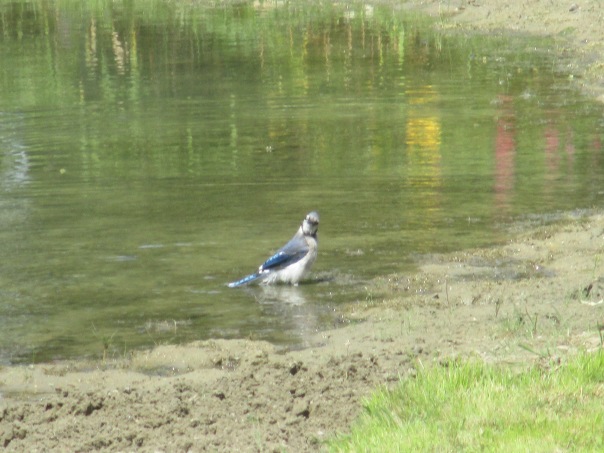
Many of the birds, like this Blue Jay, use the pond for bathing and it always a pleasure to watch them take a dip along the waters edge. Blue Jays are omnivorous, with a diet comprised of nuts, seeds, berries, bugs and more. Interestingly they are known to store acorns, much like a squirrel, to have for food during the winter. I suspect it is because their diet includes such a wide variety of things that we have not found them to be much of a threat to our crops.
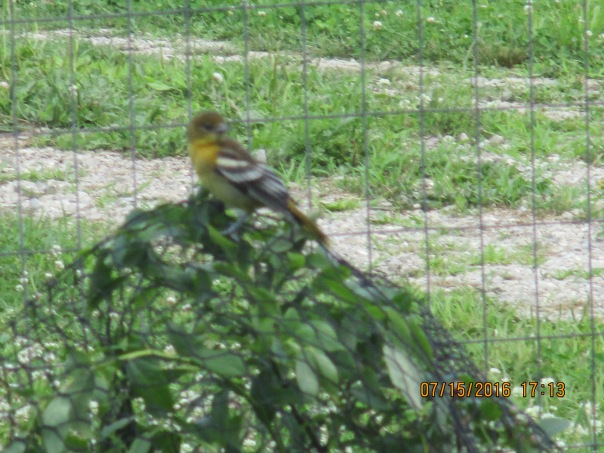
Some birds, like this Orchard Oriole and the Robin below are more of a challenge. Using netting over the blue berry bushes, as the berries start to ripen, is essential if we want to harvest any blue berries for ourselves.
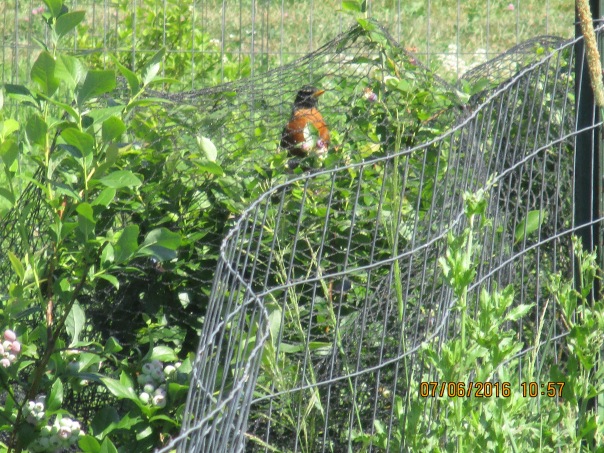
Even with netting some birds can find their way to the berries.
While netting seems to be our best option with blue berries I have taken a different approach when it comes to Elder Berries. Our Elder Berry bush that is mature enough to produce fruit is over eight feet tall and on a slope, which poses problems when it comes to putting netting over the bush. I discovered a couple of years ago that the birds do not wait for elder berries to get ripe, they eat them while they are still green. Since my main purpose for growing elder berries is for the medicinal benefits I began harvesting the flowers which also have great medicinal properties.
Last year when we had our first real apple crop we discovered the some birds were eating the apples as they ripened. Again because of the size of these trees netting does not seem a feasible option, so I think this year we will experiment with some of these other deterrents.
Our pond is a main attraction for many species of birds.
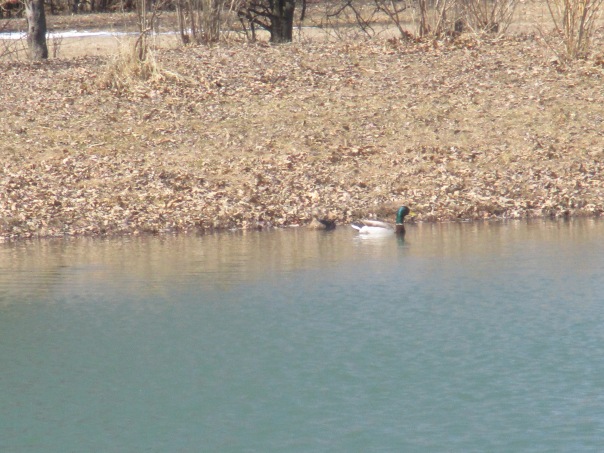
Ducks and geese will occasionally pay us a visit. Fortunately they have not decided to take up residence and raise a family there. I suspect they do not find it a suitable home because of our presence, thus we are a natural deterrent.
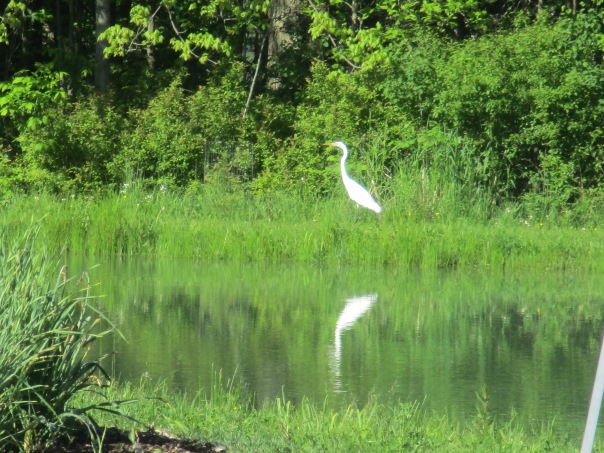
Occasionally both White and Blue Herons stop by the pond for a snack. We can view them from a distance but if we approach the area they quickly fly off.
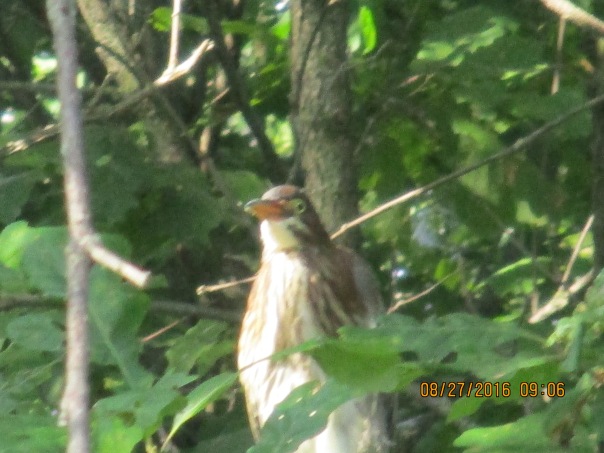
This bird had me stumped for a couple of years. During the summer I would see it (more likely them) eating at the edge of the pond. I looked at many bird sites and books and then sought help from others before I could identify it as a Green Heron. I suspect we had a pair nesting in the wooded area near the pond for a couple of years, but last summer I only saw them a couple of times so they may have nested somewhere else in the area.
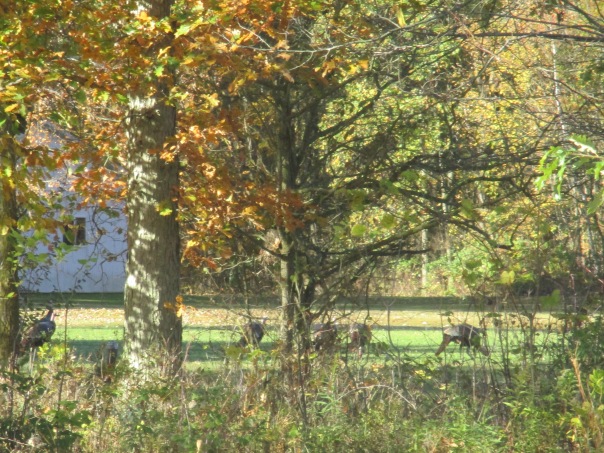
Wild Turkeys live in the area and we occasionally see a flock of them passing though. They do not nest on the farm, probably because we mow the back field in the fall so it does not offer the protection that is needed for their nest.
Insects
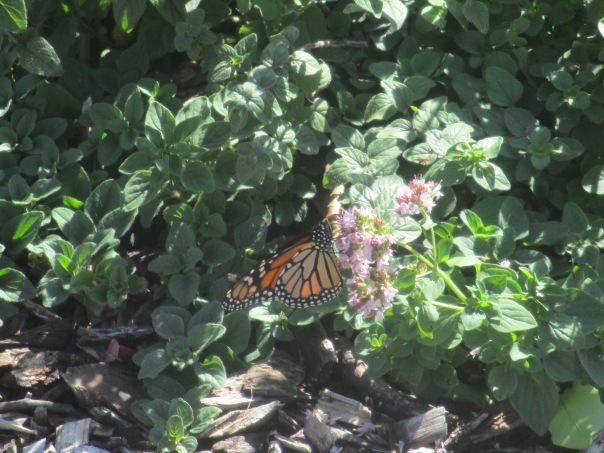
Many Butterflies, or Flutter-bys as I like to call them, with their beautiful colors and patterns, frequent the farm in the summer. They share the task of pollination with our bees and many other insects.
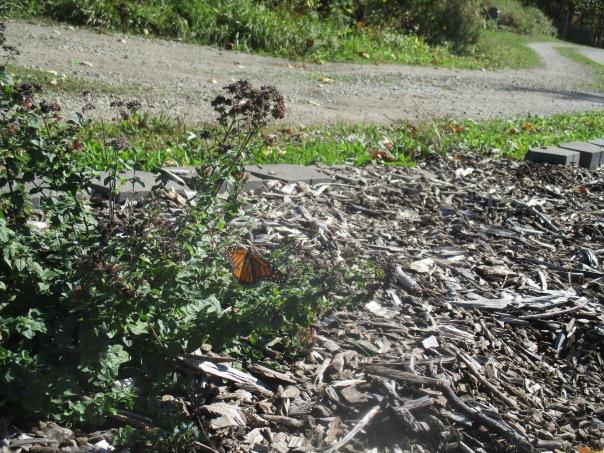
They can often be found collecting nectar from flowering plants
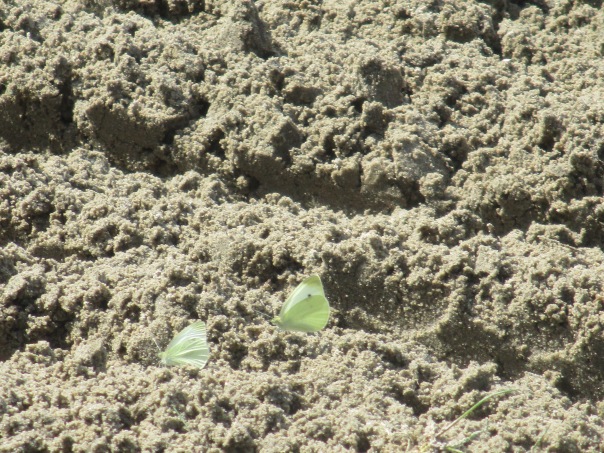
or drinking water on the beach. While we see many different species of butterflies they do tend to be camera shy so I have a very limited selection of butterfly photos.
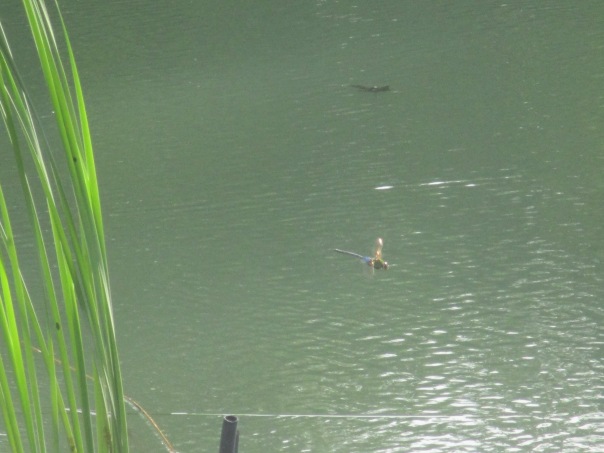
Dragonflies and damselflies are probably my favorite insects to watch. Unlike the butterflies who flutter in a somewhat relaxed nature, the dragonflies movement is swift.
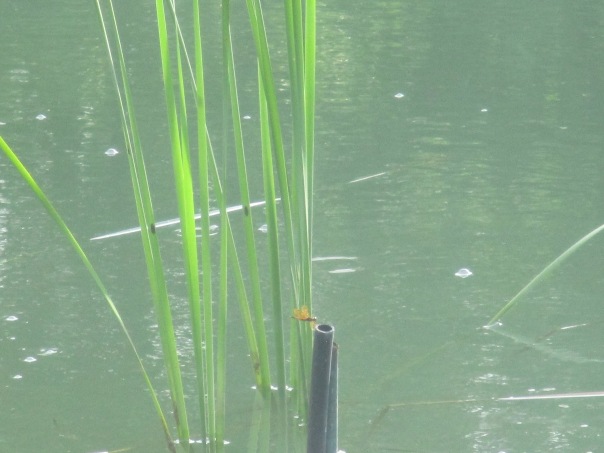
They too come in an array of brilliant colors. They do not bite and in fact at times seem friendly as they hitch a ride on a shirt sleeve. The fact that dragon flies dine heavily on less desirable insects is a huge plus.
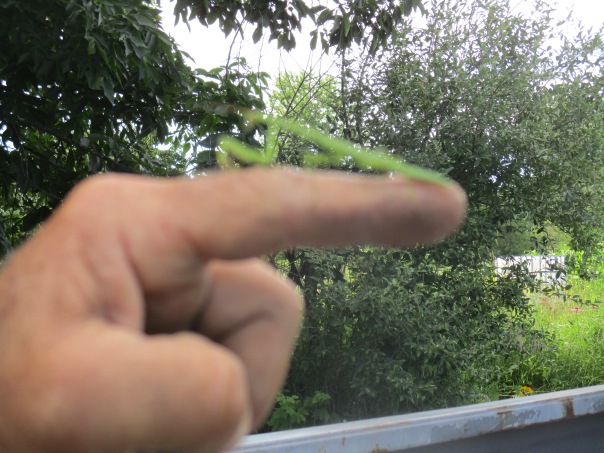
The Praying Mantis is a unique creature that we see occasionally in our area. I actually had to check the spelling of it’s name as he/she is also a preying mantis. This bug does eat other bugs but is not very selective, so while it might aid in ridding us of undesirable insects, it might also eat honey bees and others that we find valuable. Having just a small population of these is okay.
If you are a regular reader you probably know that we are bee keepers so there are a lot of Honey Bees on our farm. Even though these bees did not arrive on our farm naturally and are living in manmade hives rather than a hollow tree, they are considered part of nature on our farm.
We do try to use natural methods of managing our hives. We do not use chemicals in the hive, we do not split hives to keep them from swarming, we do not replace a queen in the hive because we fear she is too old, and we make sure the bees have enough honey left in the hive so that we do not have to feed them sugar water. We usually even save some of the harvested honey in case we find that the bees need to be fed.
Our belief is that a healthy hive can naturally manage themselves so our goal is to help them remain healthy.
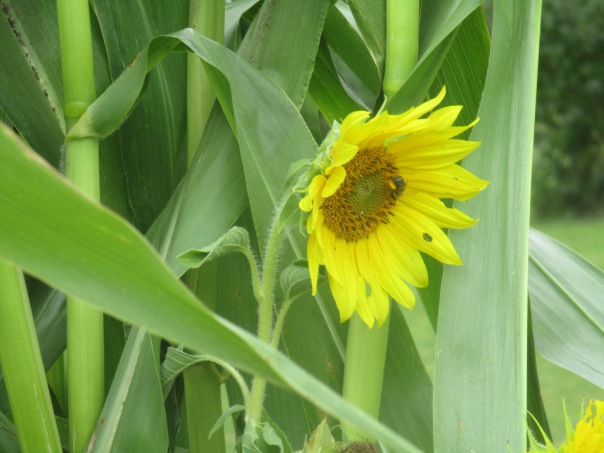
One way to help the bees remain healthy is ensuring that they have a variety of food sources. I have not seen any studies or reports on this but it makes sense that, just as you or I require different foods to build healthy bodies, bees would also be healthier when their diet is comprised of pollen and nectar from a variety of plants.
To accomplish this we allow many plants that grow naturally, and many would consider weeds, to grow on the farm. Among these are dandelions, golden rod, asters and Canadian thistle – all heavily foraged by bees. We also grow flowers, vegetables, herbs, fruit trees and other plants that bees like. Some of these include lavender, thyme, sunflowers, chamomile, clover, buckwheat, squash and pumpkins and apple trees.
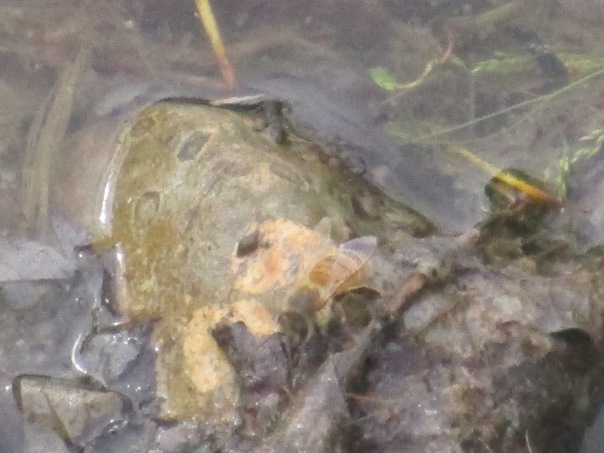
The other thing that bees need is water and again we feel that having a clean water source can contribute to the health of the bees. Honey bees are frequent visitors to the edges of our pond.
Late spring and summer we usually see the hives swarm. This is how honey bees naturally increase in population. When the hive begins to get too crowded they make a new queen. Once the new queen is hatched the old queen leaves the hive with the swarm of workers and drones to create a new colony.
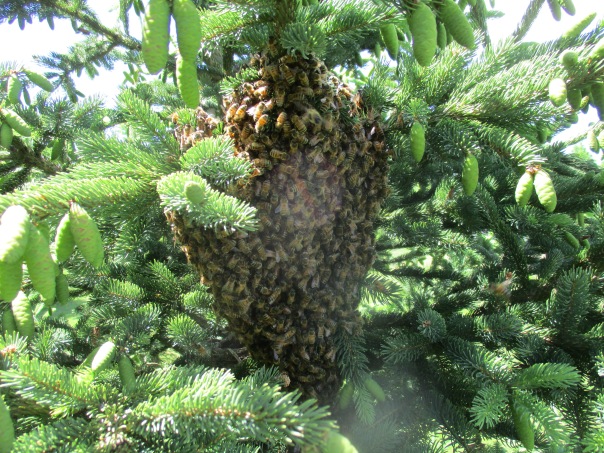
Most often we attempt to capture the swarm and put them in an empty hive, but sometimes the swarm lands in a place that is inaccessible to us, like 30 feet up in a hickory tree. In this case we wish them well. Since we live in an area where there are hundreds of acres of mature woods, it is not out of the question that these bees can find a suitable home in a hollow tree and survive in the wild.
In return for our stewardship the honey bees provide us with pollination services as well as honey and bees wax.
Deer
There is a large deer population in the area. They probably draw the most attention from visitors at the farm. While some people see Bambi others see venison steaks. As I mentioned before we are not hunters, and the fact is that warm and fuzzy Disney type critters can be very destructive in real life. The deer have been our biggest challenge thus far.
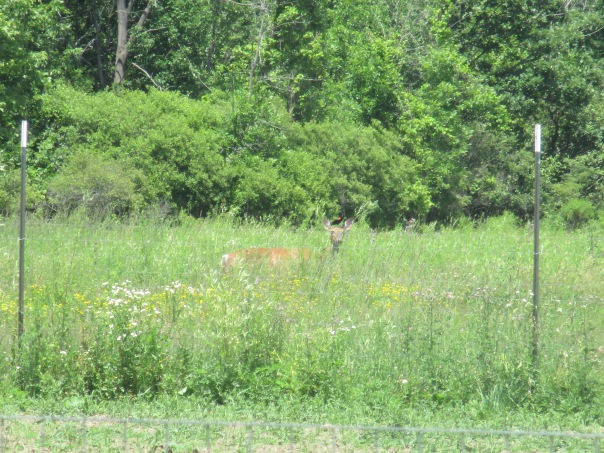
Deer will eat or at least taste just about anything. The only way to protect our gardens and trees against deer is fencing.
Reportedly white tail deer can jump eight feet, so 7.5 to 8 foot is the recommended height for deer fencing. We have discovered that for fencing our garden areas and trees 4 foot high fencing is sufficient to keep the deer out.
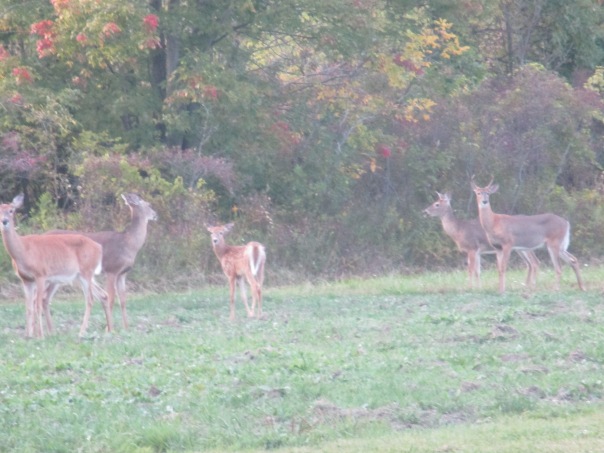
My theory on this is that four foot fence keeps the deer out because we have not fenced in the whole property, which would have cut off their travel routes. We have only fenced in sections. There is still plenty of clover and grass in the field for them to graze and they are not standing outside our garden coveting our pumpkin and Swiss chard.
Four foot high individual fences also work to protect young trees from the deer. Once the trees braches are higher than the fence the are usually safe because deer don’t generally eat anything higher than their head.
Aquatic Life
Before I begin talking about the life in the pond I really should point out the earth worm in this picture. Earth worms are probably a farmers best friend. They loosen the soil by tunneling through the ground and also add nitrogen to the soil. We are always happy to see earthworms as we are gardening.
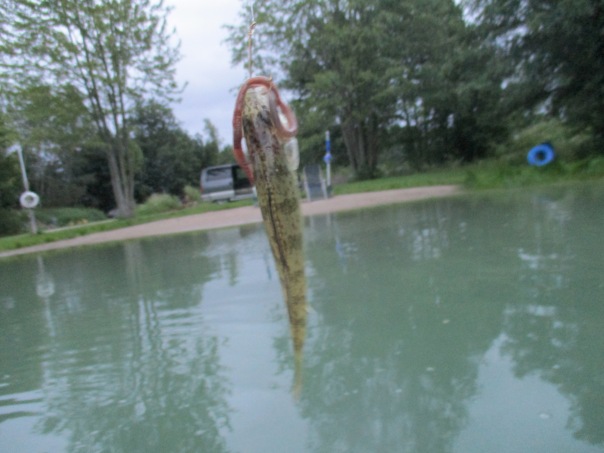
Earthworms also make good bait for catching perch.
When we dug our pond in 2012 my husband, who is knowledgeable about such things decided to build an ecosystem that would support fish and other aquatic life. At it’s deepest point the pond goes down 20+ feet. Before the pond filled with water we put in two piles of large rocks where fish could potentially spawn, find shade or hide from larger predators.
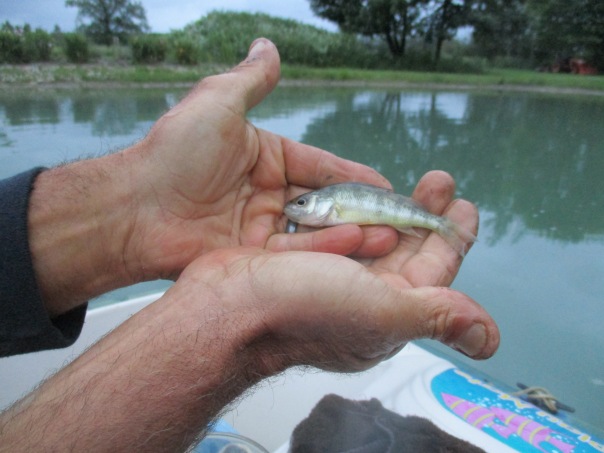
Our sand beach also extends at least 12 feet into the pond which makes great spawning ground for perch and the windmill works as an aerator pumping air into the pond. In 2013 we stocked the pond with perch, fathead minnows, some walleye, a few channel catfish, and a few pike.
We know that the perch and minnows are breeding in the pond. We know that there are still catfish and walleye living in the pond but have not been able to establish that they have reproduced. We also know that as of last summer we have at least one large mouth bass living there.
Fish are the only thing we added to they pond. All of the rest of the living beings showed up on their own.
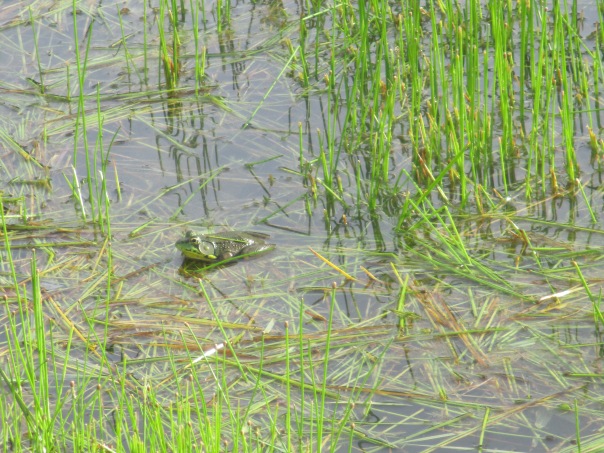 Among those frogs are a favorite. Frogs and toads are very useful on the farm as they eat lots of bugs and slugs and such.
Last year we happened to be at the farm on frog mating day. The frogs were very loud that day. Their high pitched, drawn out, melodious chirps filled the air.
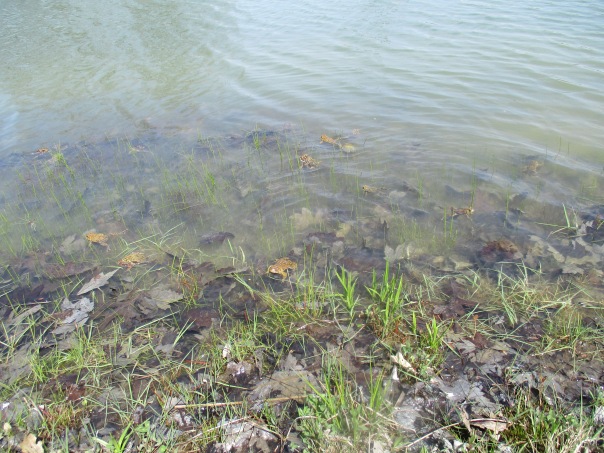
As we walked toward the area that the sound was coming from it was quite incredible to see dozens, if not hundreds, of frogs gathered in the pond. We have identified several types of frogs and toads on the farm and they are all welcome.
Turtles are also amongst those who have taken up residence in our pond. At this point we have only seen painted turtles which are harmless and at times even humorous.
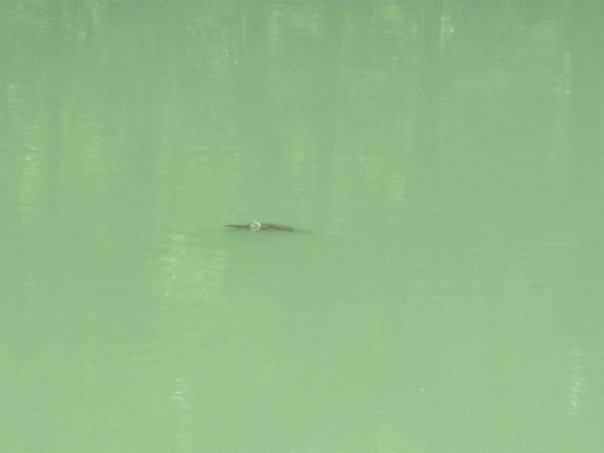
They also tend to be camera shy so my photo selection is limited. The turtles are reproducing on the farm as each year we see the cutest little baby turtles.
In touching on the benefits and challenges that these beings provide to our farming efforts I did not mention the greatest gift they offer. “Peaceful” is the word most commonly used by visitors to describe our farm.
Maybe you can picture it – squirrels scampering from tree to tree or rabbits playing tag in the yard; a herd of deer grazing in the field; listening to a symphony of songbirds while tending the garden; being serenaded by a chorus of frogs, in three part harmony, as you sit around an evening campfire.
It is uplifting, it is relaxing, it is peaceful, it is serene, it is tranquil, and it will make you smile. All of the creatures that make up this ecosystem provide an environment that is seemingly anti-stress. It is healthy for the mind, body and spirit and we are blessed to be part of it.
I hope you enjoyed visiting our farm. Please feel free to share you thoughts in the comments section below.
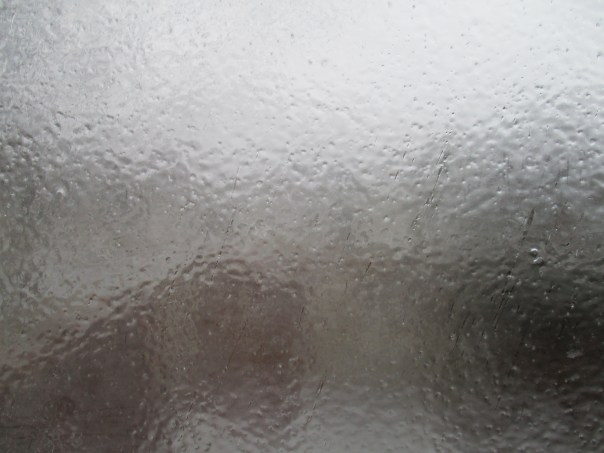
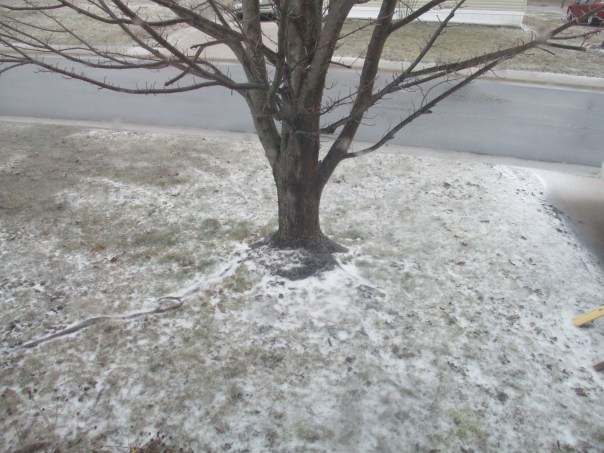 When I looked out the North window I could see that most of the precipitation that had fallen was in the form of sleet and freezing rain. It felt very discouraging since we should be three weeks into spring by now. Thankfully the power was still on. We had prepared for a power outage by bringing extra firewood inside, making sure that there was oil in the oil lamps, checking flashlight batteries and making sure the freezers were full so that foods would stay frozen longer. When the freezers are only partially full of food I freeze blocks of ice in cardboard milk containers to fill the empty space. When warm weather comes, and we are spending days at the farm, we will use these blocks of ice in a cooler at the farm to keep drinks and food cold. Buying bags of ice everyday can get quite expensive.


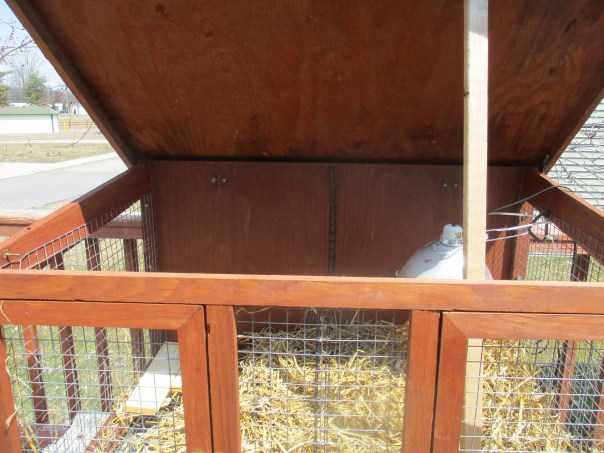 After assembling the hutch and putting in straw for bedding we use a zip tie to anchor the heat lamp in place.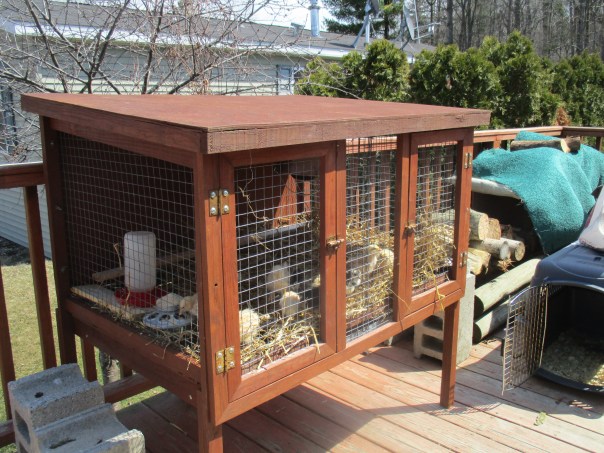


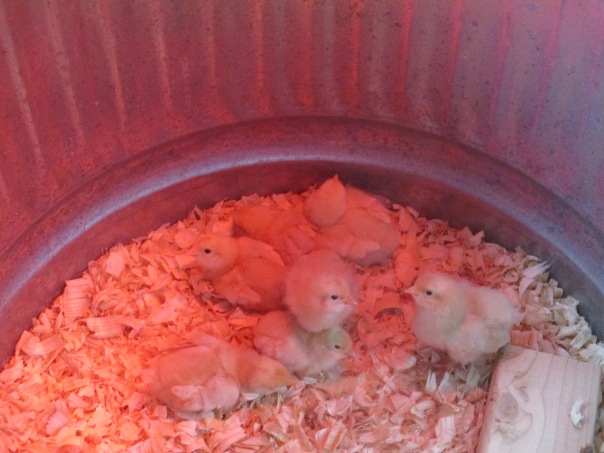


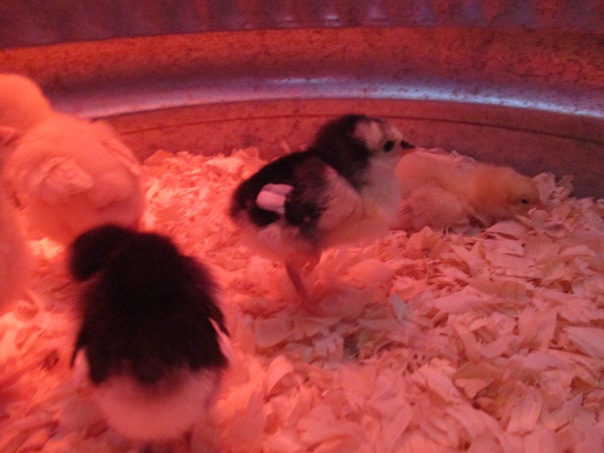 Black Australorps. This breed is supposed to be much like the Orpington except harder to spell. Just kidding, they supposedly lay more eggs than the Orpington. They certainly are adorable chicks.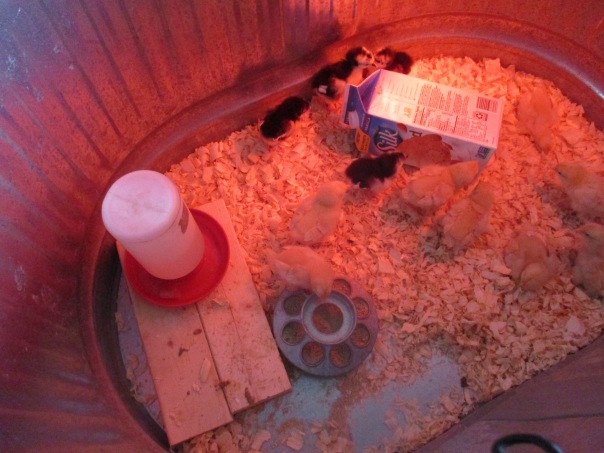
 Don't Eat It! Soap and Skin Care