Time is getting away from me. It is a busy time of year and while I have been documenting some of what is happing with pictures, I haven’t made time to post it. This post starts the week of June 15
Thursday Observations
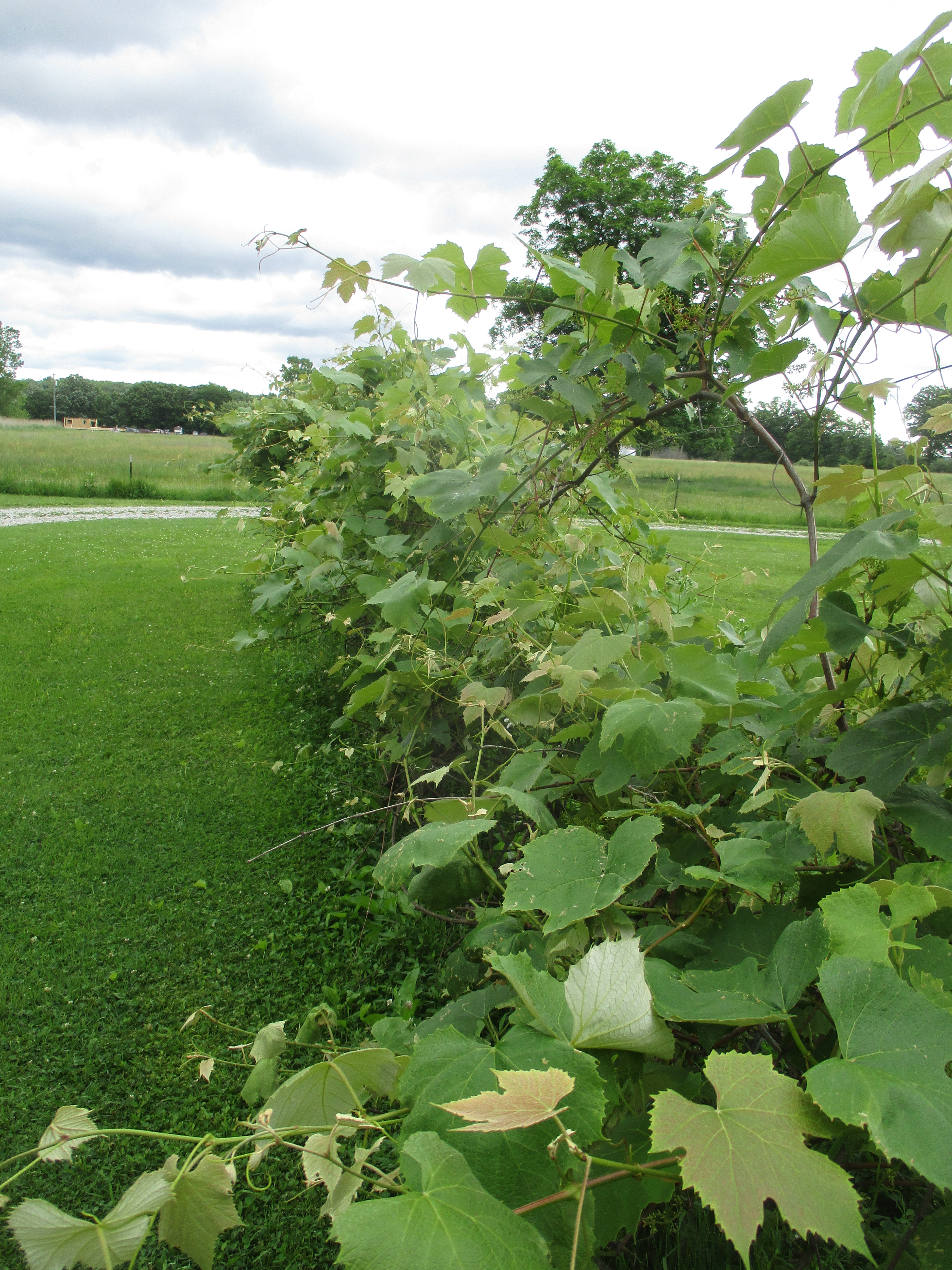
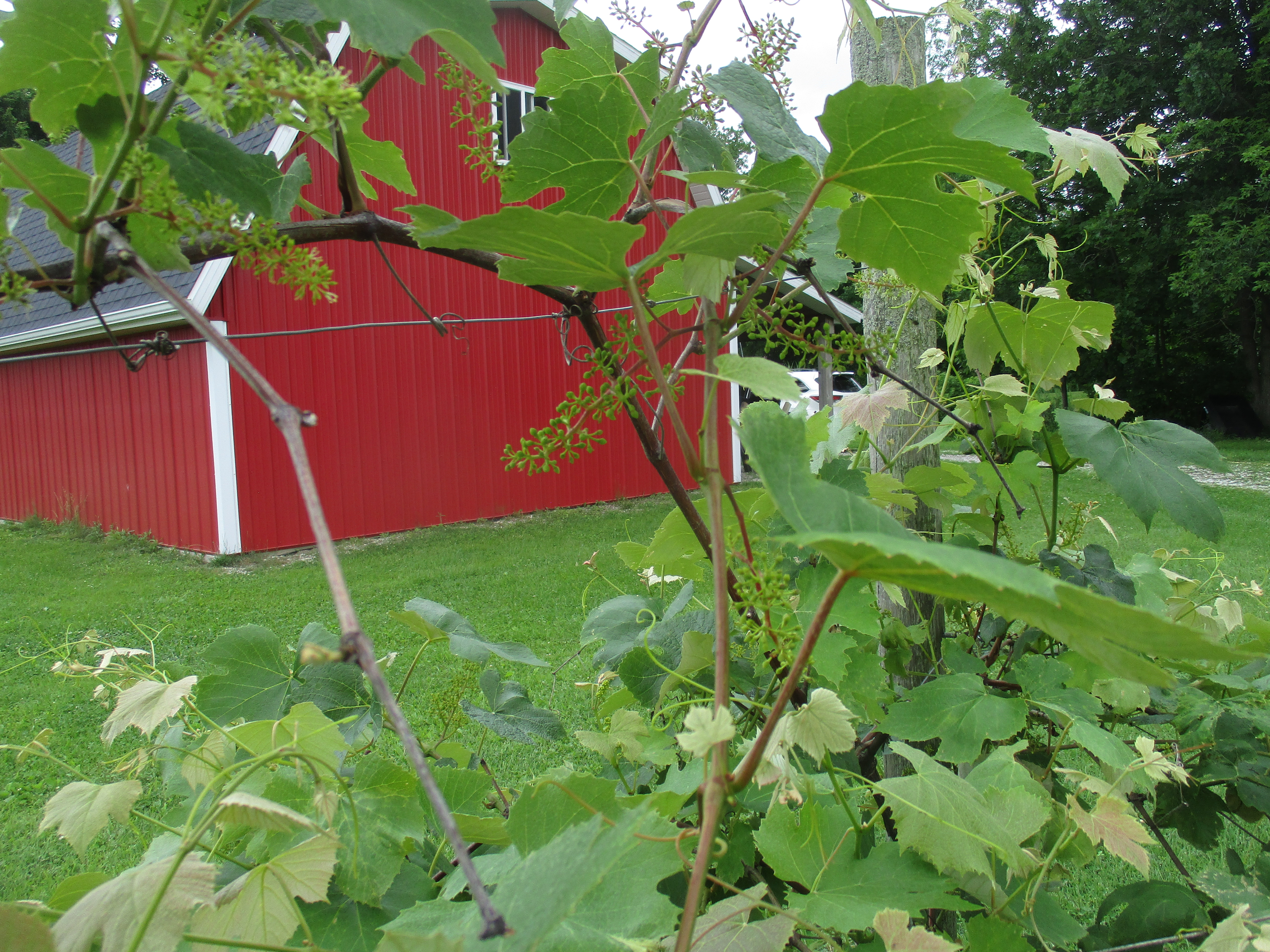
Prior to last year we had pruned back our grape vines dramatically. As a result, they produced few grapes last year and the ones they did make were eaten by birds or chickens before they ripened.
This year they are making grapes so I’m hoping for a decent harvest.
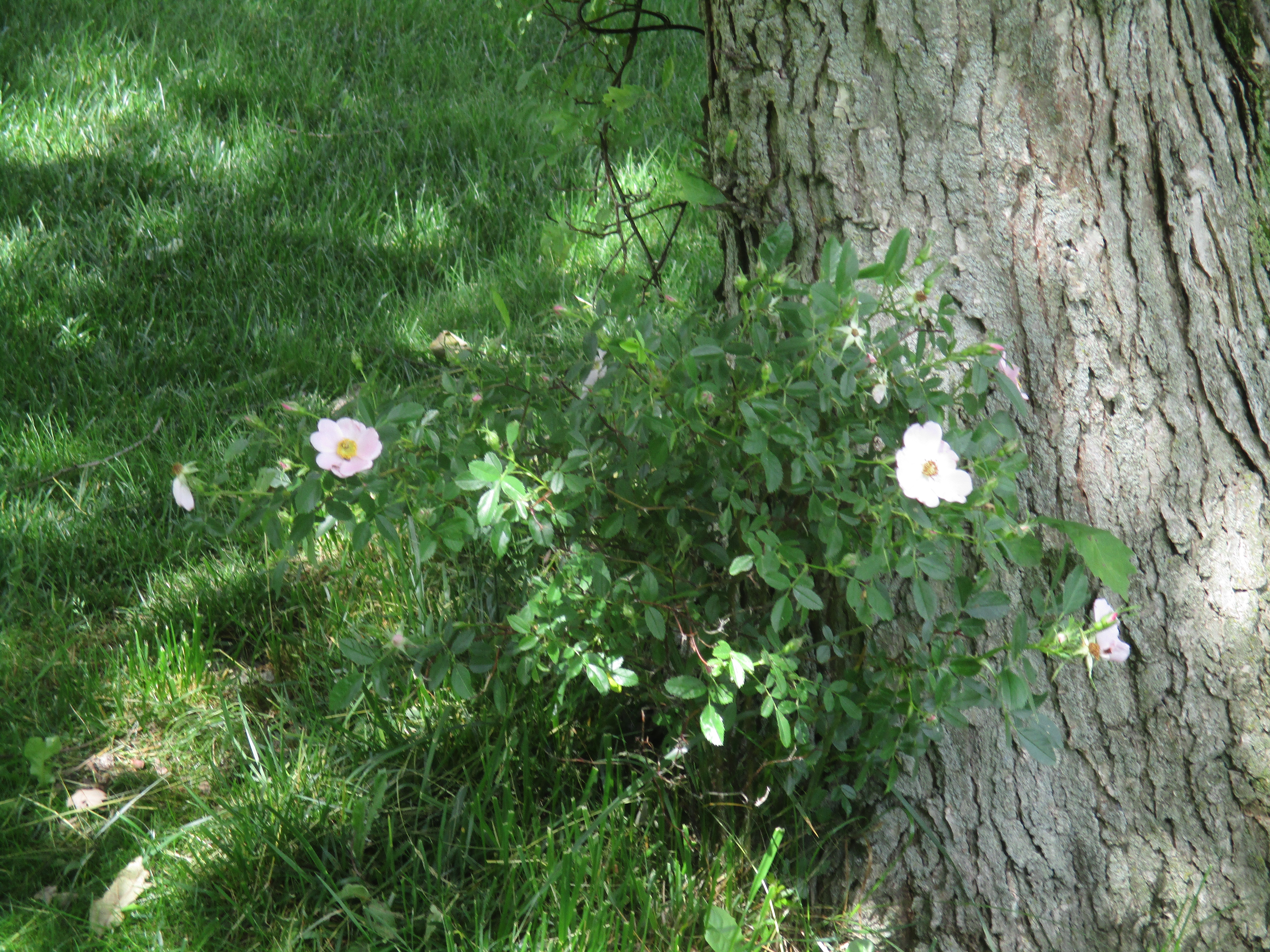
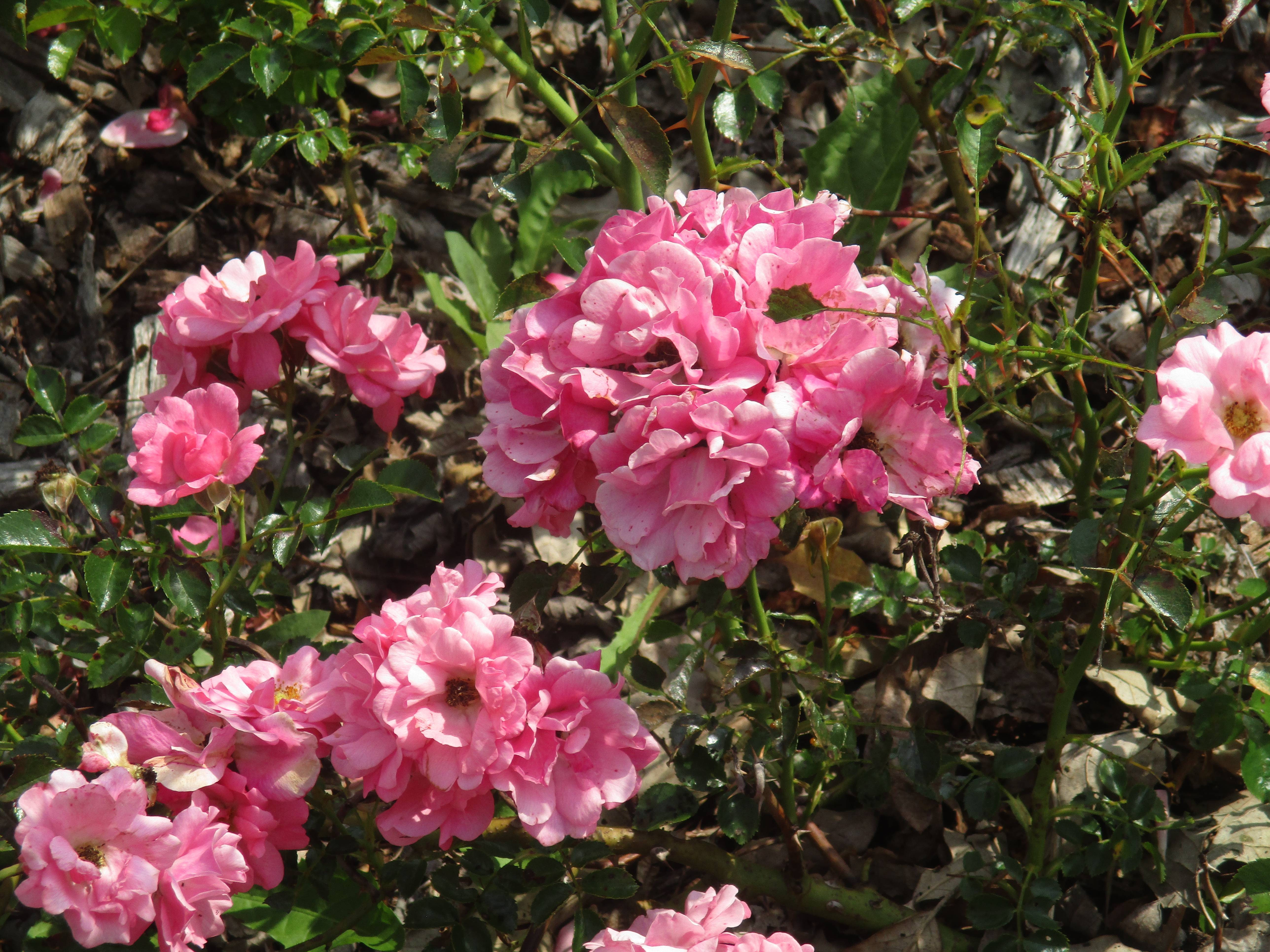
In my last post I showed you the large wild rose bushes in bloom. The second variety of wild roses bloomed in June as well. They are a low growing bush with small pink blossoms and a lovely fragrance.
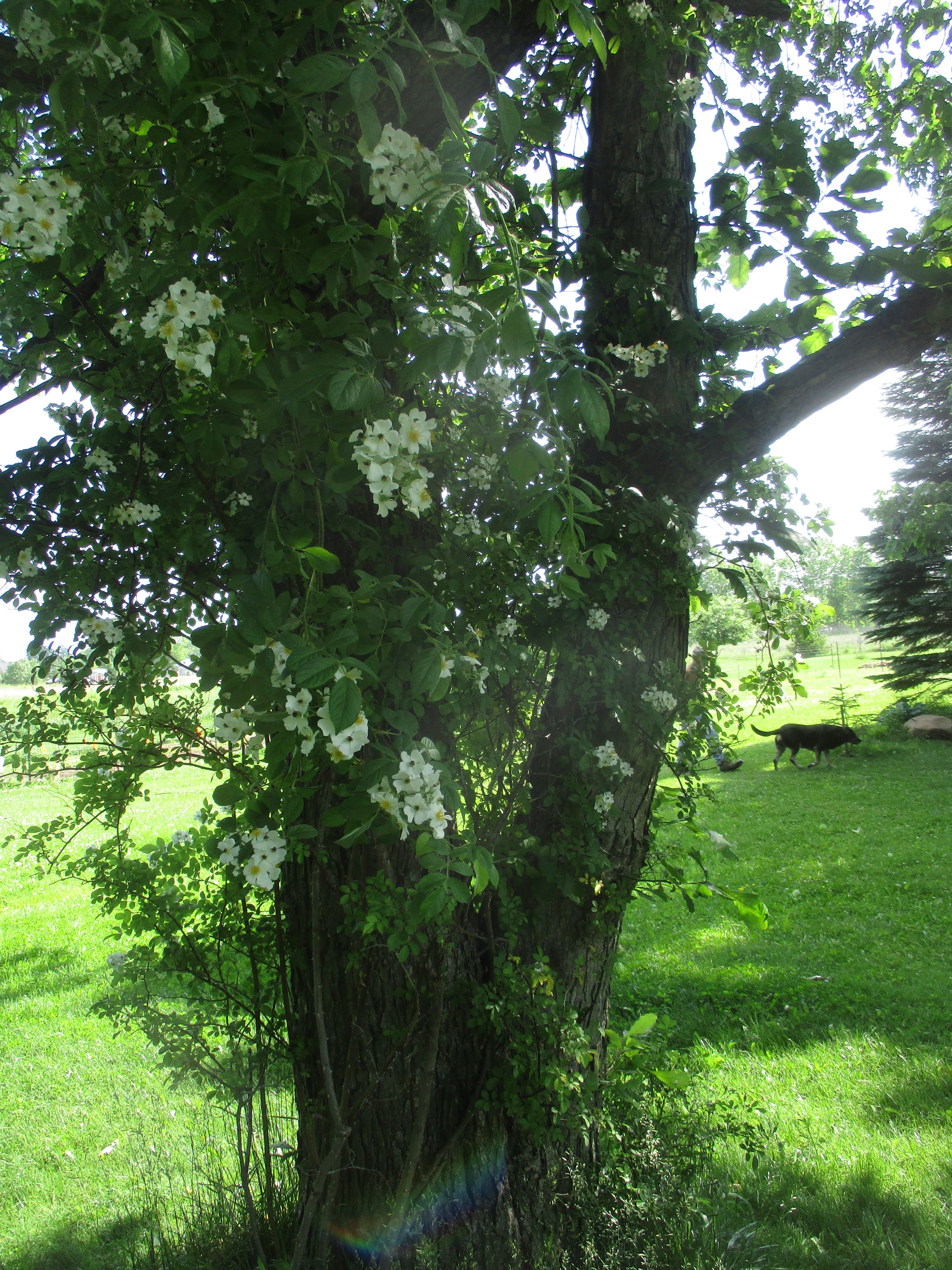
The same oak tree that supports the white, climbing rose (above) that I showed in my last post has that small pink rose bush growing at its base.
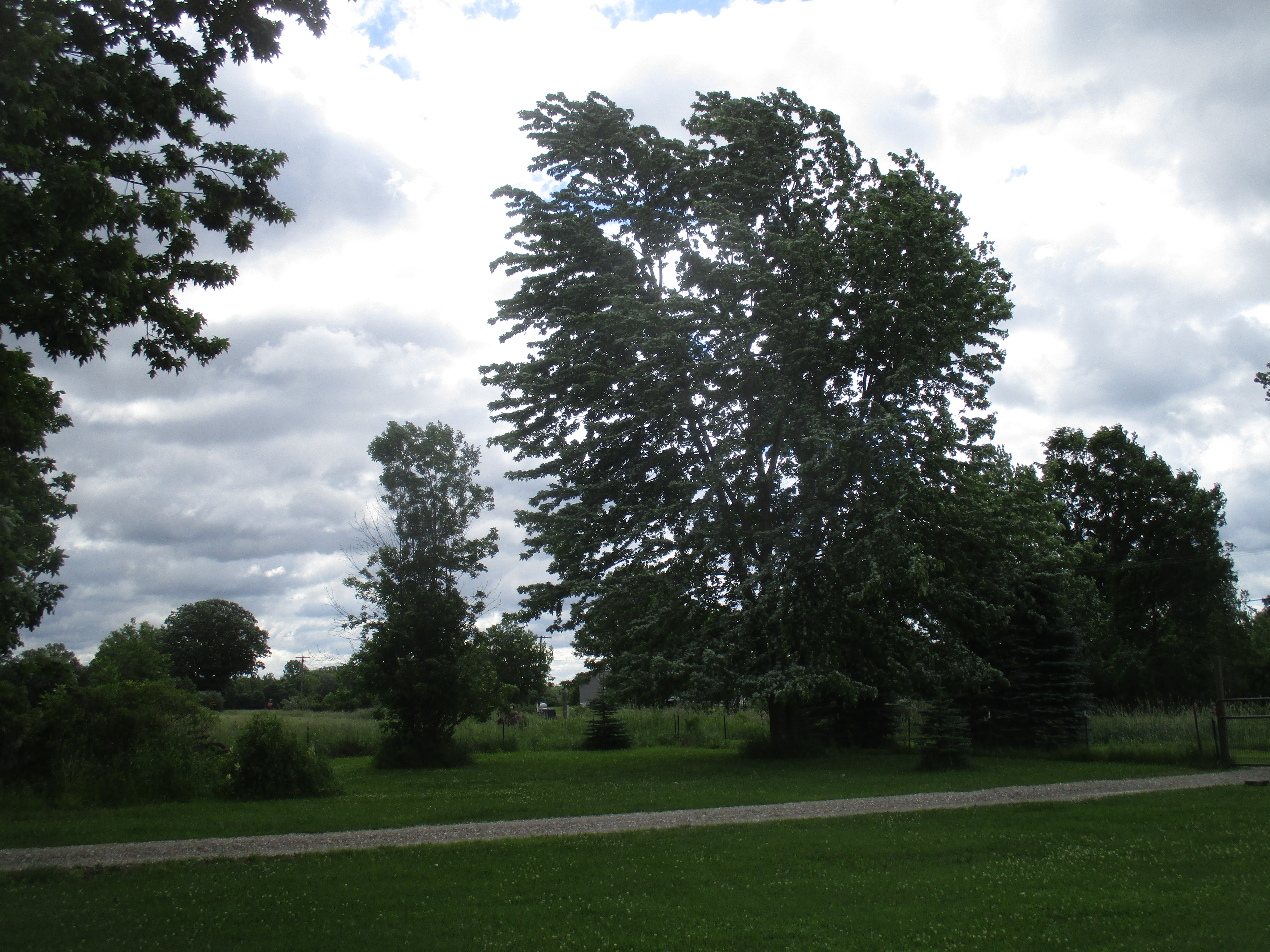
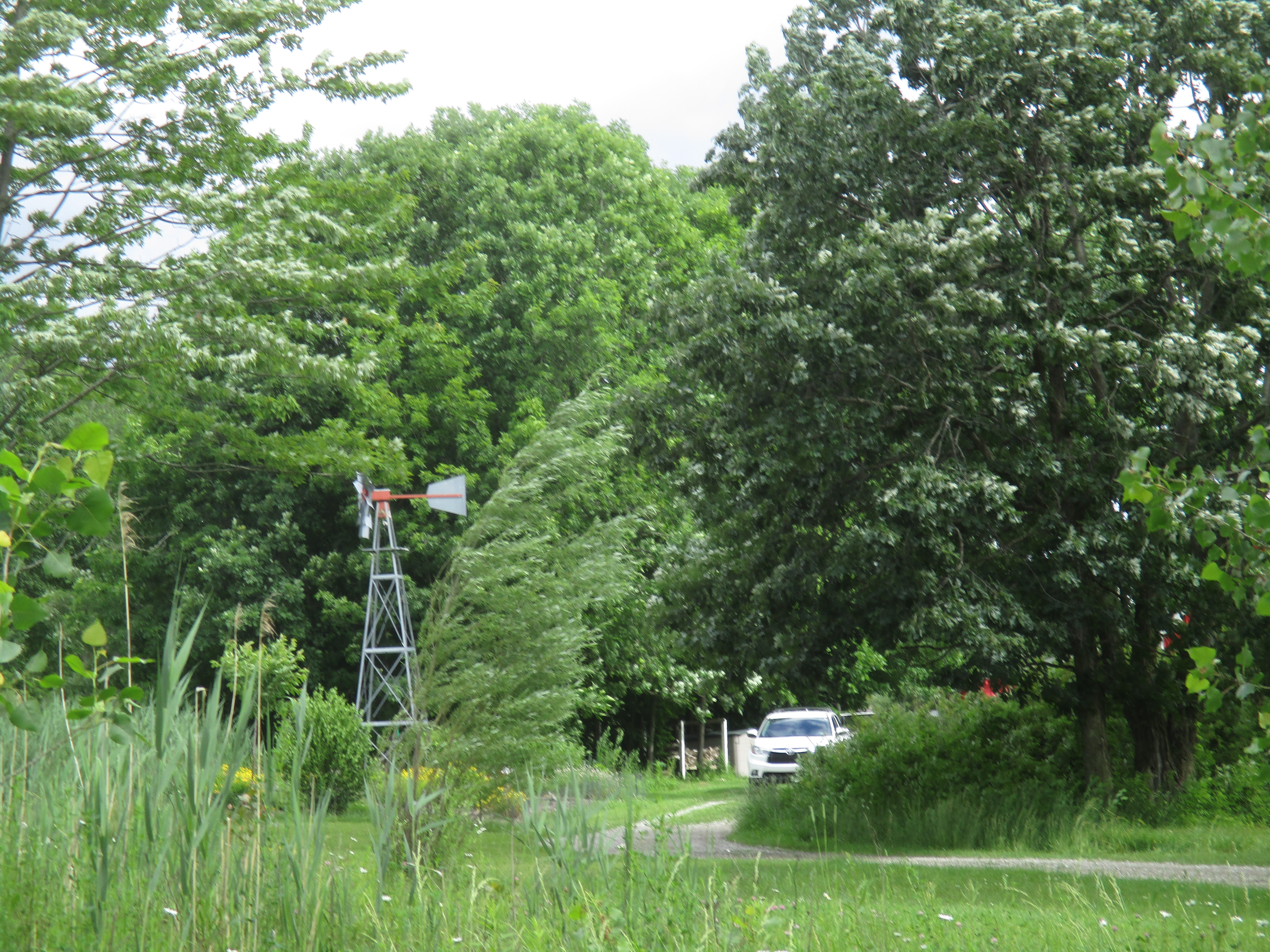
Thursday was windy. You can’t see the wind but you can see the effects.
Friday Chores
On Friday morning my to-do list including cutting the chives since their flowers had faded and they were threatening to drop their seeds. My chive patch is as big as I want it to be so cutting them back before they reseeded was necessary to prevent a total chive invasion.
That short green patch in the front is where the chives were.
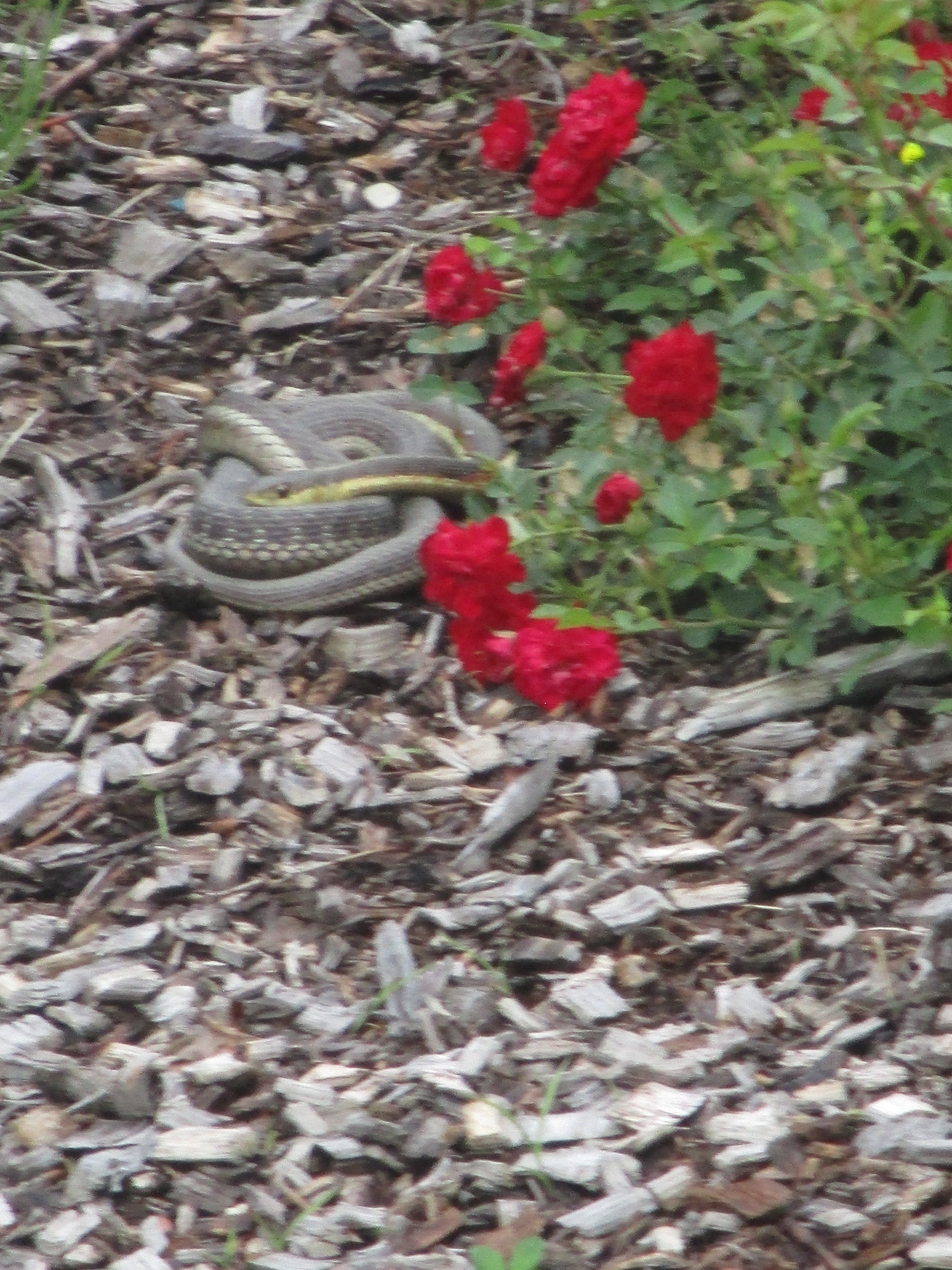
I’m glad I didn’t encounter this guy while I was cutting the chives. I don’t mind snakes but don’t like coming across them where I am working.
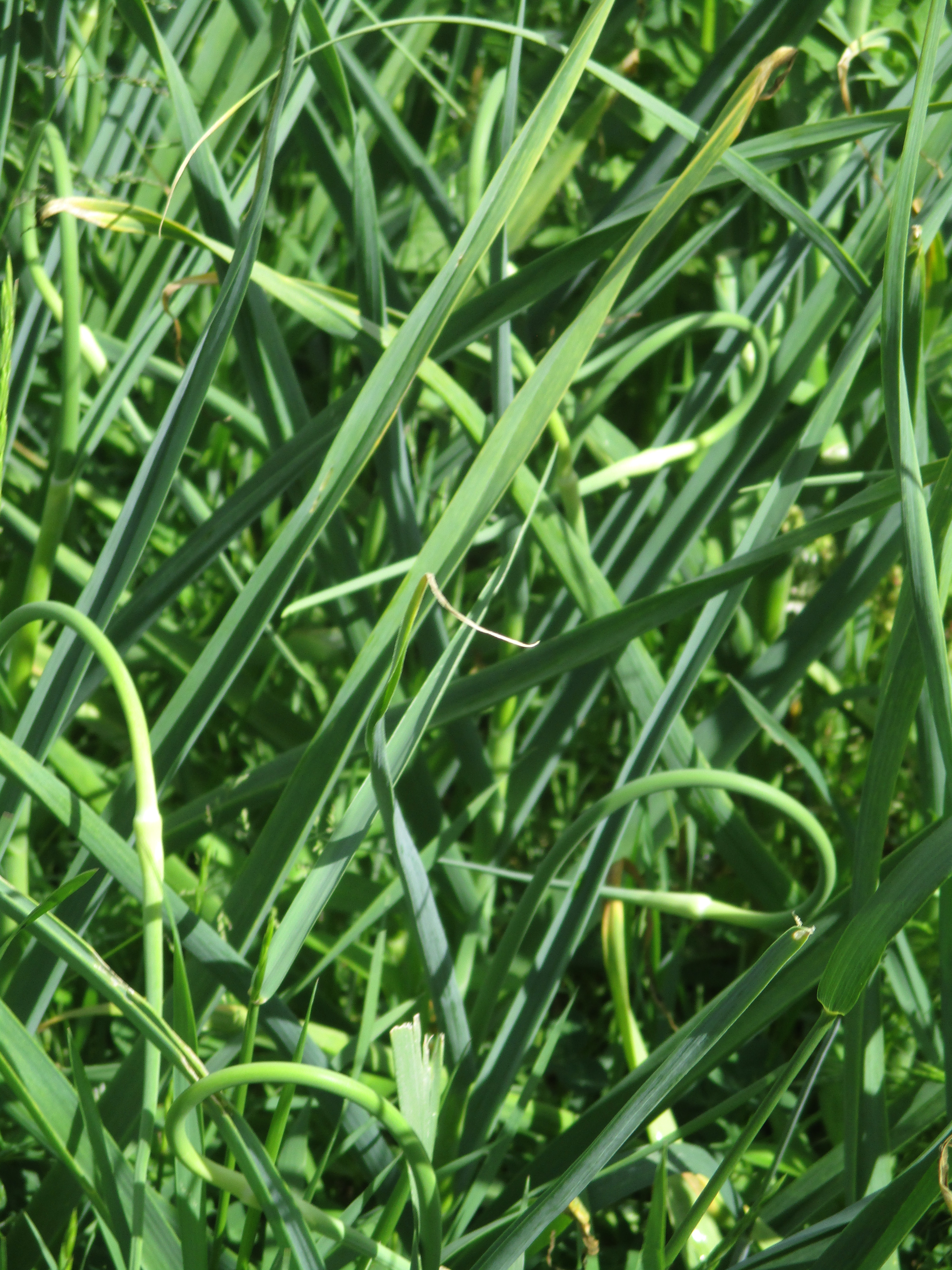
Cutting garlic scapes was my other chore that morning. If you don’t know what scapes are click here to learn more.
Saturday Efforts
On Saturday my husband spent many hours weed whipping around the pond. Oh, how I appreciate his hard work!
Colors of Summer
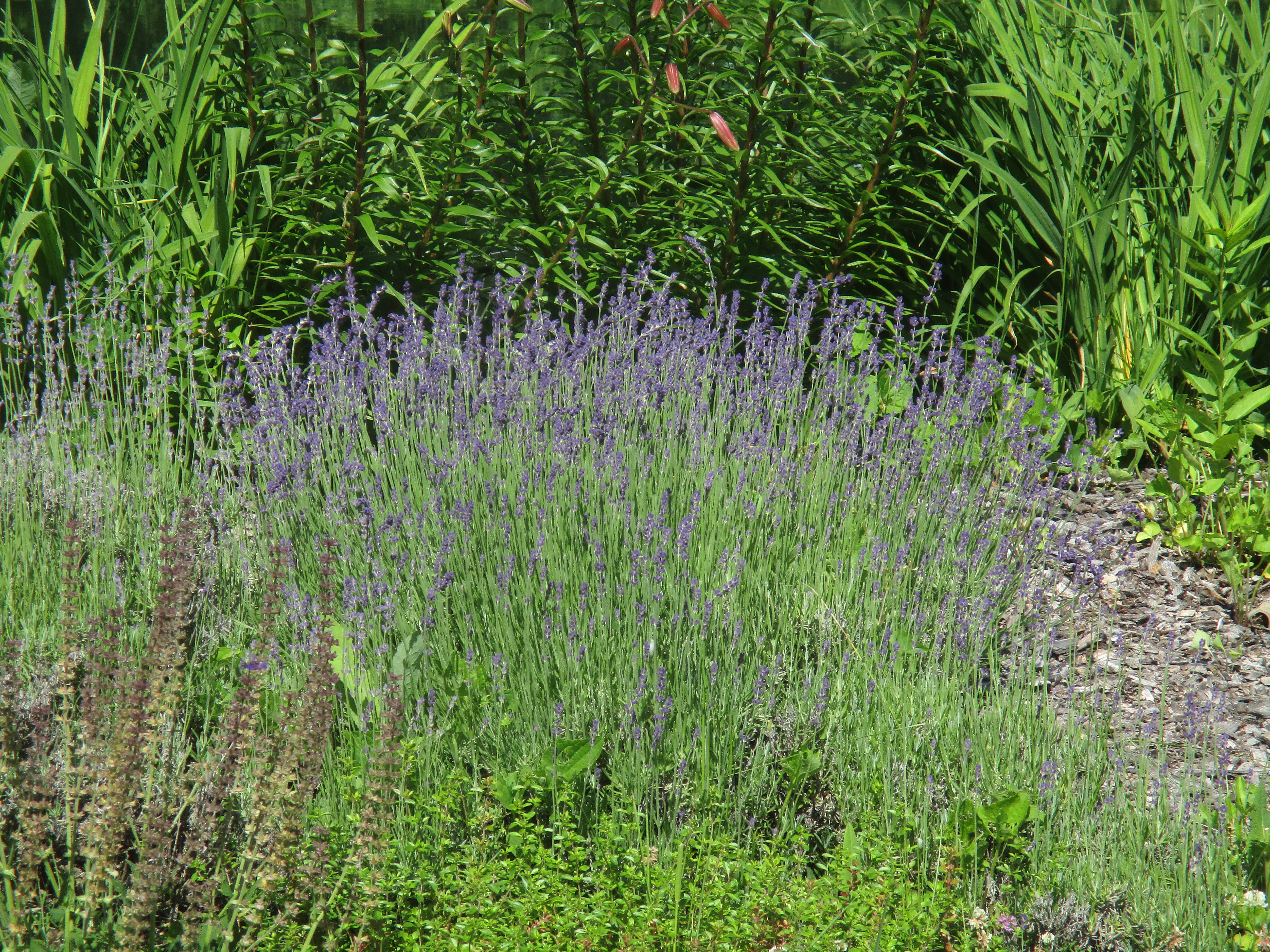
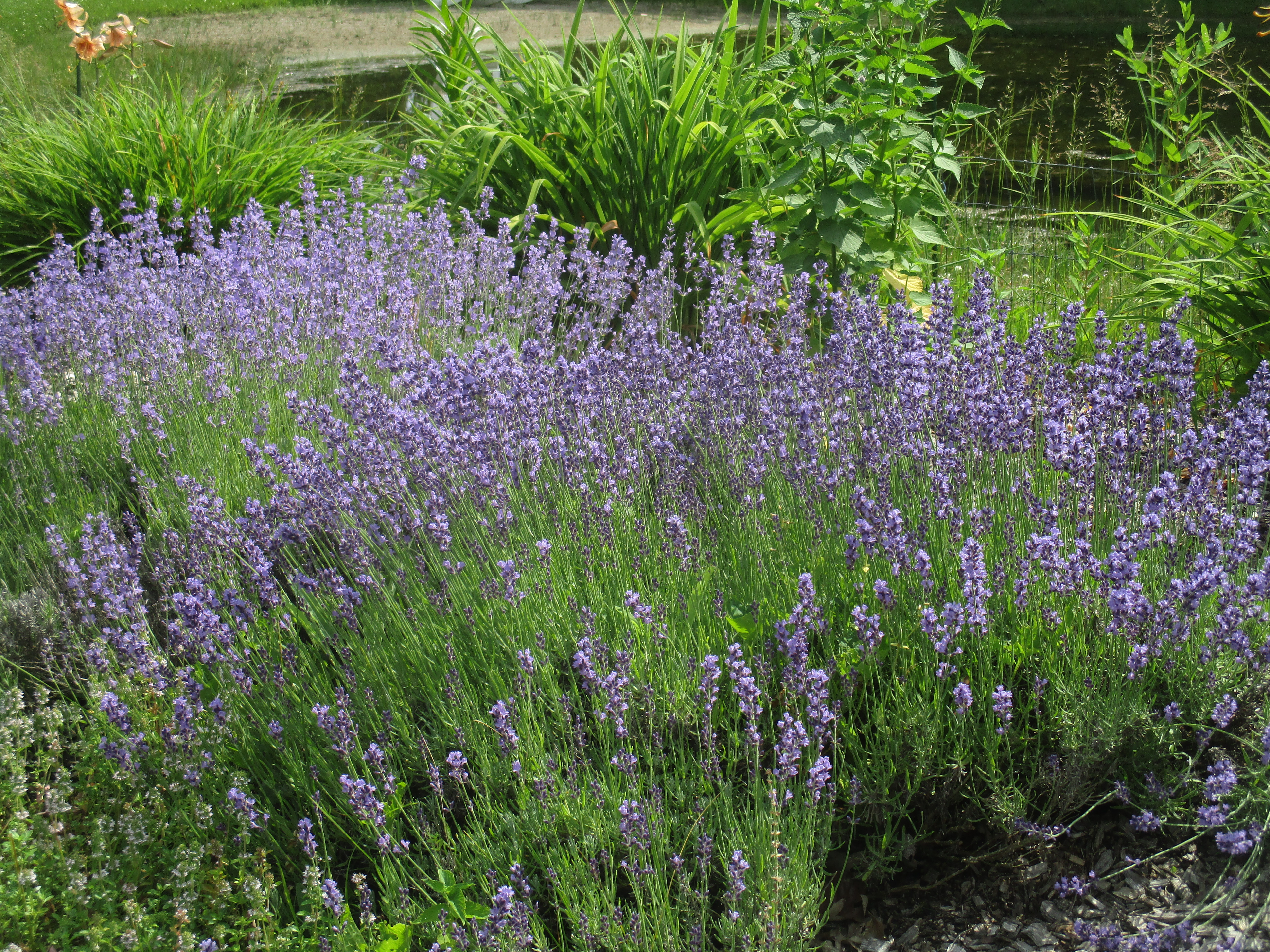
Lavender beginning to blossom.
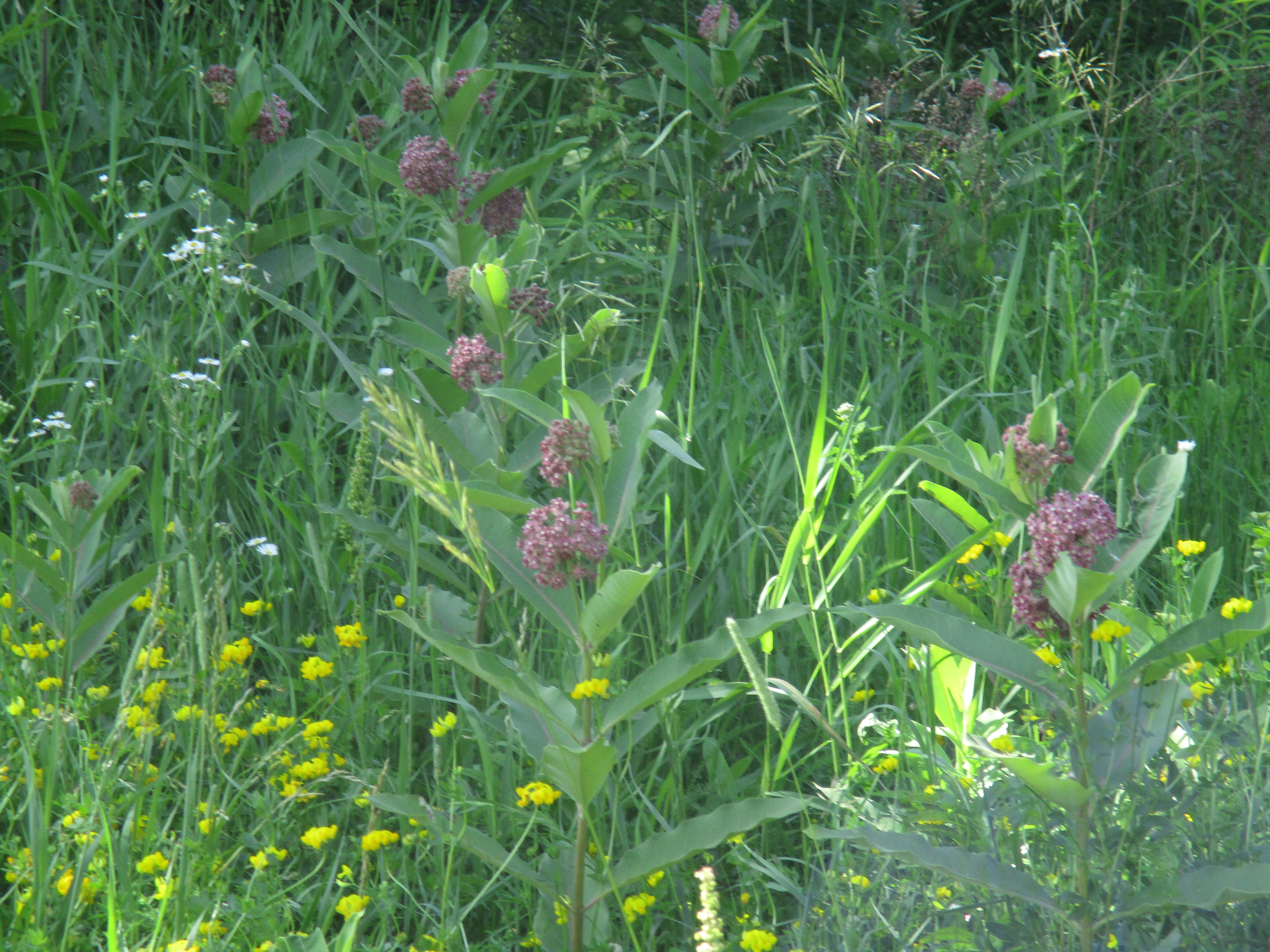
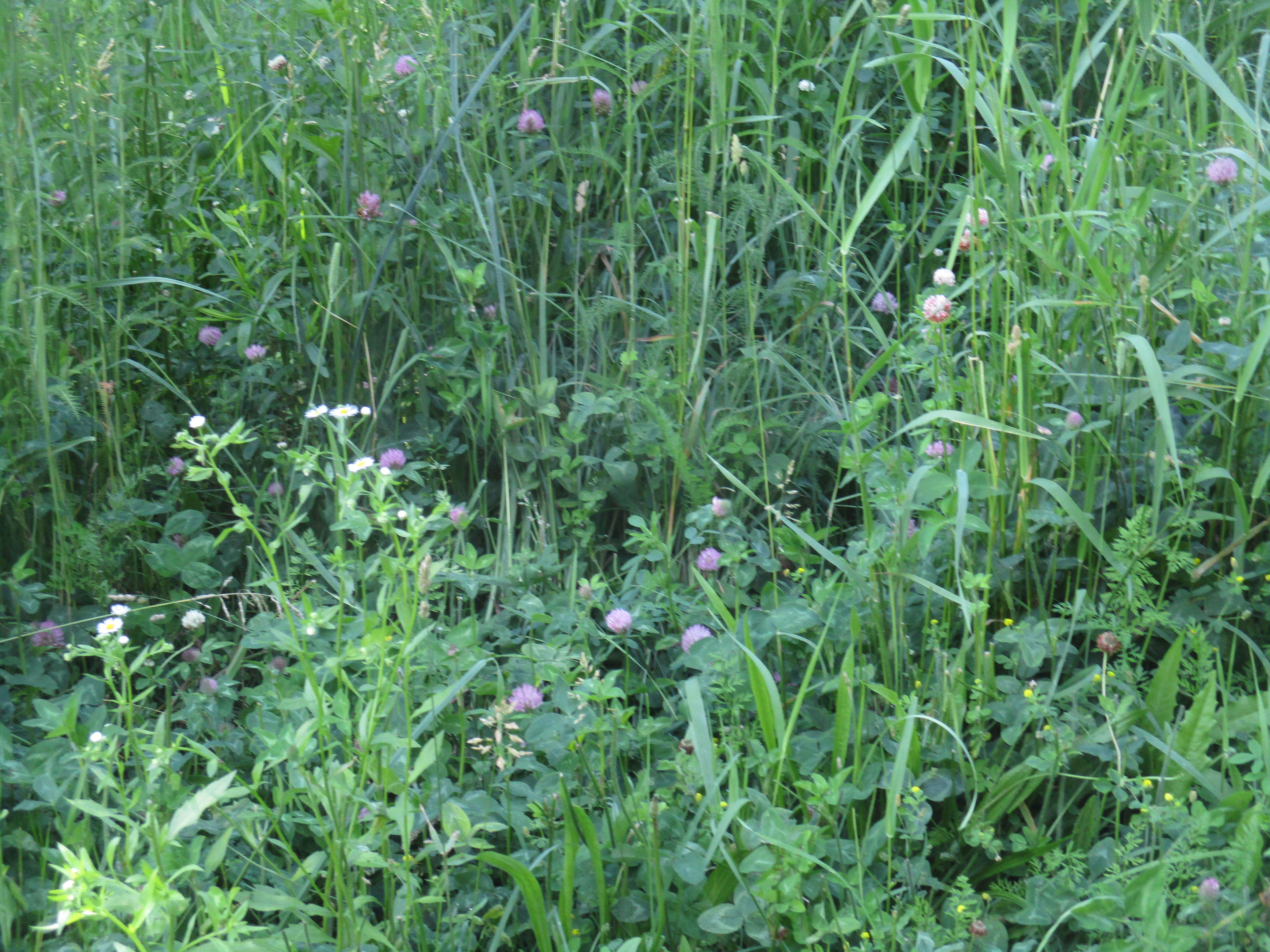
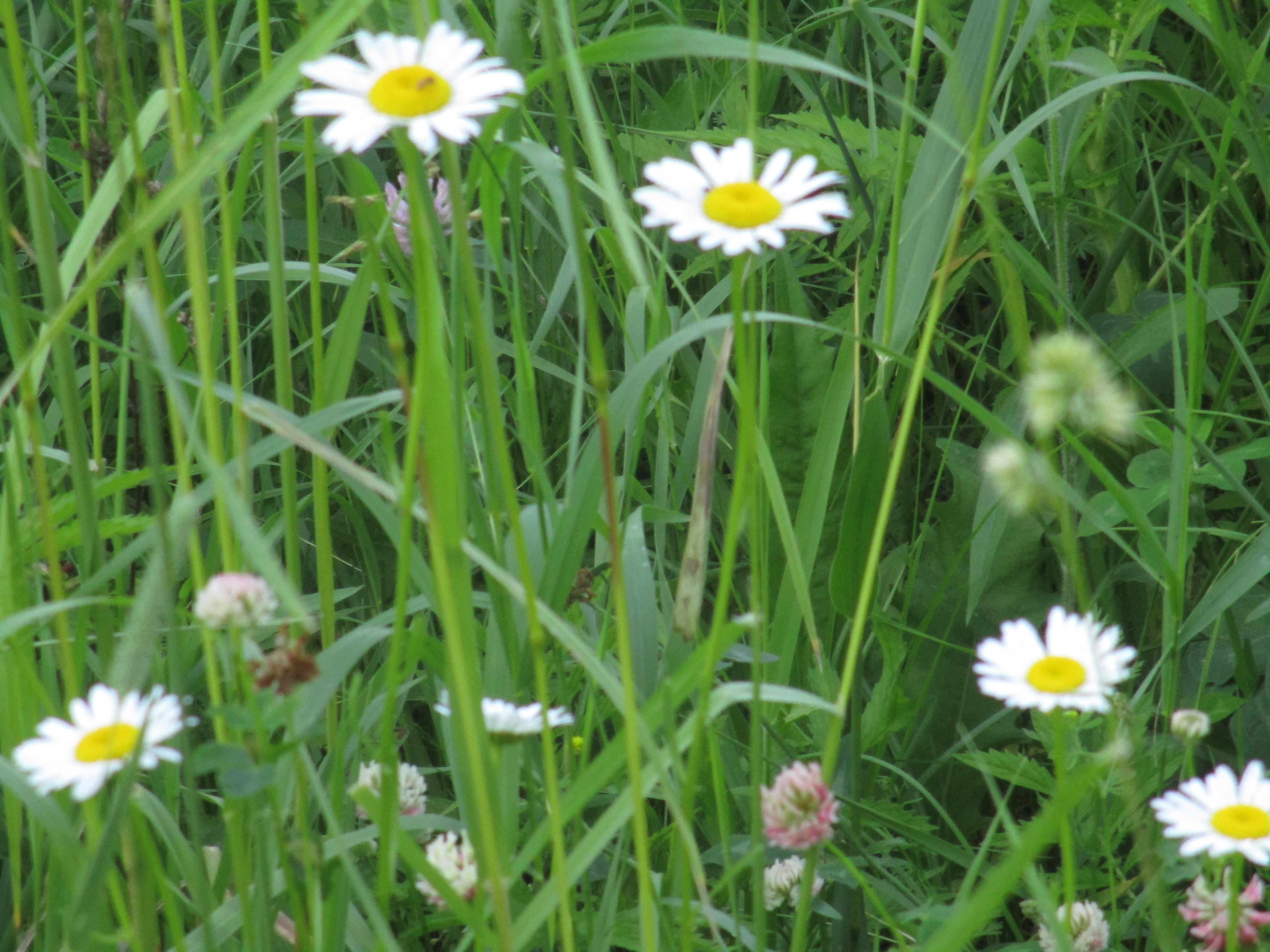
Wildflowers
Rare Photos
It is not unusual to see raptors flying around our area, but it is rare that I capture a photo of one.
It wasn’t close enough for me to identify what type of bird this was,
but when I did some online reading, I discovered this was likely a turkey vulture. The main reason I say that is because it wasn’t alone. As it soared and circled above our pond it was joined by a second and then a third. Eventually there were seven of them circling overhead. Vultures commonly hunt in groups unlike hawks and eagles who more often hunt solo.
Bees
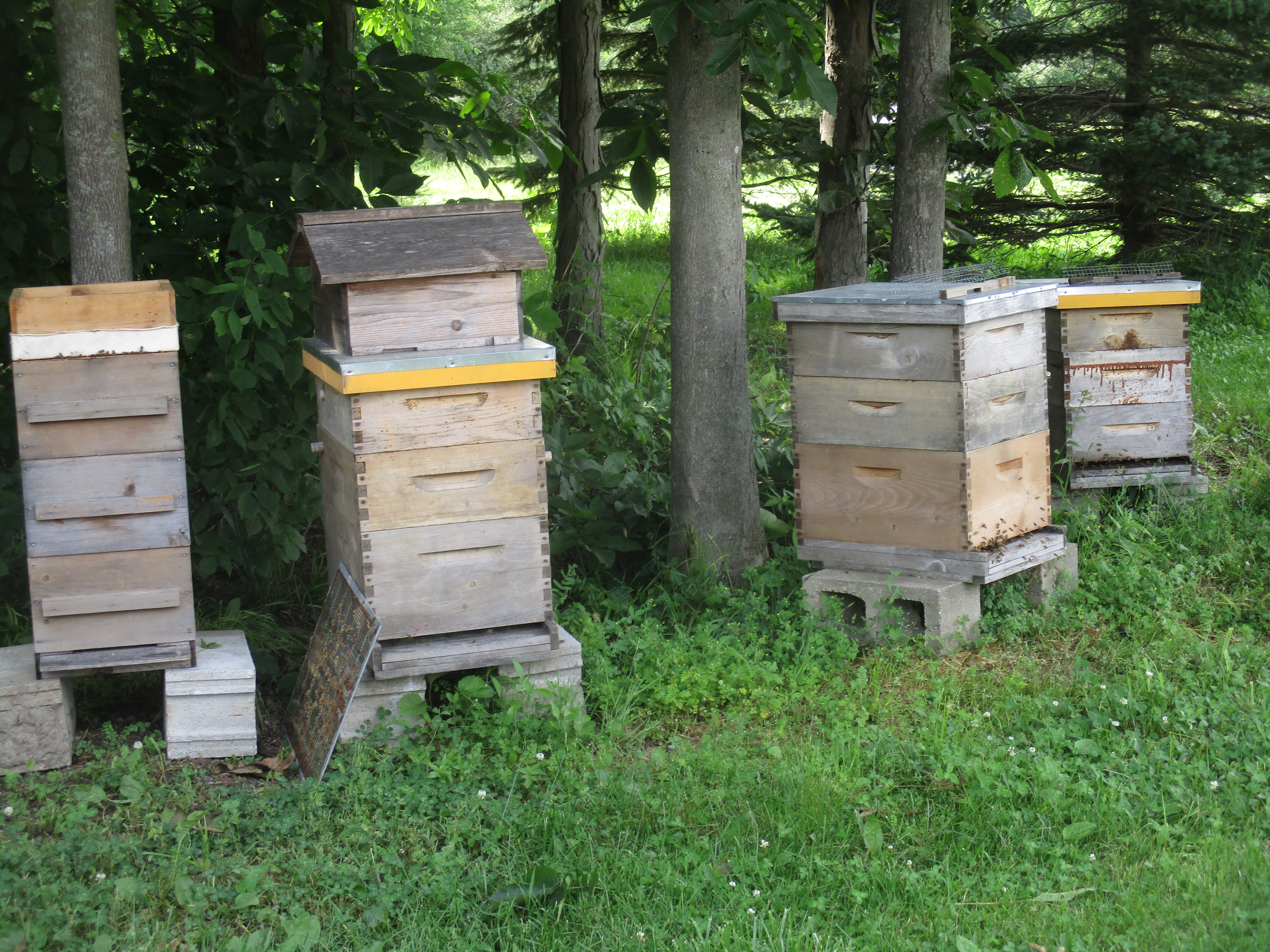
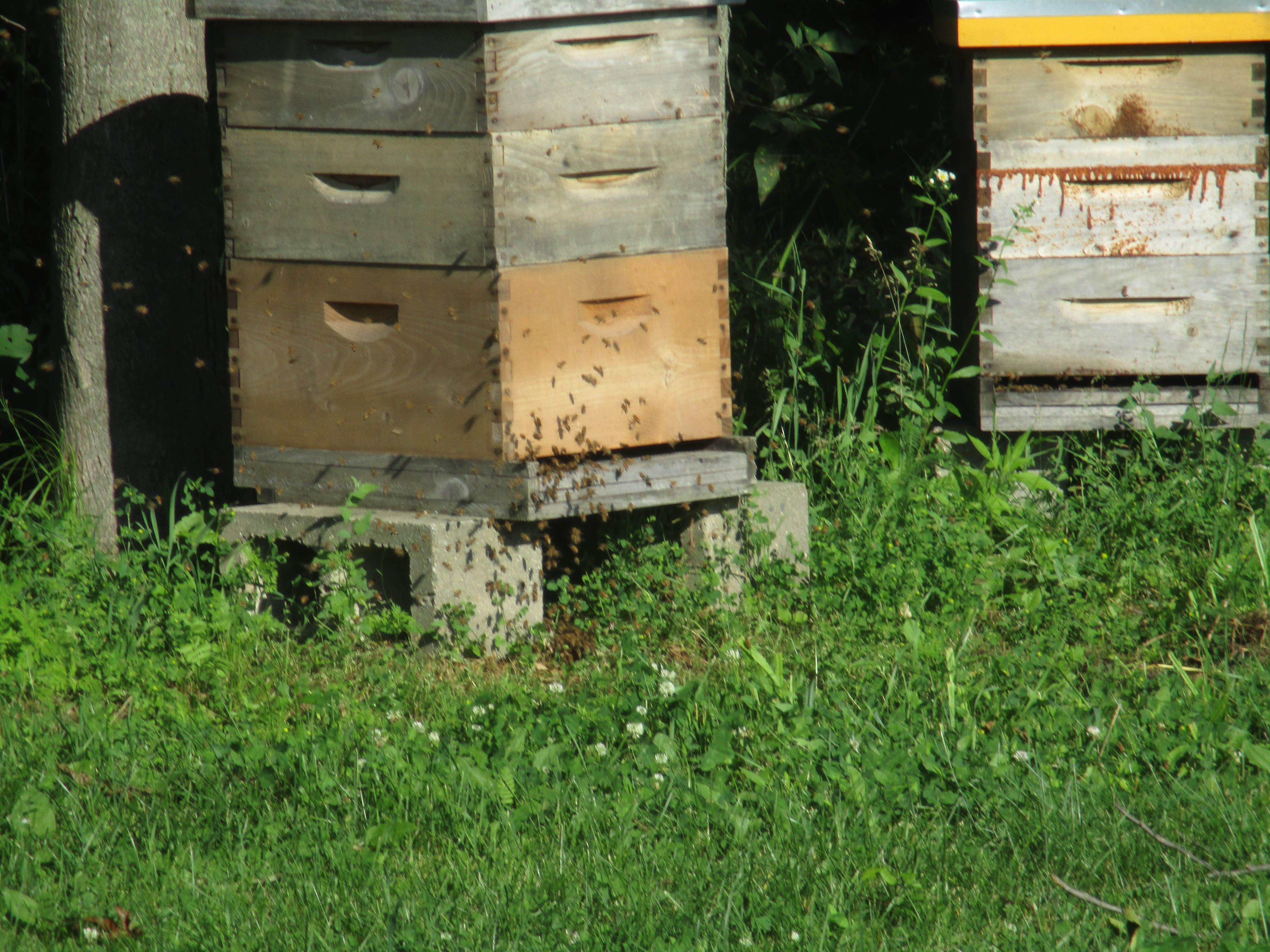
My husband captured another swarm of bees bringing us up to four hives.
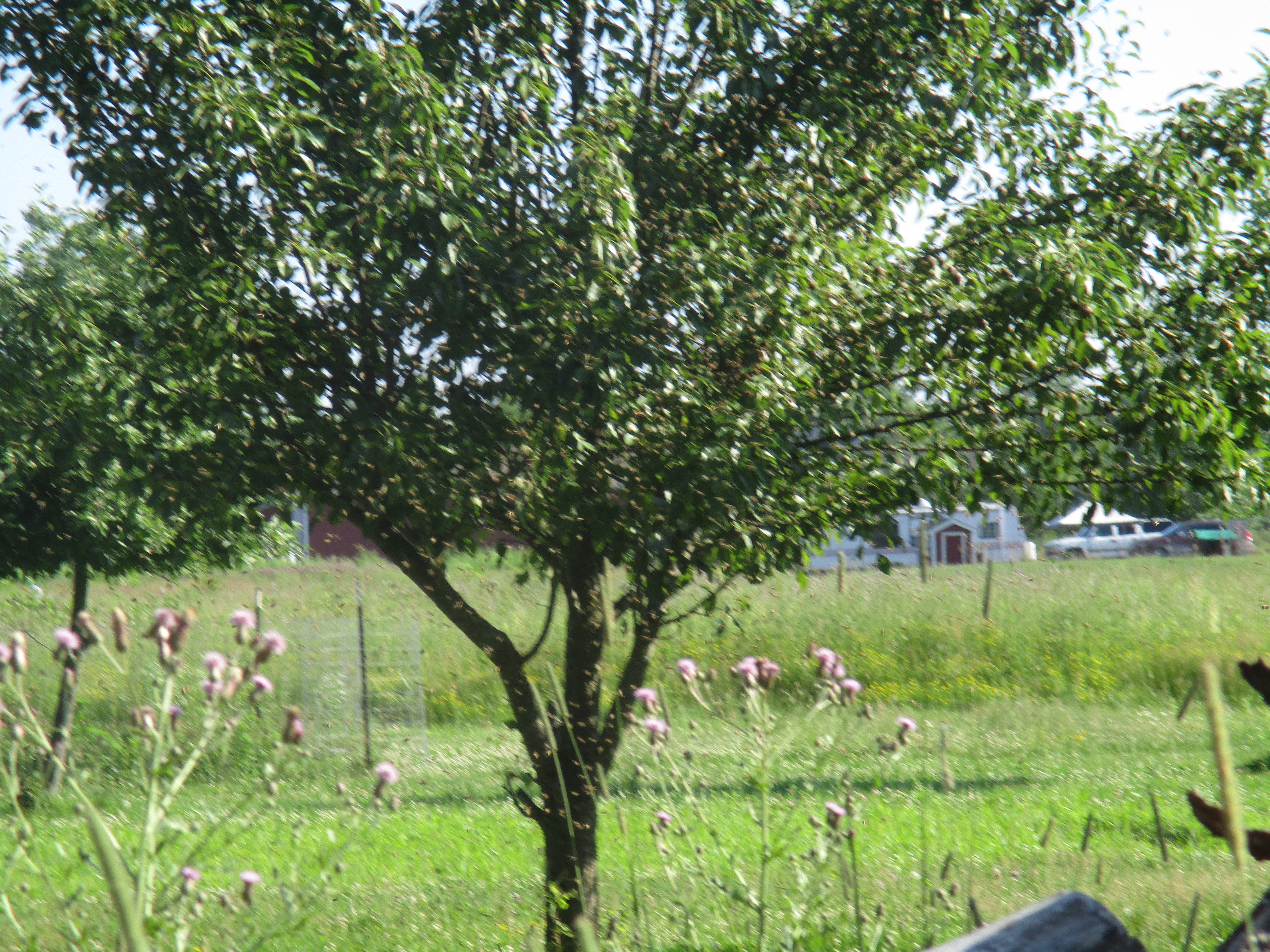
A few days later the hive swarmed again.
The swarm was too heavy for the branch they landed on. Then ended up relocating. We didn’t have another hive ready so we decided this swarm would add to the wild bee population. My husband did set up another hive so that we are ready in case there is another swarm.
After The Heatwave
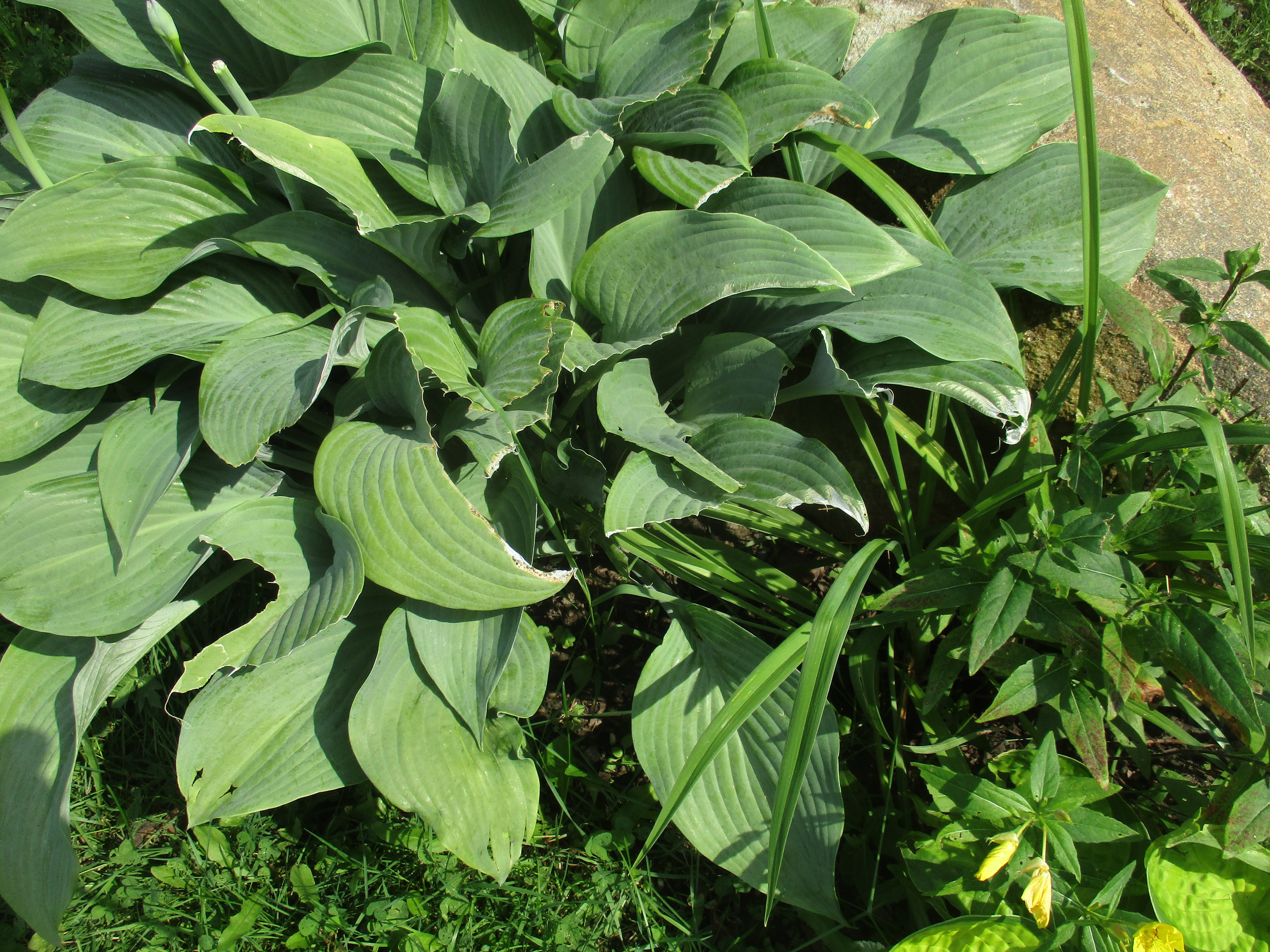
We have had some deer visiting. They enjoyed some hosta salad.
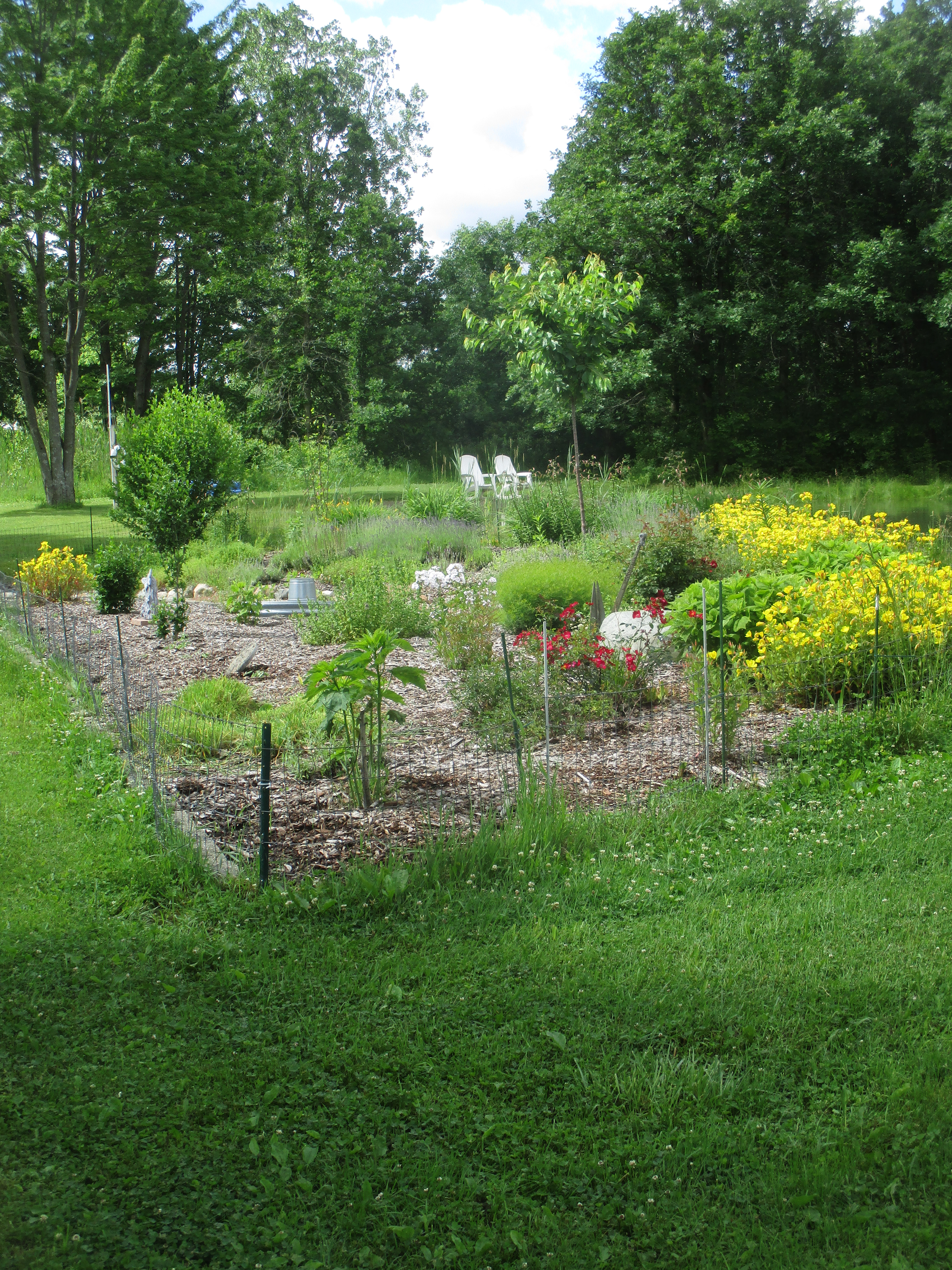
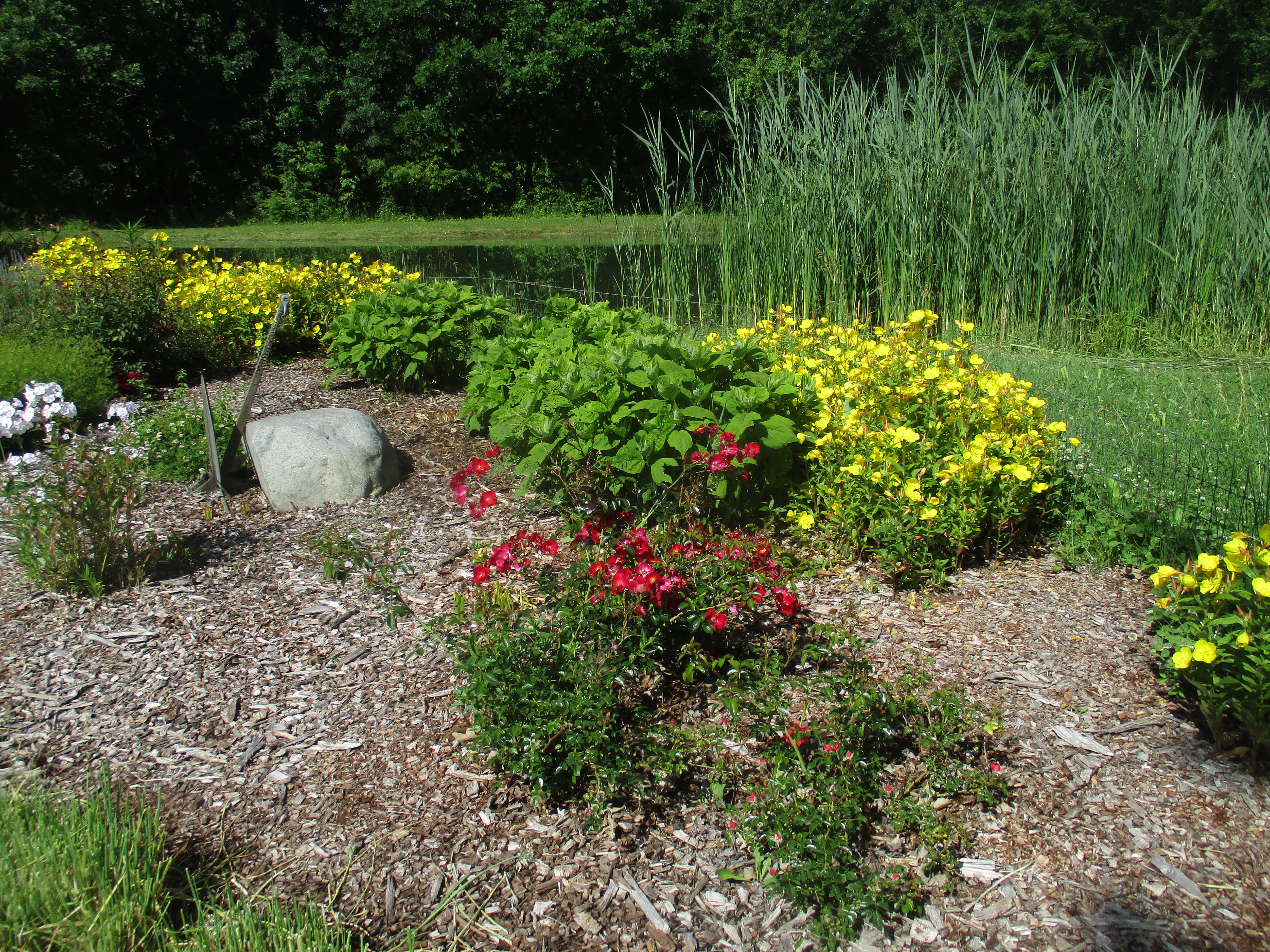
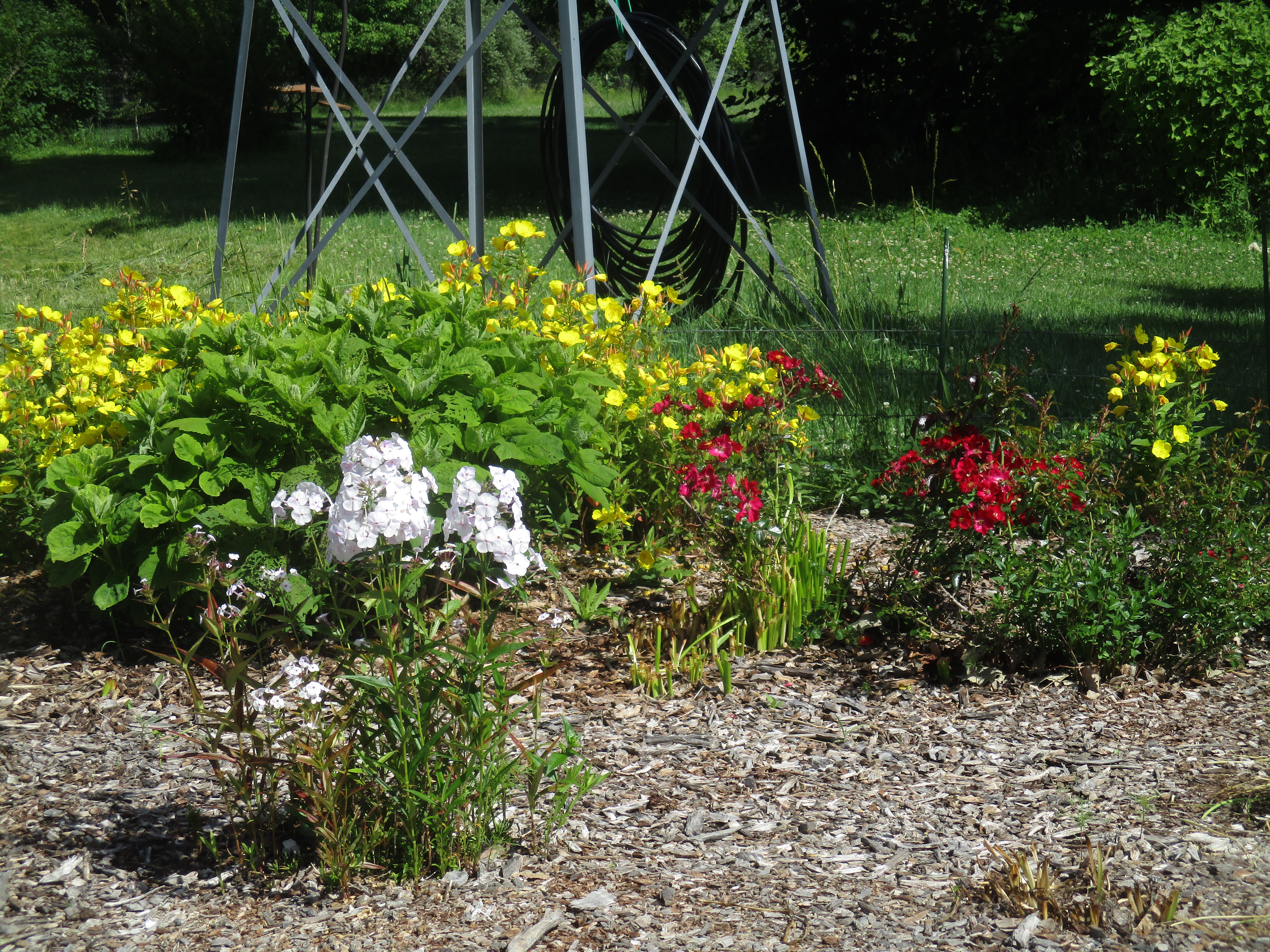
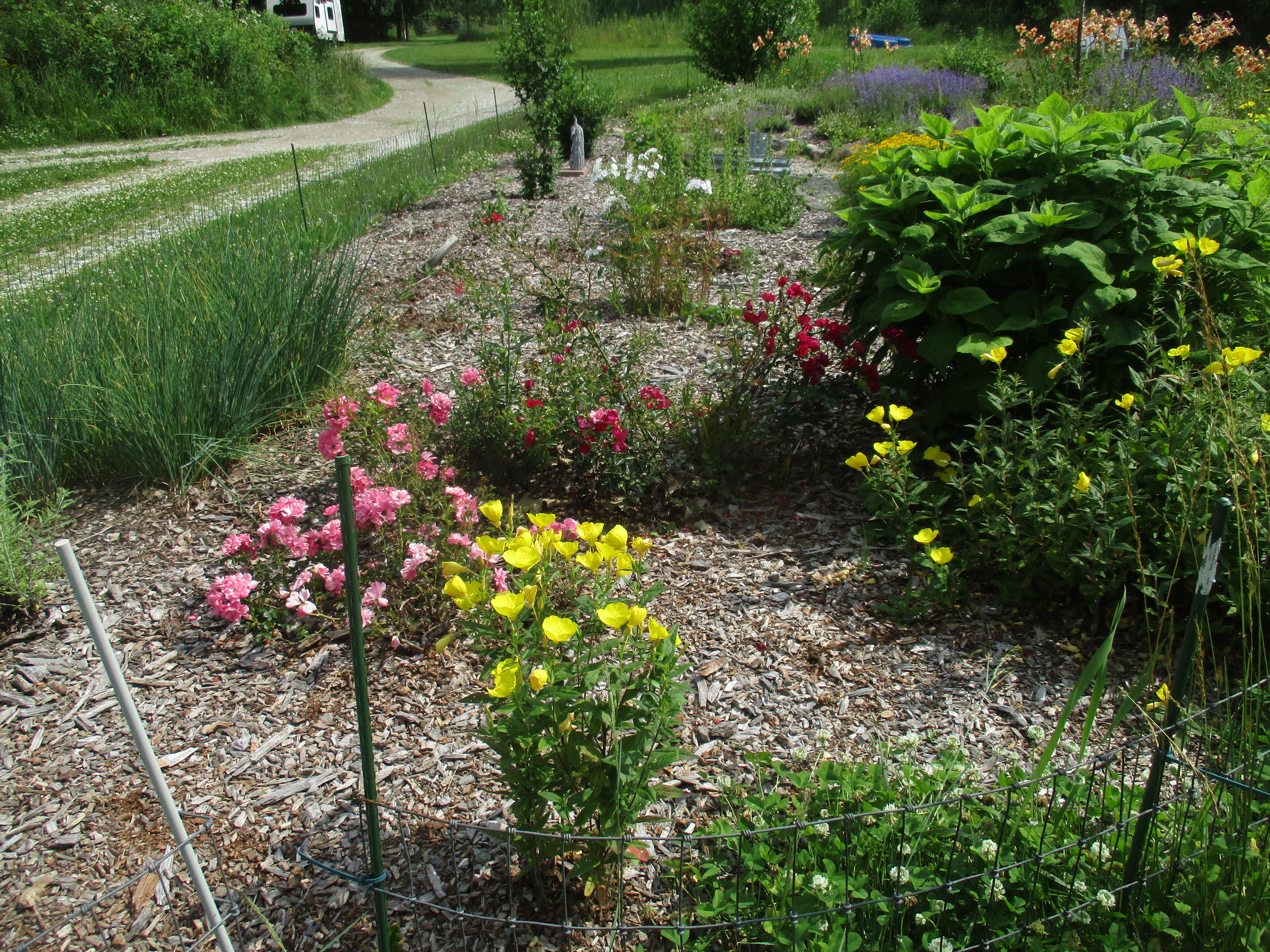
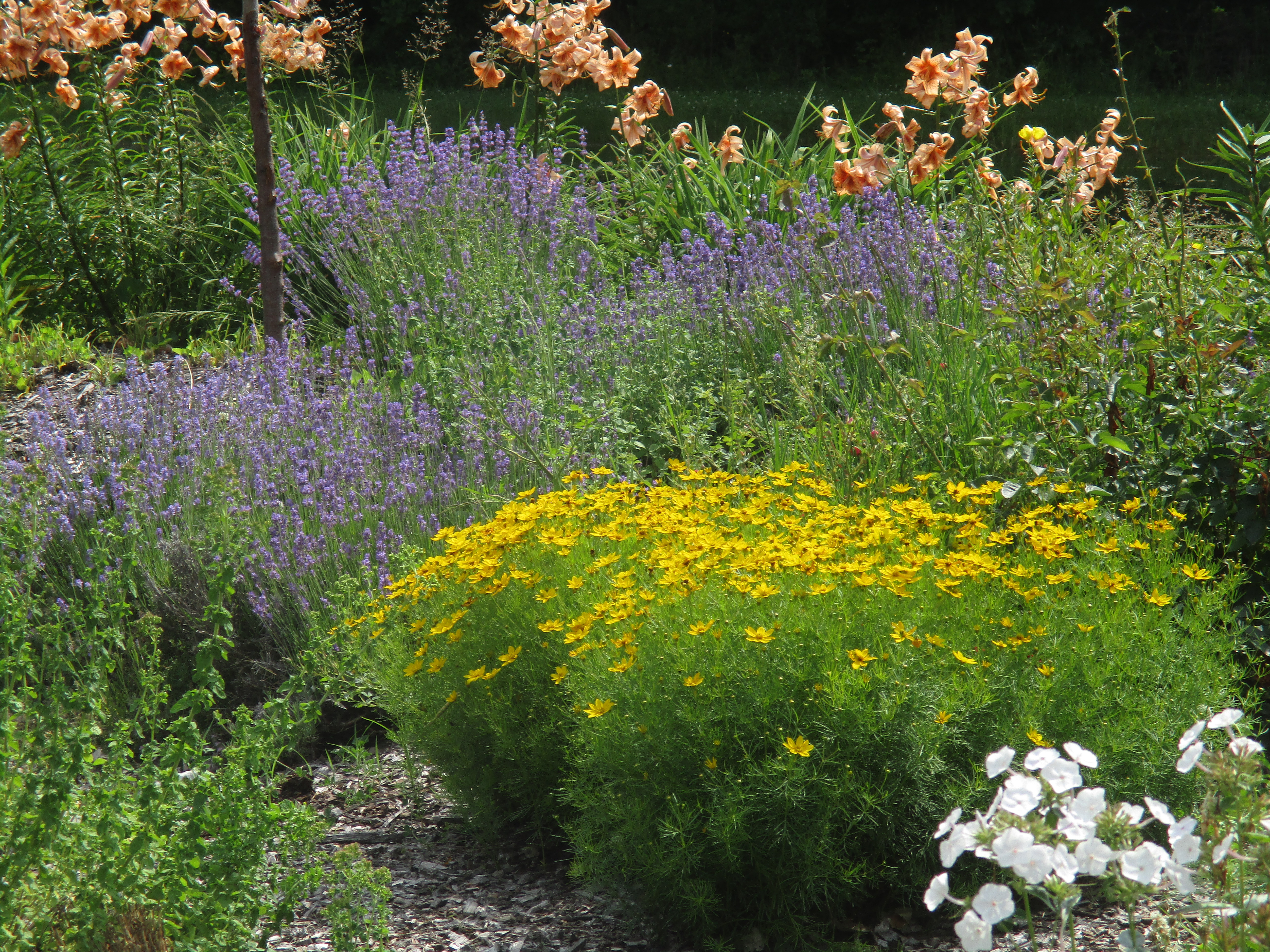
The prayer garden is ever changing. These pictures are from last week – following a week of intense heat.
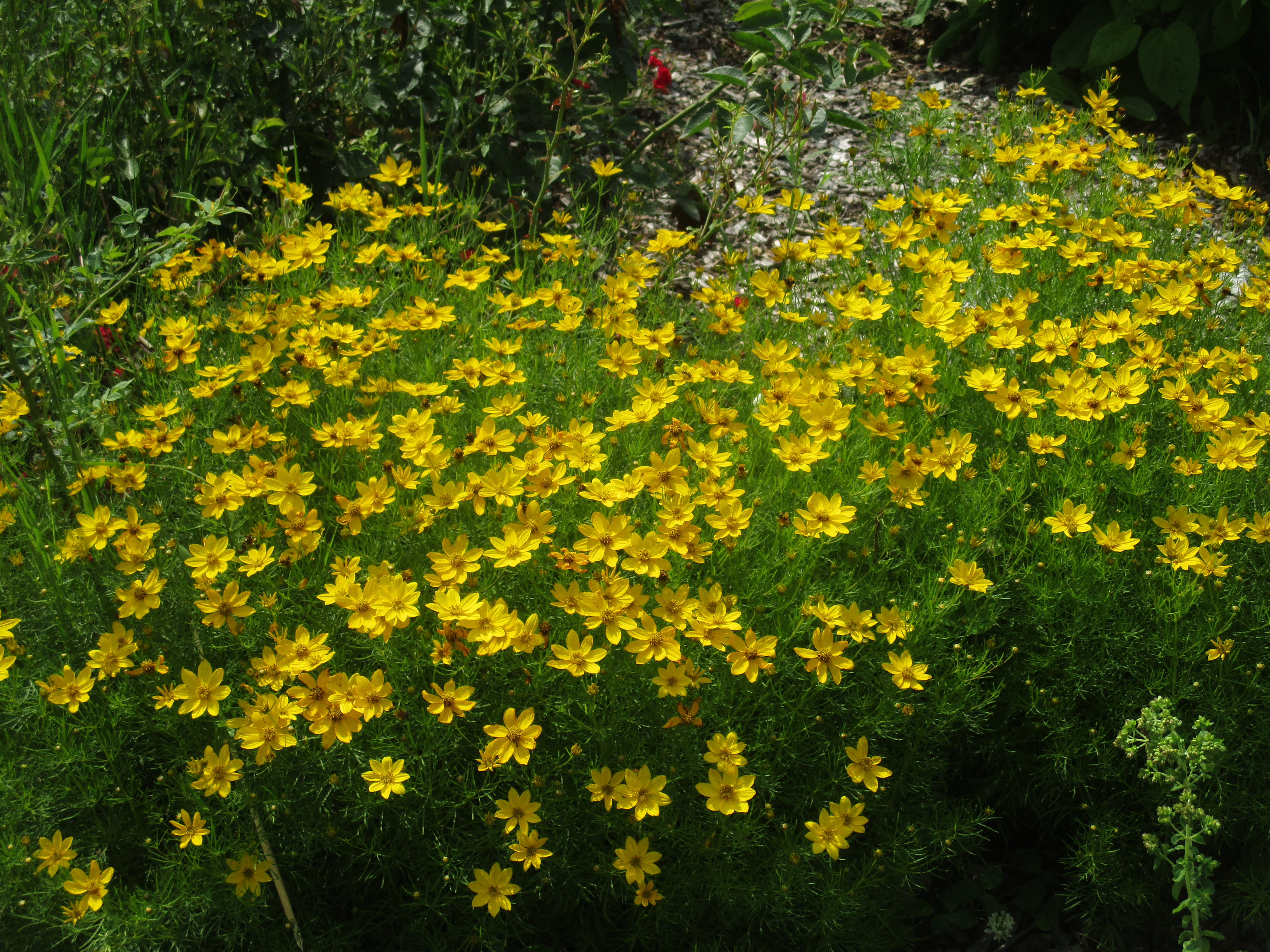
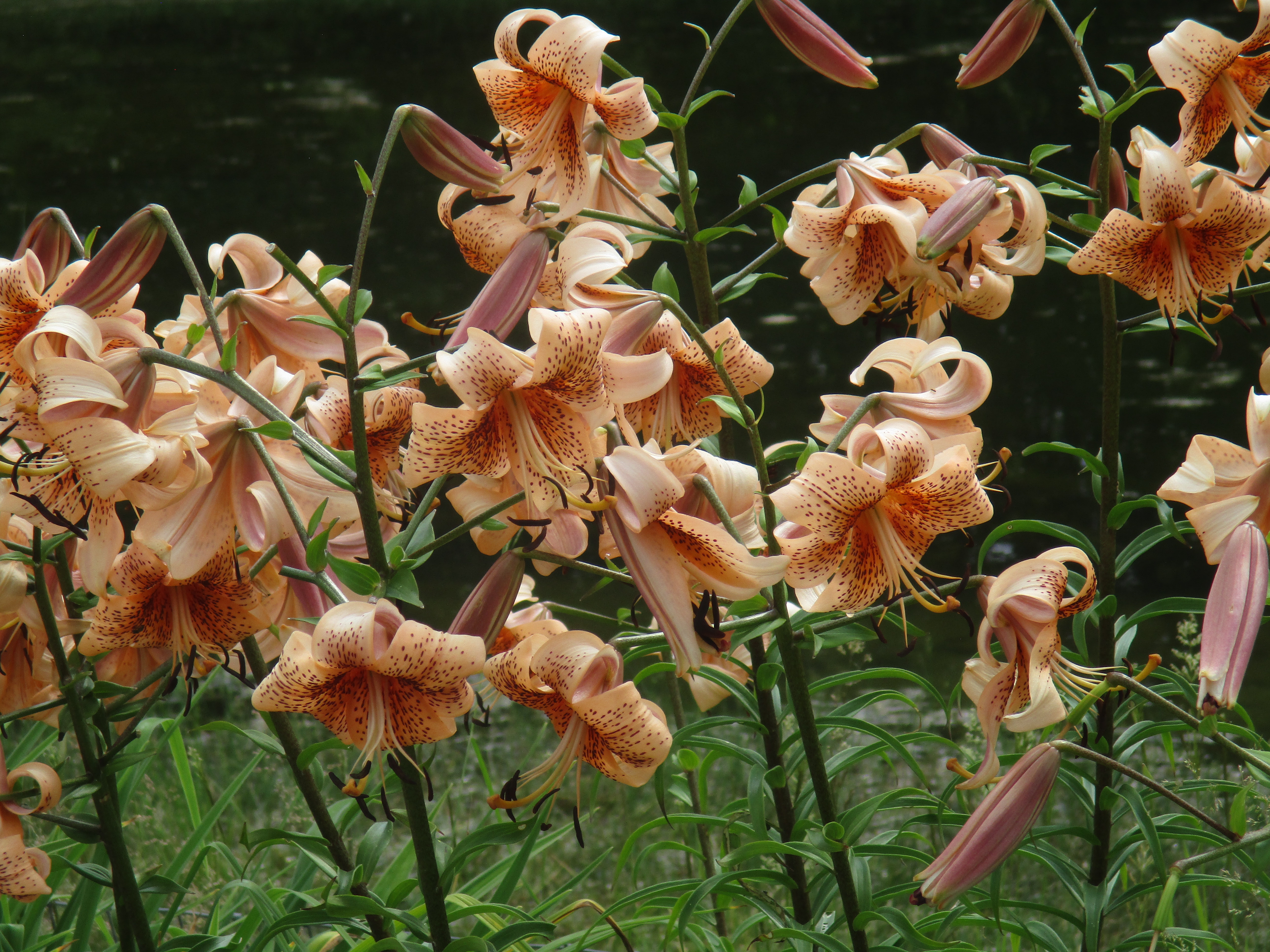
The white in the foreground are phlox, the yellow is tickseed, the purple is, of course, lavender and the peach color are Asiatic lilies.
The colors this year are very vibrant.
Roses
Tickseed
Lavender
Asiatic lilies
Creeping thyme in the foreground is a favorite of bees and other pollinators.
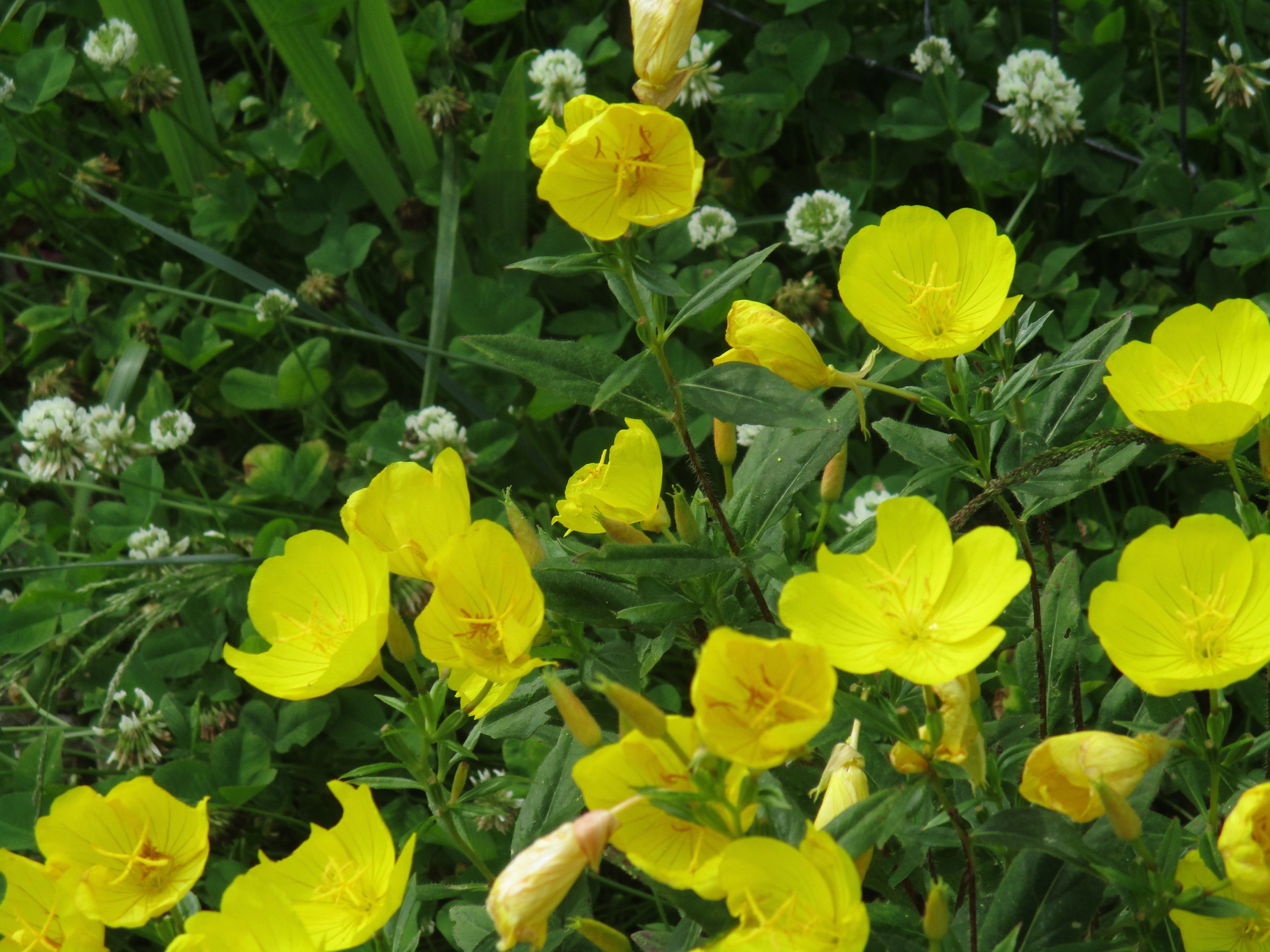
Some primroses were still blossoming last week as well.
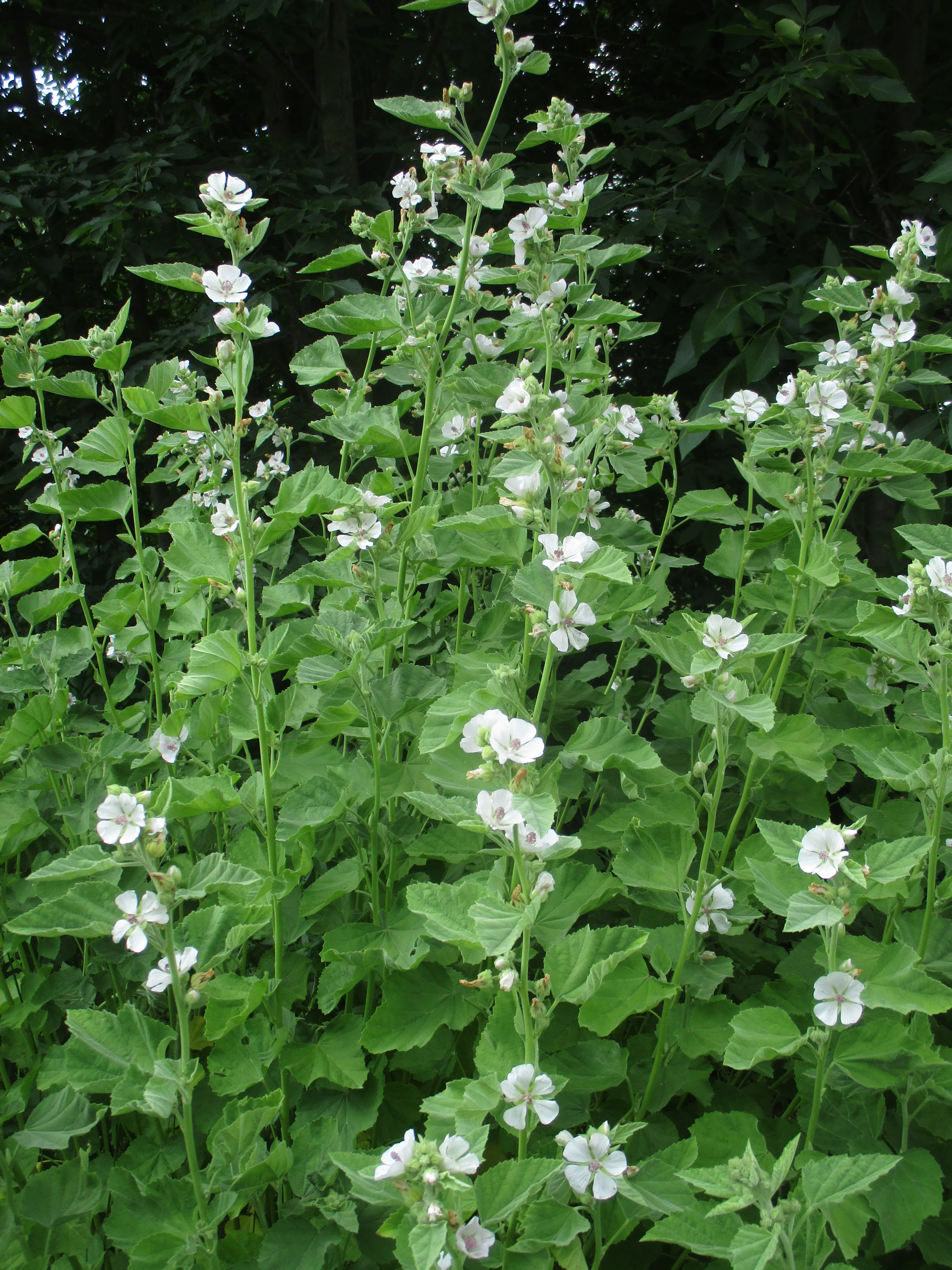
Marshmallow plants
Marshmallow blossoms
The garden seemed to enjoy the heat wave more than we did.
My husband watered as needed.
And everything is growing in leaps and bounds.
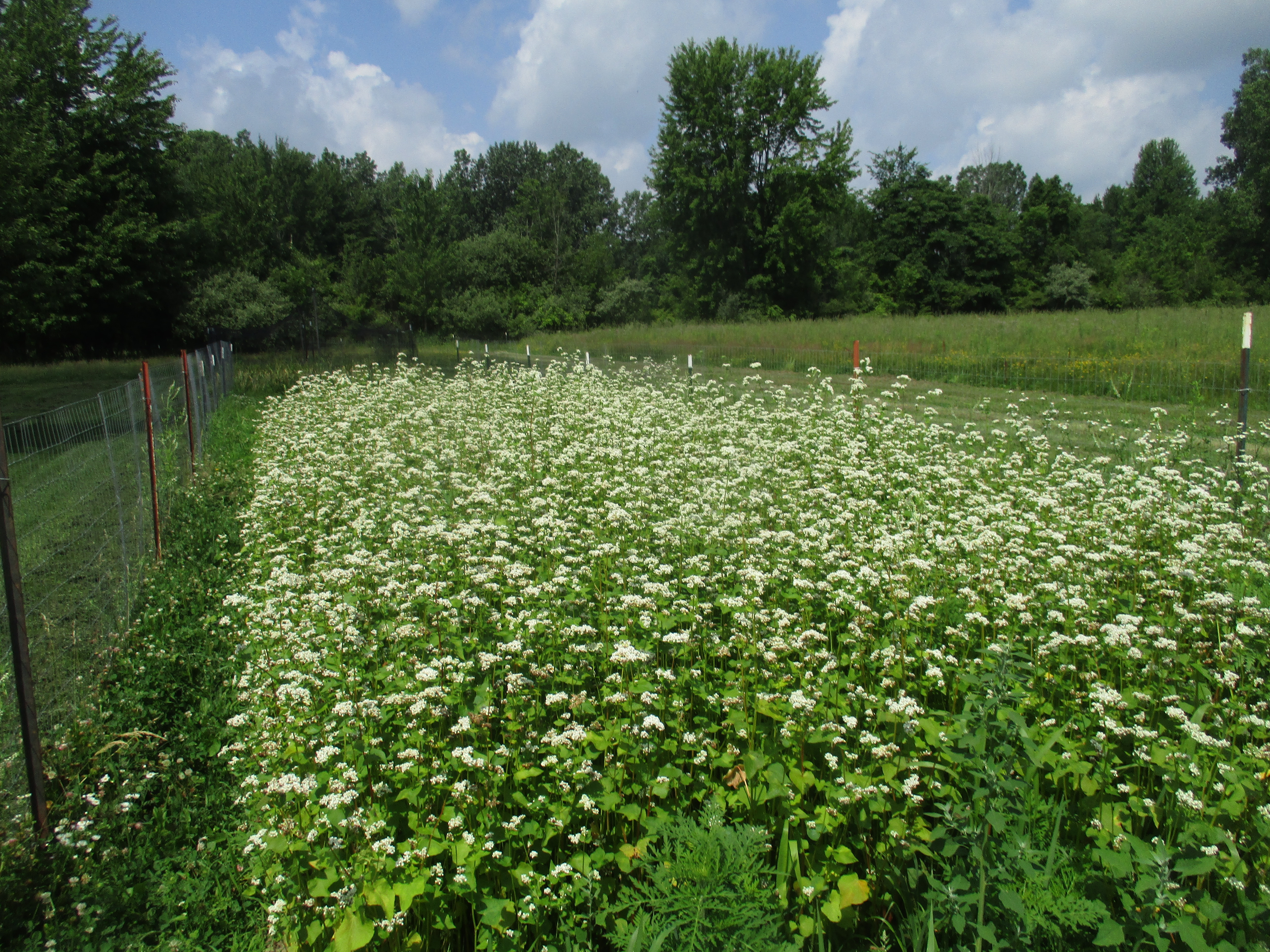
Above is the patch of buckwheat we planted. It’s amazing to see how many pollinators forage this patch. My husband also discovered that the chickens like buckwheat, so he cuts a handful or two each day and gives it to the chickens.
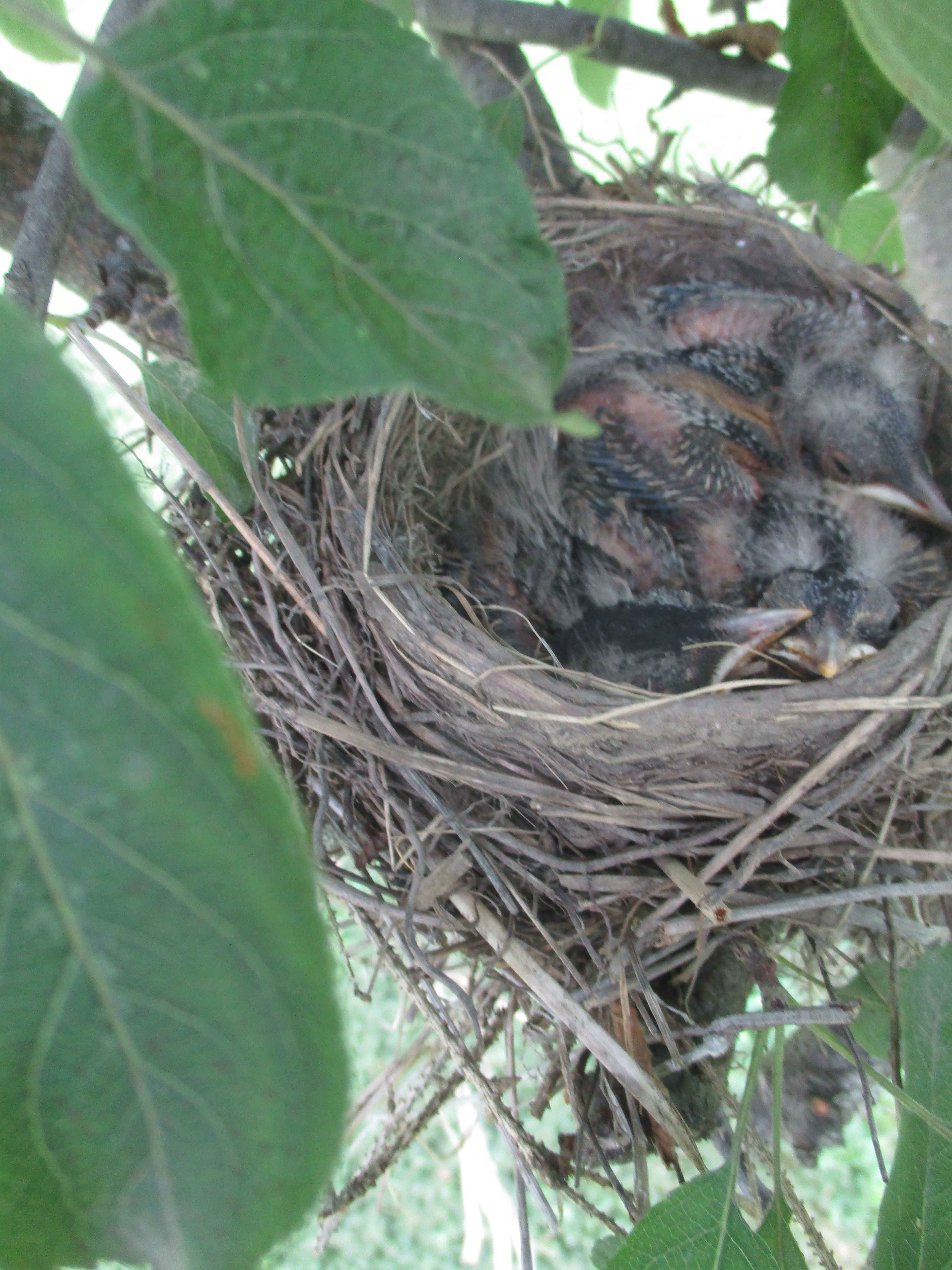
Look What’s Growing in Our Apple Tree
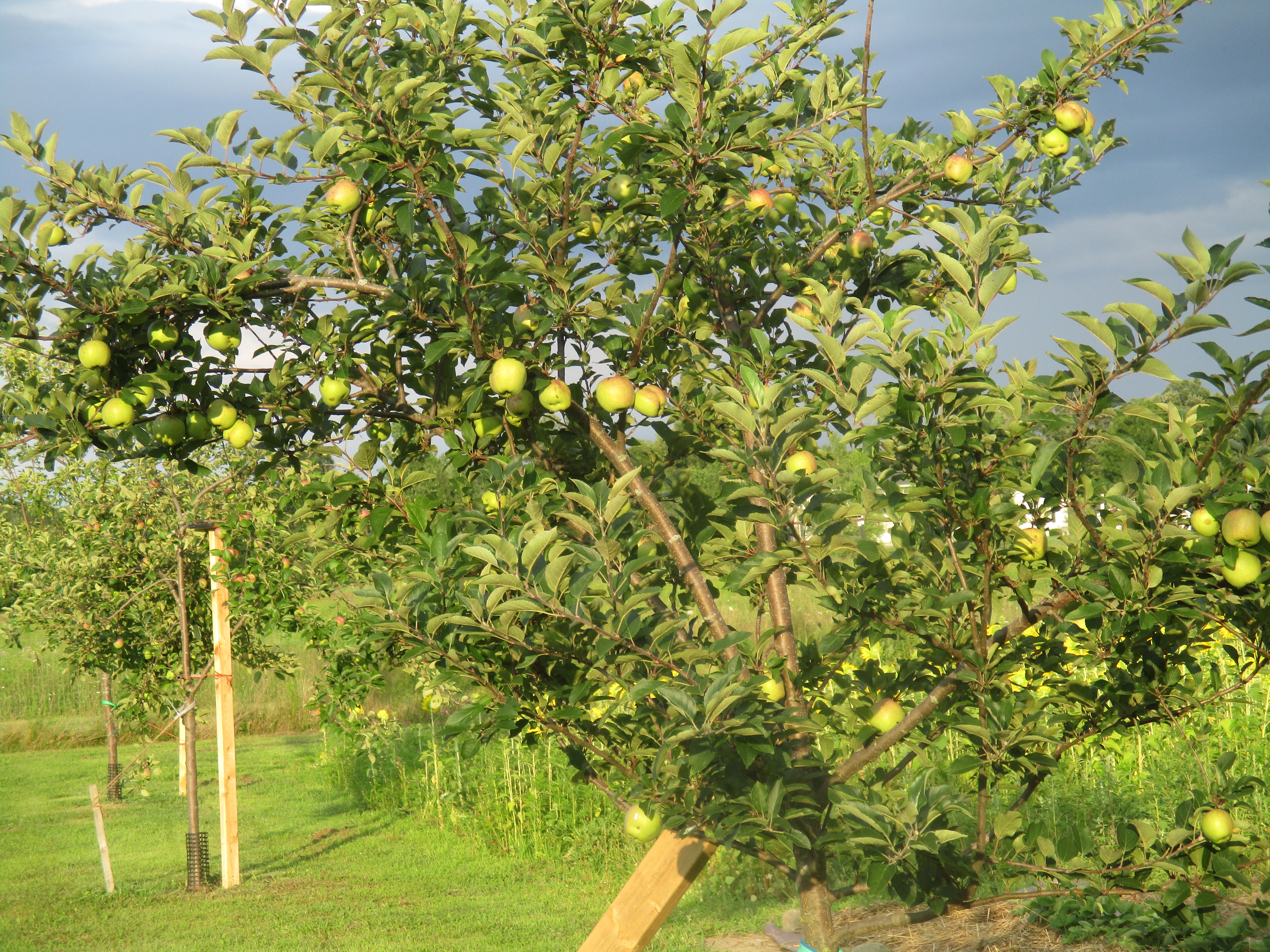
There are some apples on the tree as well, but they weren’t as interesting as these three baby robins.
It seems that October just flew by. There are several things that I intended to write about but just didn’t get the posts finished, so I decided condense them into this not-so-short but sweet post.
Little by little my blog is acquiring new readers, so I want to start by welcoming newcomers to my blog. Feel free to look around and explore previous posts. Please leave me a comment if you find something you like or just to let me know you were here. I always enjoy hearing from readers.
October 2018 Highlights
The Garlic Is Planted!
October is the month for planting garlic in Michigan. The objective is to plant the garlic 4-6 weeks before the ground freezes in order to give the garlic time to establish roots. If you would like to more about our garlic planting process you can check out these two posts from our 2016-2017 growing season.
This year our wet weather and mostly below normal temperatures in October made for less than ideal planting conditions. We watched the weather forecasts for our best opportunity and the week beginning October 21st, with several dry days predicted, seemed to be it.
Early that week my husband began preparing the garlic for planting (separating the bulbs into cloves). We, but mostly he, worked on this on Monday, Tuesday and Wednesday while we gave the ground time to dry out. By Thursday we could wait no longer – the garlic had to be planted because there was rain in the forecast beginning late Friday.
Despite the ground not being as dry as we hoped, Thursday morning my husband got an early start and planted garlic until nearly dark. For several reason we decided to use a divide and conquer approach so while I attended to other projects my husband worked diligently in the garlic field. Friday morning he again got an early start. When I took the boys (dogs) to the farm for their midday walk he asked if I had checked the radar. Not having done so I couldn’t offer him any idea how long it would be before the rains came. It was late afternoon when he called me. “I just got the last clove planted he said – then the first raindrop fell.” “God is good!” we agreed.
Coincidently, or perhaps by God’s design, we ended up planting during the full moon. We have talked about experimenting with planting by the phases of the moon in past years, but weather and soil conditions have always been more of a priority.
We did scale back on our garlic planting this year. We still planted enough to meet the demands of the markets we currently supply and have seed for the following year. We hope in scaling back on garlic we can put more time and effort into areas where we have not been able to meet demands, namely honey and strawberries.
An Apple A Day
This year we had our best apple crop thus far. While not all of our eight trees produced well, two trees produced more than their fair share. The branches on these young trees were so heavily laden with apples that my husband built posts to brace the branches so they did not break due to their heavy load.
We harvested 4 milk crates nearly full (we didn’t weigh them). Here’s what I’ve done with them –
Apple Sauce – I’ve canned 22 pints of apple sauce.
Apple Peeler
When I told my sister I was making apple sauce she asked if I had an apple peeler/corer/ slicer. I laughed and said “Yep, it’s called a paring knife.” LOL. Then as I started peeling all those apples I remembered this antique that I had tucked away on a shelf and had never used. I decided why not give it a try.
One of the problems I have with this and some similar kitchen tools that I have is that they are designed to clamp onto a counter. My kitchen counters were not designed for such uses as they have about a two inch lip that the clamp will not fit over. To accommodate these tools I use a stand alone shelf, but since I don’t often use these tools that shelf is also used to store things. I first had to clear off the shelf and move it to an accessible area. I rinsed the dust off the old apple peeler then clamped it to the shelf. I placed an apple on the prongs of the peeler and began turning the crank. As I turned the crank the blade removed a thin layer of peel from the nice round apple. When it got to the end the apple was pushed off the prongs and popped into the pan I had placed on the shelf to catch the peels. The second apple I tried was not perfectly round and the blade did not touch the flatter areas, so it left strips of peel behind. Considering this, and that I still had to use the paring knife to core and slice the apples, I cleaned up this antique and put it back and the shelf. Lesson learned: My paring knife seemed the better way to go.
Apple Chips – Last year, when we had our first decent apple crop, was the first time I made apple chips (dehydrated apples). We discovered that apple chips make a wonderful snack.
This year I have filled up my 9 tray dehydrator twice. Each tray holds 3-4 apples and it takes about 20 hours to dehydrate them. When they are finished I store them in small sealable bags usually putting one tray (about three or four servings) per bag. When eating apple chips it is important to consider portion size because they are so good it would be easy to eat too many. It is also important to drink lots of water because they still contain lots of fiber.
Apple Vinegar – This is something I have been reading about and wanting to try for a while. I have seen recipes posted on several blogs and had bookmarked Home and Harrowto return to when I was ready. My vinegar is still fermenting so I’ll let you know how it turns out in a future post.
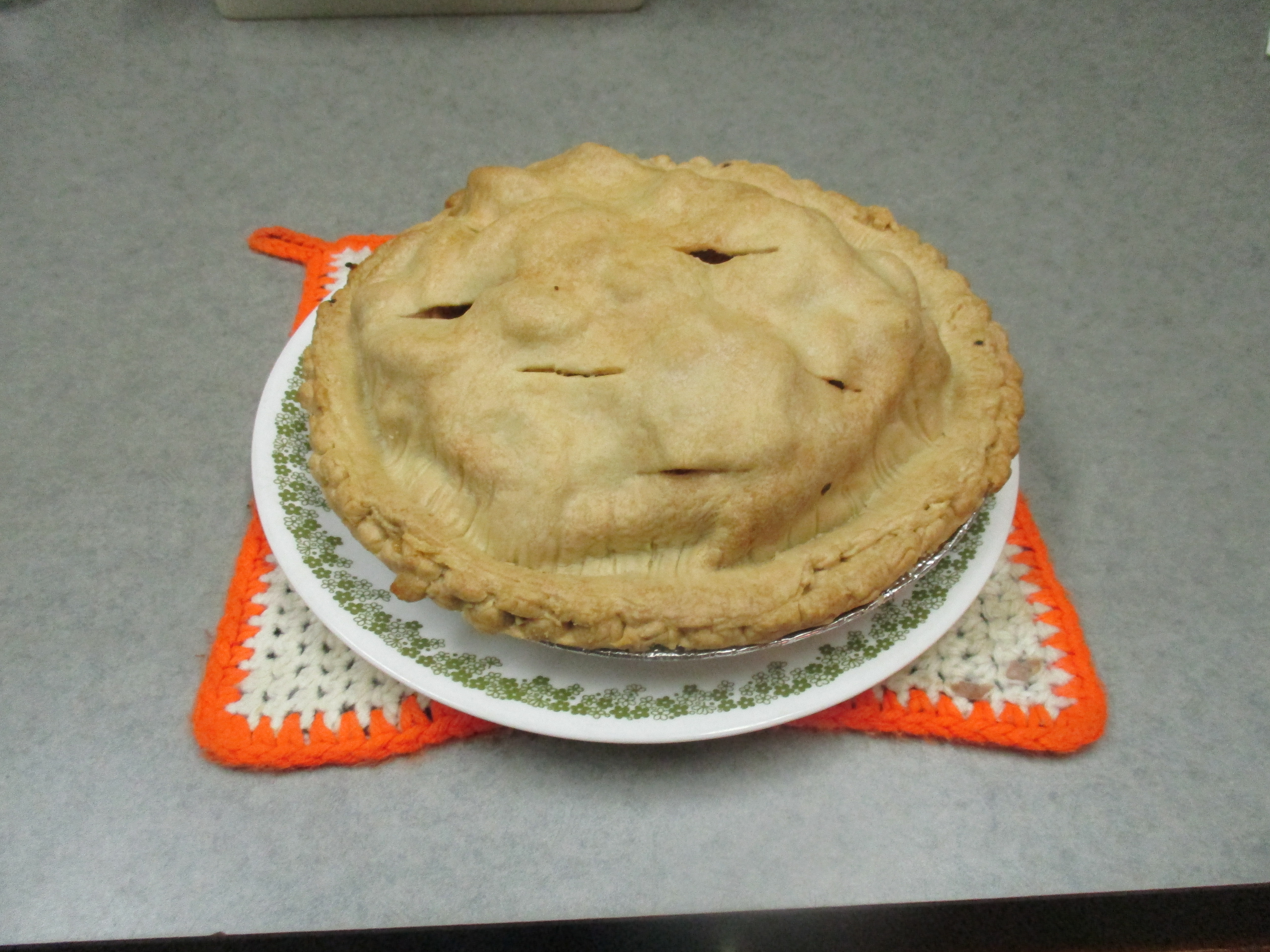
Apple Pie – Yesterday I made our third apple pie from this crop. There is just nothing better than homemade apple pie, except maybe homemade pumpkin pie, or homemade blueberry pie or homemade cherry… well you get the point. It is just so good. I also froze enough pie filling to make six more pies.
–
Coffee Cake – Even with all of that I was still looking for ways to use apples so when I made this coffee cake, which is a recipe that we really enjoy, I decided to add apples. I peeled, cored, and diced three apples and added a layer of apples on top of the streusel in the cake. It turned out fabulous.
I think we are now down to our last 7 or 8 pounds of apples and our plan for those in the next few days is to start a batch of apple wine. Cheers!
Making Soap – You may remember from this post that I consider this time of year soap making season. I haven’t yet come up with any new recipes but I did upgrade a couple of recipes that I have previously made. Perhaps I should add “version 2.0” to their names. :)Let me tell you what I did.
Cocoa Soap– My cocoa soap is made with olive oil and coconut oil as the base oils and coco powder, powdered milk and sugar as additives (just like a cup of hot cocoa might be made). When I first decided to make cocoa soap it was really just for fun. I mean how many of you would love to just bathe yourselves in chocolate? or maybe have dreamt about swimming in the chocolate river on Willie Wonka and the Chocolate Factory? Fun eh? According to this article cocoa may actually have some benefits for the skin, but when it is made into soap I am skeptical as to whether any of those benefits remain. It does however make the soap a deep brown color. The milk adds a creaminess and sugar makes for an extra bubbly lather. What more could you want right?
Actually there was one other ingredient that I use in another soap recipe that just needed to go into this soap, because what goes better in a cup of hot cocoa than ——————————marshmallow. In case you are thinking that I have totally lost my mind – no, I don’t use those sweet little sugary puffs that we all know as marshmallows. What I use is marshmallow root from the marshmallow plants that we grow.
I have been using this herb in my hair care soap for several years now. The marshmallow root is said to add conditioning properties. For the past four years I have exclusively used my homemade soaps (usually hair care or coffee) when washing my hair and in all honesty my hair is healthier than it has ever been. Don’t Eat It! Cocoa Soap (2.0 🙂 ) should be finished curing around November 23rd, so we will have to wait to find out how it turns out.
Coconut Soap– Like my Cocoa Soap the base oils used in this soap are olive oil and coconut oil. The additive in this case, however, is shredded coconut. The coconut, while gentle on the skin, adds a little extra scrubbing power. It really is a nice soap, but I decided to make it even nicer this time around by adding yogurt. In the past year I have discovered that adding yogurt to soap gives it a super rich creamy lather and who doesn’t love that?
Incidentally, I once had a lady ask me “Doesn’t the coconut clog up the drain?” and you might be wondering the same thing. The answer is No – nor do the coffee grounds in the coffee soap or the oatmeal in the breakfast bar soap. What does clogs up the drain is hair. Being the mother of 4 daughters, and all of us having long hair at various times in our lives, I can attest to the fact that hair is what clogs drains.
Coconut Soap and Cocoa Soap
I also decided to stamp all the bars of these two batches. What do you think?
I just thought I would do a quick post about what we have harvested in the past week.
Strawberries – Since we began picking strawberries we have harvested nearly 50 quarts of strawberries. After I froze enough to keep us in homemade jam through the year we began offering them to family and friends. We have had a lack of rain so the berries are not big this year but they are delicious. Due the dry conditions we are not certain that the plants will continue to produce berries much longer.
Garlic Scapes – Several people who visited the farm this week went home with some garlic scapes. We cut, bundled and delivered scapes to a local retailer and are having scapes for dinner tonight.
Oregano – It was time to start picking oregano before it blossoms. Oregano is a very prolific herb that is spreading throughout, and making a nice ground cover in our prayer garden. Since I will not be ready to can spaghetti sauce for at least a month I will dry the herbs as I harvest them and they will keep well until I am ready to use them. When it flowers the bees are very attracted to it.
I find that air drying herbs works well. I have a couple different methods for doing this. One is to tie the herbs in a bunch, like I have done with the oregano in the above picture, and hang then where they will get good air flow until the leaves completely dry. Once they are completely dry I remove the leaves from the stems and store in an airtight container.
Basil – Basil is another herb that I use in my spaghetti sauce. It is an annual so we plant a few plant each year. It is not very large yet but picking some of it now will encourage it to grow more and discourage it from flowering too soon. Since the basil stems were pretty short I decided it was best to dry them on our drying screen (shown in the photo below).
The drying screen is simply made of a wooden frame with screen stapled together. The frame that we used actually came as packaging from a table that we had purchased. I saved it because I knew there was a better use for it the just throwing it away. The screen that we used was part of a roll of screen that I had picked up for a couple dollars at an estate sale.
Since the drying screen does not have legs I usually put a box under each end so there is good air flow all the way around. Depending on the temperature, leafy herbs will usually dry in a few days on the drying screen. They are then stored in air tight containers until we are ready to use them
Plantain Leaves – When you see plantain you may think of a fruit similar to a banana that grows on trees (Musa paradisiaca) but we can’t grow that here. Apparently plantain trees grow best in zones 8 through 11 and require 10-15 months with temperatures above freezing to bear fruit. That doesn’t happen in Michigan.
The plantain I am referring to is know as common plantain (plantago major) and common it is. It pops up seemly everywhere and you would probably recognize it even if you don’t know it’s name. Along with not knowing it’s name you may not be aware that plantain had many health benefits and is often included in list of the top weeds that we should be eating. Although we have not yet included plantain in our diet I have been harvesting it for medicinal purposes for several years. The following website includes a photo and information about plantains medicinal uses https://usesofherbs.com/plantain.
We have been growing marshmallow for several years now and in the fall I harvest some of the roots as I use it in my Hair Care soap. Last year I also harvested some of the leaves, dried them and stored them. I enjoyed marshmallow tea a few times and have begun harvesting and drying the leaves so I can replenish my herbal “medicine cabinet”.
I actually started this post last week intending for it to be a short summery of our weeks efforts but as the time passes we are harvesting more and more produce. Before I wrap it up I will quickly add –
Blueberries – We are picking fully ripened blueberries and not having to worry about the birds getting them first. If you aren’t sure why click here to read about our blueberry patch update.
and last but not least
Currants – I have been waiting for months for these little berries to be ready. In my opinion they are a superfood and I intend on doing a separate post on them and how I am preserving them.
I am going to wrap up this post now before the list gets any longer. As I head to the farm to pick berries I wish you all a blessed day.
If you have enjoyed this post and would like to know what foods are in our future please sign up to follow this blog and if you have found this information valuable feel free to share it with your friends.