We planted potatoes on Tuesday. It was a beautiful spring day.
The chickens love the freshly worked soil. Lots of bugs, grubs and worms. Yum!
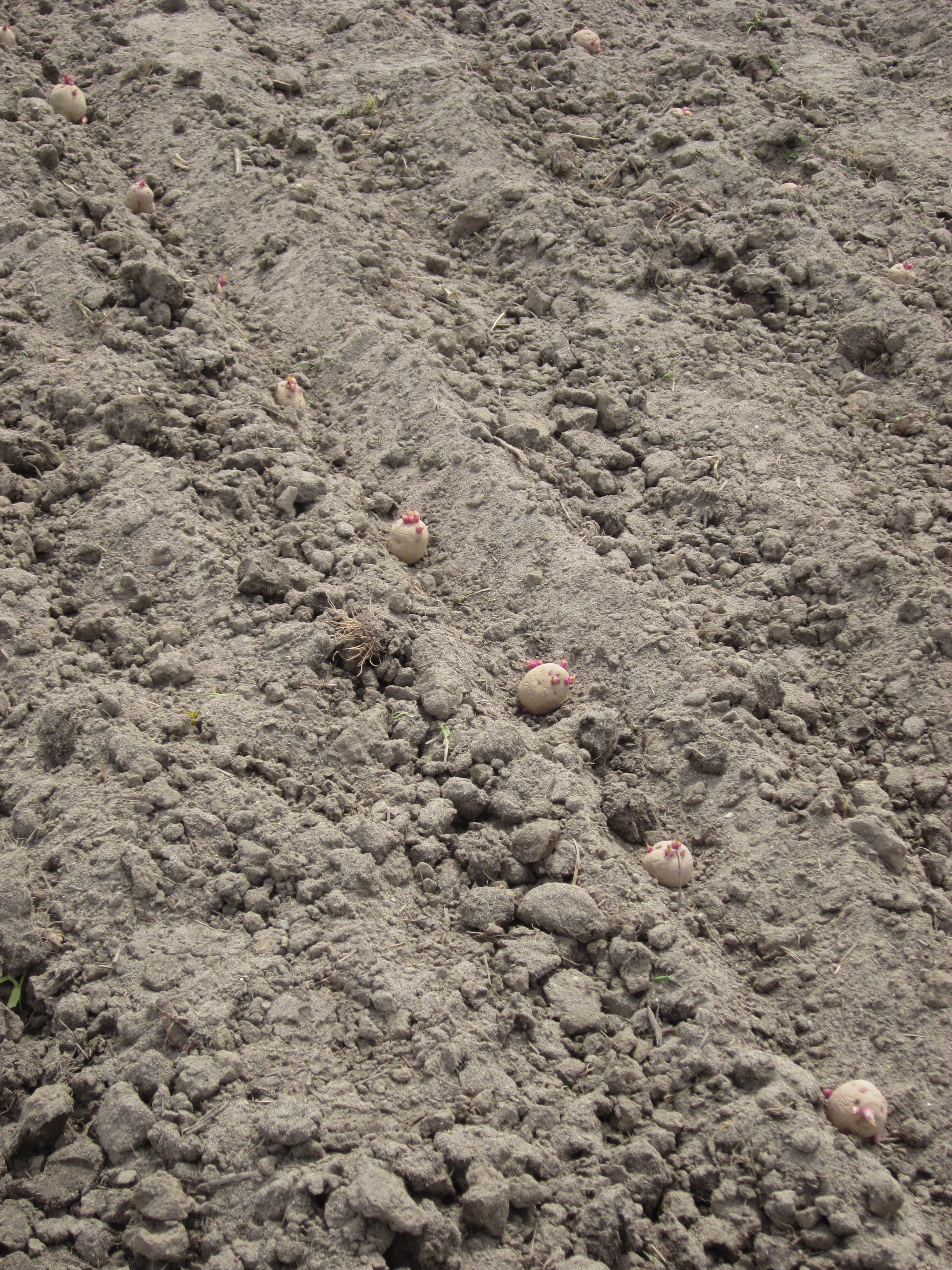
My husband tilled the area then measured, marked and dug the furrows. Then I placed the potatoes in the rows. He came back later and covered the potatoes with soil. Before leaving we fenced in the area so the chickens couldn’t scratch up the seedlings. There are plenty of other things around to keep the chickens happy. We planted about 160 row feet of potatoes.
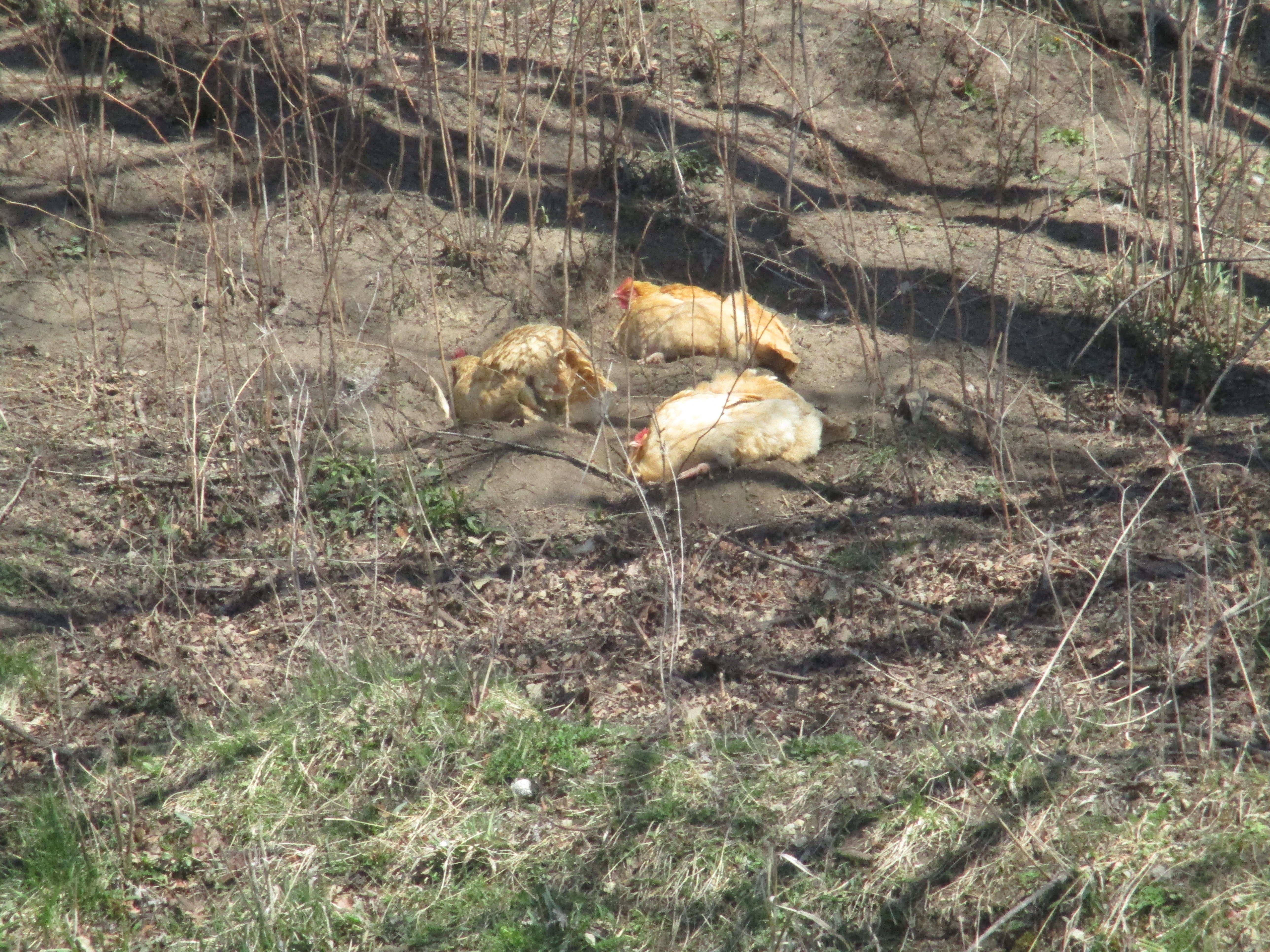
Chickens don’t spend all of their time scratching and pecking. They also like to dust bathe as these girls were doing. Dust baths are actually how chickens clean themselves. It sounds counterproductive but it works for them.
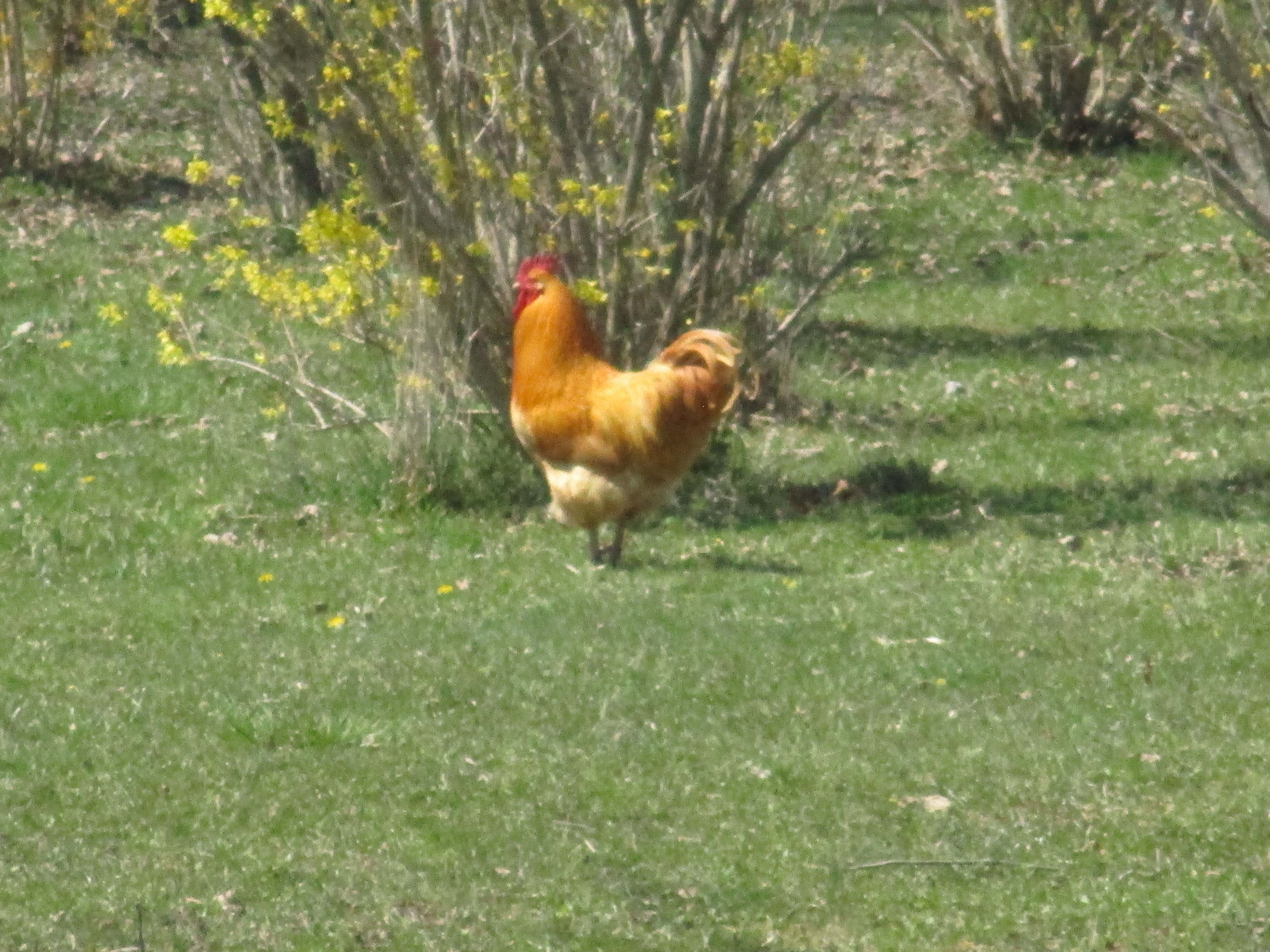
Rex is our only rooster – I think that makes him happy.
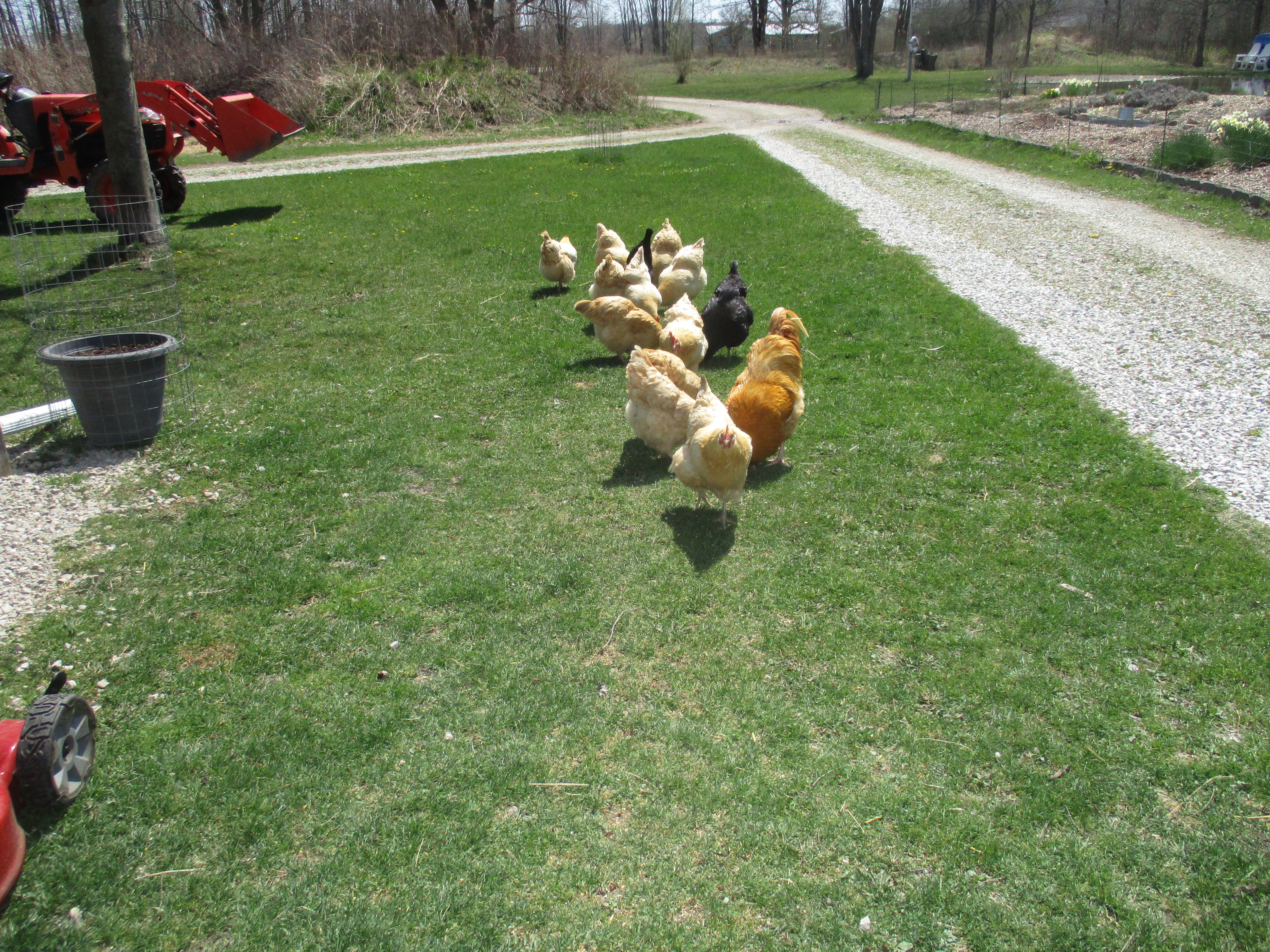
Chickens, chickens everywhere!
Made From Scratch 🙂
Happy chickens give the best eggs. We are getting about 15 -17 eggs a day right now – that makes me happy.
This week turned out to be much like I expected. Robins and red winged blackbirds have returned to the area and the daffodils are poking up through the ground. The garlic had actually sprouted last fall but it has now resumed growing after its winter break. I have yet to hear the frogs sing.
Last year I made this bird house out of corks. We hung it in a tree at the farm. It was late spring, and I suspect the birds already had their nests built so this house went unoccupied. I am hoping someone will make it home this year.
Crafting
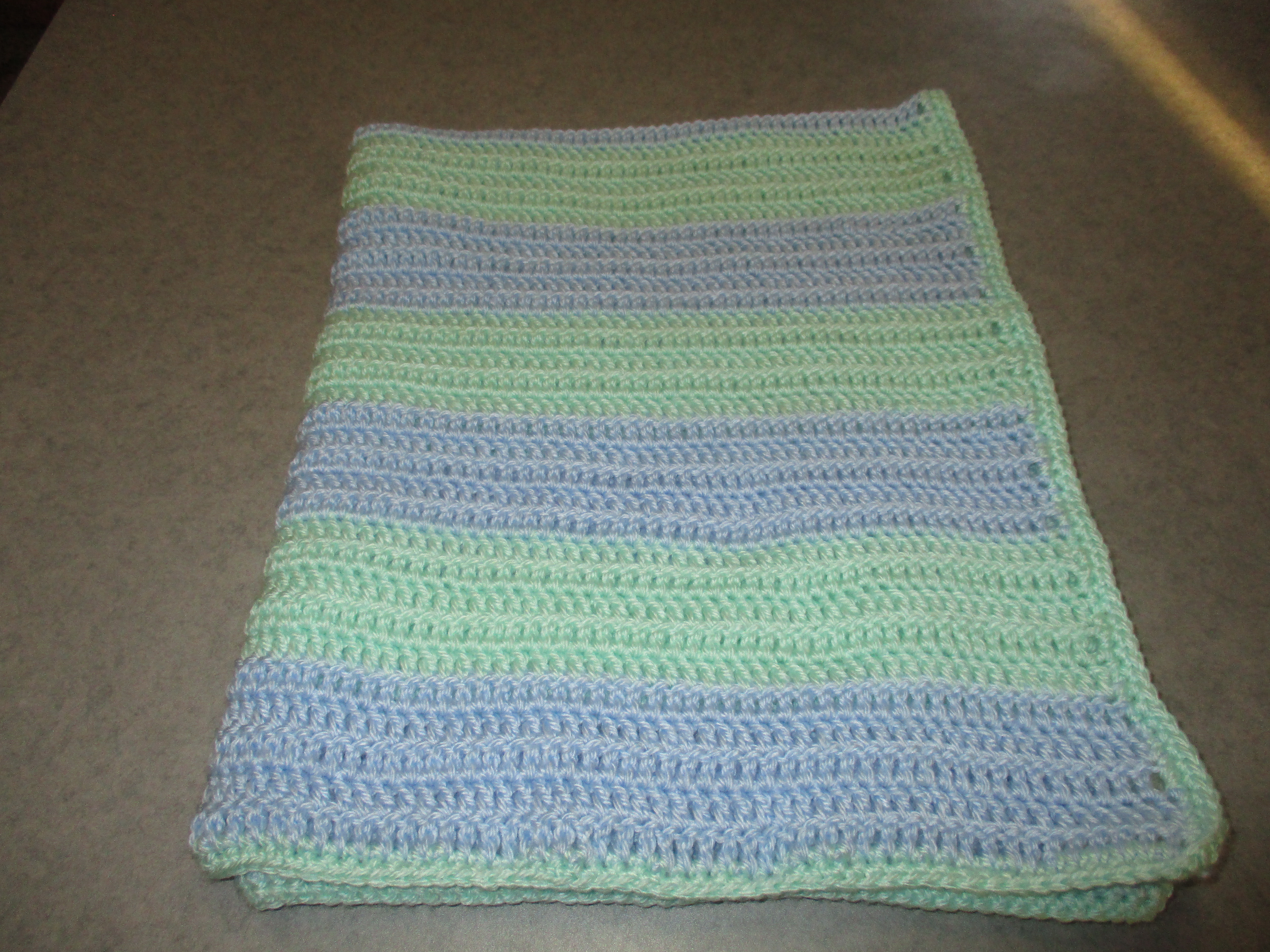
I finished the afghan I was crocheting (picture above) this week and started another. The one I am making now will be bigger than this one. It is the paw print pattern that I like to crochet. I intend to donate it to the Humane Society so they can raffle it off at one of their fundraisers.
When the Grass is Greener
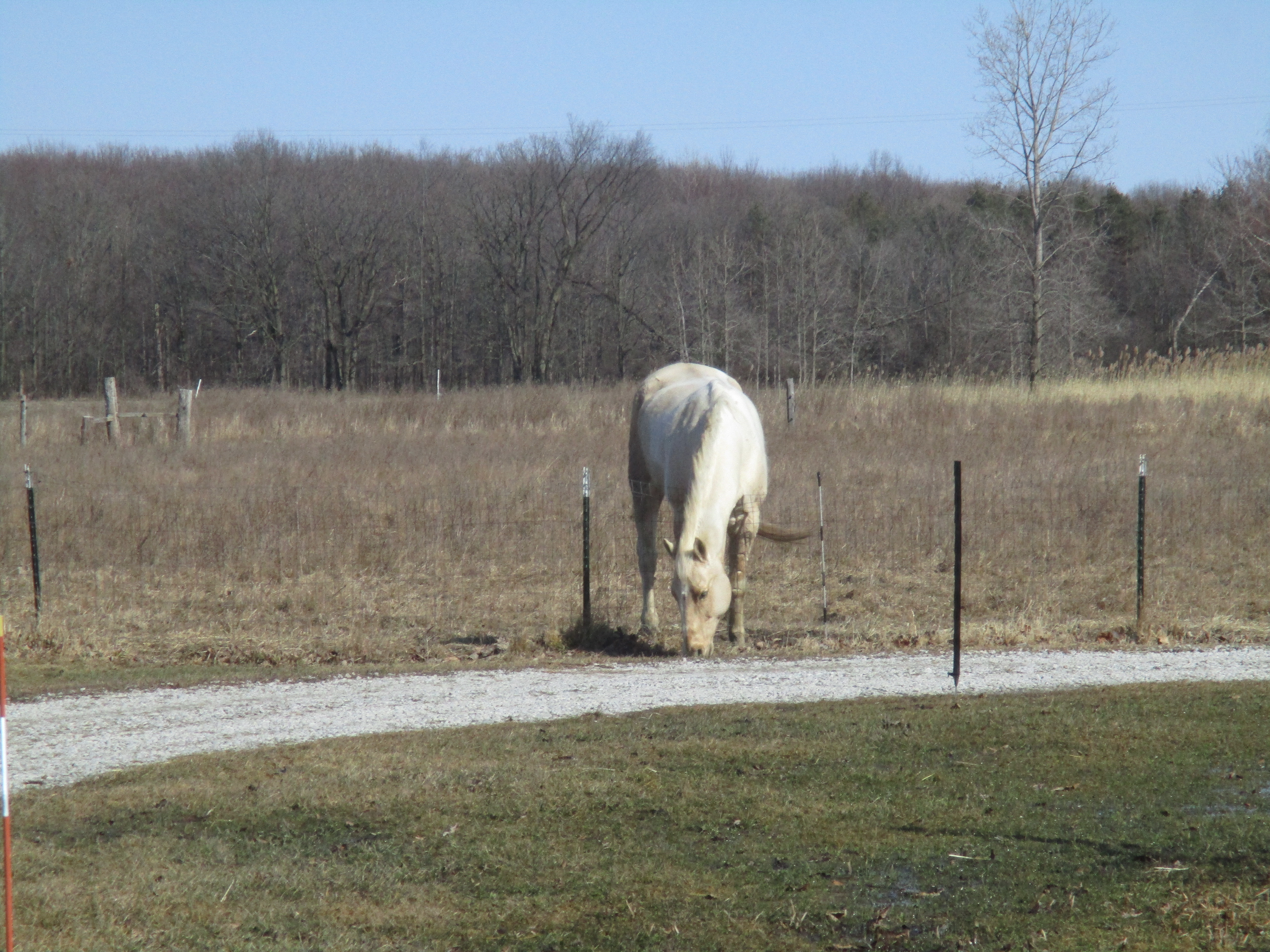
Last spring our neighbor decided to expand the area where he lets his horses graze. Our fence is their barrier where our property meets his.
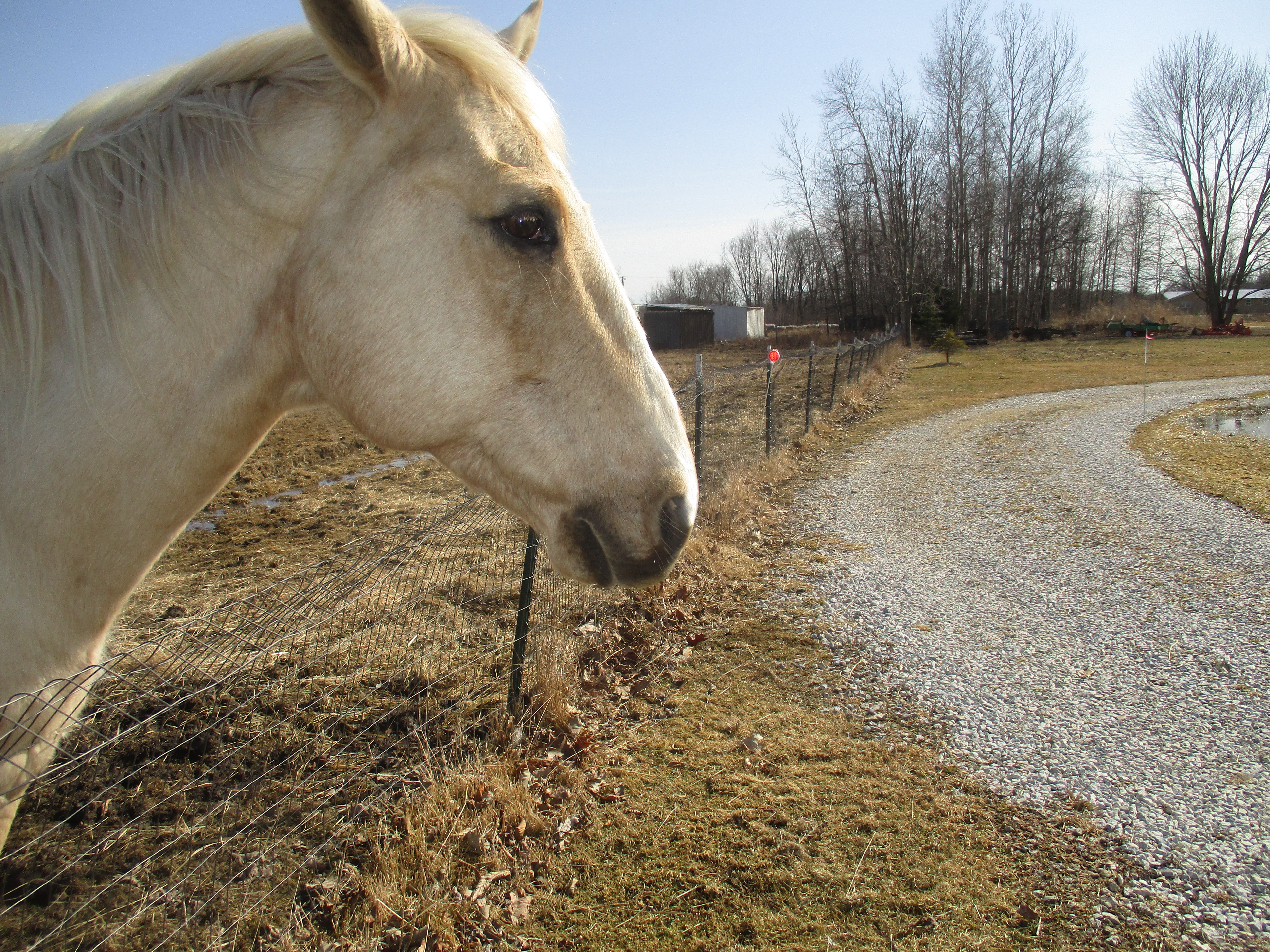
Colby Jack has discovered that this time of year the grass on our side of the fence is greener and tastier than what is in his pasture.
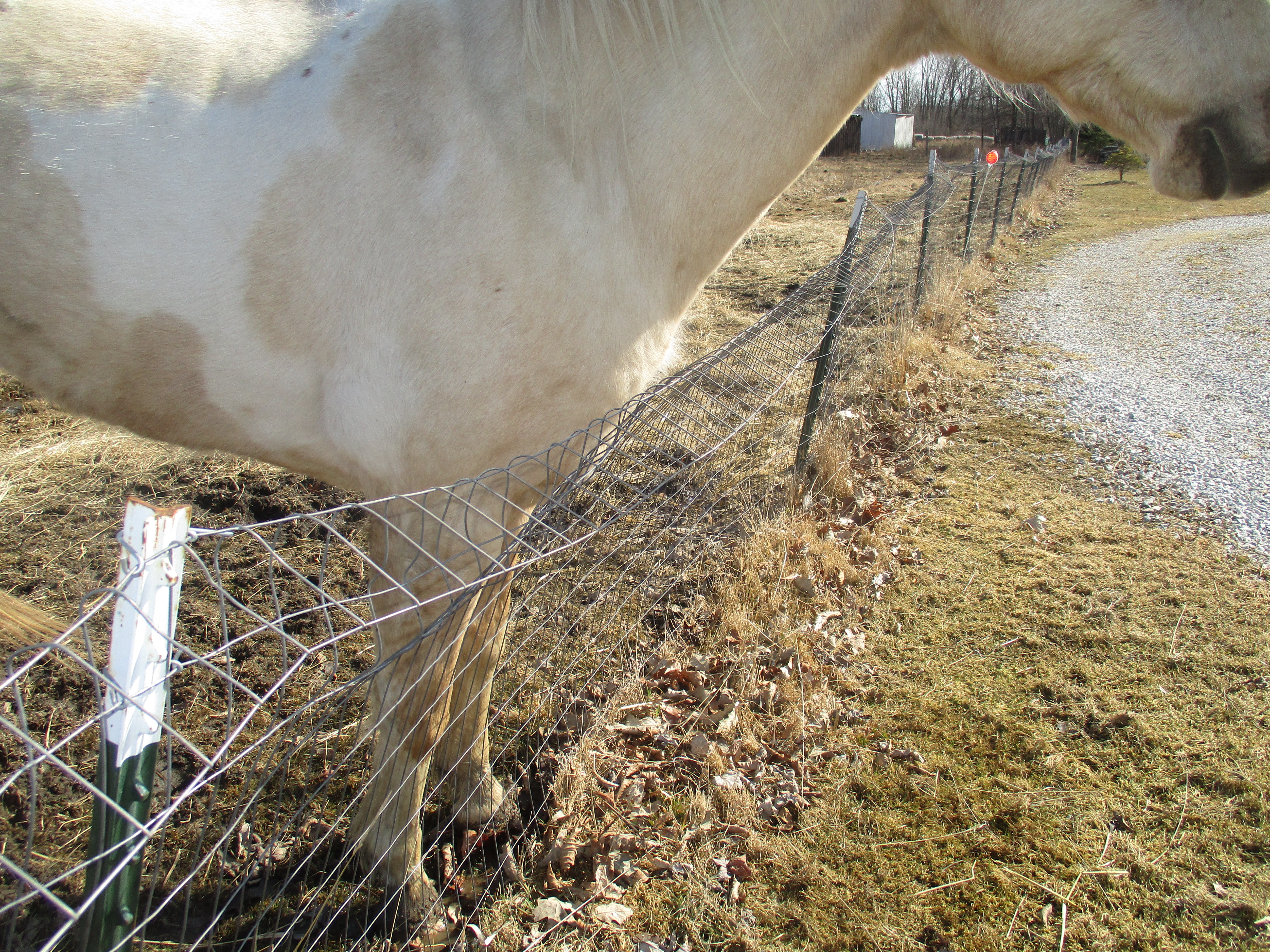
The problem is that he is not quite tall enough to reach the grass without bending the top of our fence.
Here’s a closer look. Can you see how the top part of the fence is bent over? Last year the owner strung an electric wire to keep Colby Jack away from our fence, but it didn’t stay in place very long. We haven’t complained because we feel bad for the horses that they are not provided better quality feed. At least the fence still keeps Ranger in.
A Dip in the Pond
It is way too early for me to go in the pond. There was still ice on it yesterday,
but that didn’t bother Ruby who had to go looking for minnows or tadpoles.
Playing in the Dirt
In the last several years it has become sort of a tradition for us to pot up some pansies in early spring and set them in the flower bed along our deck. They are bright and cheery and add some much-needed color while we wait for everything else to come back to life. On Thursday my husband made my day by going the greenhouse and coming home with two flats of pansies.
So, I got to play in the dirt. 🙂
There were 36 pansies in the two flats, and I divided them into 12 pots. Oh, so pretty. We may still have a few nights when temperatures drop well below freezing, but the nice thing about have these in pots is that we can bring them indoors to protect them from the cold.
While I was “playing in the dirt” I planted some spinach and pea seeds that we will grow in containers on our deck. I don’t think it’s too early since these are cold season crops.
My husband spent a little time with his hands in the dirt as well. Since we grow most of our plants from seed, he started eggplant and several types of peppers that we will grow indoors under grow lights until late May when we can get them into the garden. He will be starting tomatoes next. Planting season has begun!
Overall, it was a good and productive week and now that spring has sprung it only gets better from here. 🙂
Last year we waited too long and in April when my husband made a phone call to the greenhouse where he worked in 2019, to see if they had pansies for sale, they told him they were all sold out. He wasn’t going to make that mistake again.
He called them yesterday morning but only got the answering machine. He left a message asking when they would have pansies for sale and received a call back in the afternoon. They had pansies ready, and we could come out and pick some up.
I wish I would have taken my camera along. The green house was enormous and filled with pansies. There were pansies in round pots, pansies in square pots and pansies in flats. There were sections that had flats of all yellow pansies, and all purple, and all red, and all orange, and all white and there were sections that had flats of mixed colors. It was a sight to behold. We selected two flats of mixed colors. Each flat had 18 pansies in it.
We went back to the farm where my husband brought out some flowerpots and opened a bag of potting soil.
I put three flowers in each pot and ended up with 12 pots. You only see 10 in the picture because I took one to my next-door neighbor and the other on would not fit on this table.
Pansies thrive in cooler temperatures, between 40 and 60F but can survive temperatures well below freezing as long as the soil does not freeze. I am eager to put them outside to adorn the flower bed beside our deck but have decided to keep them indoors for a while, at least until after the ice storm that is due to arrive tomorrow.
Getting my hands in the dirt and potting up these cheery flowers certainly made me smile. I hope this picture makes you smile too. 🙂
Saturday was a productive day. We accomplished several projects at the farm.
Blueberry Patch
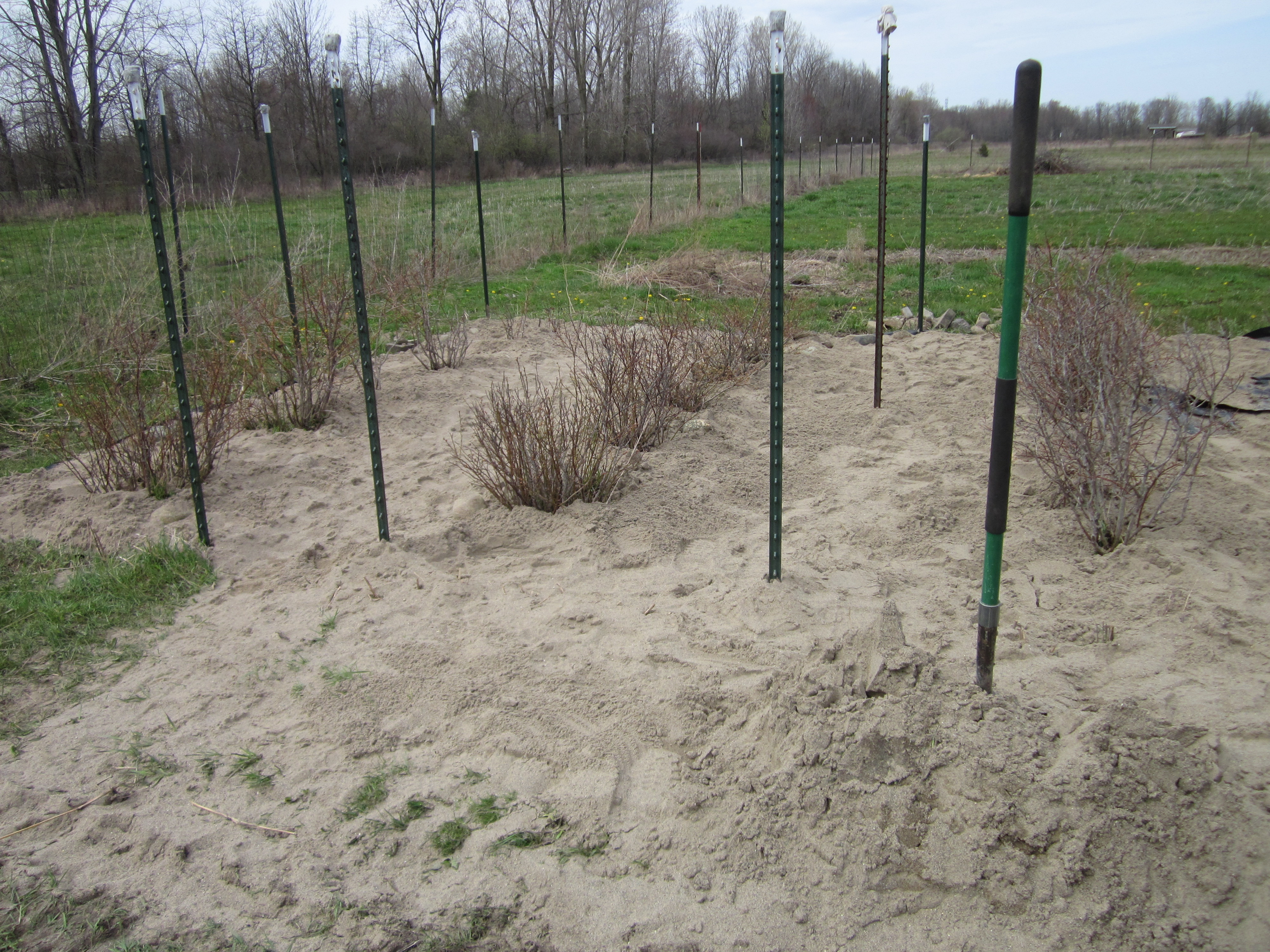
We made great progress in the blueberry patch – a project that we had been working on for a few days. Our soil at the farm is mostly clay and despite working straw and other composted materials into it each year we have yet to turn it into an ideal garden loam. This year we decided to add some sand to the soil. A couple of weeks ago my husband had a truckload of masonry sand delivered.
We decided to use some of the sand in the blueberry patch for weed control. Two years ago we put black plastic down between the rows and bushes and while it was largely effective in keeping weeds down it tended to slide out of place or was easily moved by a hunting dog, (Ranger) who had picked up the scent of a mouse hiding under the plastic. (He is relentless.) Water also tended to pool on the plastic creating puddles that took a long time to dry up. After putting the plastic back in place we covered it with several inches of sand.
The blueberry patch project is not completely finished as we still need to put up the plastic fencing around it and the netting on top to protect our crop from hungry robins. We hopefully will get that done this week.
Planting
We put our first plants in the garden on Saturday.
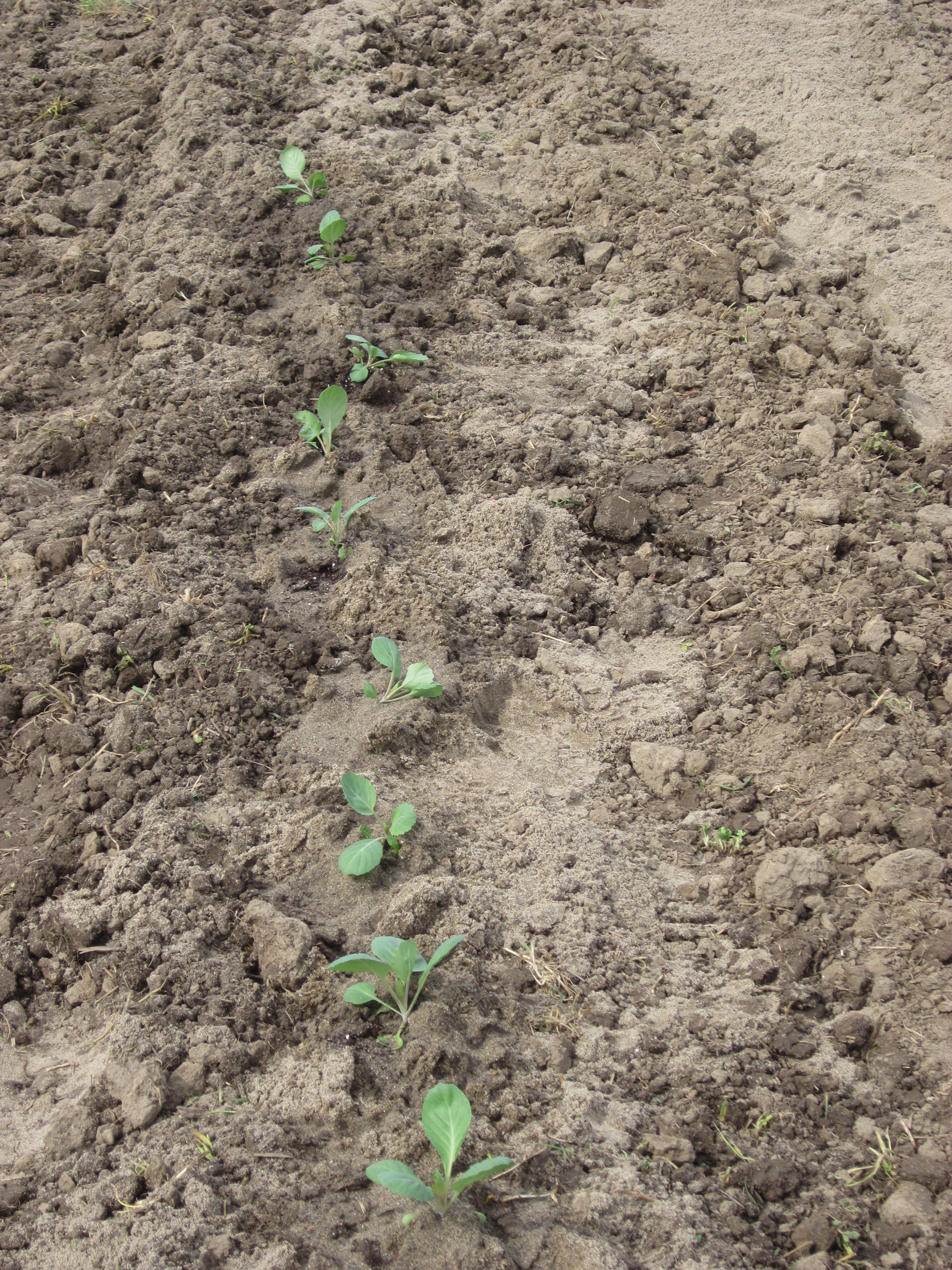
My husband had identified an area that was dry enough to till the soil and that is where we decided to plant potatoes and cabbage – both cool weather crops.
He broke out the rototiller he bought a couple months ago. It is a Champion 19-inch, rear tine, tiller. After tilling up the patch where we would plant the potatoes and cabbage he reported that he is very pleased with the way this machine preforms. We spread a layer of sand on the patch. He then mixed it in as he tilled the area.
We planted six 17-foot rows of of potatoes.
and 12 cabbage plants.
I saved some of the cabbage plants to plant in the raised beds we are making. Since the ground is still very wet, and still having much rain in the forecast, I’m not sure how well things will do that are planted in the ground. You may remember last year we had many vegetables that were lost because the ground was just too wet. This year we will be making some raised beds and I hope to plant at least a portion of some crops in the raised beds that will be better able to drain excess water.
When the Hen’s Away
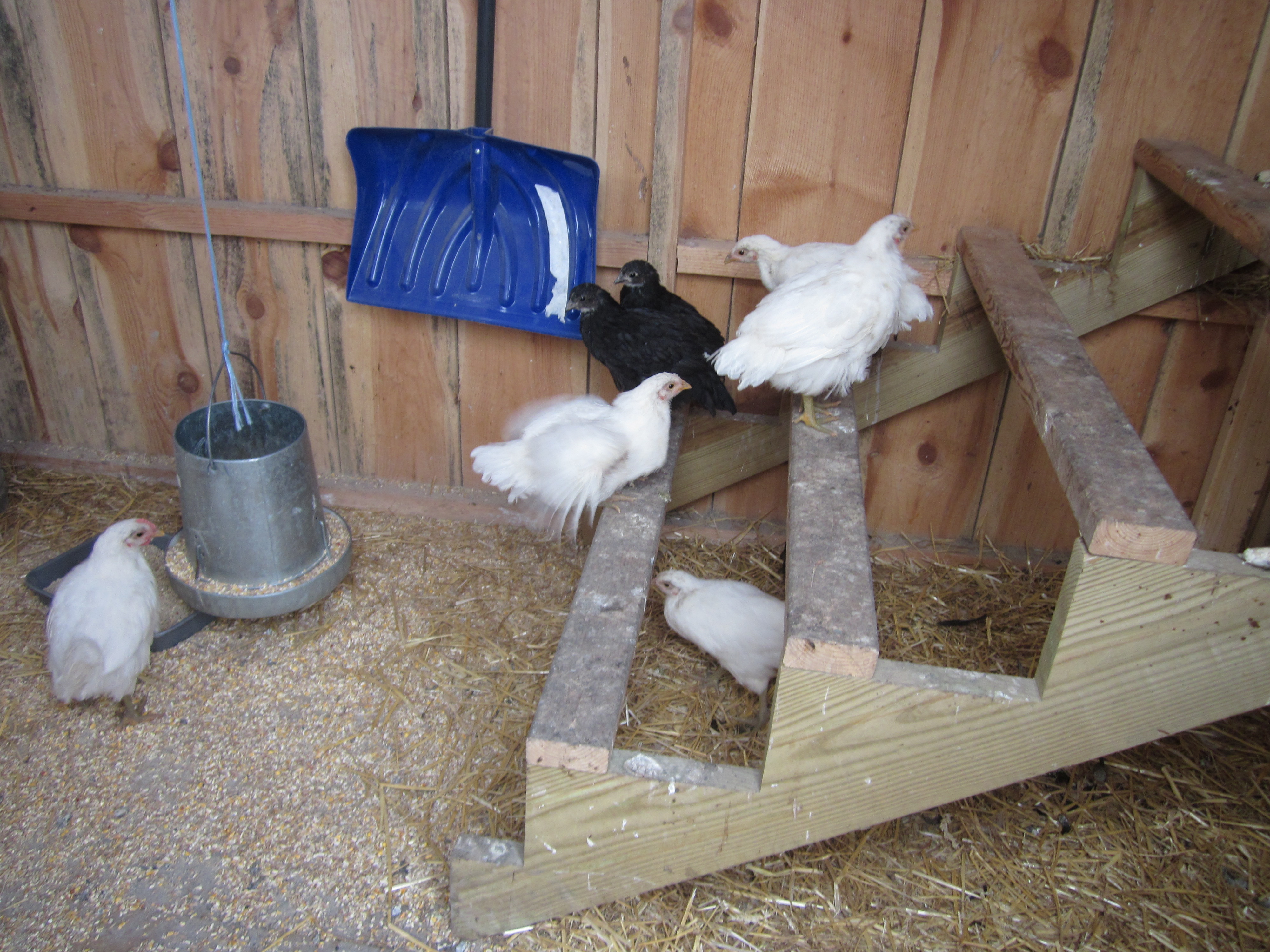
The chicks will play. The chicks still sleep in the nest boxes at night, while the older chickens sleep on the roosts. During the day while the older hens are out of the coop or using the nest boxes for laying their eggs, the chicks like to spend some time playing on the roosts. Perhaps they are practicing for when they too are old enough to sleep on the roosts at night.
Breathtaking
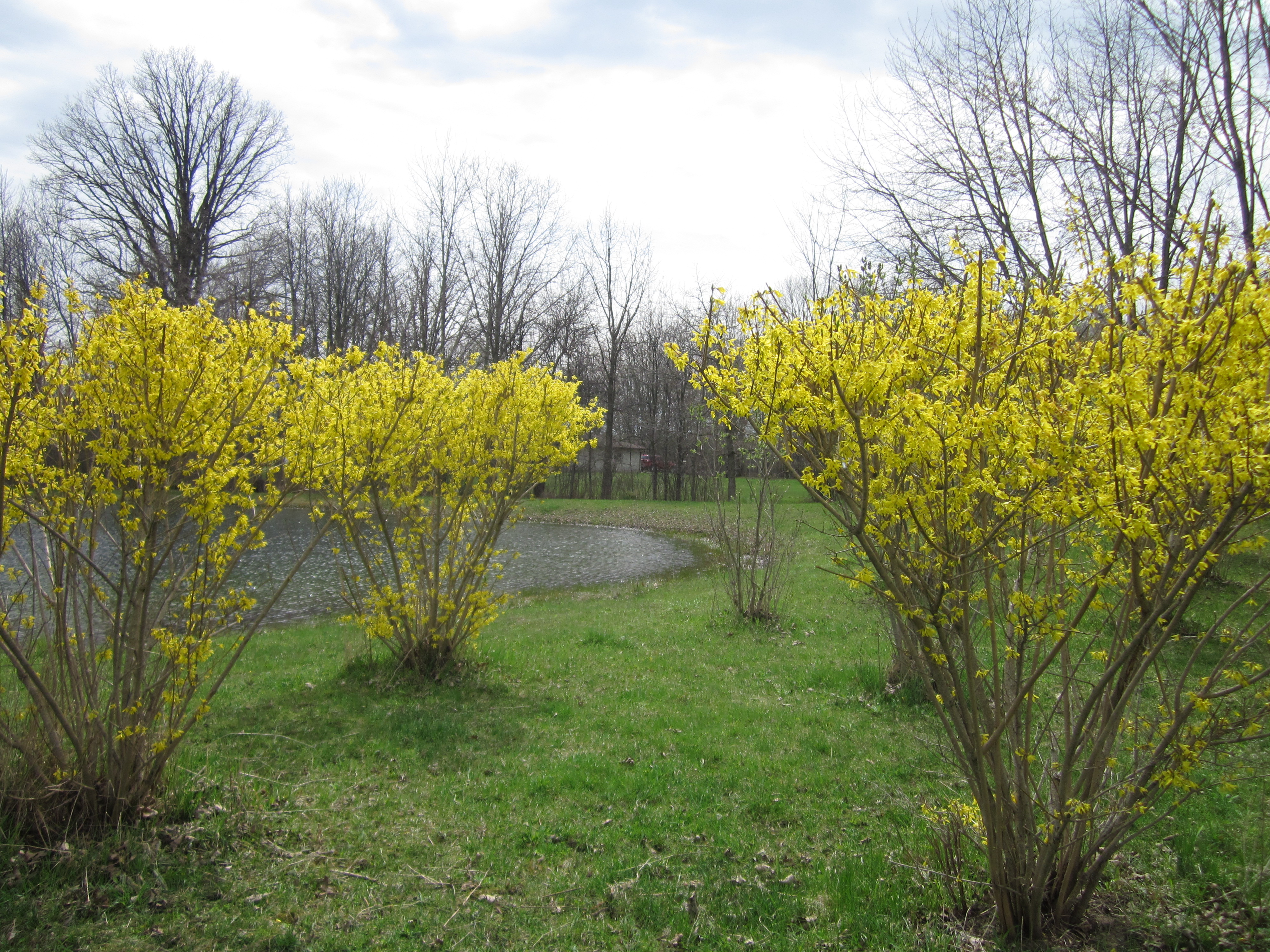
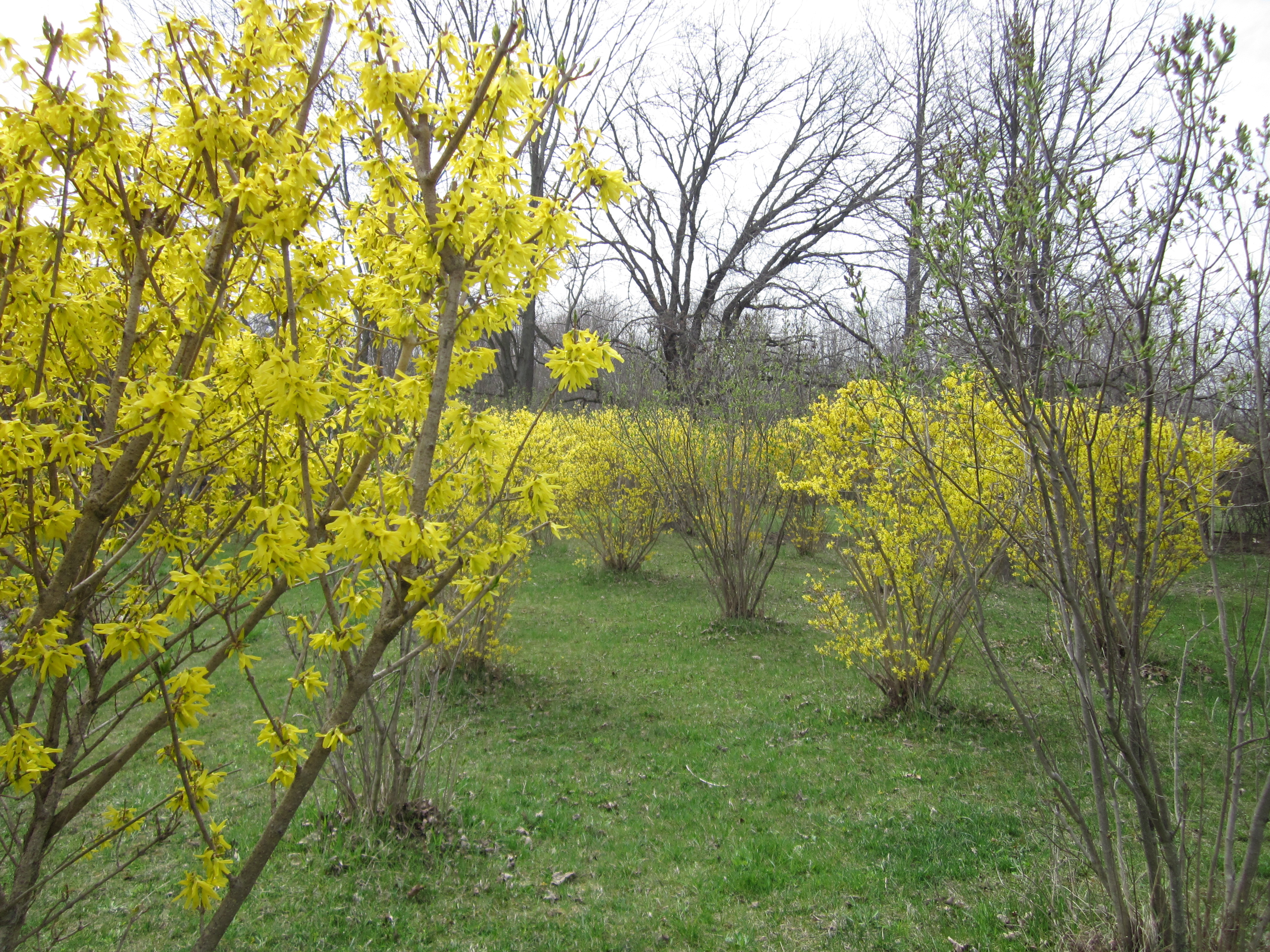
From a distance to forsythias create a stunning array.
But standing in the midst of their intense brilliance is mesmerizing.
This is the final post in the series that was published in 2016. Click to see Part I or Part II. After reading it again I realized that I have discovered a few things since it was first published.
We have grown some more plants that I have observed the honey bees foraging on heavily. They include chamomile and chives which blooms in the spring, oregano which blooms throughout the summer, and spearmint, peppermint, chocolate mint and anise hyssop which all flower in late summer and fall, so these can be added to the others you will read about in the original post.
The other thing that I recently read and thought would be worth including with this post is that honey bees will only forage one type of plant during a flight. Knowing this it stands to reason that they would be foraging a type of plant that is plentiful in the area. Thus if you are planting with honey bees in mind it would be better to plant several of one type of plant than to plant only one of several types of plants.
I hope you enjoy the original post.
Since we decided to become beekeepers I have read many recommendations about what to plant for the bees including the above picture. I feel very strongly that it is important for the health of the bees that they have a variety of foods (plants) to forage. Although it is not our only consideration when deciding what to plant, planting for the bees is something that we have been doing since we bought the farm and decided to become beekeepers.
Other things we take into consideration are:
1. Is the plant annual or perennial? Except for food and herbs we usually don’t plant annuals.
2. To know if a perennial will survive it is important to know the hardiness zone that you live in. Some plants that are perennial will not survive the colder temperatures of our winter and some will not even grow long enough to blossom.
3. It is also good to know the growing conditions that the plant requires – type of soil, wet or dry, and sun or shade are all important considerations when deciding where to plant something.
4. I love things that have multiple purposes. So I consider other uses for the plant – are they edible, medicinal, a good cover crop that will nourish the soil, or simply planted for their beauty ?
5. I also have to consider what critters will eat these plants before either we or the bees can benefit from them. I have found some plants that the deer and rabbits simply don’t bother with, yet there are many others that have to be fenced in order to protect them.
6. When planting for the bees, another thing to consider is the bloom time of the plant. It is good to have plants that blossom at different times of the year. Early spring is probably the time when the bees are most in need. As they emerge from their hives in the spring, their winter food stores are running low if not depleted, they need to be able to find food in order to survive.
What we have planted:
Lavender was a plant of choice before we ever knew we were going to become bee keepers. I originally planted lavender at the house because I loved the plant, loved the fragrance, loved the dried flowers that could be made into sachets, sleep pillows, tea, or infused into oil. I also add them to my chamomile/lavender soap. It was on the plants at the house that I first observed honey bees foraging and realized what a good bee plant it was. When we bought the farm, planting lavender was a no-brainer and it is now a large part of our prayer garden. Another thing that I appreciate about lavender is that deer and rabbits leave it alone.
Our Prayer Garden
Thyme is also grown in our prayer garden. It is a low creeping plant that makes a nice ground cover. It has both culinary and medicinal uses. http://www.delallo.com/articles/thyme Last spring, when the thyme was flowering, I noticed that the honey bees were all over it. I was happy to see this because thyme essential oil is recommended as a natural treatment for varroa mites. While I haven’t seen it written anywhere, my theory is that by feeding on thyme, perhaps, the bees can extract the thymol that is reported to be effective for controlling the varroa mites, thus not requiring human intervention. Thyme is another plant that is not bothered by deer or rabbits. This year I will divide the roots and spread thyme throughout the prayer garden.
Sage and Salvia are of the same family. This link provides a growing guide for the different types. http://www.bhg.com/gardening/flowers/perennials/guide-to-salvias/ When planting sage/salvia it is important to note the hardiness zone for the variety you are planting. I have grown several varieties of sage. They grow well during the summer, and I have been able to harvest their leaves, but since they are not hardy in our (zone 6) growing area they have never blossomed and some have not survived our winters. Since they do not flower they are not useful to the bees. On the other hand I do have a salvia plant (I’m not sure what variety it is) that has beautiful purple spiked flowers in the spring and summer. I have had it for three years and the honey bees love it. Salvia and sage seem to be plants that the deer and rabbits leave alone.
Basil – I have grown basil for many years. I use it fresh during the summer and dry it to have on hand year round. I pick the leaves off before it begins to flower and continue to pick them until I want it to flower and go to seed. Late last summer, when I let the basil plants flower, I noticed the honey bees were heavily foraging them.
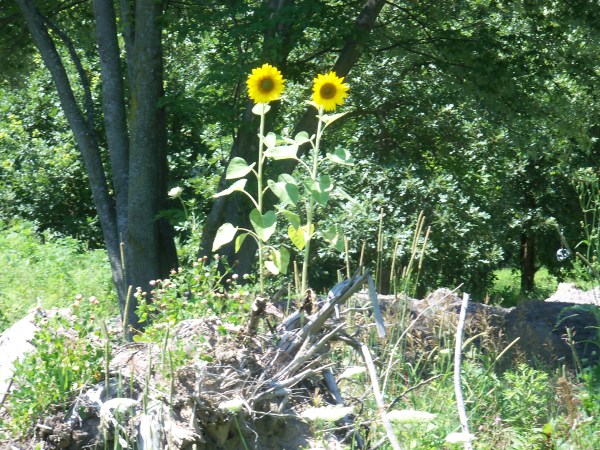
Sunflower is one of the annuals that we grow. I can not speak for all varieties of sunflowers but our bees visit the Grey Stripe Mammoth and black oil seed varieties often.
Once you plant sunflowers, don’t be surprised if they come up voluntarily the following year in surprising places as these did. They always made me smile 🙂
Asters grow wild in our field. They blossom in the late summer and fall and last year we witnessed the bees feeding heavily on them.
Clover is the one thing that we plant most often, that is great bee food. We sometimes use clover as a cover crop to nourish the soil for future crops, but most often we use it combined with grass seed when we landscape areas. Call me crazy, and you might if you’ve been paying a lawn care company to keep your lawn weed free, but I feel that white clover compliments the grass. It grows at a similar rate, it fixes nitrogen that helps the grass grow, and it is soft to walk on. I also like that if I mow the white clover when it is blossoming, it will blossom again.
Buckwheat – Another plant that we have used as a cover crop that the bees seem to enjoy. Buckwheat makes a dark honey with a strong flavor. It also makes a good cover crop as it grows fast and is said to choke out competing weeds.
Last summer my husband and I were in the garden center department of one of the local home improvement stores. I was looking for more of the salvia plant that I have, but was unable to find any. We noticed honey bees visiting several different flowering plants. You should probably know that for me going to a garden center and not buying plants is almost like going to the Dairy Queen and not buying ice cream. I absolutely hate shopping and the only exception is going to a green house or garden center. I could spend way too many hours and way too much money in these places. That being said we ended up buying some of the plants that we saw honey bees visiting.
They included a Coreopsis also known as Tickseed.
Tickseed
A Mallow
Mallow
and a Balloon Flower that I don’t have a picture of. After planting these in our prayer garden I didn’t notice any bees on them. I suspect that there were so many other things blossoming in the area that the bees did not pay any attention to these flowers. Thus, the lesson I take from this is that my focus should be on sticking to what we already have. I will add more lavender, (I started some by seed) I will divide the thyme and let it spread, and perhaps I will divide my salvia in order to have more plants. I will cherish the clover, the asters and the golden rod that grow wild in our field, and I will not curse the thistle (much).
2020 update – While the mallow plant pictured above did not come back the following year, the balloon flower has continued to grow but I have never observed bees on it. The tickseed has continued to grow and spread and last summer I often saw bees foraging it.
Will you be doing any planting this year? Have you observed bees foraging on specific plants in your area? I would love to hear from you.
















 Don't Eat It! Soap and Skin Care