Hello and welcome! It’s a beautiful morning and I thought you might like to join me for a walk at the farm.
We are seeing new blossoms every day.
The white phlox that we added to the prayer garden last year are flowering.
The primrose are beginning to bloom.
and the roses are blooming.
Our peony has only a single flower this year, but it sure is a beautiful one.
We will be picking strawberries later.
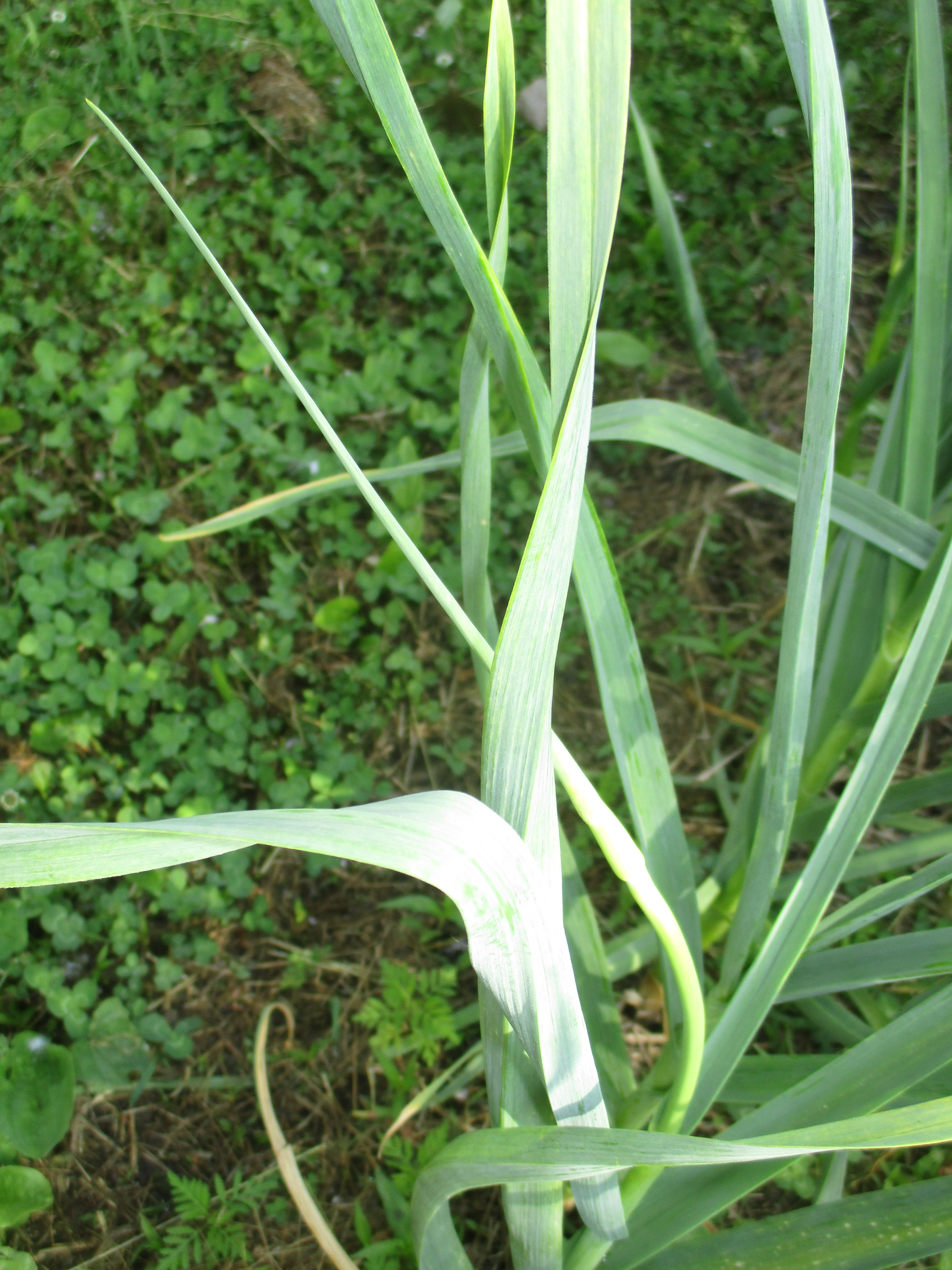
But we won’t be cutting garlic scapes for about a week. The scape is the light colored, curved shoot in the middle. They are just beginning to form.
The wild roses are in full bloom. They are very fragrant – in fact you might have smelled their lovely scent before you saw the blossoms.
Daisies scattered here and there.
A flowering shrub that I have not identified. It does have a light pleasant fragrance.
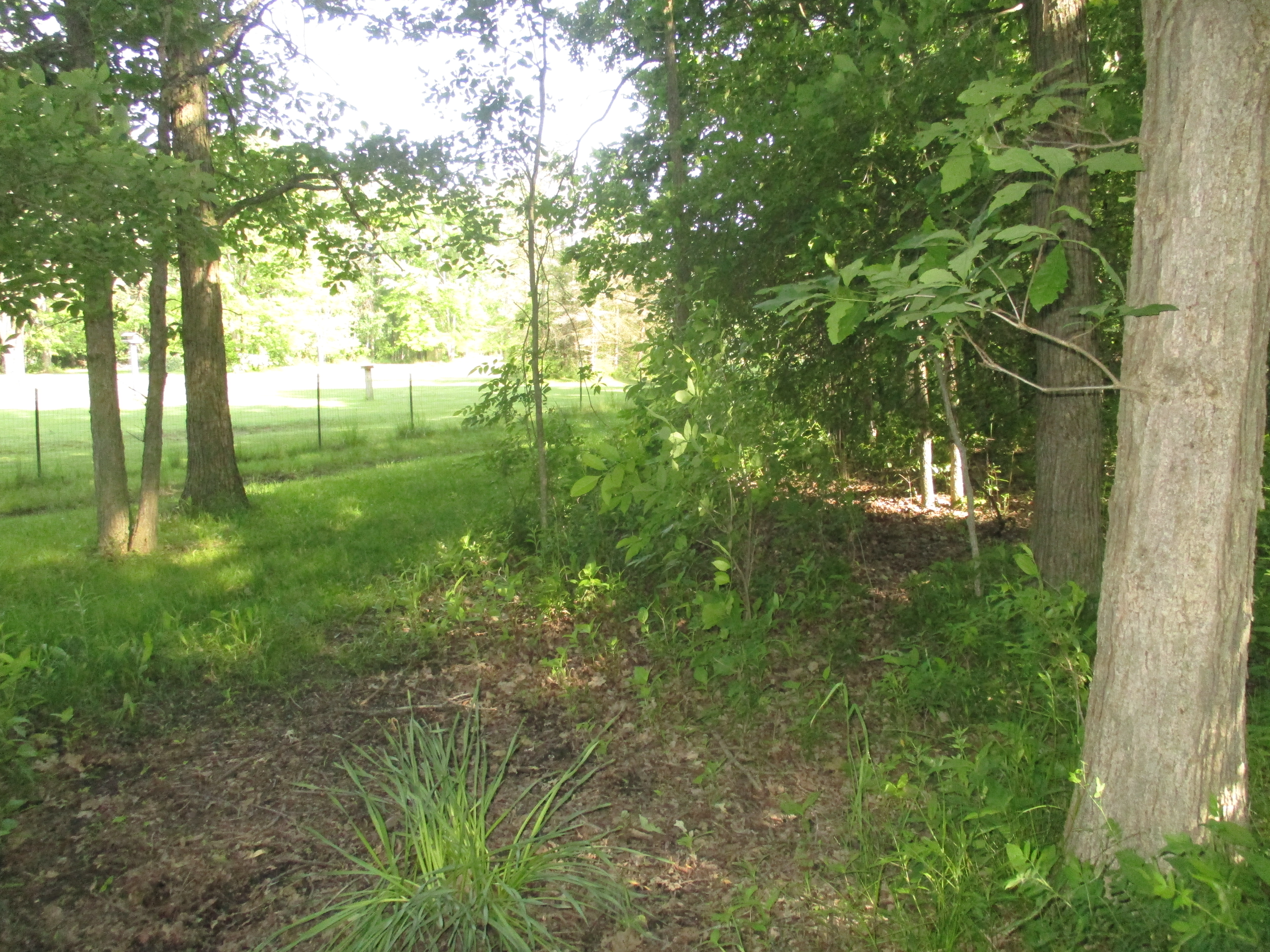
A short stroll through the woods is shady and lush.
Beyond the woods the sun shines on the neighbor’s yard.
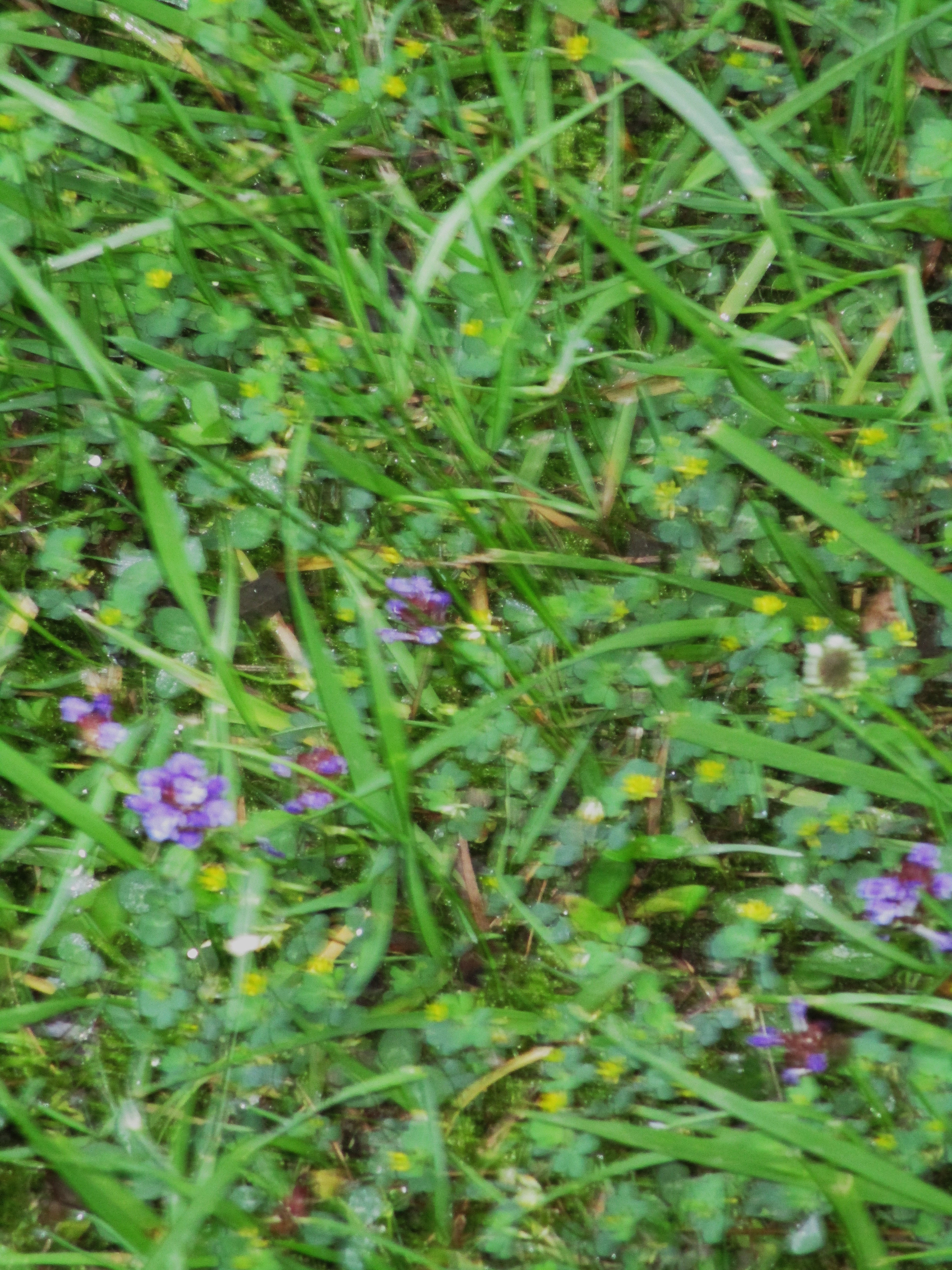
Mixed among the grasses you might notice wild plants such as selfheal (the purple flowers) and black medic (the yellow flowers). Both are edible and medicinal.
Fleabane is a common daisy-like wildflower in our area.
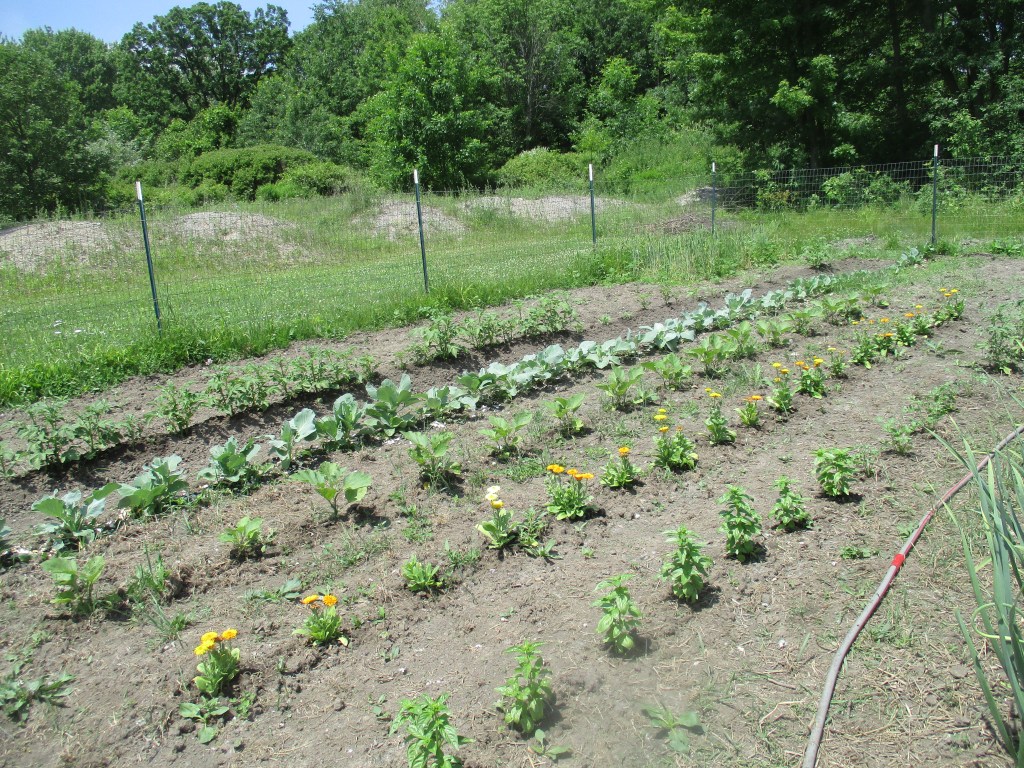
Our gardens are doing well so far. Some of the tomatoes have blossoms already.
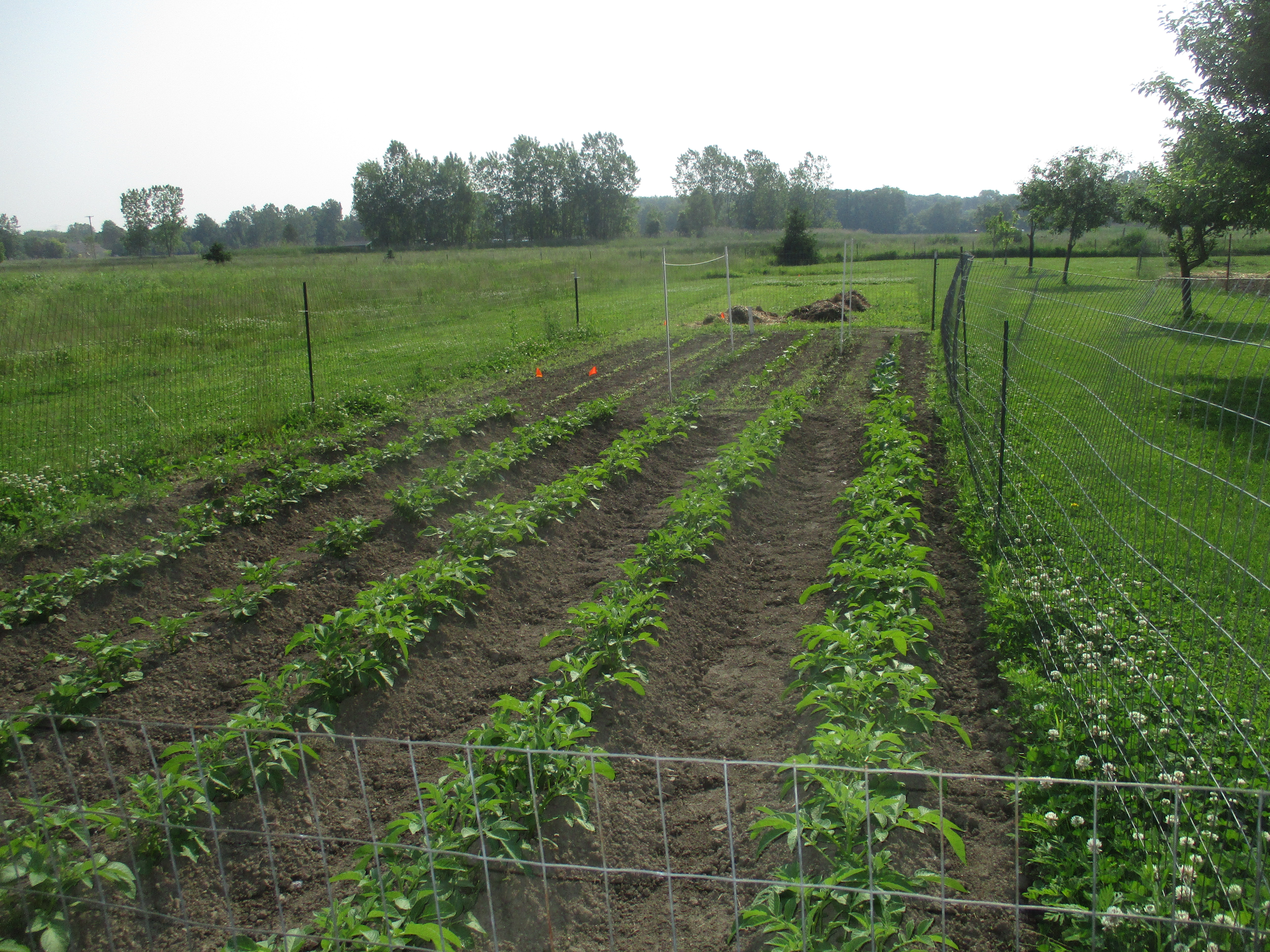
Potatoes are also doing well.
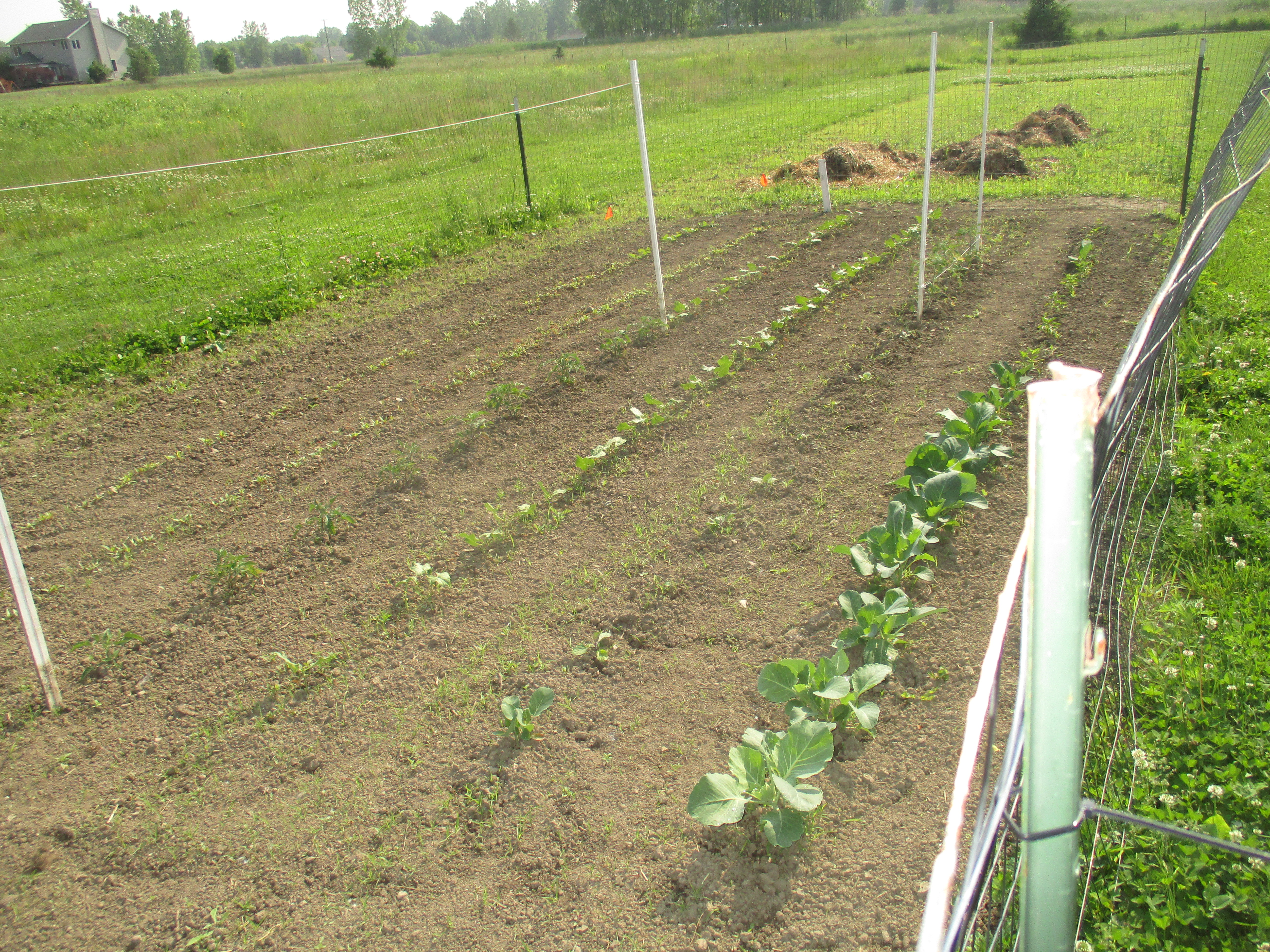
Cabbage is coming along nicely. There are also green beans, eggplant and a few other things in this patch.
Our apple trees are loaded with apples this year. It’s looking like a we may have a bumper crop this fall.
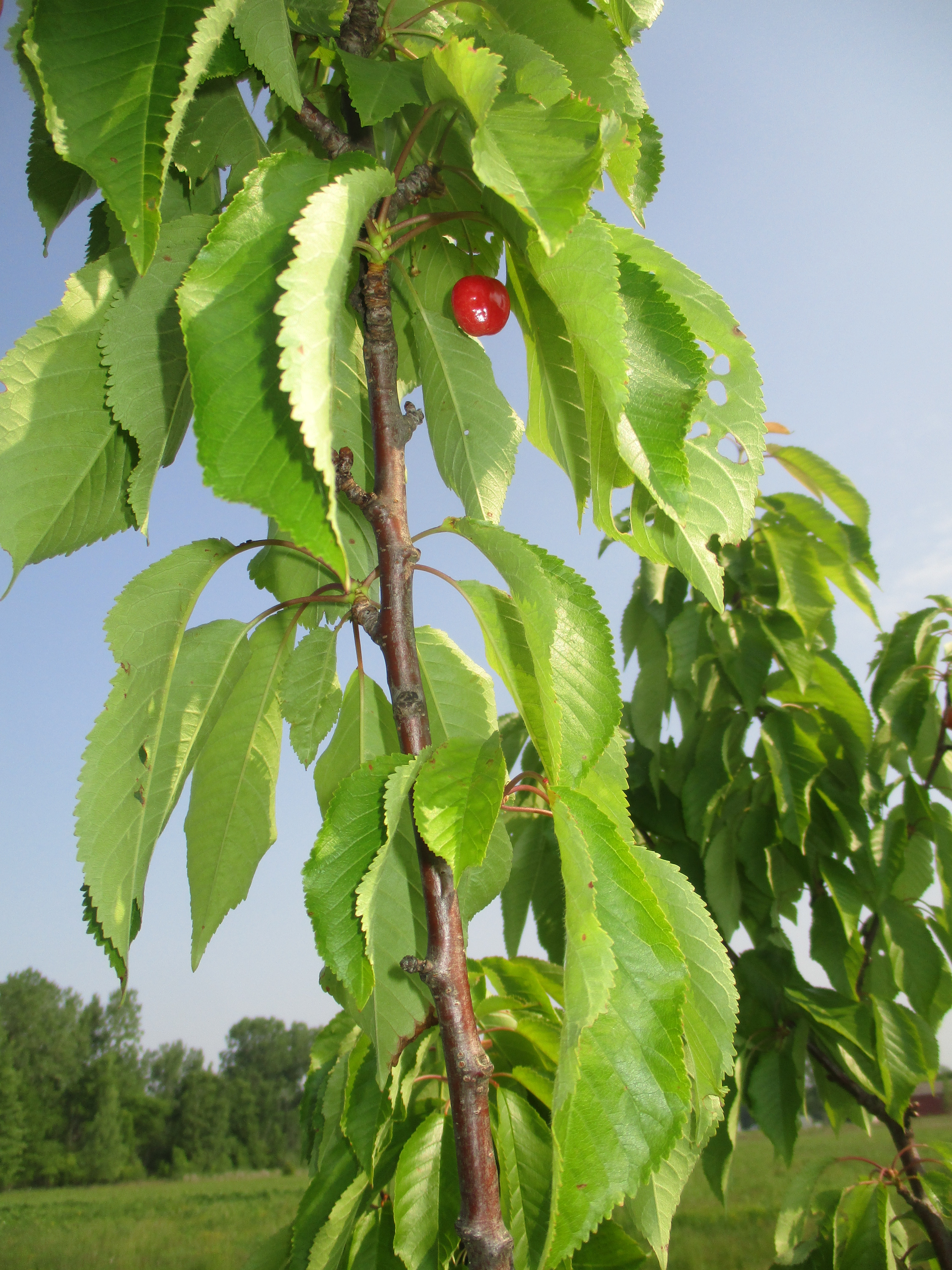
Ripe cherries on one of our new trees. I harvest three wonderful, sweet cherries from this tree. Hoping for a bigger harvest next year.
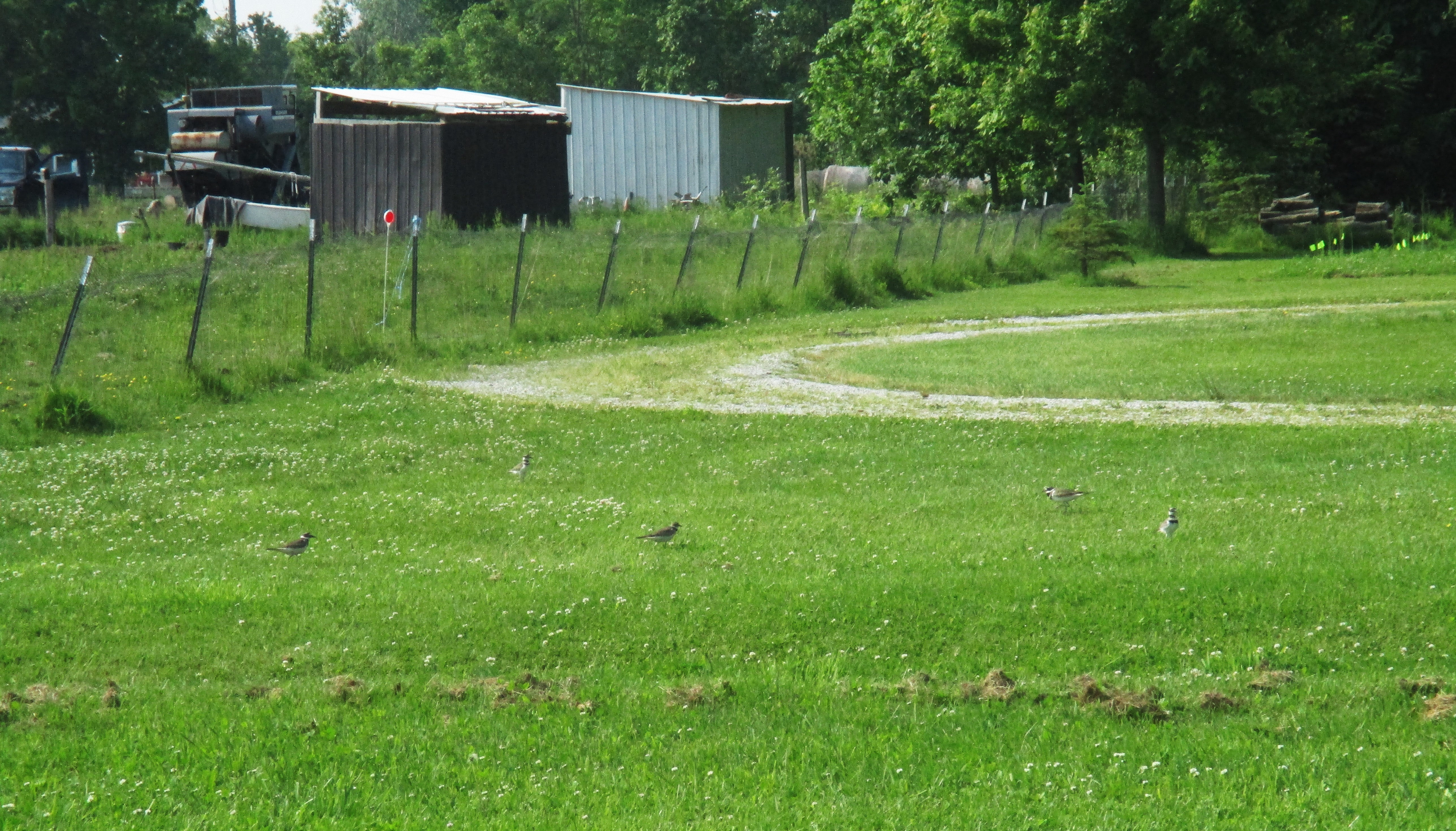
The killdeer quadruplets are still running around. They are nearly as big as the parents so I expect they will be flying off soon.
But in about a week this killdeer and its mate, who decided to nest in the middle of our driveway (forcing us to detour around the area) should have four more babies running around.
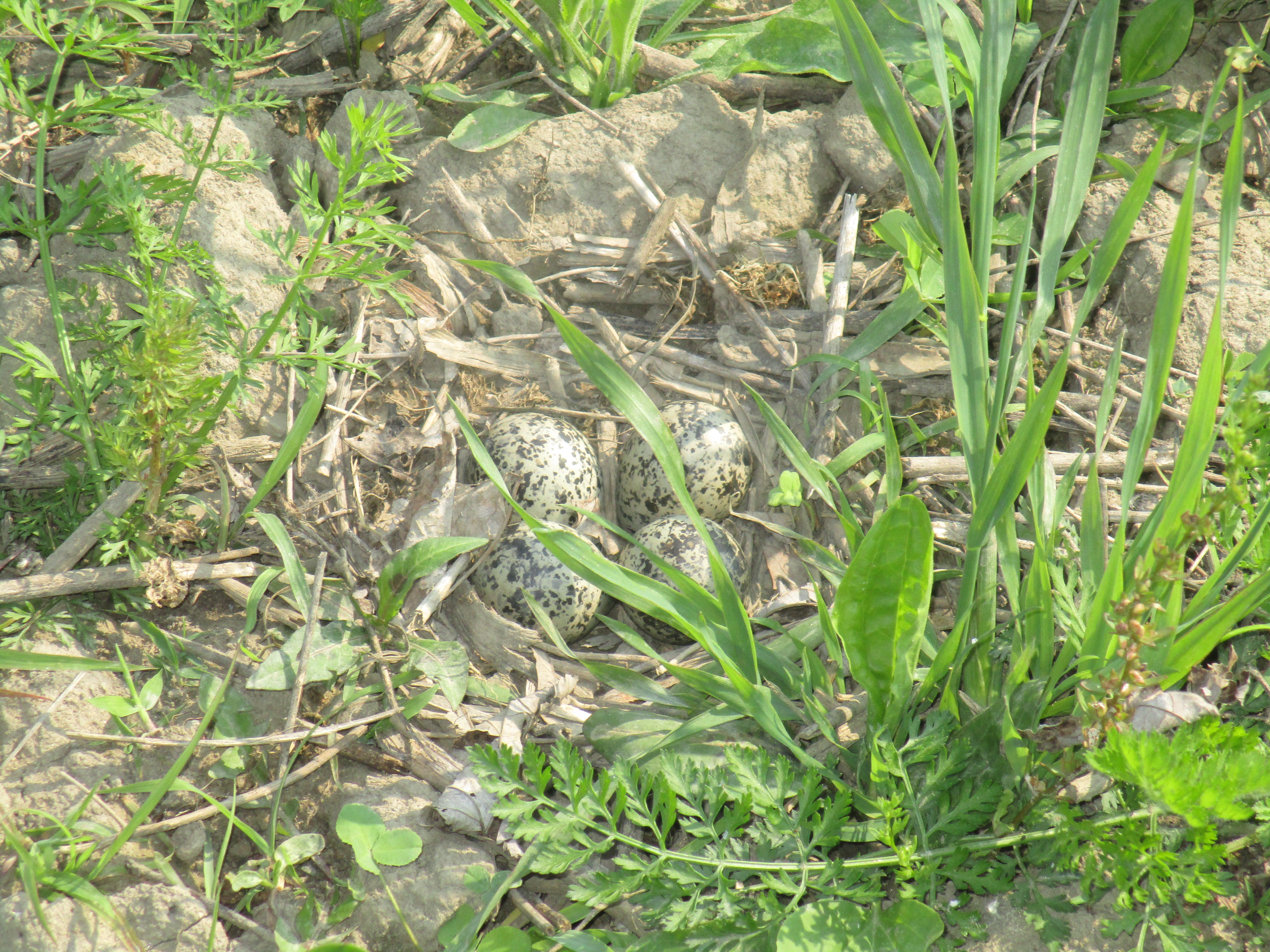
And about a week after that these four killdeer eggs, that are being incubated in an unused area of the garden, should be hatching.
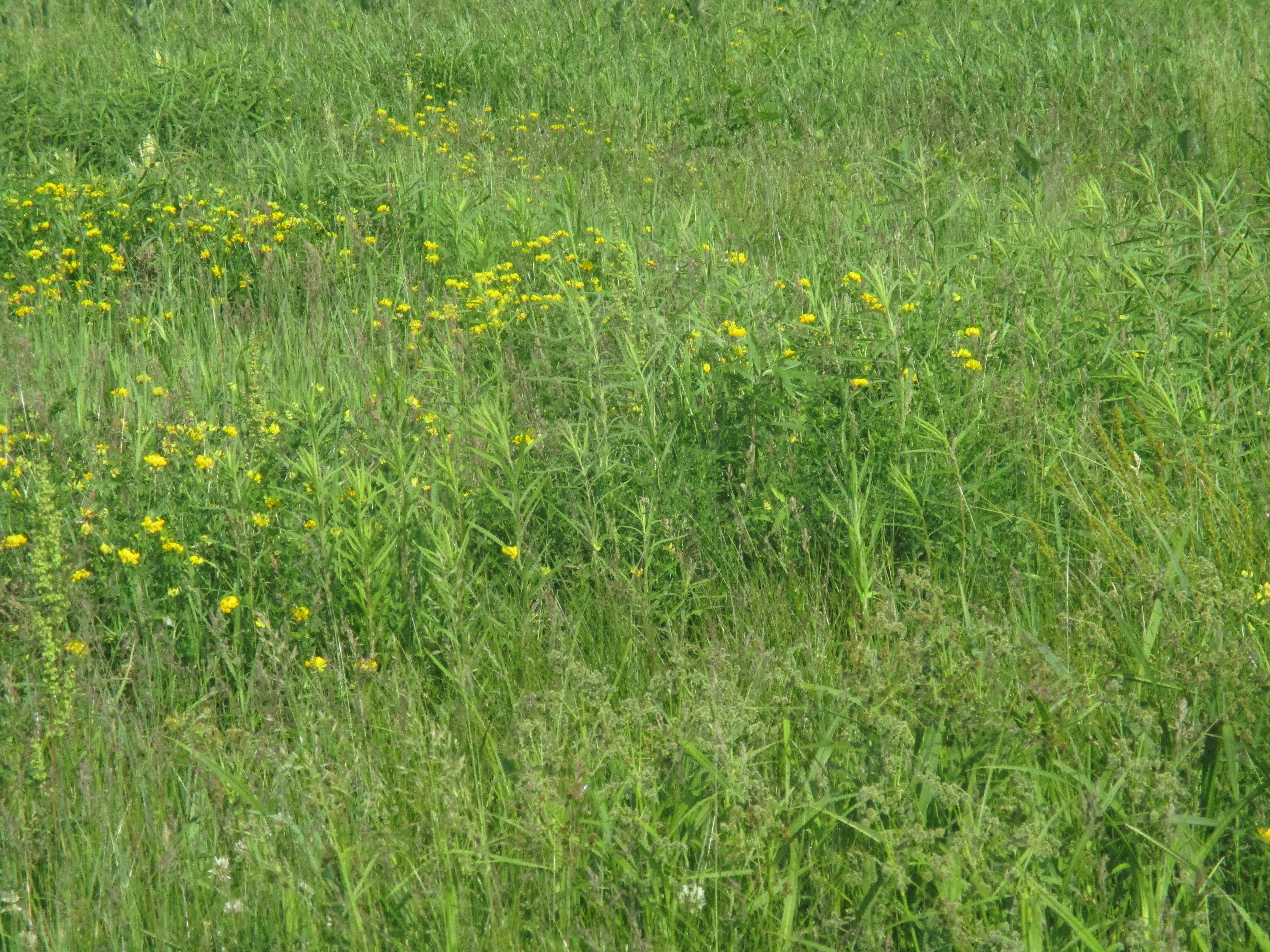
In the back field we see clover,
and these yellow flowers birdsfoot trefoil.
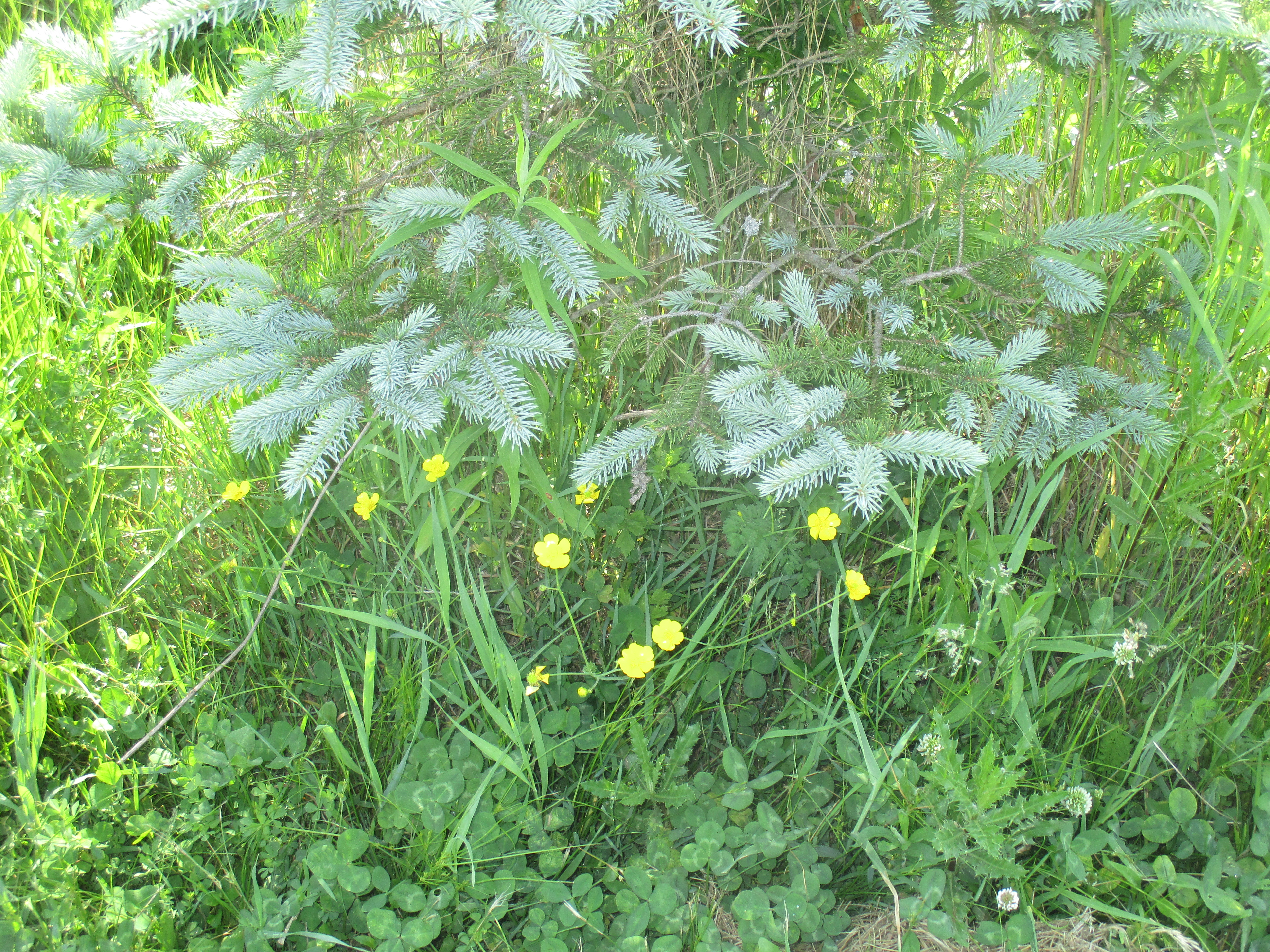
Butter cups under the spruce tree.
And look at those pinecones.
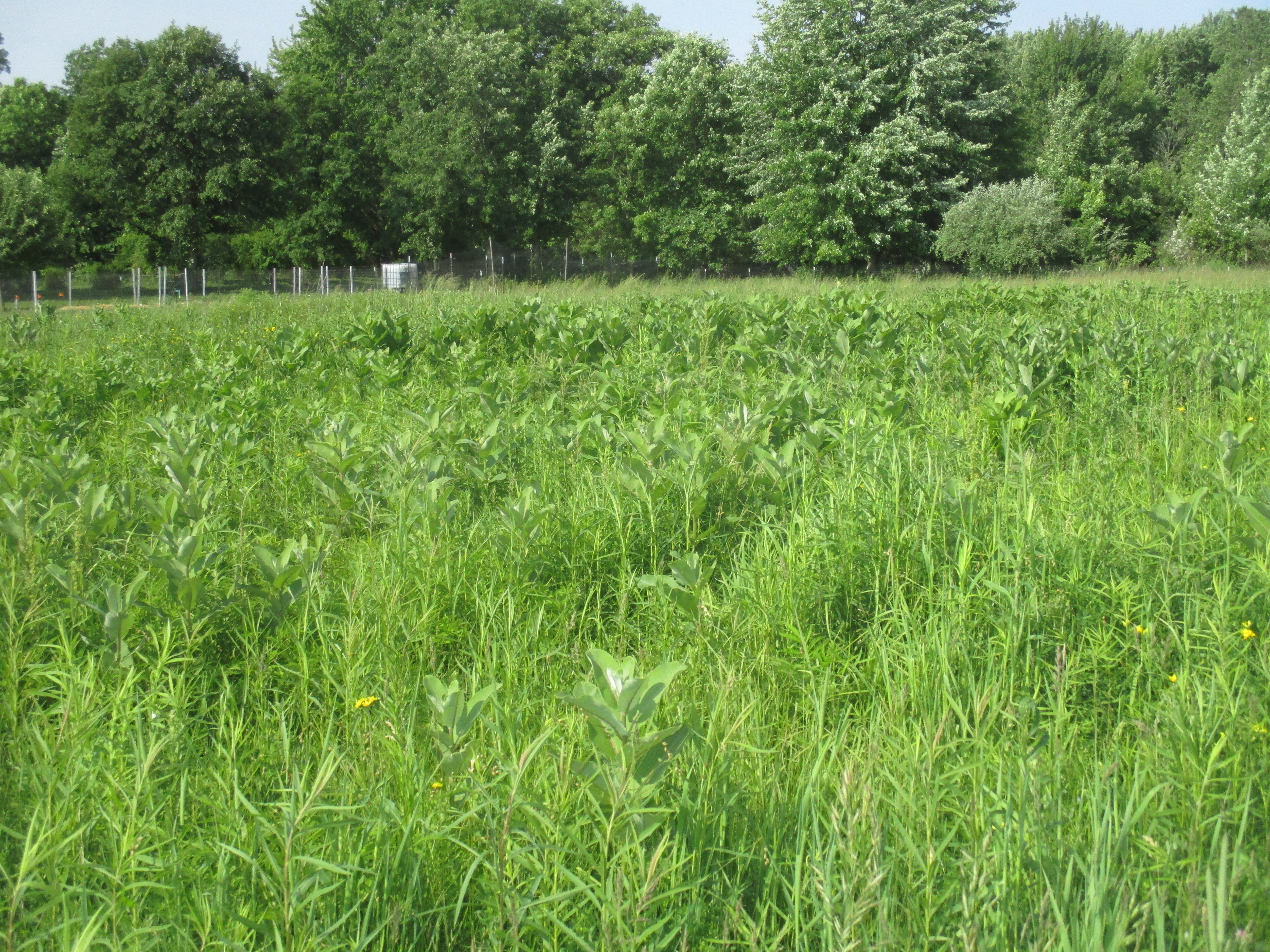
We have a large patch of milkweed in the back field. I have seen a couple of monarch butterflies in the area, so they likely have laid eggs as their caterpillars feed on milkweed leaves once they hatch.
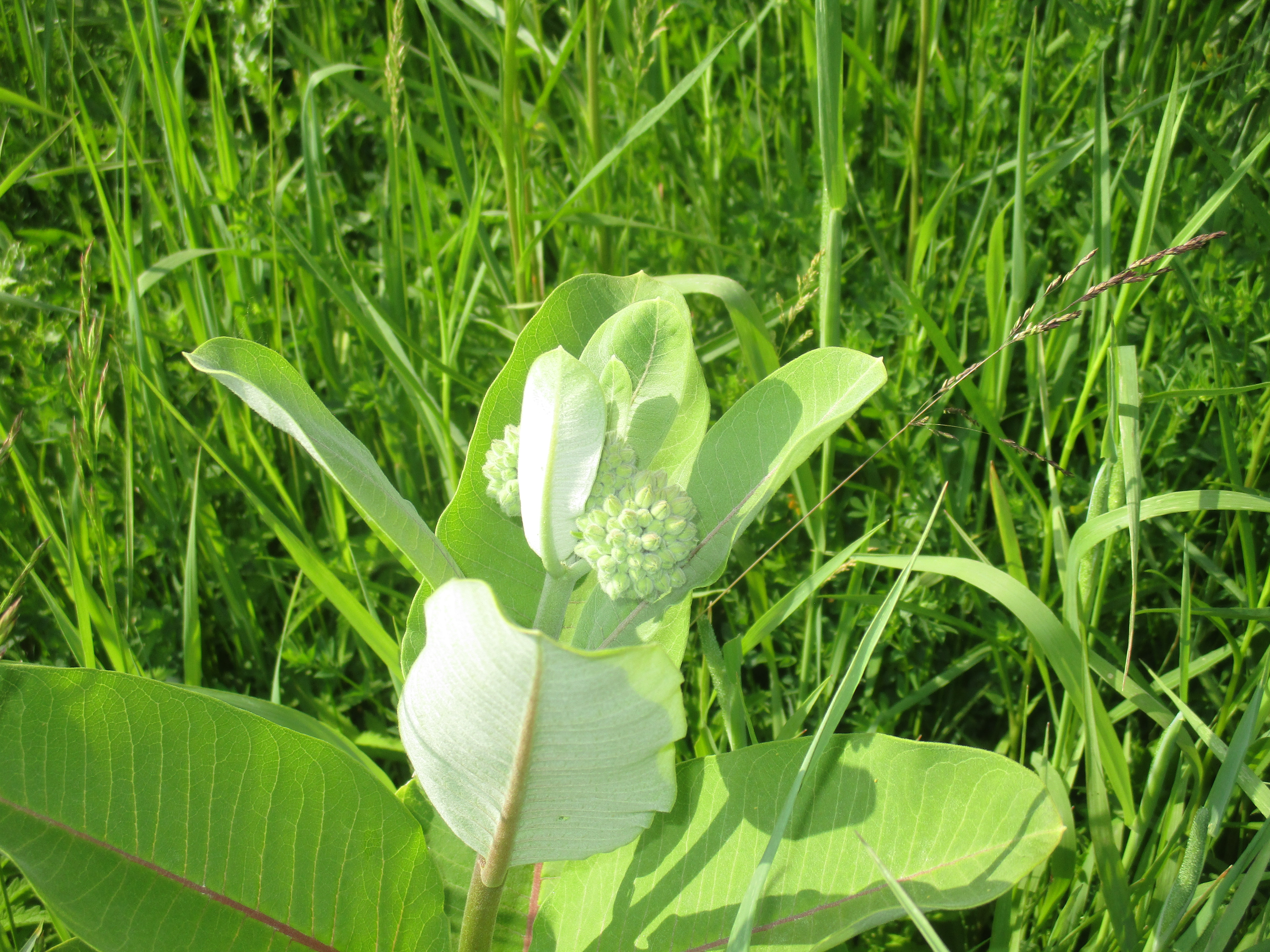
Milkweed.
I believe this yellow flower is called common cat’s ear. It is scattered throughout the field.
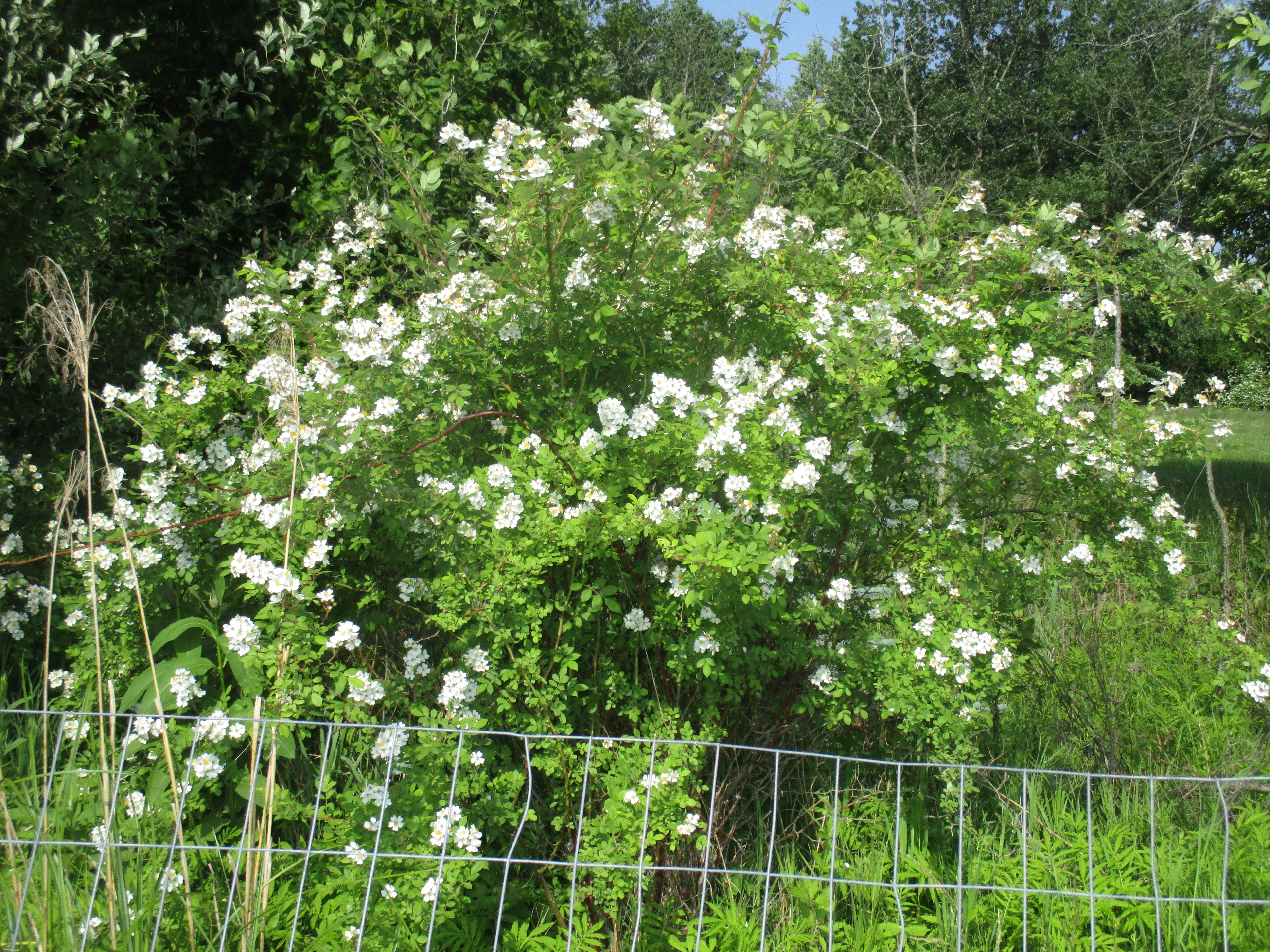
More wild roses in the wood line. Enjoy their lovely fragrance.
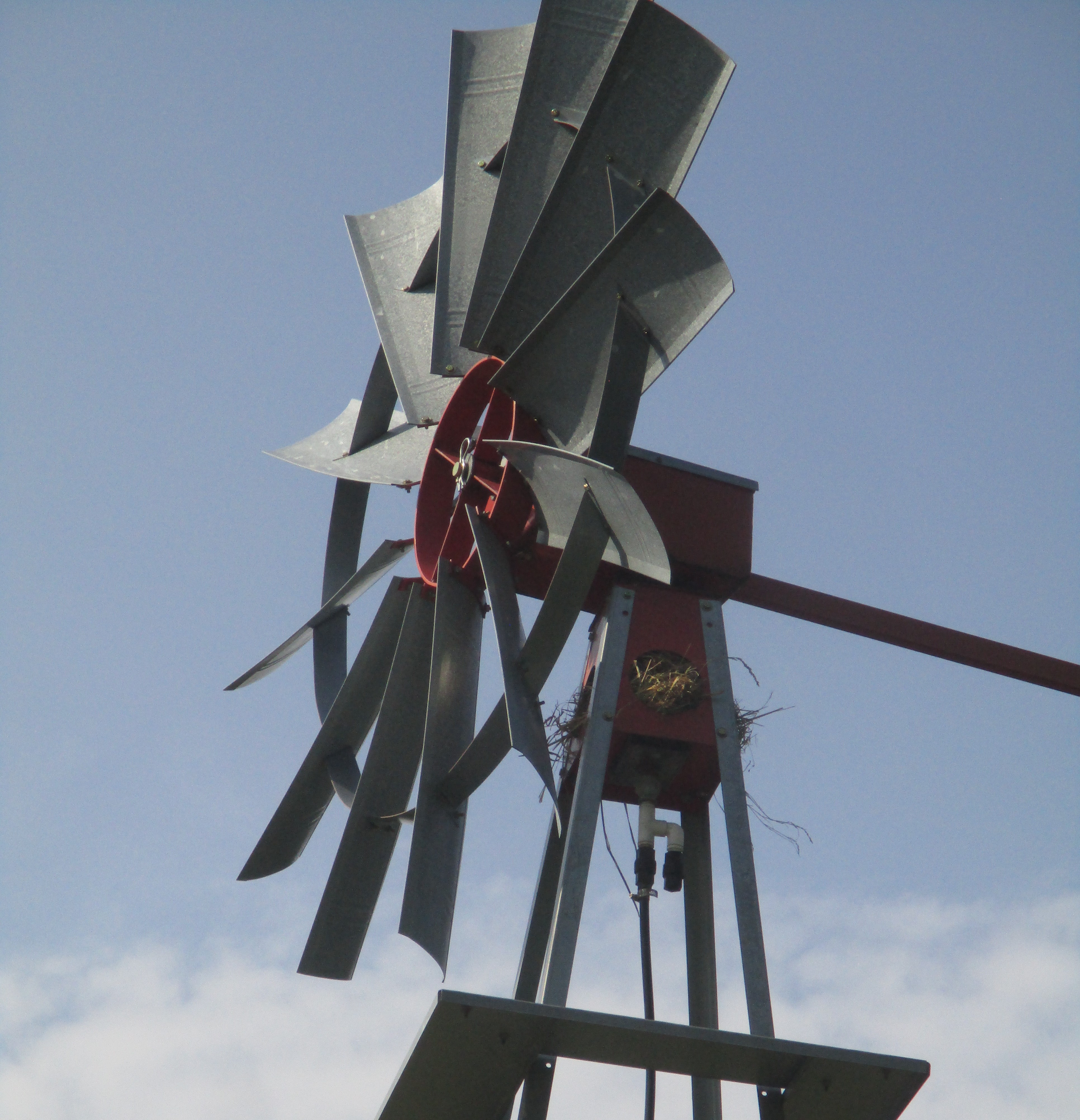
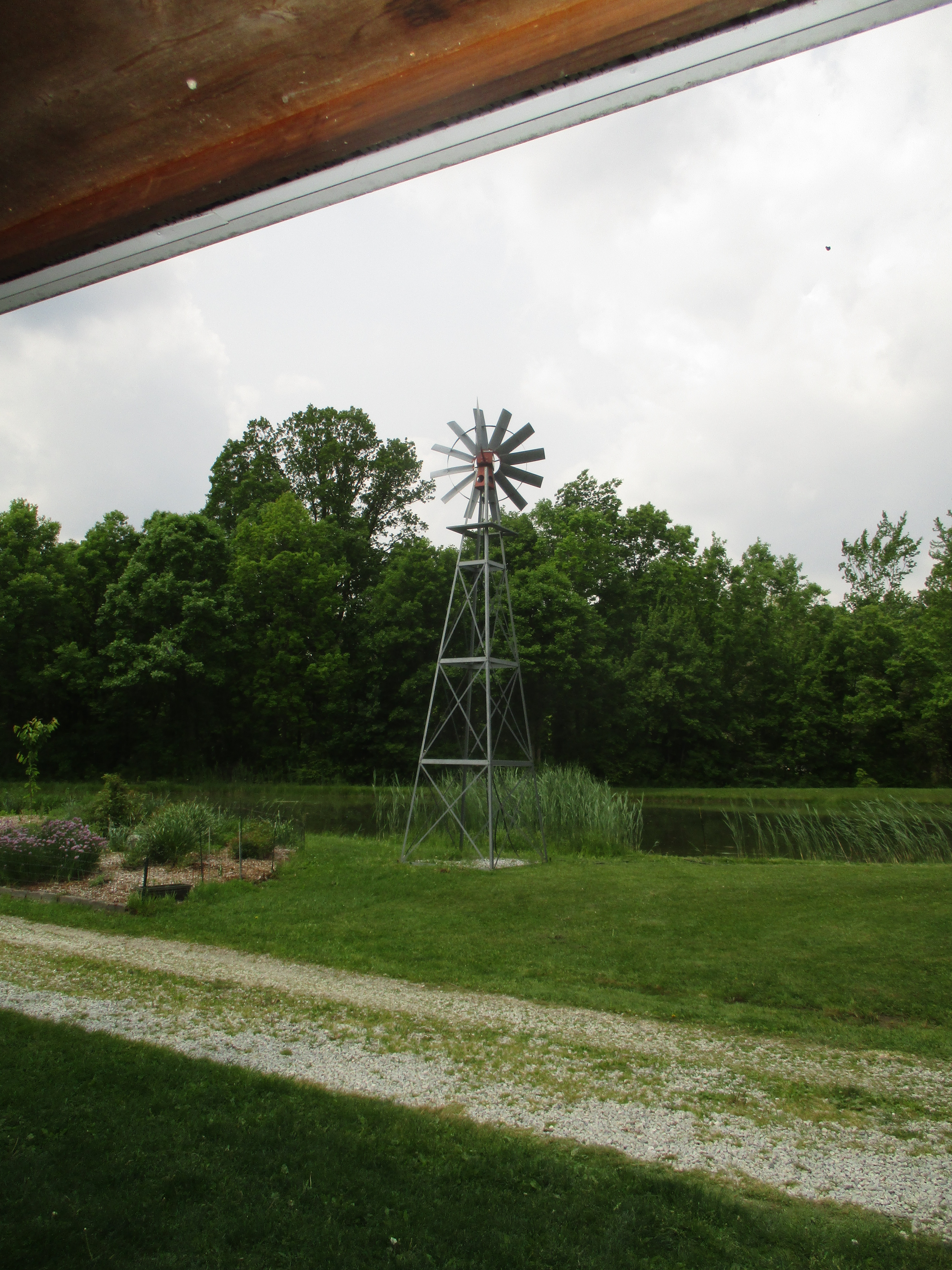
When we arrive back by the prayer garden my husband points out the nest that some birds (sparrows I think) have built in the top of the windmill. That was not there two days ago. Fortunately, it does not interfere with the operations of the windmill.
Thanks for joining me for a spring walk at the farm. I hope you enjoyed it as much as I did.
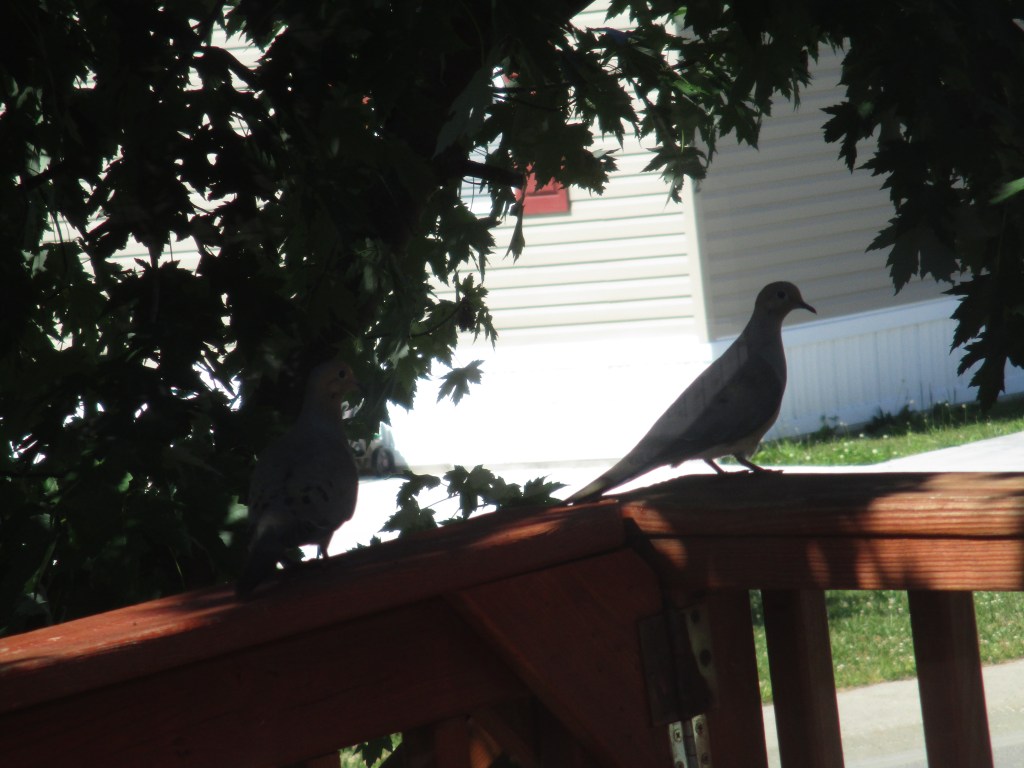
As a special treat for spending this time with me I am sharing this rare glimpse of the mourning dove who is nesting in the maple tree above our deck. It has been there about two weeks now and I have tried taking pictures many times but mostly I can’t see it through the leaves. I finally got a good photo. I have not seen its mate around, but I read that mourning doves take turns sitting on the nest with males usually there during the daytime and females on the nest at night.
In a previous post I mentioned that we would soon be putting the pump in the pond so we could water our gardens when necessary. I also told you that my husband had said it was my turn this year to put the pump in. Let me start by explaining how this works.
Each spring when it’s getting close to time to put the pump in the pond we have a conversation like this:
My Husband: It’s your turn to put the pump in the pond.
Me: Okay as soon as we have 3 consecutive days of 80-degree F (26.6C) temperatures so the water warms up.
My Husband: Puts the pump in the pond even though the water is still colder than is comfortable.
OR
My Husband: It’s your turn to put the pump in the pond.
Me: No. It was my turn last year.
My Husband: I did it last year.
Me: I know, but it was still my turn last year, so it is your turn this year.
My Husband: Puts the pump in the pond.
THIS YEAR
My Husband: Are you ready to put the pump in the pond tomorrow?
Me: I told my readers I would take pictures and blog about it. I can’t take pictures while I’m in the pond.
My Husband: Puts the pump in the pond.
The truth is while I know how to put the pump in the pond and could probably do it if I had to, it’s one of those jobs that my husband is willing to undertake. (He’s a great guy!)
Dual Purpose Windmill
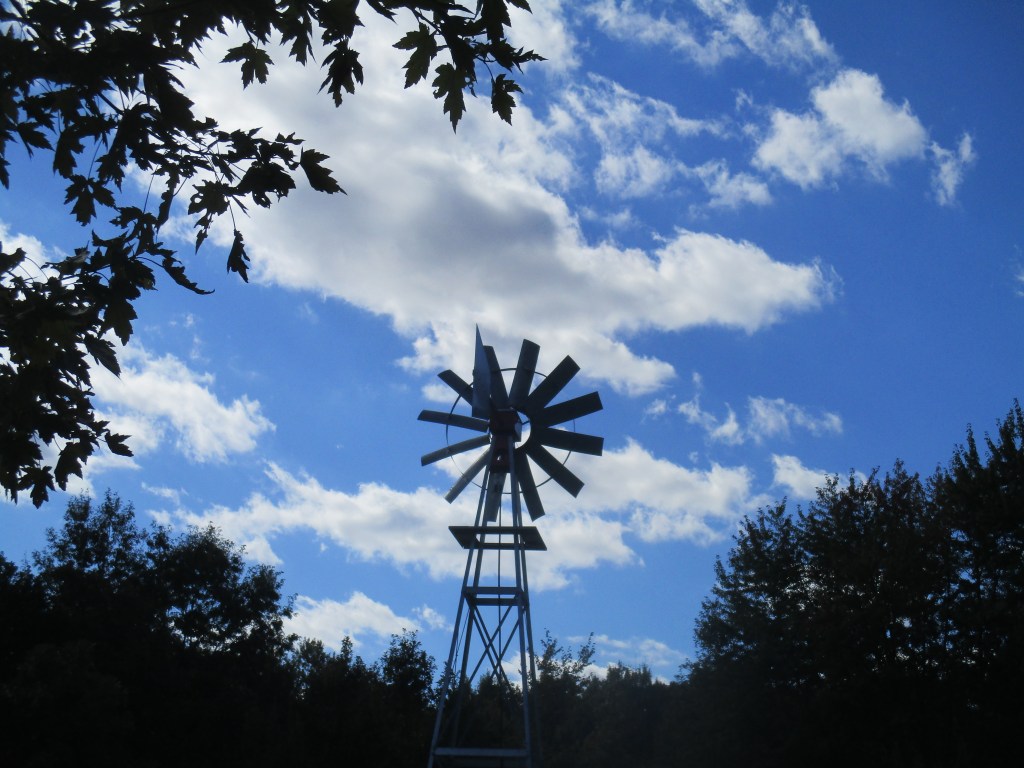
If you’ve been following my blog for a while you have likely seen pictures of our windmill. Some readers might also remember that our windmill is used both to aerate the pond and pump water out of the pond for irrigating our crops.
Aeration
The windmill works to aerate the pond year-round.
In the above photo the bubbles in the water are cause by the windmill.
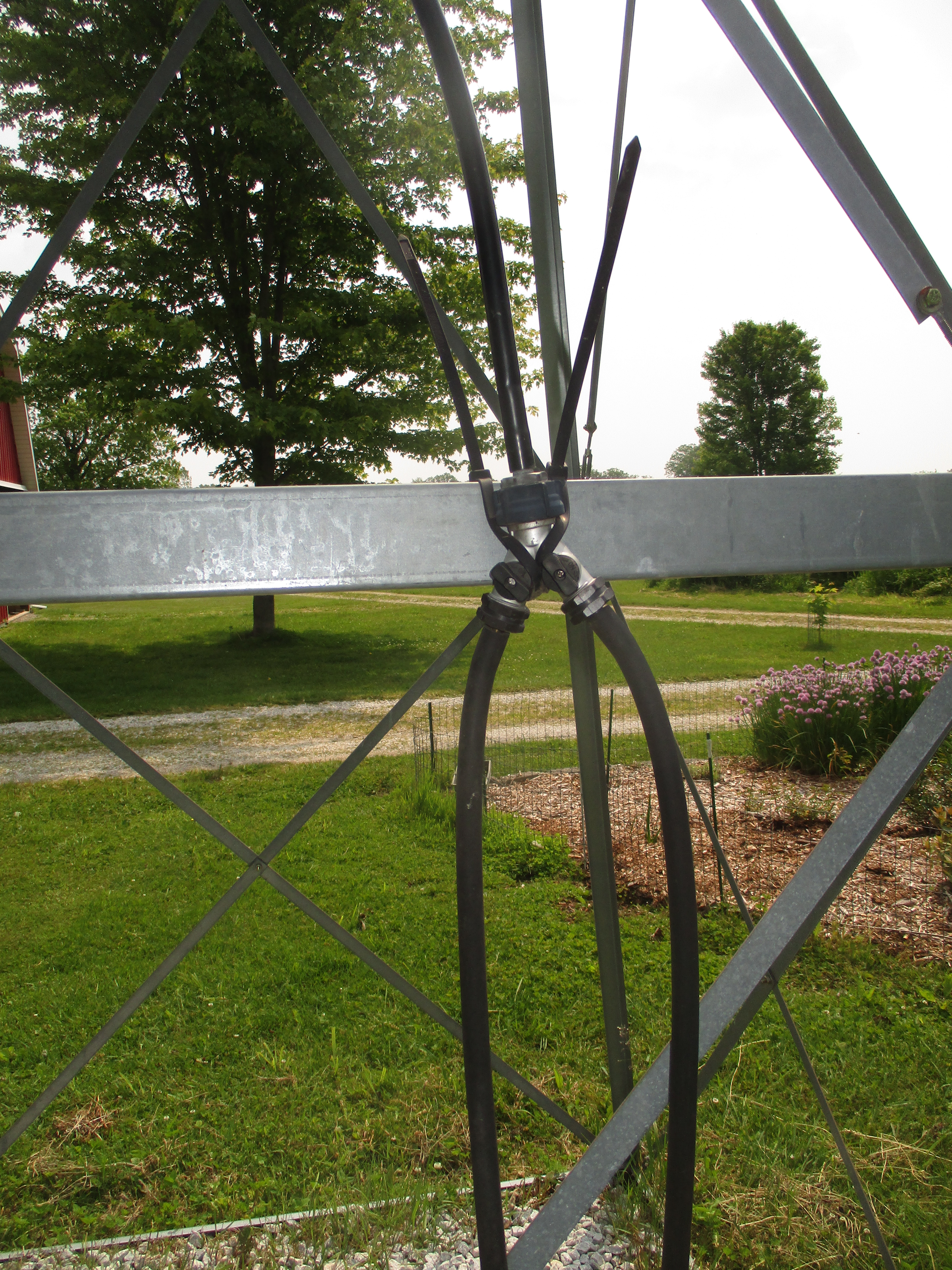
In the above photo the hoses attached to the windmill run down into the pond where they are attached to porous devices called stones. We have two stones located in different areas of the pond. When the wind makes the windmill turn, air is pumped through the hoses and comes out the stones and into the water, thus providing much needed oxygen.
Irrigation
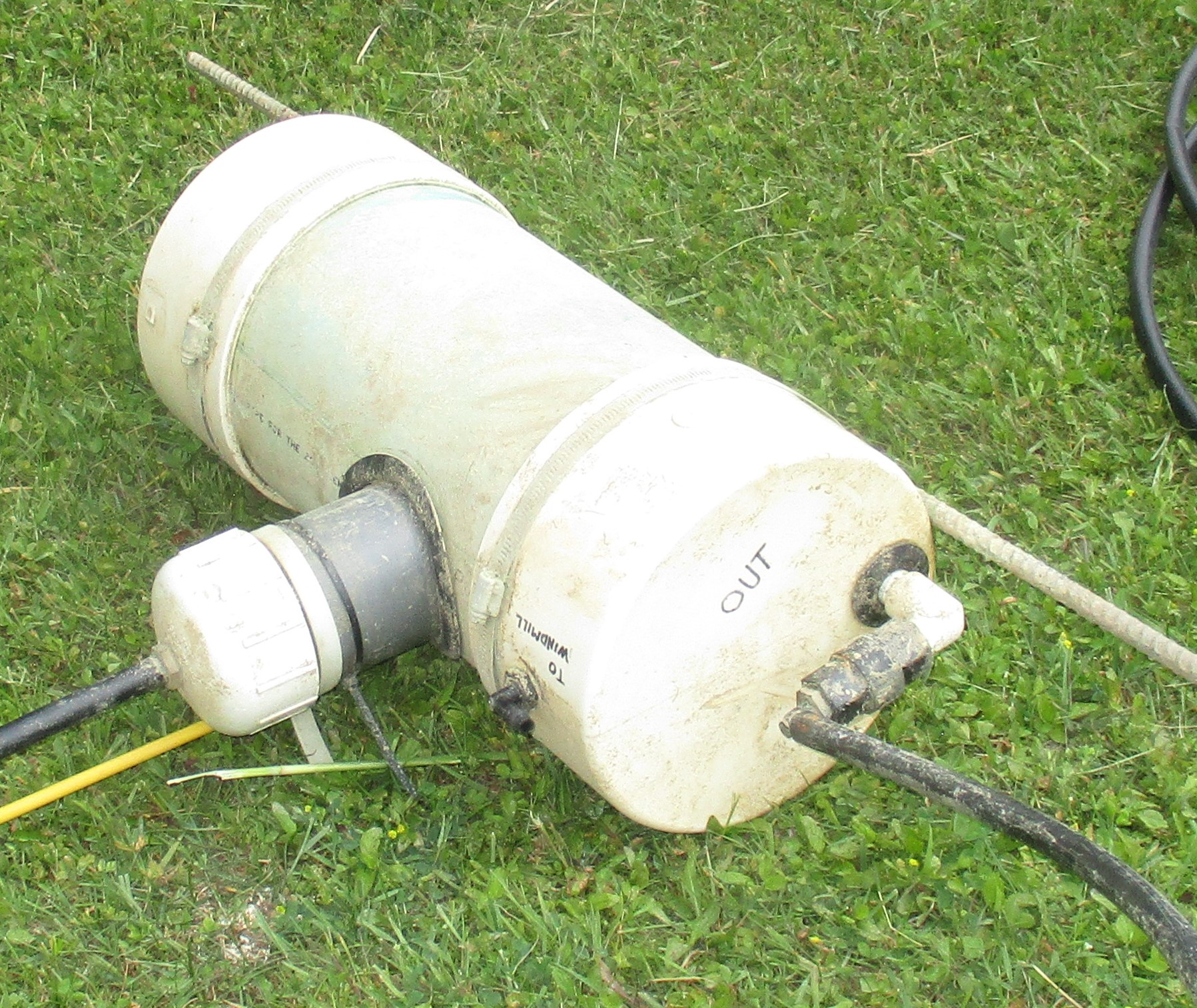
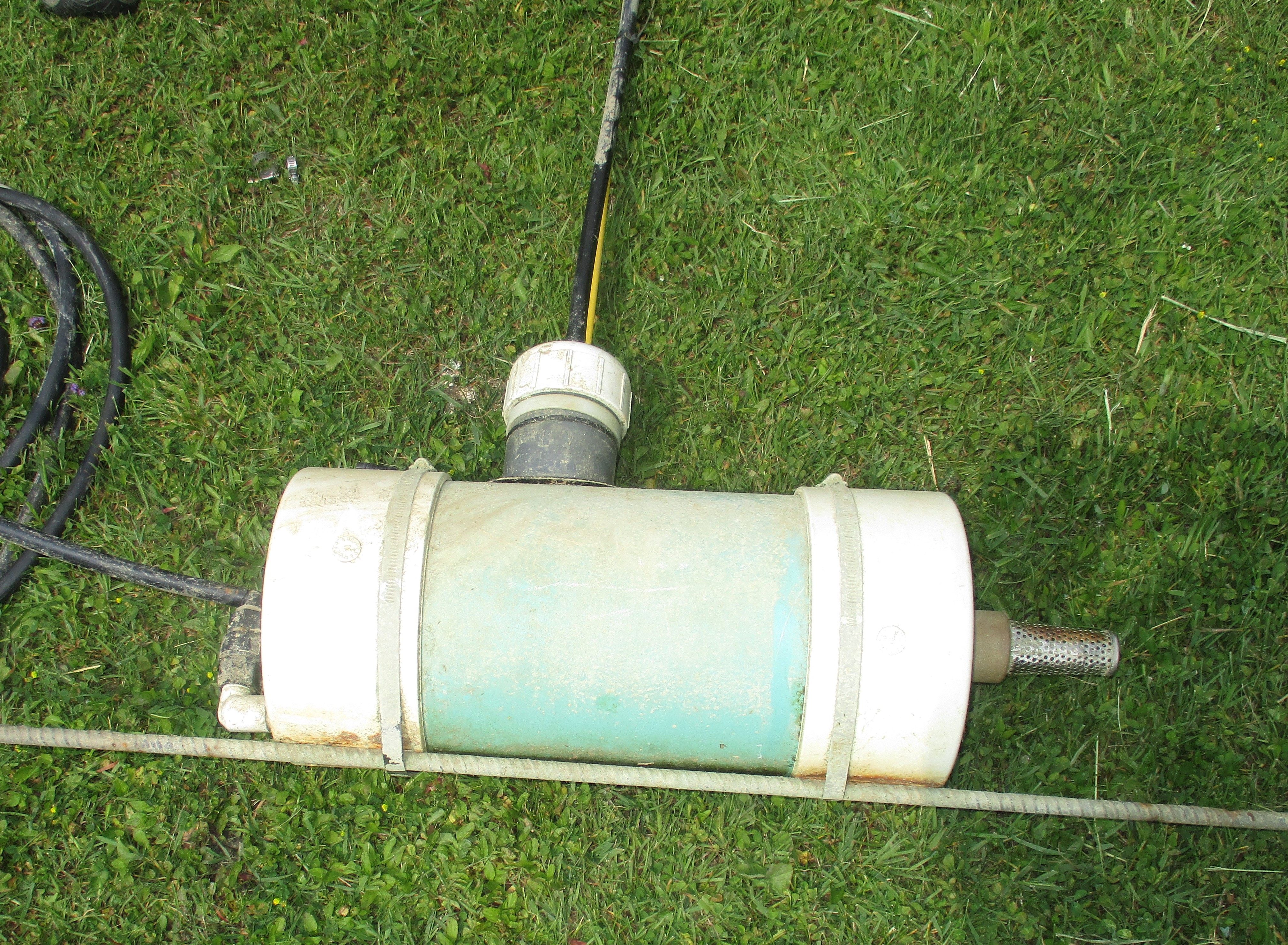
We only pump water for irrigation during spring and summer (the growing season). This year we put the pump in the pond on Wednesday, June 4. Below is a picture of the pump that we use in the pond.
Notice there are two valves. The one to the left is marked “To Windmill” (the words are upside down in the picture). A hose attaches to that valve and the other end of it attaches to one of the valves on the windmill. We unhook one of the aeration hoses since we do not aerate and pump water out at the same time.
The valve on the end is marked “out”. That is where the water is pumped out. A different hose is attached to that valve.
That metal piece on the right end has many small holes in it and is where water flows into the pump. The tube attached to the cap-like piece on the top is a vent.
When the pump is in the pond, bricks are placed on top of that long bar attached to the bottom to hold the pump in place.
Both hoses are attached before the pump is put in the pond.
This year the water wasn’t too cold. The pump will be fully submersed in several feet of water
expect for the vent tube.
I regret that I can’t show you, or tell you, how the magic works inside the pump. I just know that when the windmill pumps air in, water comes out. If the windmill is not turning, water does not come out. Also, when the windmill starts turning again a small amount of water squirts out the vent tube in the pond.
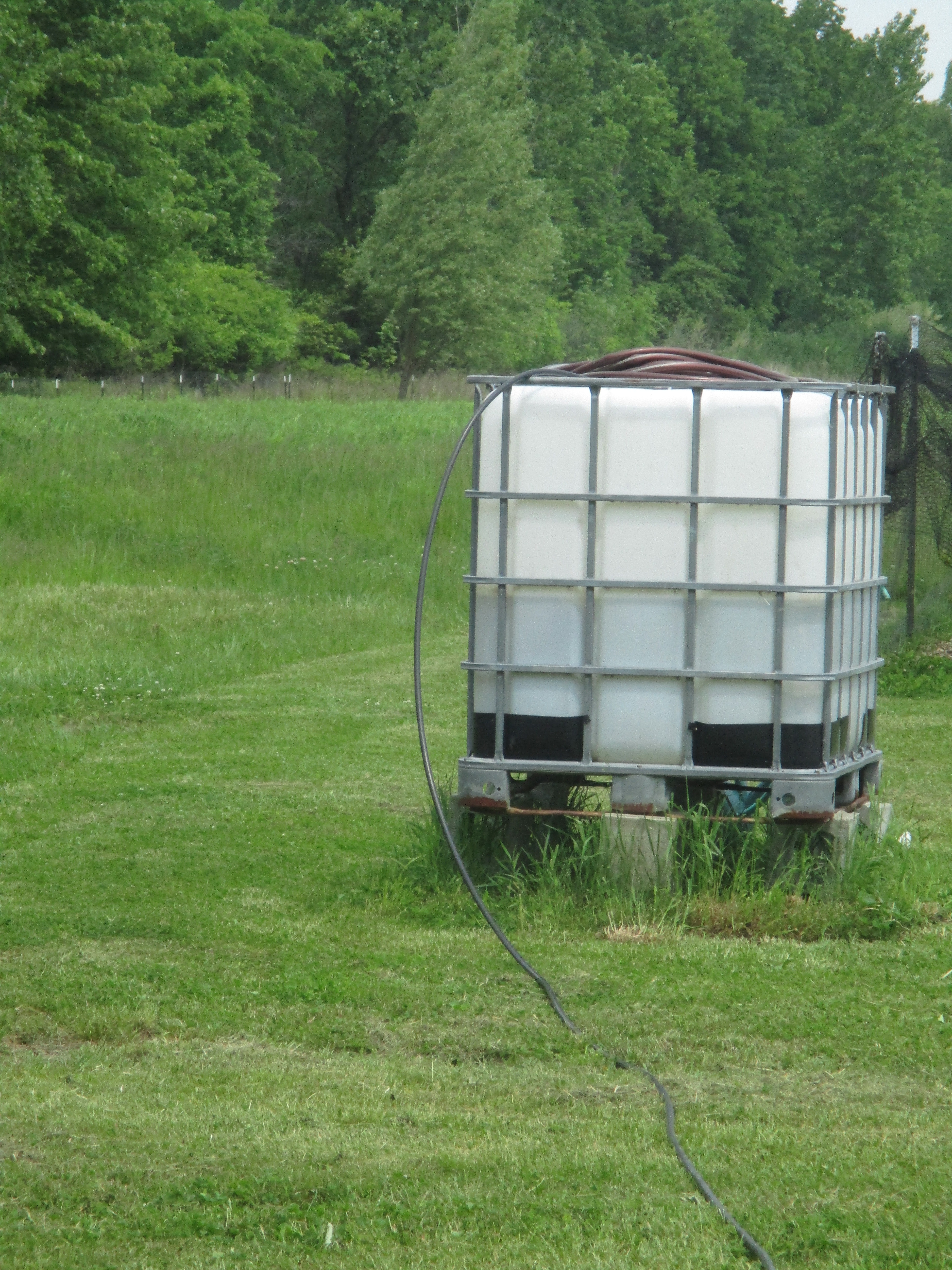
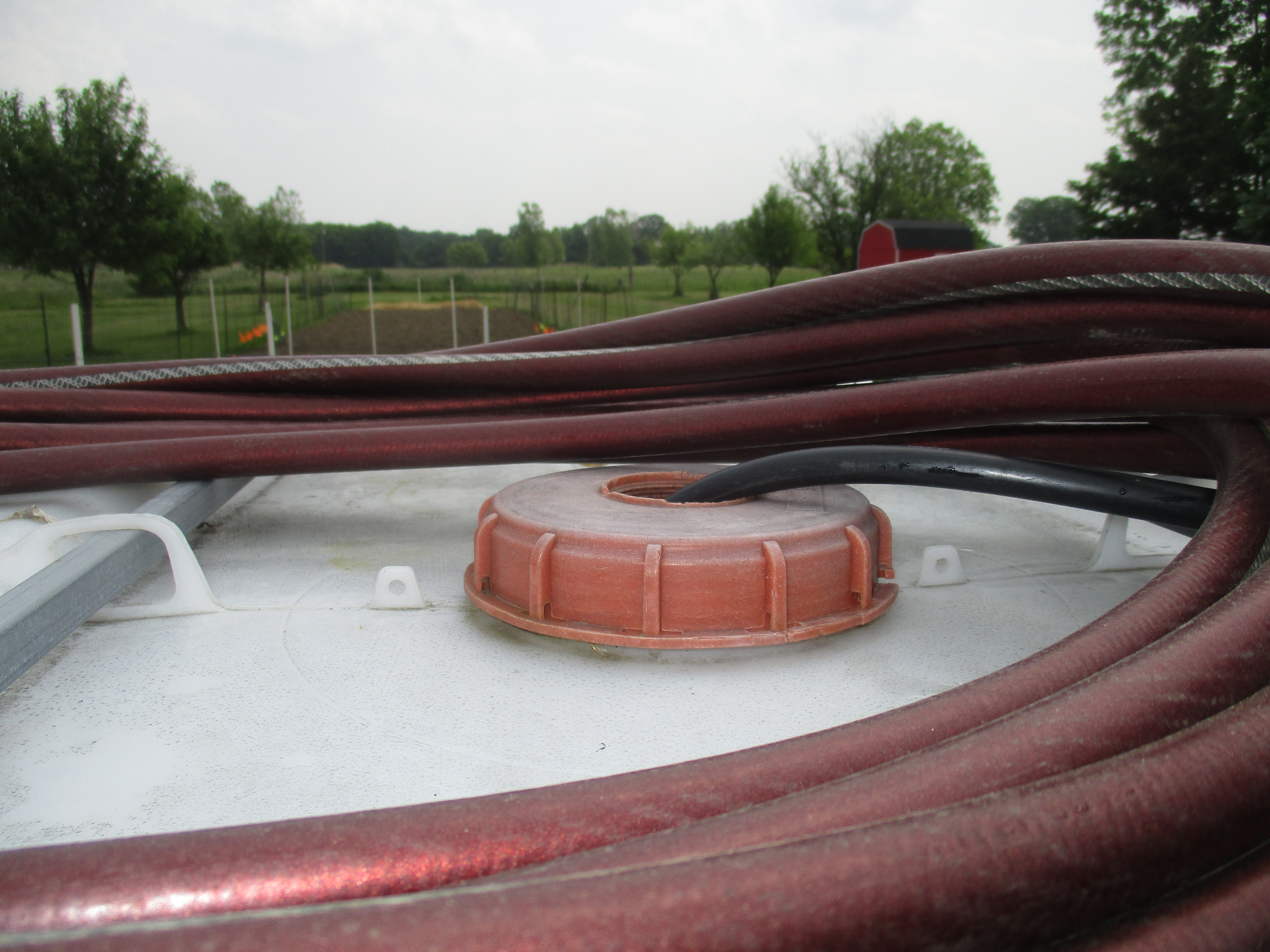
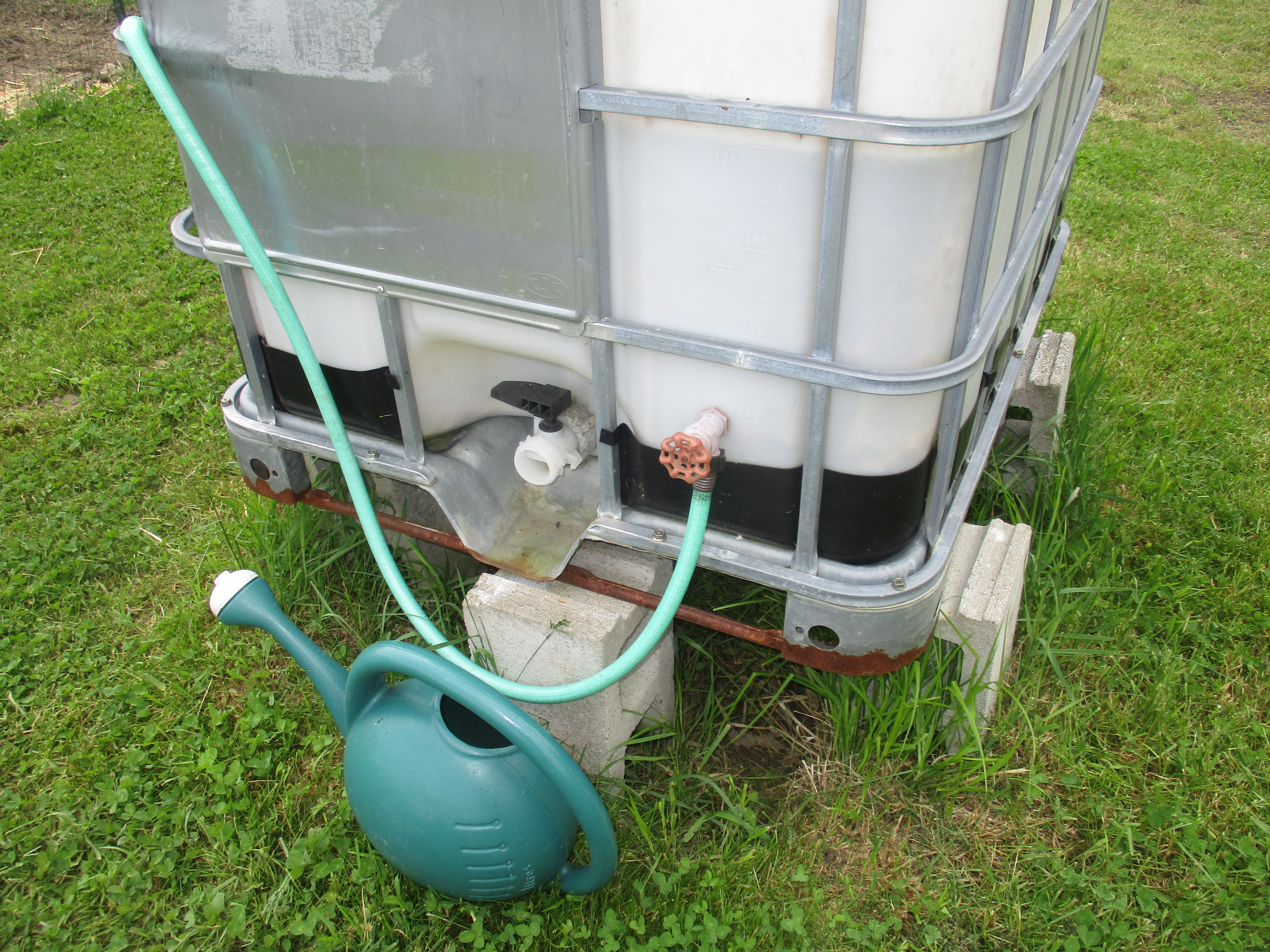
The hose that the water comes out of is run to one of our holding tanks. We have three tanks strategically located.
The hose is about 120 feet long, which is more than enough to reach any of the tanks.
The tank is filled through an opening in the top.
My husband installed spigots near the bottom of the tanks so we can attach a garden hose. We can use the garden hose to fill watering cans or sometimes we water plants directly from the hose.
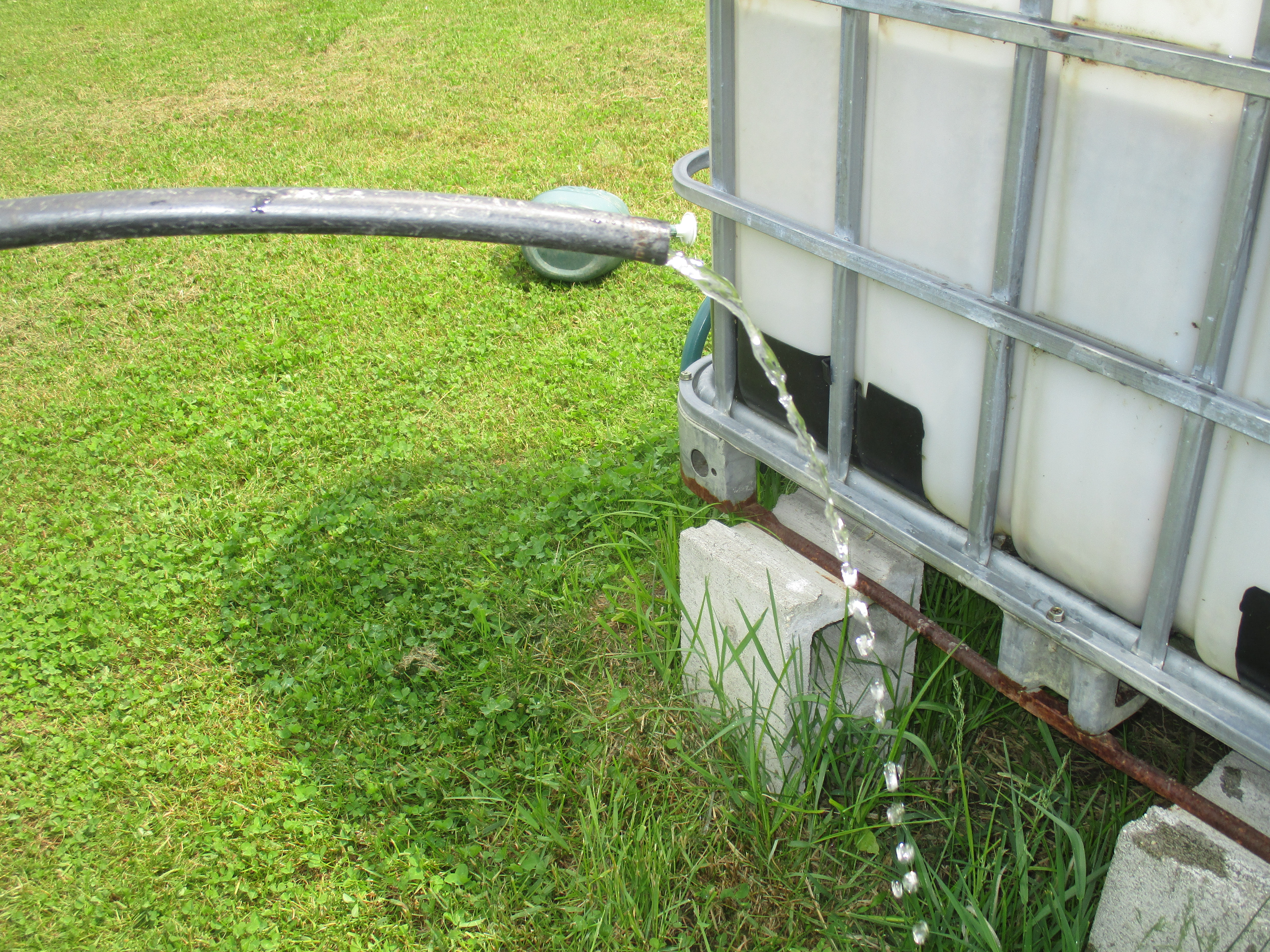
Within a few minutes of having the pump installed water was running through the hose.
How fast we can fill a tank depends on how much wind we get and the wind direction. When we do not get enough rain to keep things watered, wind is the next best thing.
Thanks for visiting.
P.S. My husband just informed me that next year is my turn to put the pump in the pond. Uh, no. This year was my turn. 😉
Sunday, February 14th, was the perfect winter day for getting out for a walk. The sun was shining, the wind was light, and the temperature was around 30 F (-1 c). It was also before Old Man Winter dumped 13 inches (with drifts as high as 5 feet) of winter wonderland on us. It’s funny how a snowfall that can be welcomed and appreciated for it’s beauty in December loses it’s appeal by February. This particular “winter wonderland” that came on Monday and Tuesday only has us wondering how soon spring will get here.
As we all wait for spring to arrive I invite you to join me for a walk at the farm.
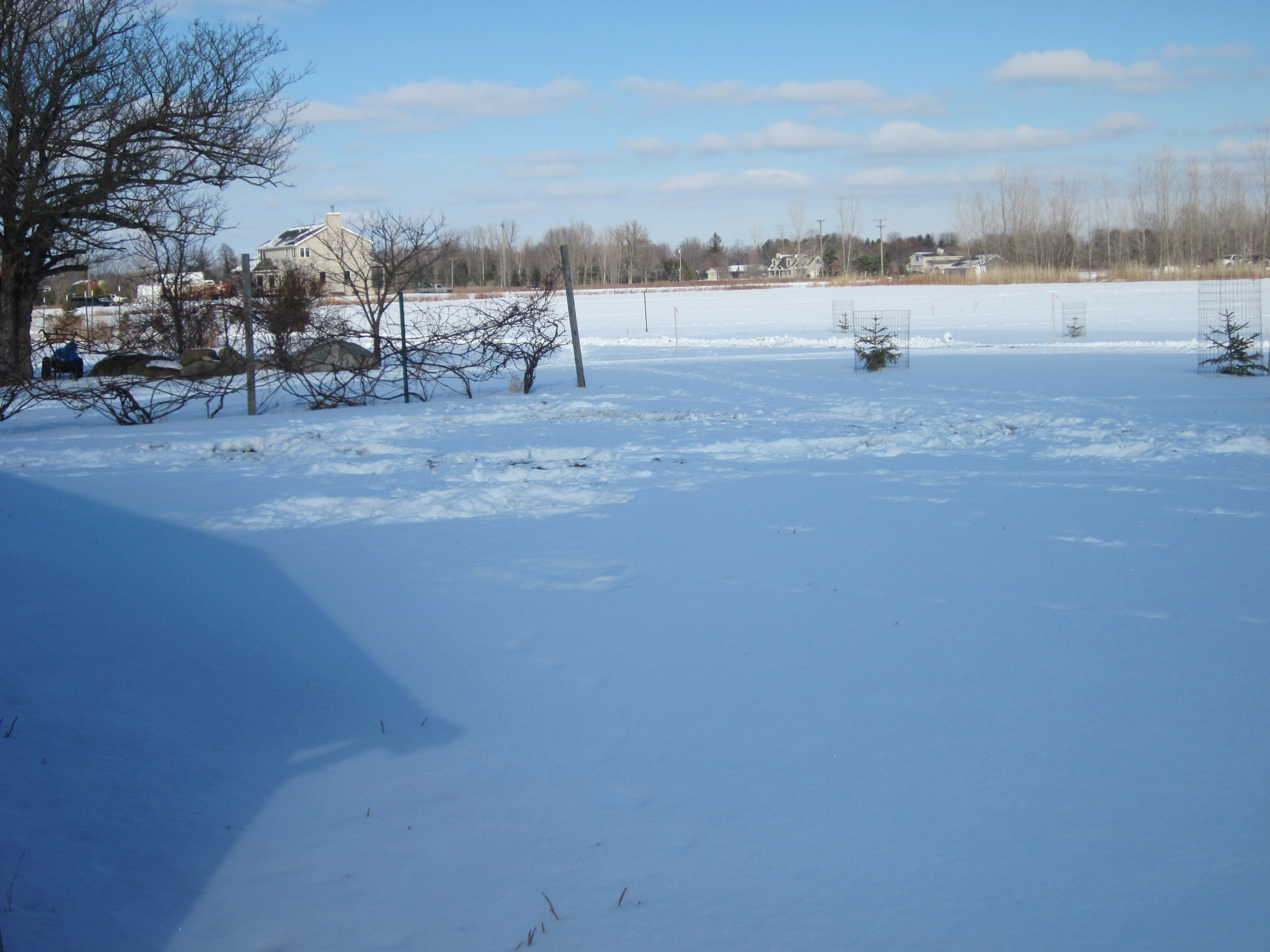
There were a only few inches of snow on the ground when my husband, who was preparing for the big storm that was in the forecast, put the back blade on the tractor then decided to test it out by making a path around the back field. (The snow that came with the storm was not so easily moved.)
Can you spot Trooper in the above photo (that’s him about dead center)? Ranger is out there too but we can’t see him in the photo.
We discovered several area’s when the deer had been digging to find food (grass) under the snow.
There were more of these areas behind the barn. (I wonder how the deer are faring post snow storm.)
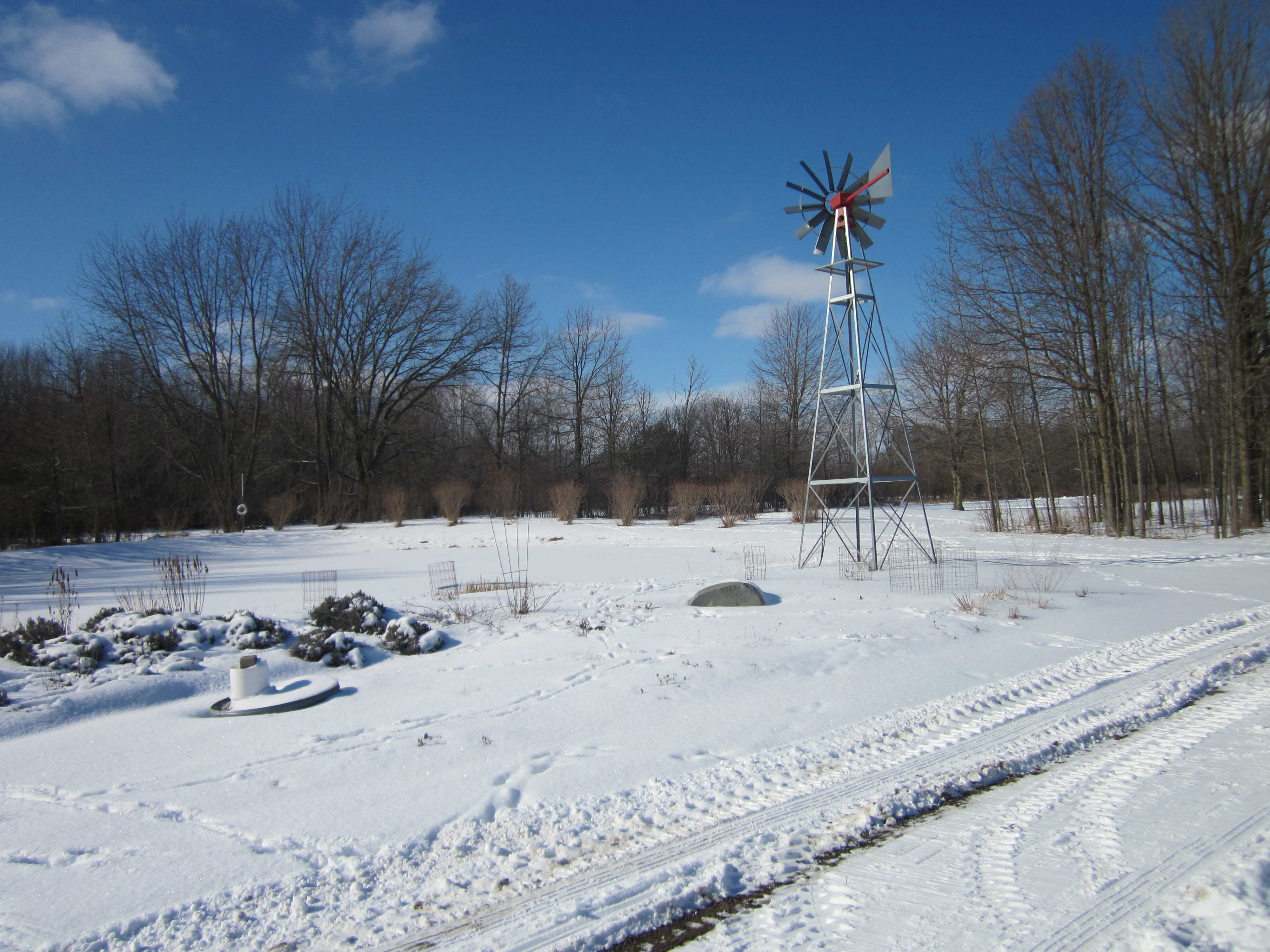
The windmill was mostly still that day.
All of the plant life is dormant this time of year,
but I find the buds on the maple tree encouraging, even if they are long way from opening.
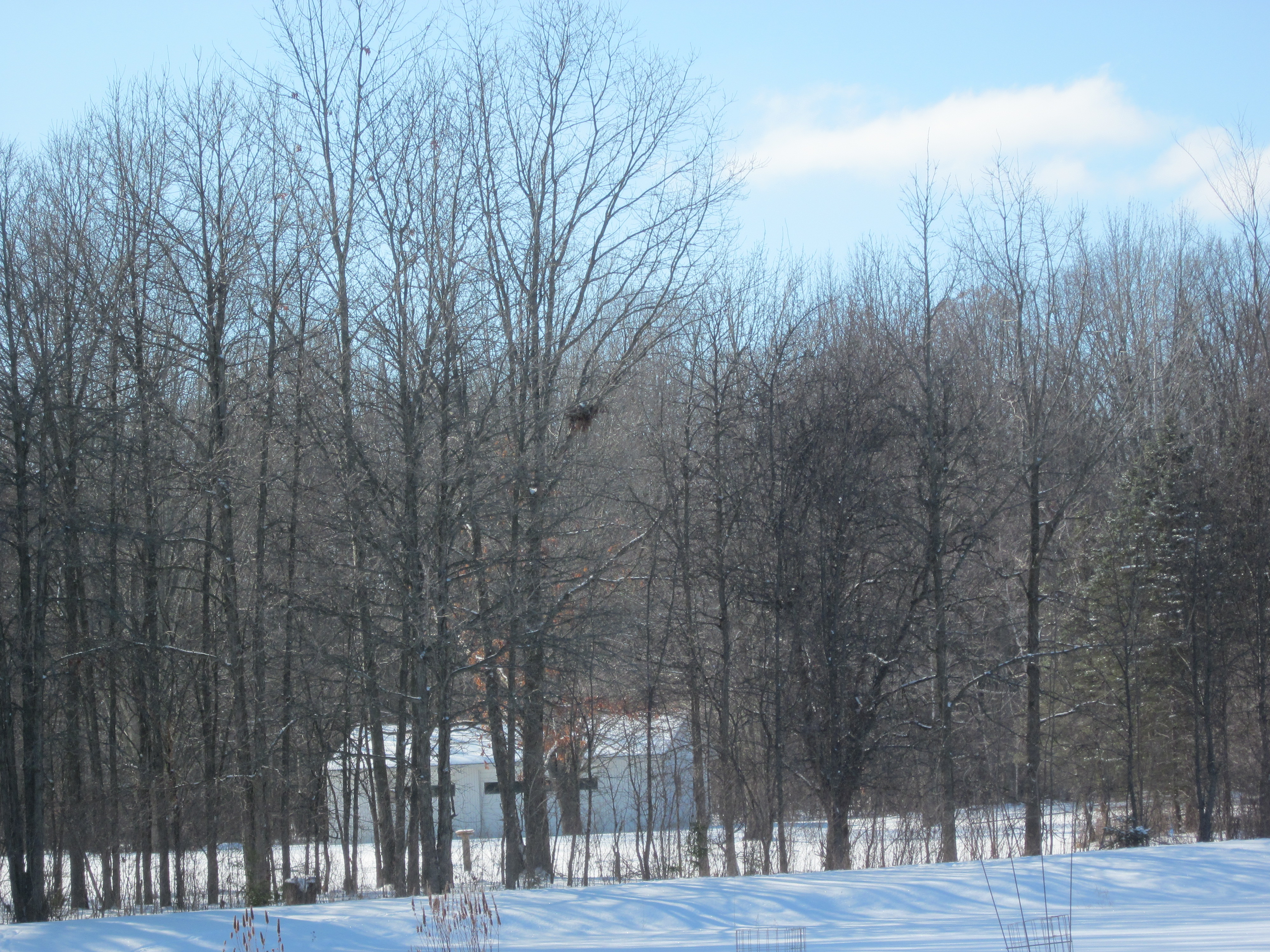
We have two squirrel nests on the farm but I didn’t see any signs that the squirrels had been out lately. No squirrels, no tracks, and Ranger did not pick up their scent.
The chickens were out enjoying the sunshine while trying to keep their feet out of the snow.
My husband had given them some hay to scratch and peck through.
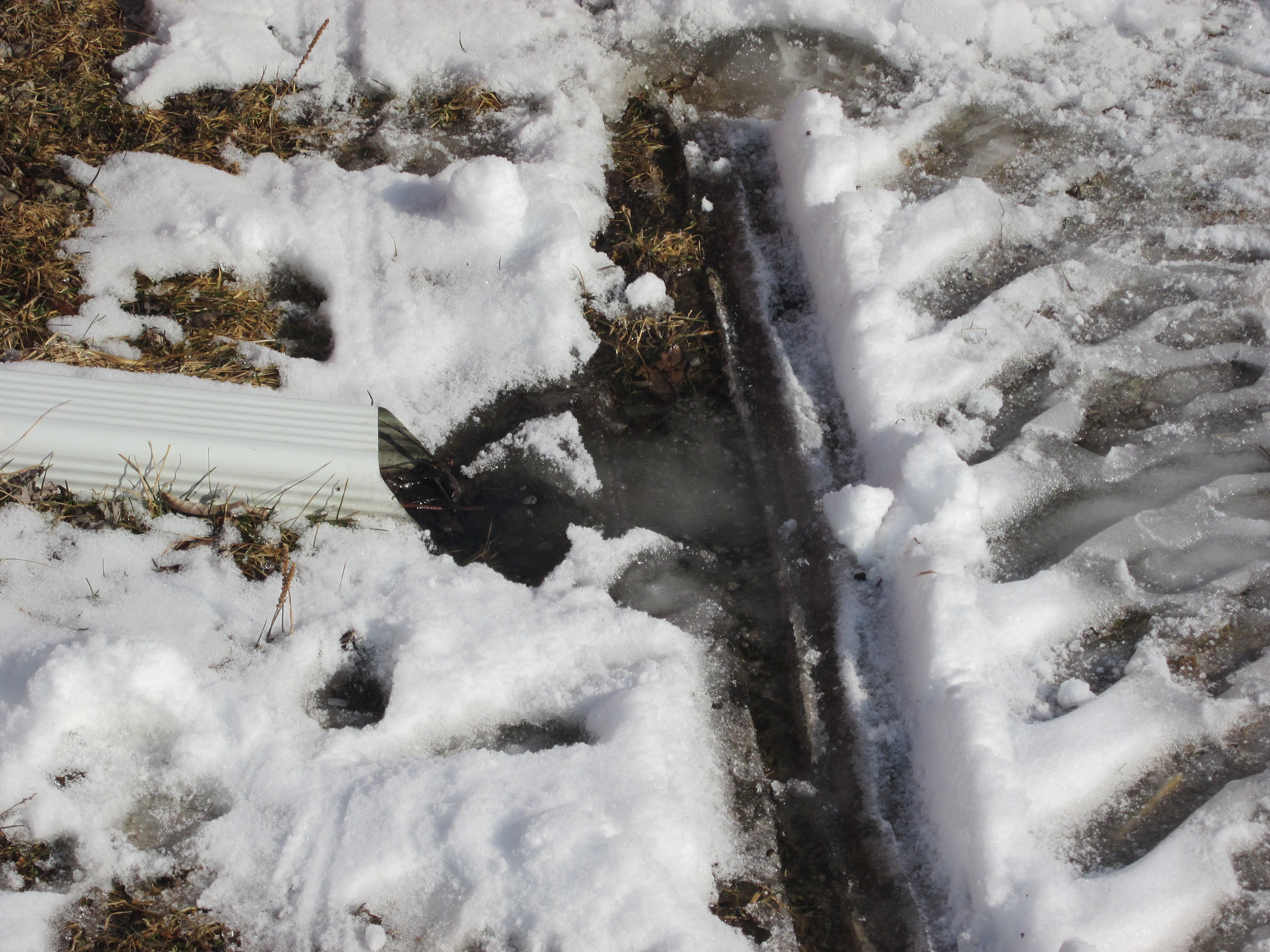
Although the temperature was still below freezing, snow was melting on the top of the barn and flowing from the down spout. Sunshine on black shingles will do that.
My husband took some time to hang out with the boys (dogs) in the van, but when Ranger spotted me he made a quick exit.
He greeted me as I walked up the driveway.
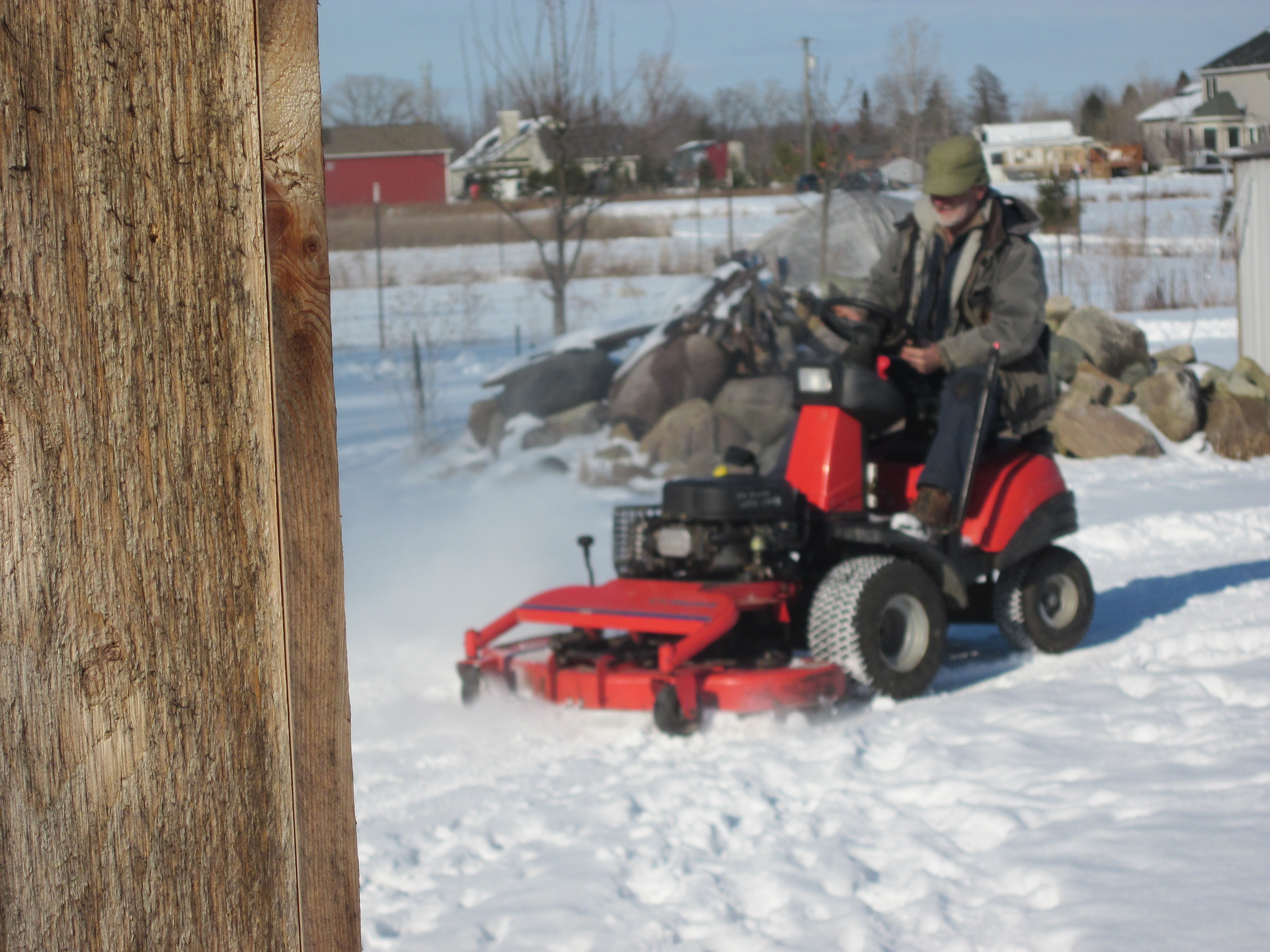
In recent days my husband had repaired the lawnmower that he got from his dad. He couldn’t wait to show me how well it was working. You may remember this post from last year where we determined that my husband might be a little crazy. Yep, he is still at it. LOL!
So I thought we could have a little fun with this photo by offering you a chance to caption it. Please leave your caption in the comments section below.
P.S. We are not easily offended so go ahead and have some fun with it.
According to almanac.com the dog days of summer run from July 3 through August 11 which is normally the hottest and most humid time of year in the northern hemisphere. Around here every day is a dog day. Just ask Ranger and Trooper. But, yes, the HEAT IS ON and it is accompanied by a dry spell so keeping the gardens watered has been the main focus for the past week or so. If you are curious about how we manage that on our off-grid farm you can check out our off-grid irrigation system here.
In the mean time I put together a collection of pictures that I’ve taken over about the past few weeks to share with you.
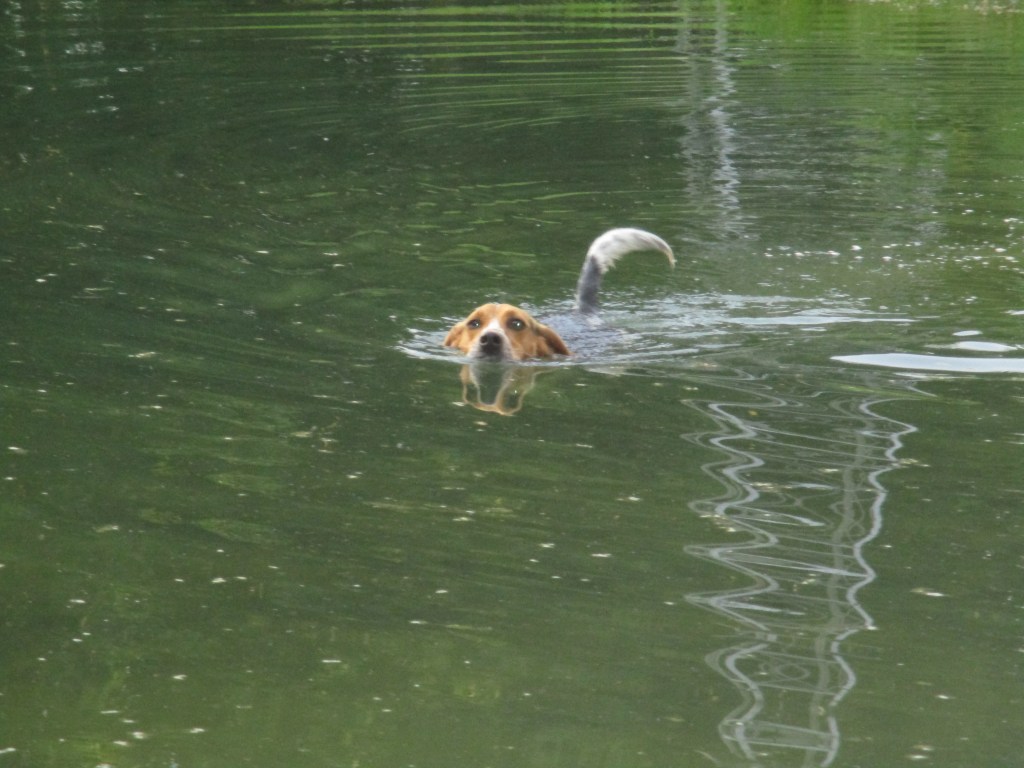
This is how Ranger cools off on these hot days. (Did you know beagles can swim?)
and Trooper enjoys laying on the beach after a swim in the pond.
The grandbabies love the water as much as the dogs do.
Dragonflies are yet another creature that appreciate the pond.
This one is drinking water from the sand. Check out the honey bee (on the left) that photo bombed this shot. She too was coming to the beach for a drink of water.
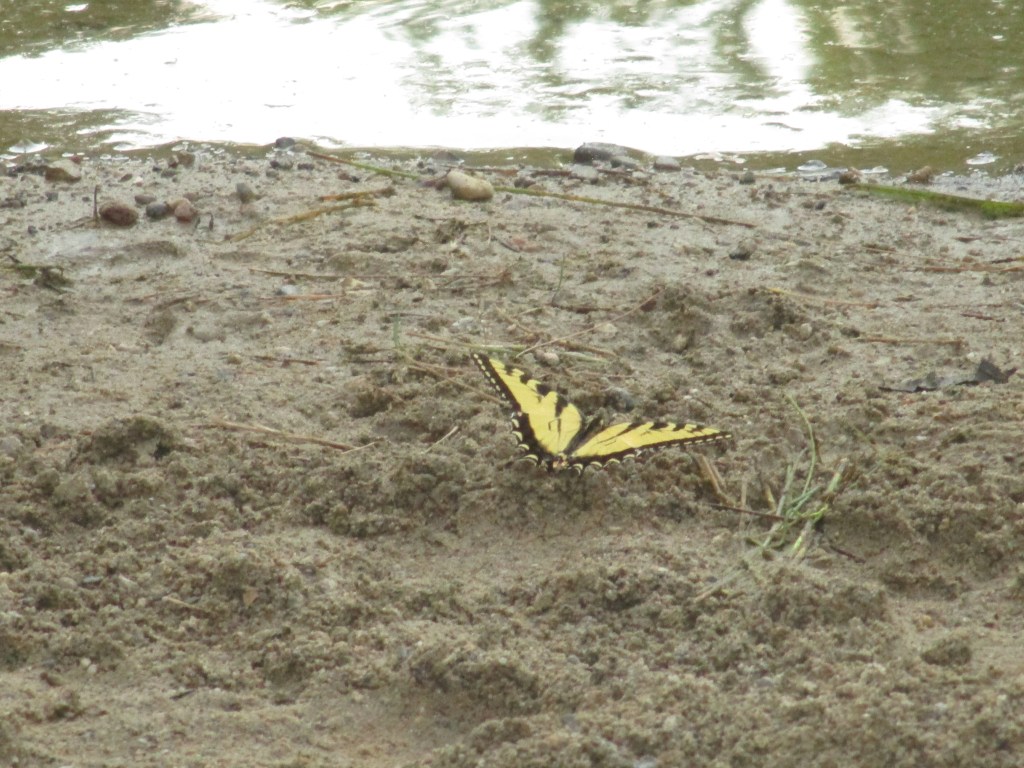
This beauty hung out with us on the beach, for a couple of hour yesterday evening, fluttering about and pausing now and then to rest or perhaps get a sip of water.
One last pond picture because we can never have too much cuteness. LOL.
Speaking of cuteness, here is a double dose – twins.
The lavender is gorgeous this year and the bees and butterflies are all over it.
We have transitioned from strawberry season to blueberry season. On the same day that my husband, and (daughter) Kara, picked the last of the strawberries, I took (daughter) Tina, and Jackson and Addy into the blueberry patch to pick the first ripe berries. While Kara took her 3/4 of a basket of strawberries home. Addy couldn’t wait, so she ate all of the blueberries we picked while they were still at the farm.
Start them off young – that’s my motto. They posed for a group photo then dad took Jackson and Addy, one at a time, for a ride on the tractor.
The garden is flourishing. I have harvested basil and calendula flowers twice so far.
We have green tomatoes, peppers starting to develop, blossoms on the eggplant,
blossoms on the green beans and the corn is knee high.
We cut garlic scapes (check out this post to learn more about scapes) about two weeks ago and will be digging garlic soon.
It seems that every summer our back field is dominated by different plants. This year it is full of clover and birdsfoot trefoil and I think it is just gorgeous. It’s also great bee food.
I’ll leave you with one last photo of this pair who stopped by our deck for a short visit last week. They were kind enough to stay so I could get a photo then they hurried on their way.
Thanks for visiting and remember – stay hydrated, breathe deep and stay well.
I have to admit that writing this post has been very challenging for me. As I thought about what our prayer garden is and what it represents my thoughts ran deep, and at times it seems like the answers to what it is, why it exists and how it came to be have turned into questions that that I can not definitively answer. As I struggle to convey the information about our prayer garden I can only pray that God will give me the words I need and that they will perhaps be a blessing to someone who reads them.
Flowers offer more praise to God than man ever shall. ~ Ninian Riley
What Is A Prayer Garden?
When I typed that question into my internet browser this was but one of the definitions that showed up. I selected it because it does seem fitting.
It said: “Used as a quiet place to relax and recharge, a meditation or prayer garden is a place of peace and tranquility. It’s personal space with no right or wrong design elements. A prayer garden can be a small, private corner of a larger garden, or an entire section of your landscaping may be designed around a theme of thoughtful serenity. Planting perennials helps to avoid stress from constant garden maintenance chores, and including beautiful accents — natural or manmade – helps you focus on positivity.”
What Is Our Prayer Garden?
It could be called a flower garden or and herb garden because of the vast array of both flowers and herbs that we grow there. It could be called a rock garden because many rocks were used in it’s construction. It could be called a pollinator garden because bees, butterflies and many other pollinating insects are attracted to the various flowers when in bloom. It could be called a memorial garden since we have planted flowers in memory of my mother, my husband’s mother and my Aunt Shirley. It could also be called a friendship garden since many of the plants have been given to me, some by my children, others by my sisters and some that were added this year were sent by a lady who my husband met this year while working at his landscaping job, and when the plants in the garden need to be thinned I often dig the roots and pass them on the family, friends or neighbors who will give them a new home. Our prayer garden is all of these things combined.
Walking up the driveway
It is the center piece of our farm from which everything else seems to radiate. It is bordered to the west by the pond and the east by the driveway with the barn standing on the other side of the drive. The windmill stands directly to the north of the prayer garden, only a few feet outside the garden edge, and the apiary is just a short distance from there. It is not visible from the road so when in bloom it can be a glorious view as you round the bend in the driveway and are greeted buy the colorful display.
A View of Our Farm From the Road
Honestly while it is this “center piece” that we refer to as the prayer garden, it is the entire farm that evokes feelings of peace and serenity and elicits the desire to pray – to commune with God. While it may seem contradictory, we find that even while working on the farm we are often able to recharge.
In Our Beginning
When we first bought our farm, the property had been unused (by humans) for many years. The previous owner had planned to build a house there so he had done some excavating, put in somewhat of a driveway and the well, but it seemed that it had been at least few years since those things had been done. What I’m trying to say is that things were growing wild. We spent a lot of time exploring, discovering and deciding.
We wanted to be good stewards of the piece of earth that God had given to us, so there were many decisions to be made. We wanted to make the land useful, that we may grow our food and raise livestock, while utilizing all of what the land could offer and preserving much of it’s natural beauty. Through exploring the land we discovered that God had given us much more than we had prayed for.
One of our early priorities was having access to water. There was a well on the property but at that time there was no pump to retrieve the water – it was simply a capped well. Since there was no electricity on the property, and that was not a priority, we purchased a hand pump suitable for deep wells and then had the company that drilled the well come out to install the pipes that were needed to hook up the hand pump.
Another thing we needed to do was to protect the well head. It was in an open area and we feared it was at risk of being hit and damaged by some type of vehicle. We purchased a galvanized metal ring and placed it around the outside of the well head then filled the rest of the ring with white stone. It then seemed to be a good area for a flower garden so in the fall we planted tulip bulbs.
The pictures below are what it looked like one spring day in 2012.
The following day when I arrived at the farm the deer had eaten all of the blossoms off of the tulips and all that remained were stems and leaves. I wanted to cry.
In the fall of 2012 we decided to have a pond dug. My husband and I have done the majority of the landscaping and building on the farm. Only twice have we called in professionals to do work which was beyond our abilities. The first was digging the pond. The second was building the barn last June.
While it was necessary to have excavators do the digging, the design of the pond was ours. We spent hours talking about the layout, measuring, staking, then cording off the area that was to be dug out. They needed to stay a certain distance from the tree line on the west side of the property and a certain distance from the well. They were given explicit instructions and my husband was on-site most of the time the work was being done to assure that our expectations were met.
The above photo was taken in the spring of 2013.
After the pond was dug my husband and I worked together to landscape the area. He brought in top soil with the tractor bucket and we raked it out. We used rocks that we found on the farm to build a retaining wall to prevent soil erosion. I can’t remember exactly what plants we put in at that time but I know they included lavender, salvia and thyme (all deer resistant plants by the way). We then purchased mulch and spread it.
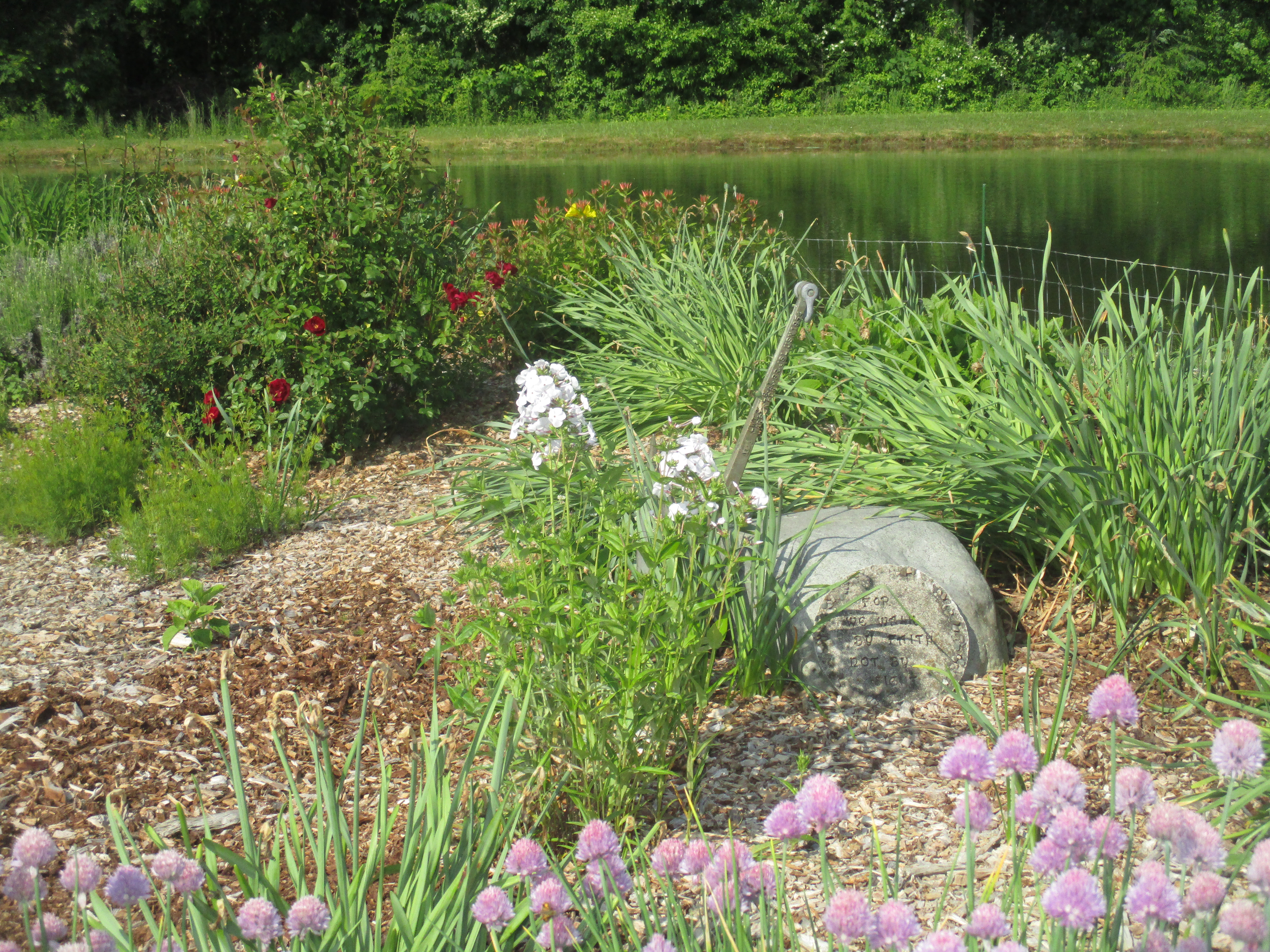
The large rock was one that was unearthed when the pond was being dug. My husband and I found it appealing so we decided to display it in the garden.
We ordered the windmill that spring. It was a bit pricey but would serve dual purposes. The first would be to pump life sustaining oxygen into the pond. The second was for watering plants during dry spells; so along with the windmill we purchased a pump that would pump water out of the pond. You can read about our off grid irrigation process here. After the windmill arrived my husband and I worked together to assemble it. We then invited family over for a windmill raising party.
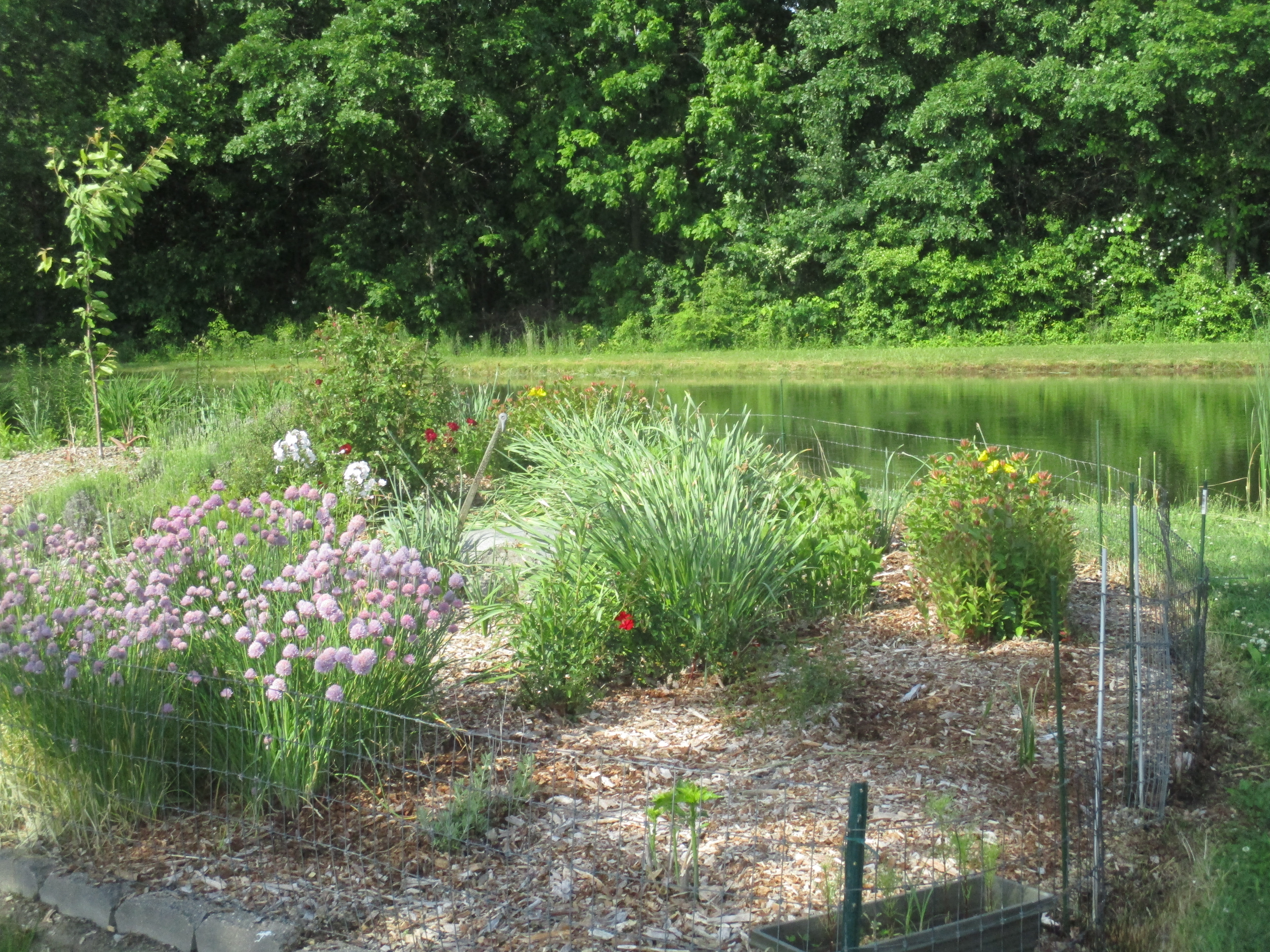
Over the past few years the garden has continued to evolve. Many new plants have been added and most of what we have planted there has flourished. I sometimes find it necessary to remove plants as well.
The photos below were taken over the past two years.
Why A Prayer Garden?
Now that I have covered the “what is our prayer garden” and told you how it came to be I will address the Why. This is where I was most challenged when putting together this post.
I am not sure when the idea of a prayer garden first came to me or where I even first heard the term. It was likely something that I read about online because that is how we get a lot of information nowadays. I do remember that it was around the time when we were working on landscaping the garden area that I decided that making garden stepping stones was a craft I might enjoy. I experimented with making a couple that I gave away and one that I made that I wanted to place in our garden.
On the stone I made for our garden I imprinted one of my favorite Bible verses. For we walk by faith, not by sight. 2 Cor 5:7. I have found this verse meaningful for many years but even more so after our experience with buying our farm and the blessings we received by waiting on God’s timing. I place the stone in the garden as a continual reminder of how God is always working behind the scenes and if we follow His lead we will be blessed. I think it was around this time that I decided to call this our prayer garden.
I have grown to see the prayer garden as an offering to God – a way to honor and glorify Him, so I was struck when I read the quote at the beginning of this post. These words – Flowers offer more praise to God than man ever shall, were spoken by my Great, Great, Great, Great, Great, Great Grandfather, Ninian Riley, who lived from 1725 – 1814. It was while contemplating this post that I received an email from lady named Kathy Strawn, a third cousin that I have never met, and the family historian. She sent some documents that she had created regarding family history and one of the documents contained the above quote.
Upon reading those words I felt an immediate, yet somewhat eerie, connection to this ancestor who lived so long ago. I wondered where did they come from? Where were they documented? Kathy had referenced the Diary of Nancy (Riley) Clarke Salt as the source and an internet search led me to this site where I was able to read Nancy’s diary. Indeed within the pages Nancy explained that as a hobby her grandfather, Ninian, enjoyed tending to flowers a she attributed that quote to him.
This information led me to some questions: is this just coincidence, finding that my distant ancestor had a love of flowers like I do and that his words that were documented more than 1 1/2 centuries ago would so accurately define my feelings? or is there something more – some type of divine inspiration perhaps? These are questions that will certainly not be answered in this lifetime.
While writing this post it also occurred to me that God would likely be pleased with a garden that was built and maintained in His honor. I draw this assumption from the realization that in Genesis 2:8 “The Lord had planted a garden in the East, in Eden; and it was there that he put the man.” God Himself was a gardener and thought the garden to be a fitting place for His greatest creation – man.
I think I will conclude this post by answering a question that may have been on your mind throughout your time reading this – “Do you pray in the garden?” you ask.
Yes, I do pray in the garden, but not as you might imagine. It is when I am on my hands and knees in the dirt, working the soil or pulling weeds, that I feel God’s presence and am moved to converse with him. I offer prayers of thanksgiving and pray for those in need. I pray for friends and family and if you come to mind I will likely say a prayer for you as well.
I know this post was longer than most of my posts and if you have read to the end I am grateful.

































 While it was necessary to have excavators do the digging, the design of the pond was ours. We spent hours talking about the layout, measuring, staking, then cording off the area that was to be dug out. They needed to stay a certain distance from the tree line on the west side of the property and a certain distance from the well. They were given explicit instructions and my husband was on-site most of the time the work was being done to assure that our expectations were met.


 Don't Eat It! Soap and Skin Care