Today is bee day at our farm. It is the day that the honey bees that we ordered have arrived and we must set them up in their new homes (hives). This year, as in the past two, we ordered our bees from Osage Bees in Avoca, MI. Osage Bees do not raise the bees here in Michigan. Instead they take orders from local customers then travel to Georgia where they pick up the bees and bring them back to Michigan. We find this to be a great option for acquiring bees, especially after our tragic mail order experience a few years back.
Our order was for five 3 pound packages of bees.
This is what three pound packages of bees looks like. There is an estimates 9000 – 12,000 bees in a three pound package.
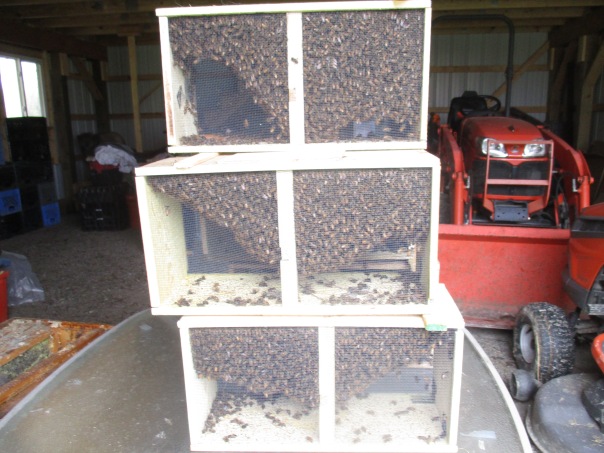
The bees are huddled together in a ball surrounding the queen cage to keep her warm and protected.
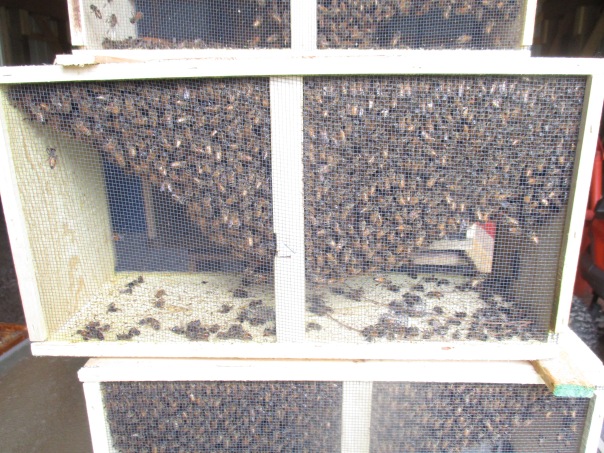
There are a few dead bees in the bottom of each package but that is to be expected.
My husband did all the hiving today, but I wanted to be there to take some photos to share with my readers. You won’t see me in the photos, but in case you are wondering I was wearing a bee suit similar to the one my husband has on.
Before I get into todays activities I should mention that a lot of the prep work has been done over the last few weeks. That involved making sure that we had five hives ready (clean, assembled and set in place).
This morning when he went to pick up the bees I made syrup that we would use to feed the bees for the first week or so. We generally don’t like to feed sugar syrup because it does not have the nutrients that the bees would get from nectar or from honey. We try to keep enough extra honey on hand to be able to feed the bees if necessary, but this year we did not have enough honey to make that happen.
I will also say that there are many methods for hiving bees and for bee keeping. What is right or wrong is largely a matter of opinion, and what works for one bee keeper may not work for another. If you have seen things done a different way or do things differently feel free to ask why we did what we did.
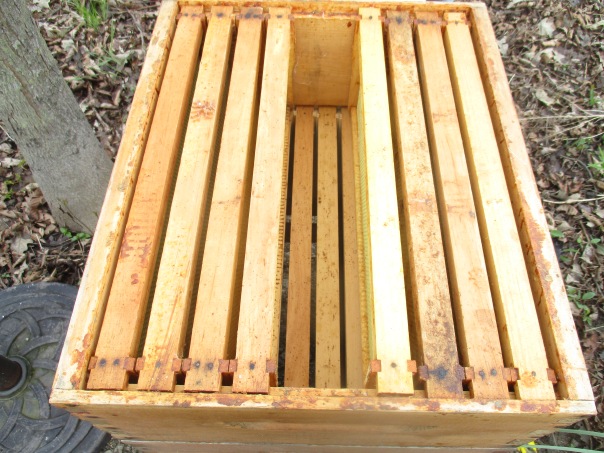
Before opening the package of bees my husband opened up the hive that he would be putting the bees in. He also removed the center two frames to make room for the bees.
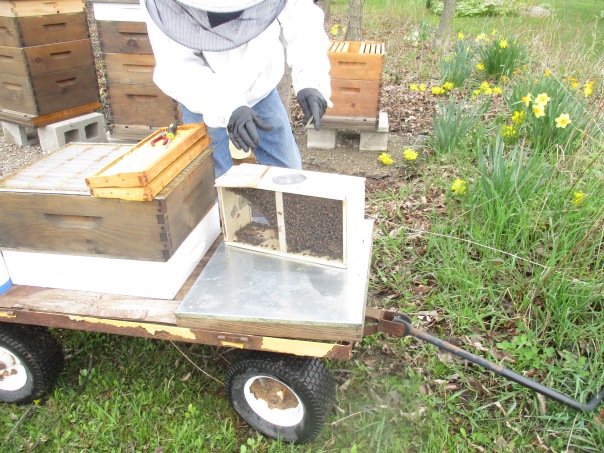
He next removed the small piece of wood that sealed the top of the package shut. Removing the piece of wood gave him access to the feeder can. The feeder can has syrup in it and small holes that the bees can suck the syrup out of. There is enough syrup in the can to keep these bees alive for several days. This can was still pretty full.
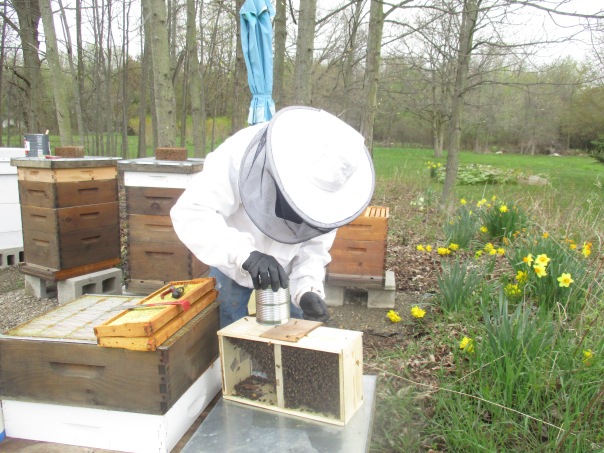
As he removed the can he remembered to slide the small piece of wood over the hole because he still wasn’t ready for the bees to come out of the package.
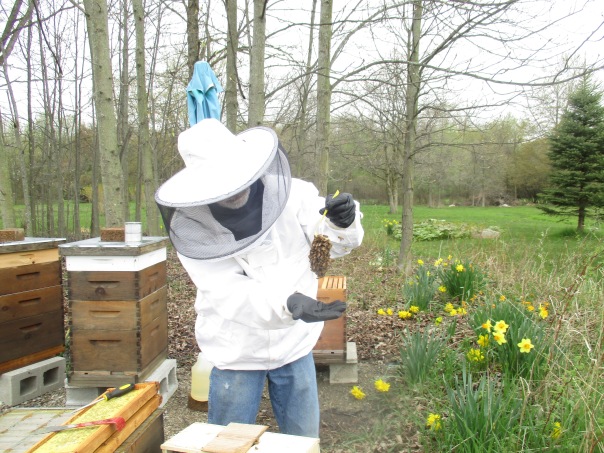
The next step was removing the queen cage. The queen cage is a very small box with screened sides that contains the queen bee and a few attendant bees. The queen is kept separate during travel to protect her. The safety of the queen is of utmost importance because a hive can not function without a queen.
You don’t get to see the actual queen cage because many worker bees were clinging to the cage. Protecting their queen is a large part of their job. Because it was chilly outside my husband held the queen cage in the hive while shaking and brushing the excess bees off.
The next thing he did is not recommended practice, but because of his schedule for the next few weeks it was necessary. He placed the queen cage in the hive and removed the screen so that the queen could get out.
Normal procedure would have been to keep the cage intact and allow the worker bees to get her out by eating the sugar candy that is used to plug one end of the cage. This process usually takes a few days but it is important to check after a few days to make sure she is out. My husband is just not going to have the time to do that check.
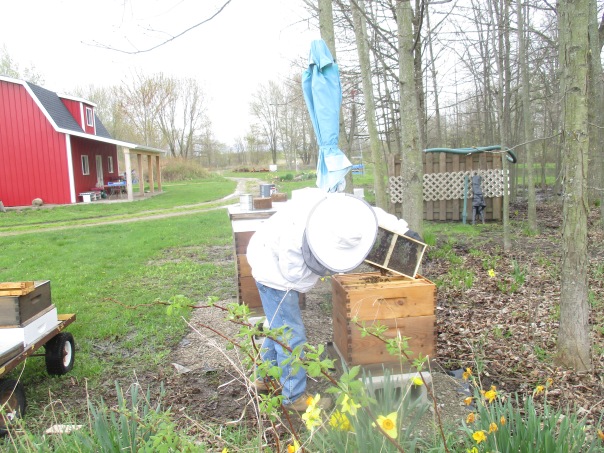
After the queen was in the hive my husband emptied the rest of the bees into the hive. In past years when we have done this we have found that when the package is open many bees are eager to get out and bees begin flying out and around the area. Our experience today was different. Presumably because of the cool, cloudy weather the majority of the bees stayed in a ball – huddled tightly together.
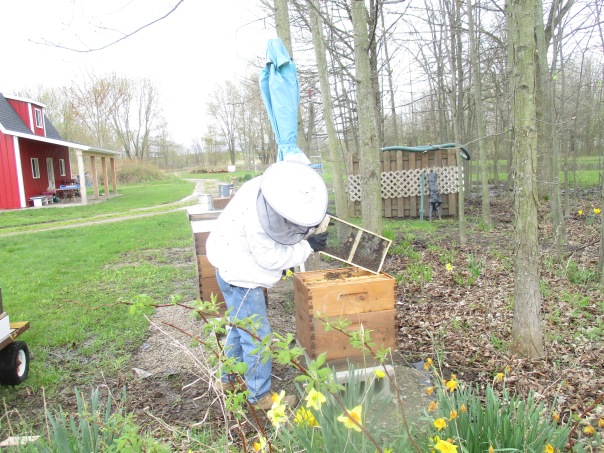
Shaking the package
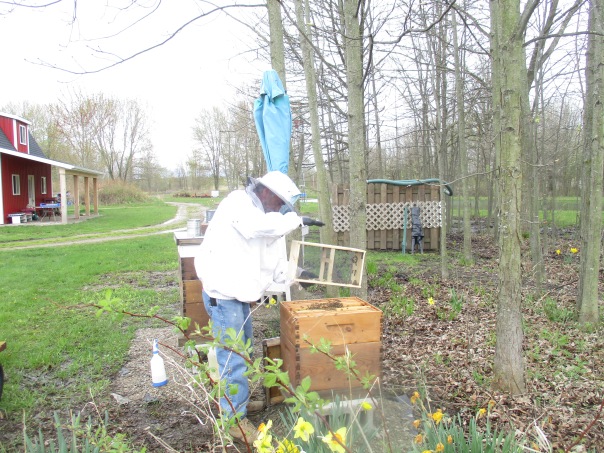
and smacking it on the bottom is what needs to be done in order to get the bees out of the package.
There are usually a few bees left in the package so he sets the package on the ground next to the hive so they will find their way in.
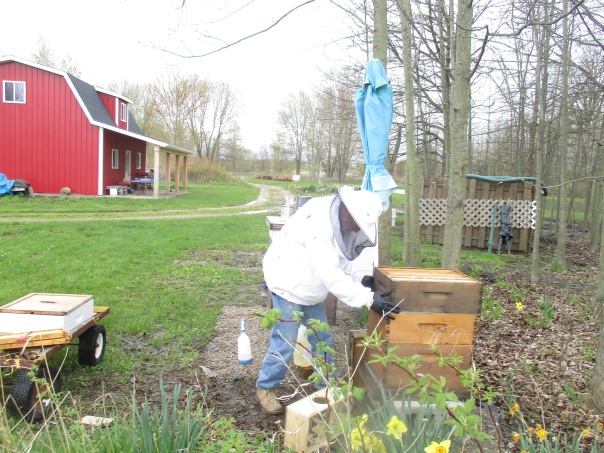
Since we don’t like to open our hives often and disturb the bees he adds a queen excluder and a honey super (the third box). He then put the feeder on top and puts sugar syrup in it, before placing the top on the hive.
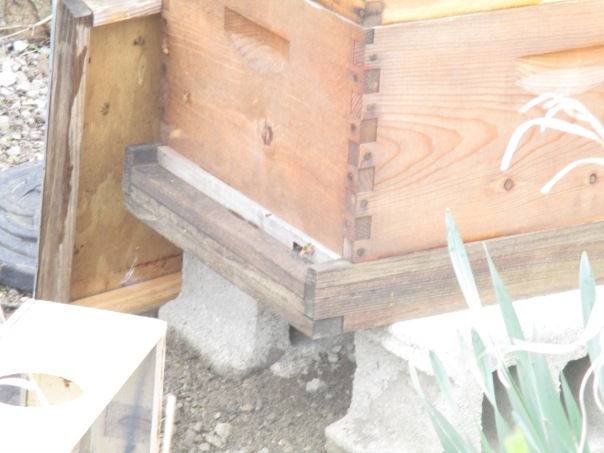
This one is finding it’s new home.
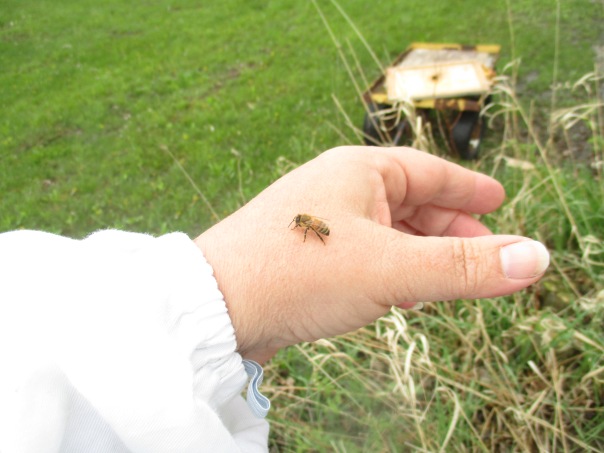
As I was taking pictures I felt something tickling my hand. I looked down and found this girl checking me out.
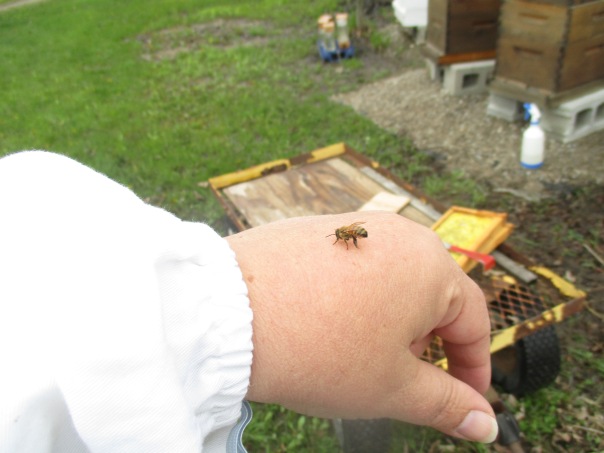
She seemed to be tasting my skin but certainly had no ill intentions. One of the precautions we take when working with the bees is to not wear anything scented (perfumes, deodorant, hair care products) as the bees might be attracted to it.
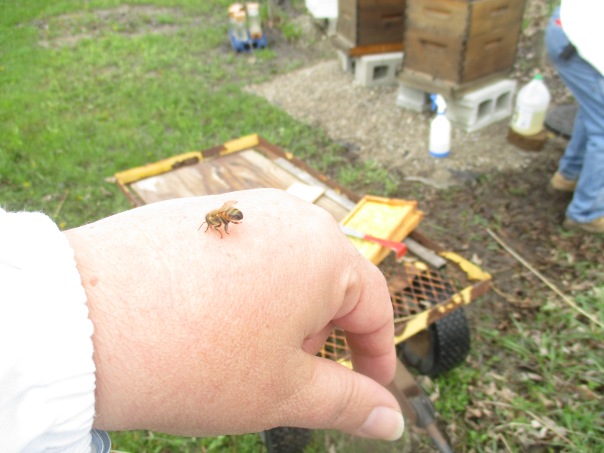
So maybe I am just that sweet. LOL!!!
I only stayed around for the first hive but my husband repeated this with each of the other four hives.
He then reported to me late this afternoon that all of the hives were active and after the sun came out there were busy bees all over the dandelions.
This was a good day!



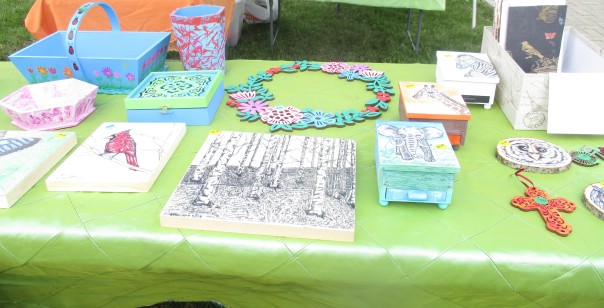 and judging from how many pieces she sold I would say that shoppers agreed.







 Don't Eat It! Soap and Skin Care