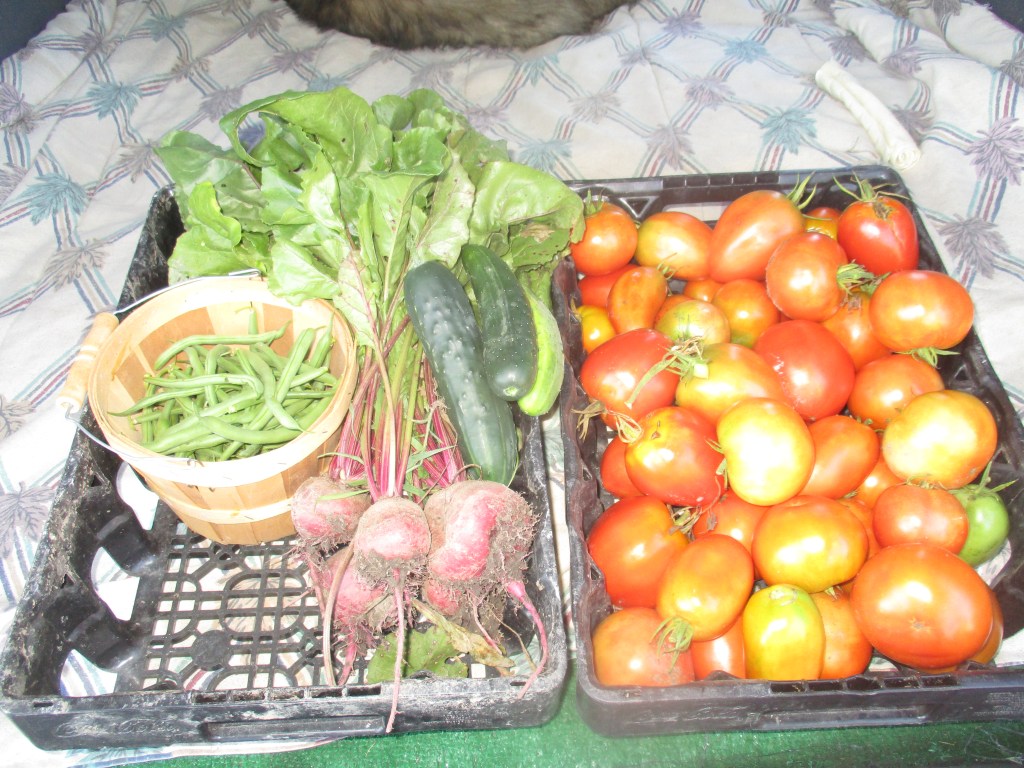
From the garden we harvested green beans, tomatoes, beets and cucumbers.
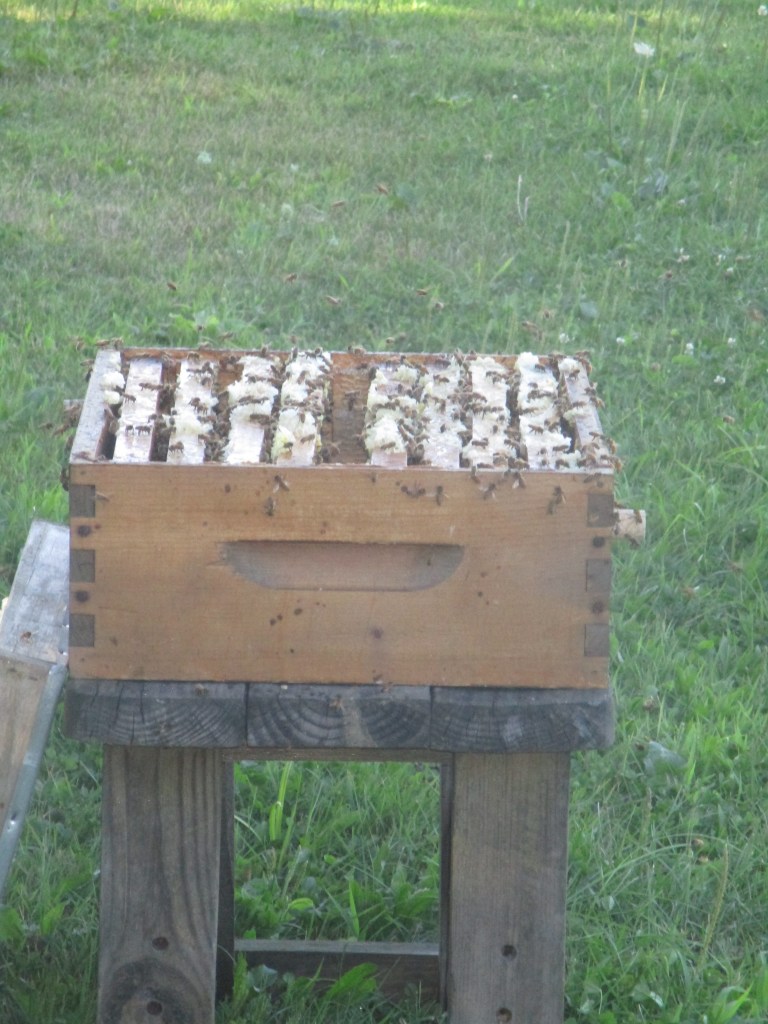
From one hive we harvested 8 frames of honey and wax. Now the bees are cleaning up the frames.
Honey is our oldest hen. She turned 7 this spring.
From the coop we collected 11 eggs. Only 8 of them made it home though. It seems that Ranger learned a new trick. He figured out how to steal eggs out of the egg basket. They didn’t break until he stepped on them. I’m not sure why he decided to take them – either he thought he had found a new toy or he was telling us he wanted to eat. Crazy Dog! LOL!
Yesterday while walking around the back field I spotted Honey bees on several different flowers. I first noticed a bee in the white clover, then another foraging in the birdsfoot trefoil. I spotted a couple of bees on Canadian thistle blossoms and there were many buzzing about in the sweet clover.
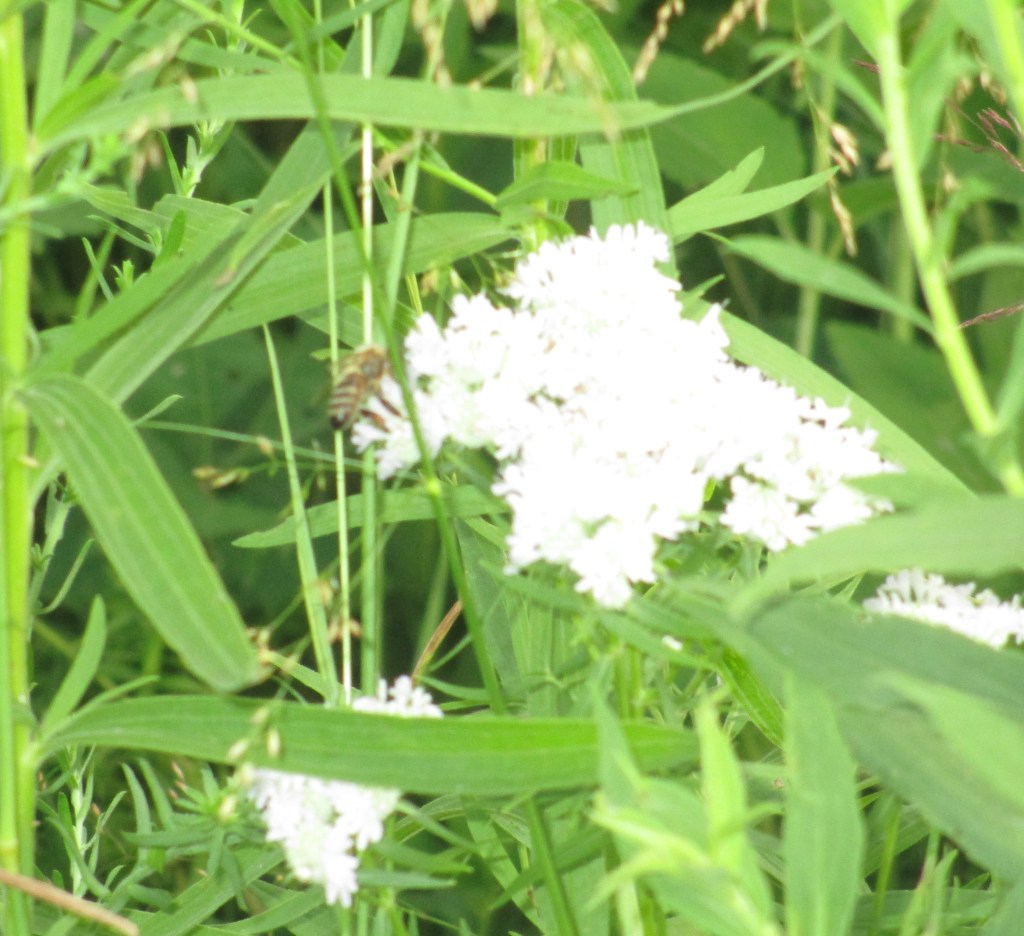
Honey Bee on Sweet Clover BlossomHoney Bee on Mountain Mint Blossom
I then walked by a patch where we planted wild flowers several years ago to see what they might be foraging in there. While the mountain mint that grows in that patch was not part of the seed mix that we planted, it has become a favorite of the bees when it blossoms.
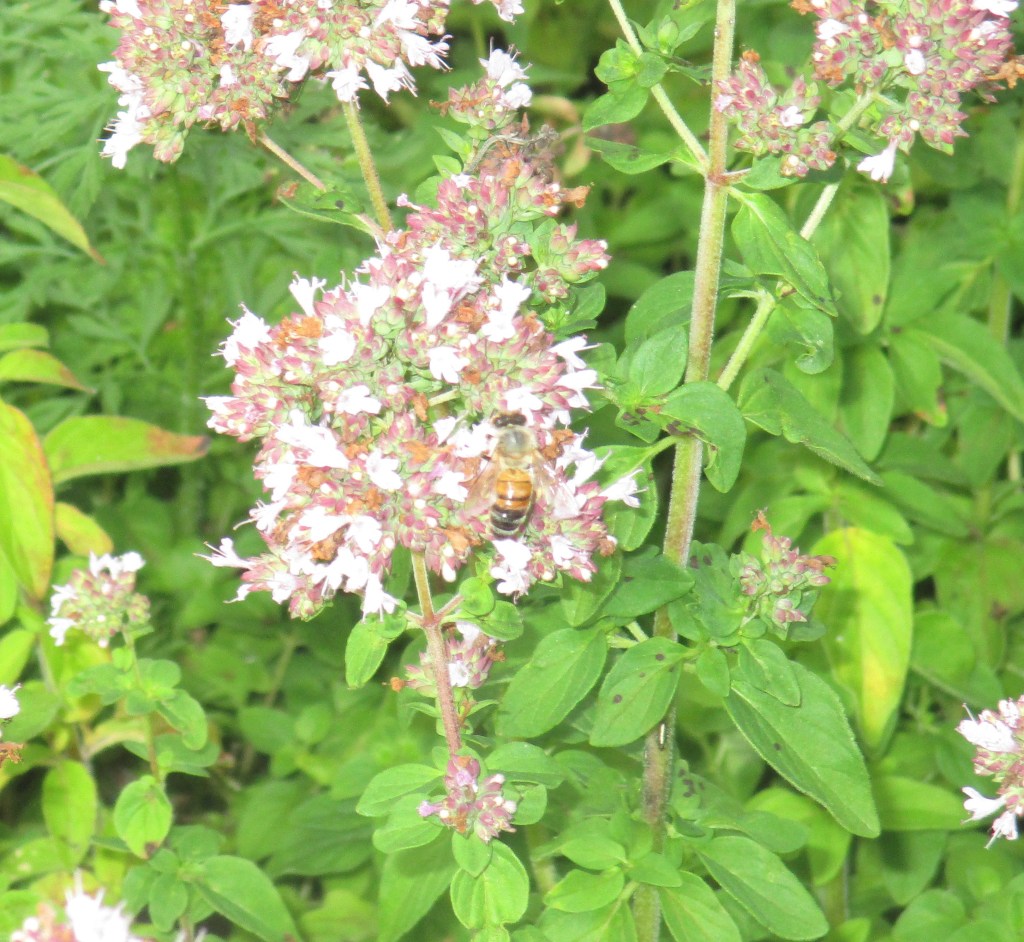
Honey Bee on Oregano Blossom
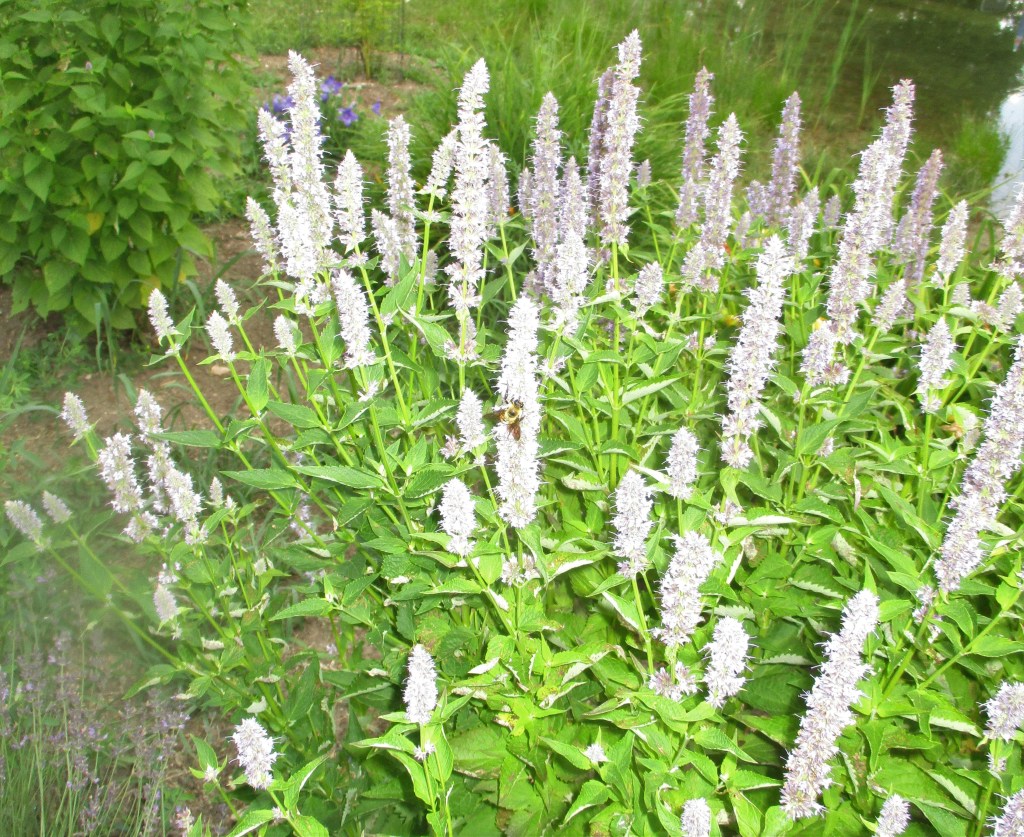
Back at the prayer garden I found many bees in the oregano and a few on the anise hyssop.
Bumble Bee on Anise Hyssop Blossom.
The bee in the above photo is a bumble bee. Honey bees and bumble bees often forage the same flowers.
In addition in all of these plants my husband has reported seeing the bees pollenating the squash and pumpkins and I have seen a few foraging in the marshmallow plants.
The beauty in the bees foraging such a wide variety of plants is that each time we harvest honey the result is a deliciously unique blend of various plant nectars that the bees have collected. I dare say that we have never had two batches of honey that were exactly the same.
According to almanac.com the dog days of summer run from July 3 through August 11 which is normally the hottest and most humid time of year in the northern hemisphere. Around here every day is a dog day. Just ask Ranger and Trooper. But, yes, the HEAT IS ON and it is accompanied by a dry spell so keeping the gardens watered has been the main focus for the past week or so. If you are curious about how we manage that on our off-grid farm you can check out our off-grid irrigation system here.
In the mean time I put together a collection of pictures that I’ve taken over about the past few weeks to share with you.
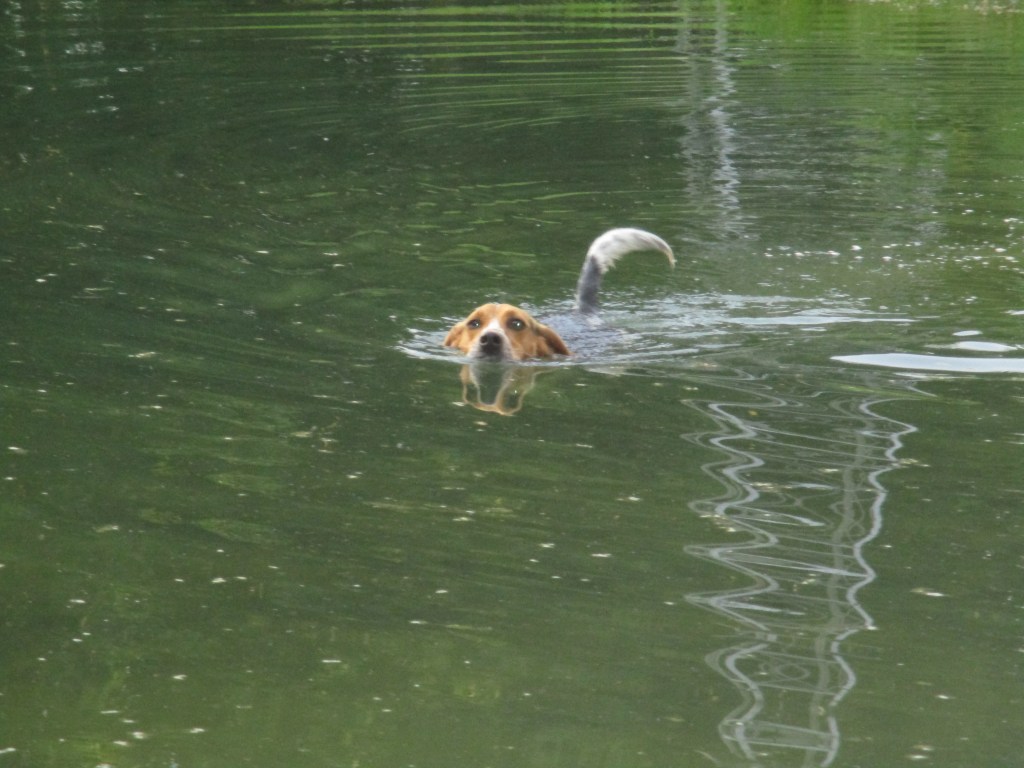
This is how Ranger cools off on these hot days. (Did you know beagles can swim?)
and Trooper enjoys laying on the beach after a swim in the pond.
The grandbabies love the water as much as the dogs do.
Dragonflies are yet another creature that appreciate the pond.
This one is drinking water from the sand. Check out the honey bee (on the left) that photo bombed this shot. She too was coming to the beach for a drink of water.
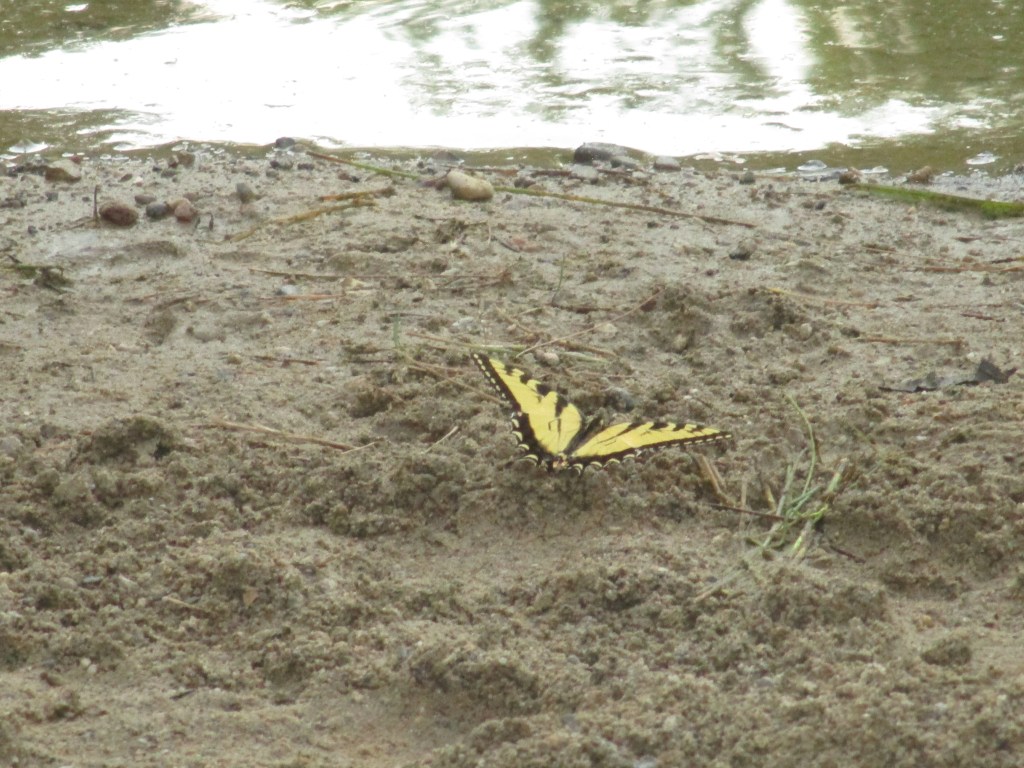
This beauty hung out with us on the beach, for a couple of hour yesterday evening, fluttering about and pausing now and then to rest or perhaps get a sip of water.
One last pond picture because we can never have too much cuteness. LOL.
Speaking of cuteness, here is a double dose – twins.
The lavender is gorgeous this year and the bees and butterflies are all over it.
We have transitioned from strawberry season to blueberry season. On the same day that my husband, and (daughter) Kara, picked the last of the strawberries, I took (daughter) Tina, and Jackson and Addy into the blueberry patch to pick the first ripe berries. While Kara took her 3/4 of a basket of strawberries home. Addy couldn’t wait, so she ate all of the blueberries we picked while they were still at the farm.
Start them off young – that’s my motto. They posed for a group photo then dad took Jackson and Addy, one at a time, for a ride on the tractor.
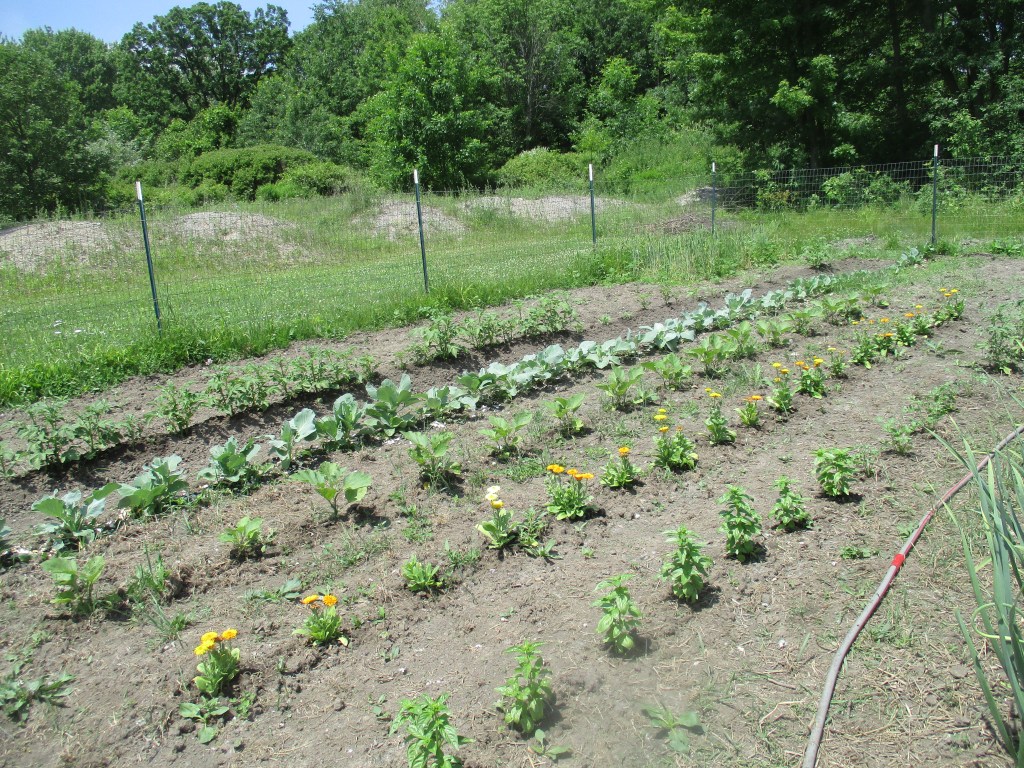
The garden is flourishing. I have harvested basil and calendula flowers twice so far.
We have green tomatoes, peppers starting to develop, blossoms on the eggplant,
blossoms on the green beans and the corn is knee high.
We cut garlic scapes (check out this post to learn more about scapes) about two weeks ago and will be digging garlic soon.
It seems that every summer our back field is dominated by different plants. This year it is full of clover and birdsfoot trefoil and I think it is just gorgeous. It’s also great bee food.
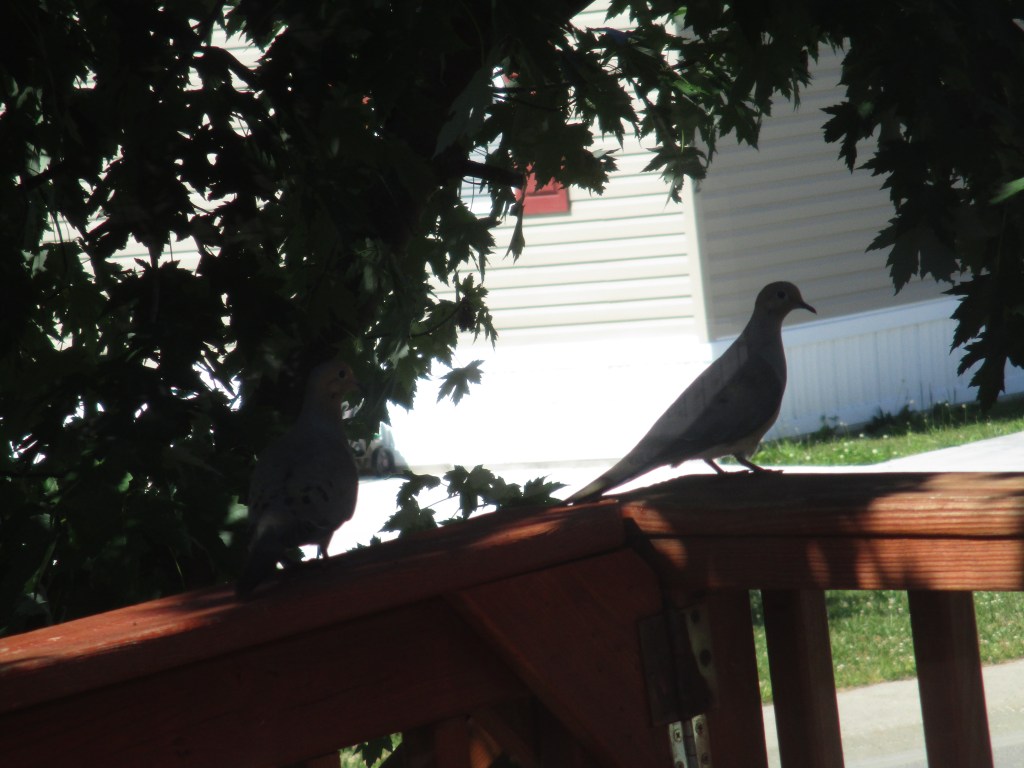
I’ll leave you with one last photo of this pair who stopped by our deck for a short visit last week. They were kind enough to stay so I could get a photo then they hurried on their way.
Thanks for visiting and remember – stay hydrated, breathe deep and stay well.
Several blogs that I have seen this morning have reminded me that it is Earth Day. In fact it is the 50th year that this day has been celebrated. It is really just a coincidence that I have prepared a post with lots of pictures of our little piece of this earth but I invite you to have a look around.
Even though we lost all of our bees over the winter we still have two hives that have some honey in them. On the days that are warm and sunny they are being visited by what we assume are wild honey bees. Since there is little available for them to forage this early in the year these bees are eating the honey that remains in the hives. It is good to know there are still honey bees in the area.
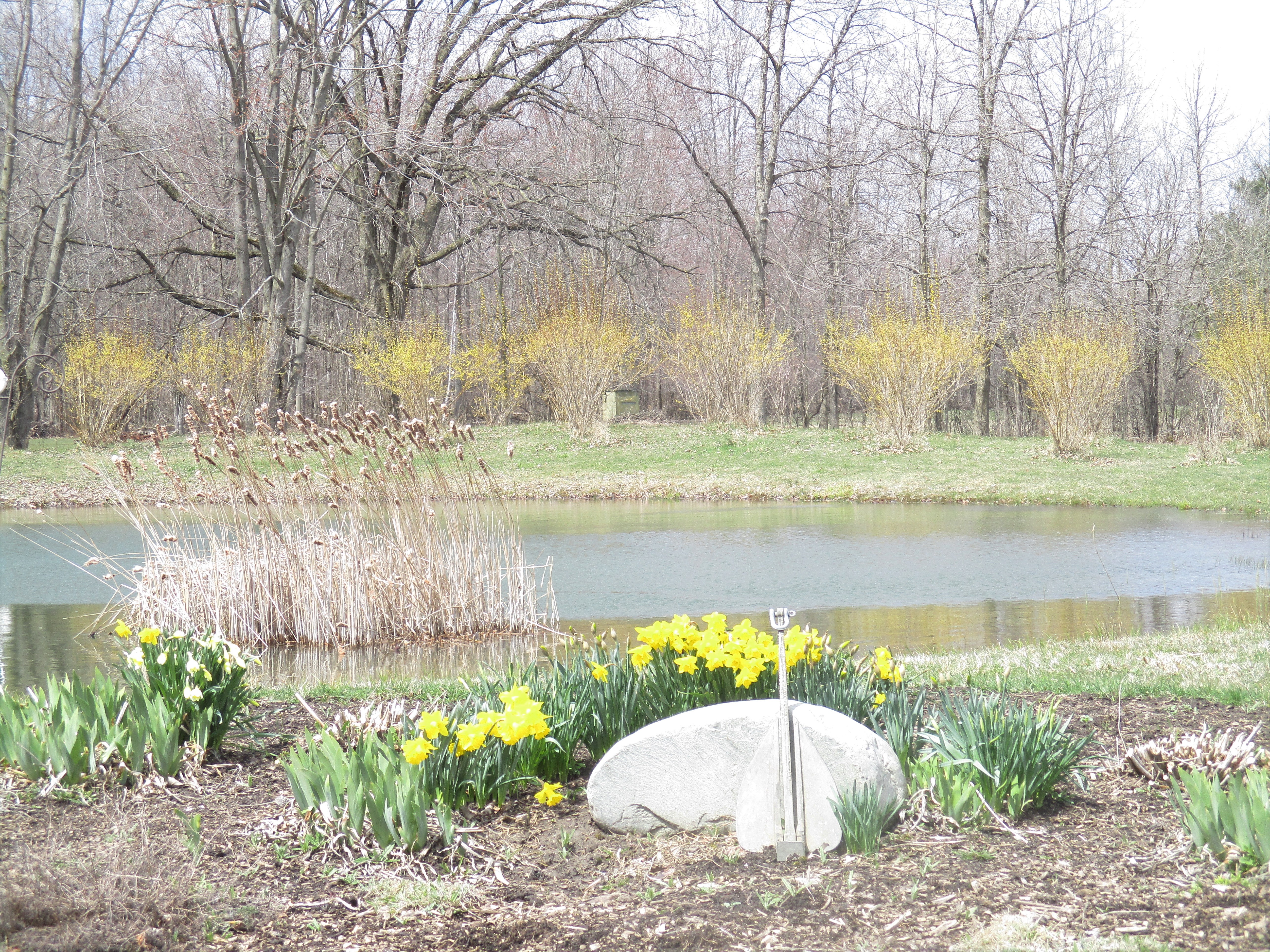
Daffodils are blossoming and the bushes in the background are forsythia just beginning to bud out. We have never had the forsythia blossom so fully. Last year we decided not to prune them but to wait until after they are done blossoming this spring. It seems to have worked.
Yellow is a happy color. 🙂
It shouldn’t be long before the forsythia is fully blossomed. I think it will be a stunning backdrop for the pond.
These small daffodils and white hyacinths were planted 5 years ago in memory of my husband’s mother. My husband had bought them for her to brighten up her room when she was in the hospital. After she passed away we brought them home and planted them in the prayer garden. They are the first daffodils to blossom every year.
The garlic is doing well. I love seeing them come up in neat, orderly rows.
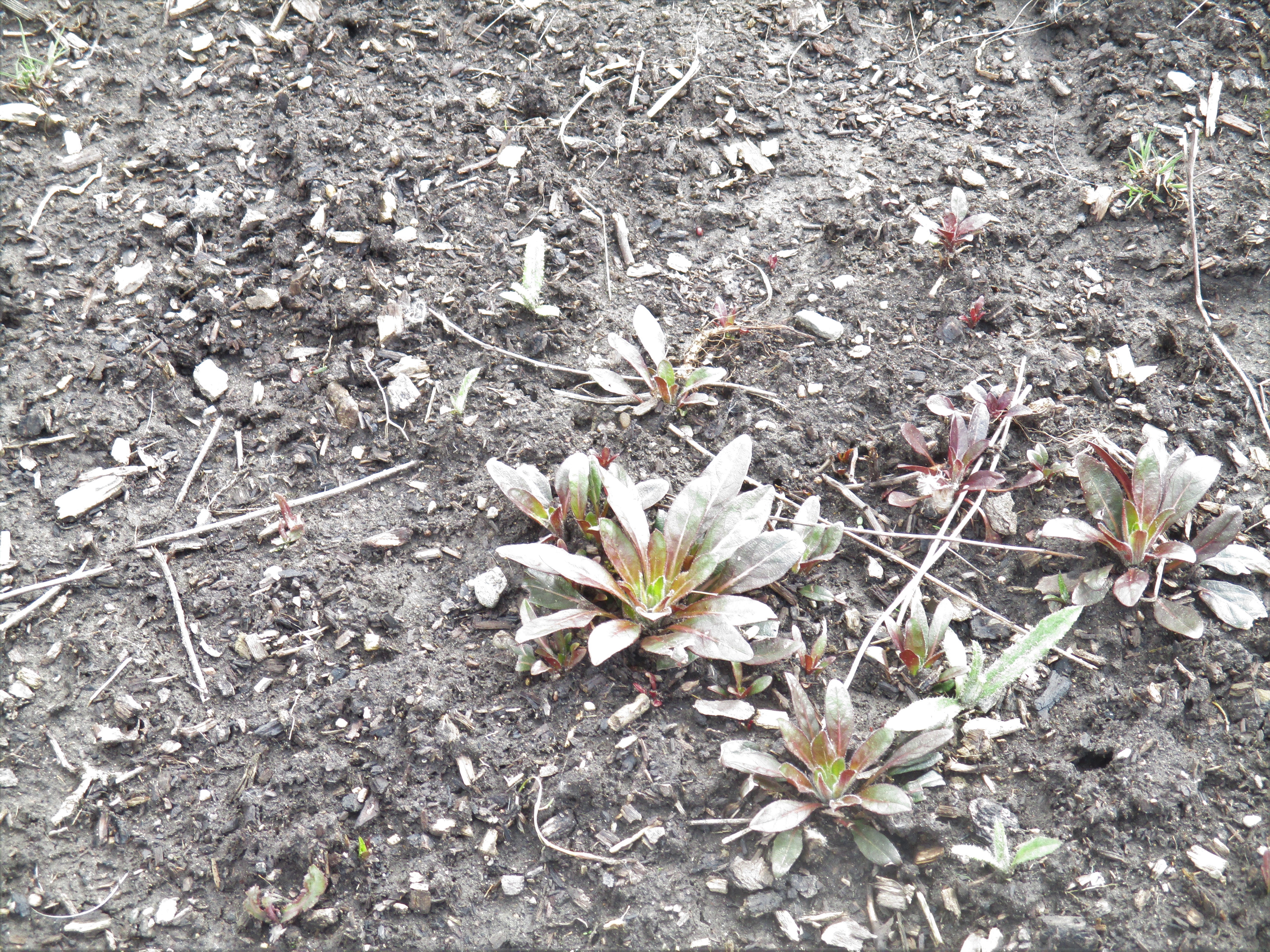
These small red shoots are a peony bush the I planted last year in memory of my Aunt Shirley. I am so happy to see it coming up.
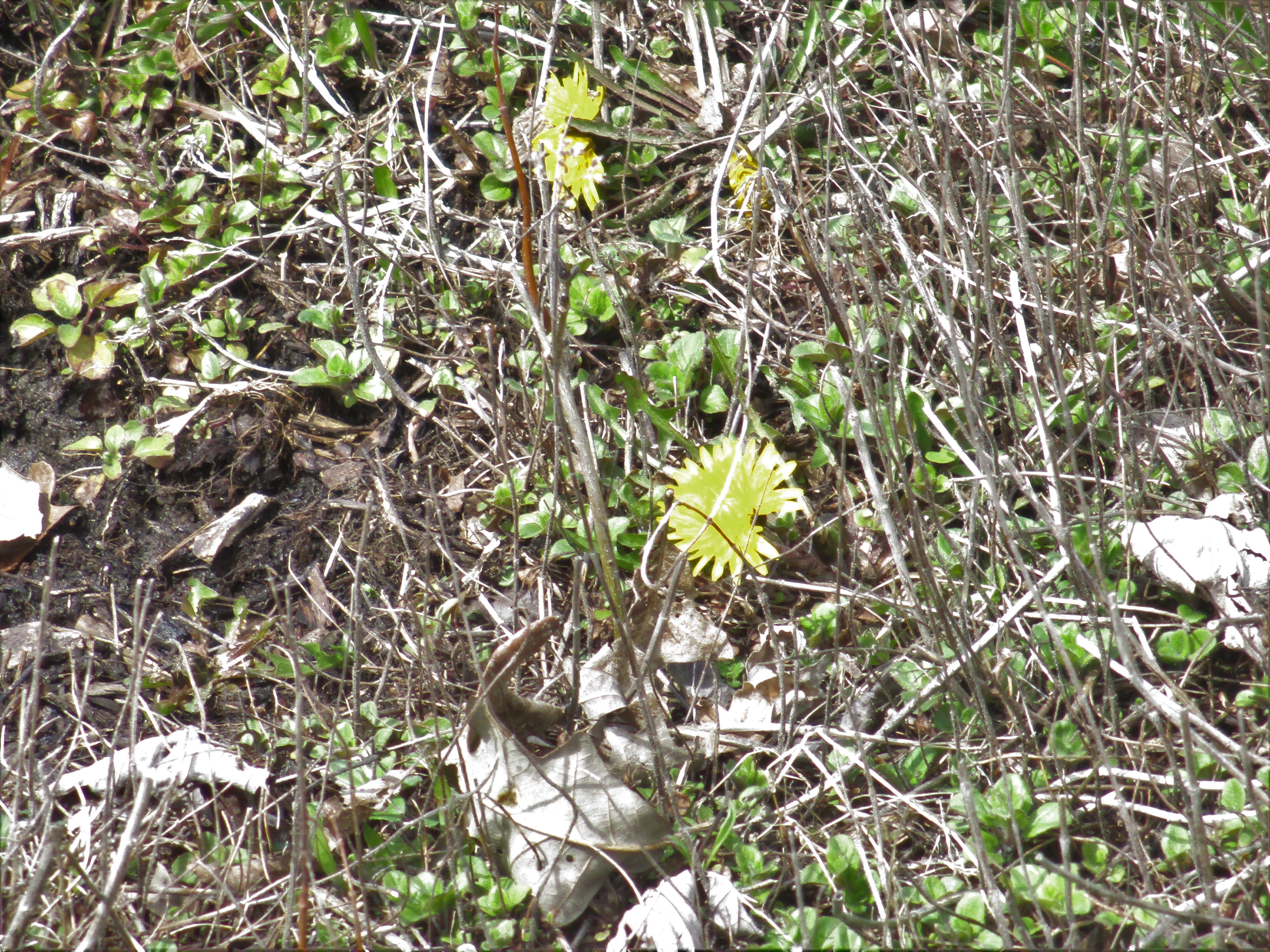
I spotted the first dandelions to open. They were growing in the middle of my oregano patch so I will likely dig them out. Personally I love to see dandelions in bloom they just don’t belong in my oregano patch.
Above are cosmos and below are primrose. Both were added to the prayer garden last year. They were given to my husband by a lady whose home he was working at while he was working the landscaping job.
The cosmos continued to flower all last summer and were not touched by the deer, but the top growth on the primrose died off after being transplanted. They then formed new leaves but did not flower. I guess I will find out this year if they are deer candy or not.
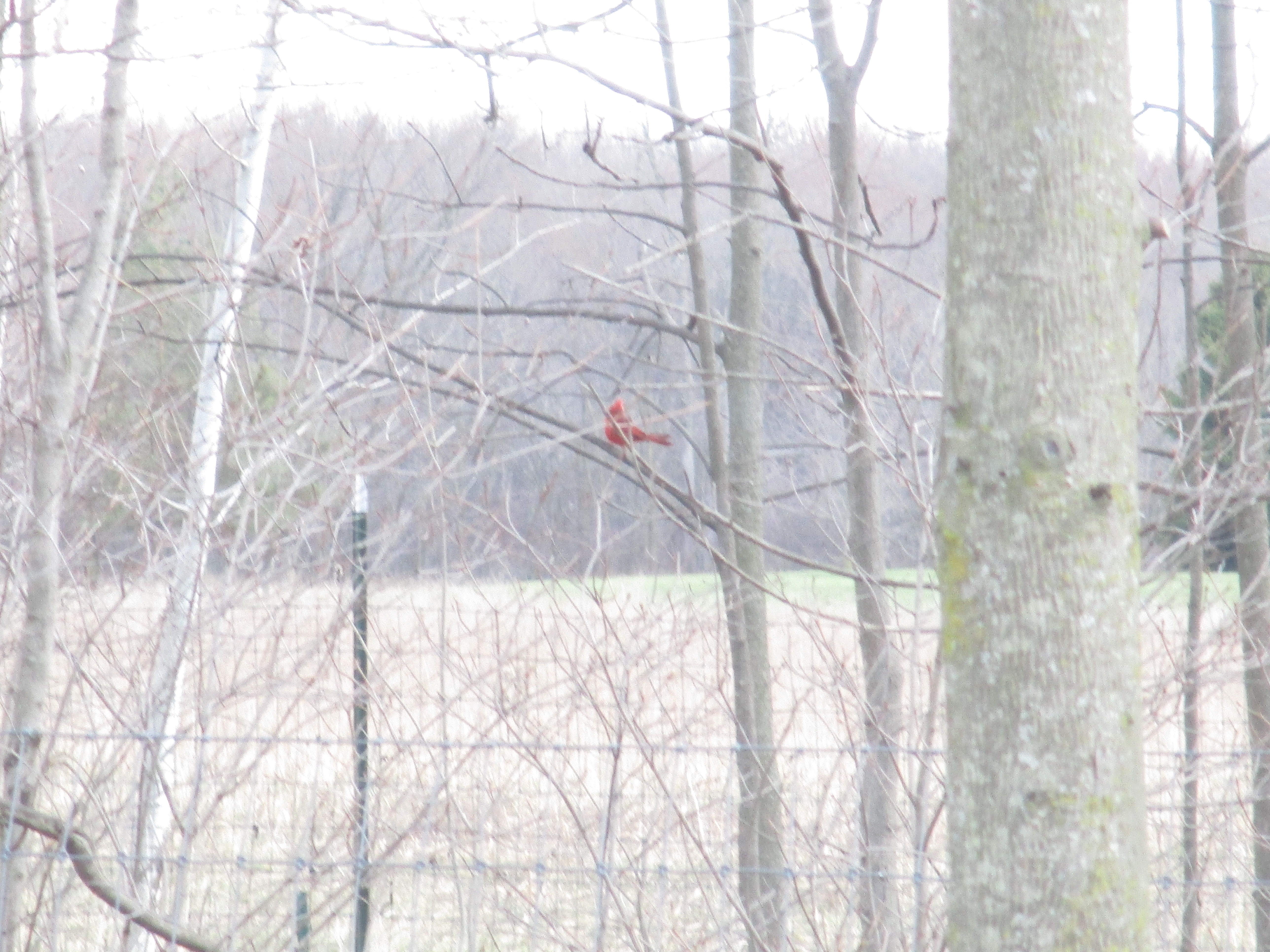
A cardinal was visiting the chicken yard. This is not unusual. Many birds (and rabbits, and squirrels and even deer) visit that area since there is always food available.
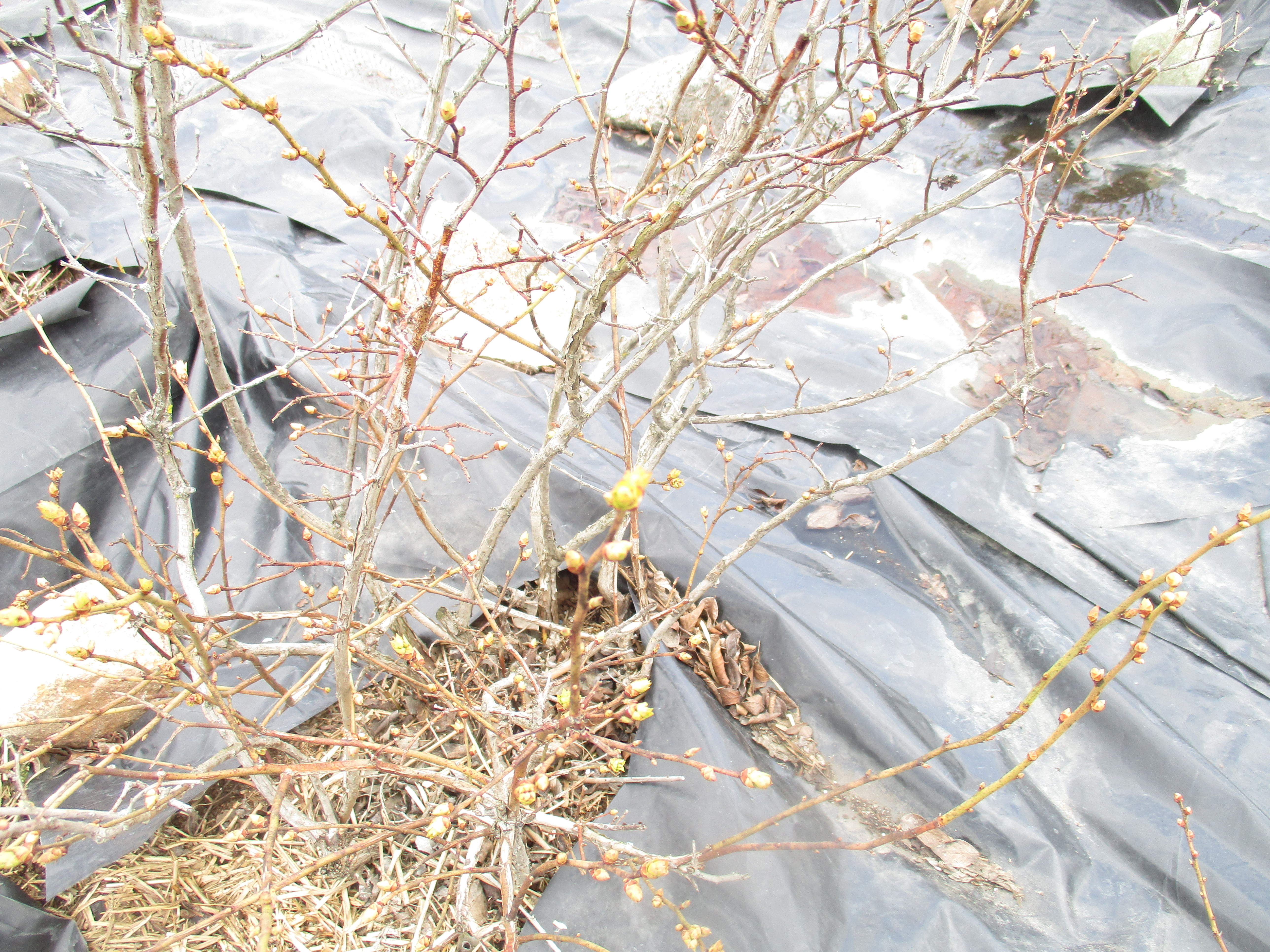
Blue berry bushes are beginning to bud out as are apple trees (below).
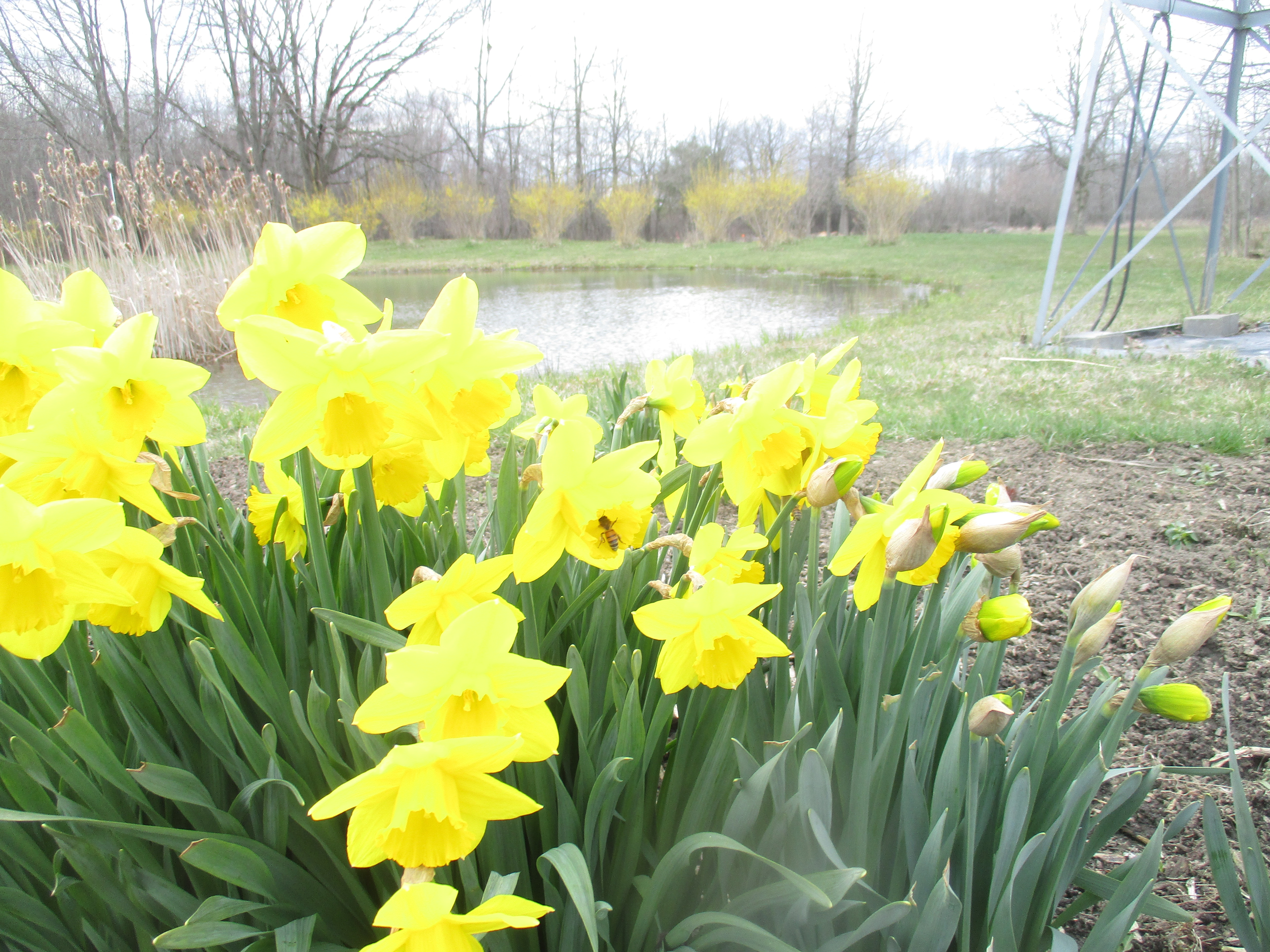
We witnessed something we have never seen before on Sunday. Honey bees were foraging in the daffodils.
We have had daffodils growing since before we began keeping bees and if you have been following my blog for very long you know that I always watch to see where the bees are and what plants they are foraging.
This is the first time in eight years that we have seen the honey bees collecting daffodil pollen. Since I am not skilled enough as a photographer to get a picture of the pollen attached to their bodies you will just have to take my word that they were collecting pollen to take back to their hive.
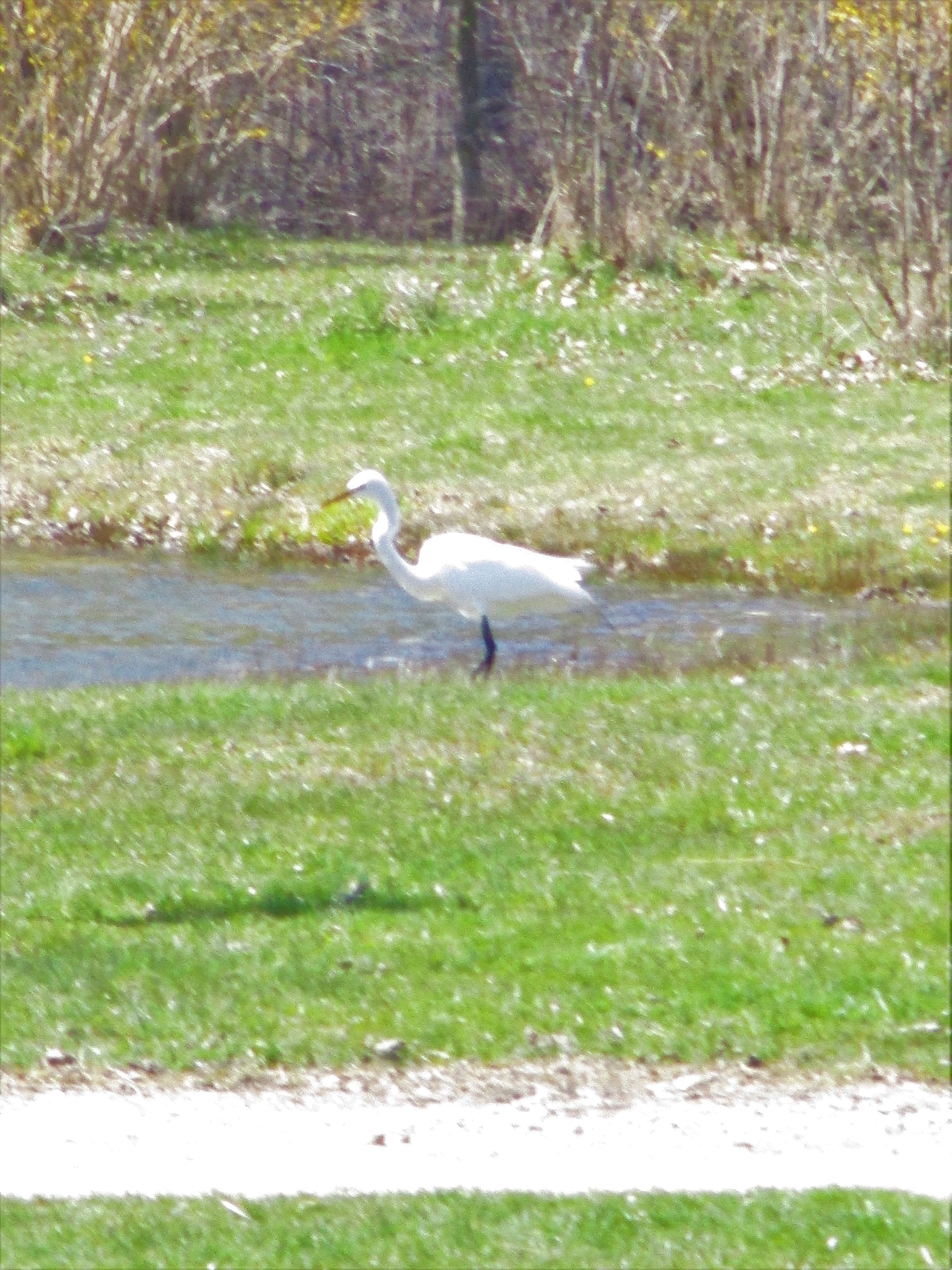
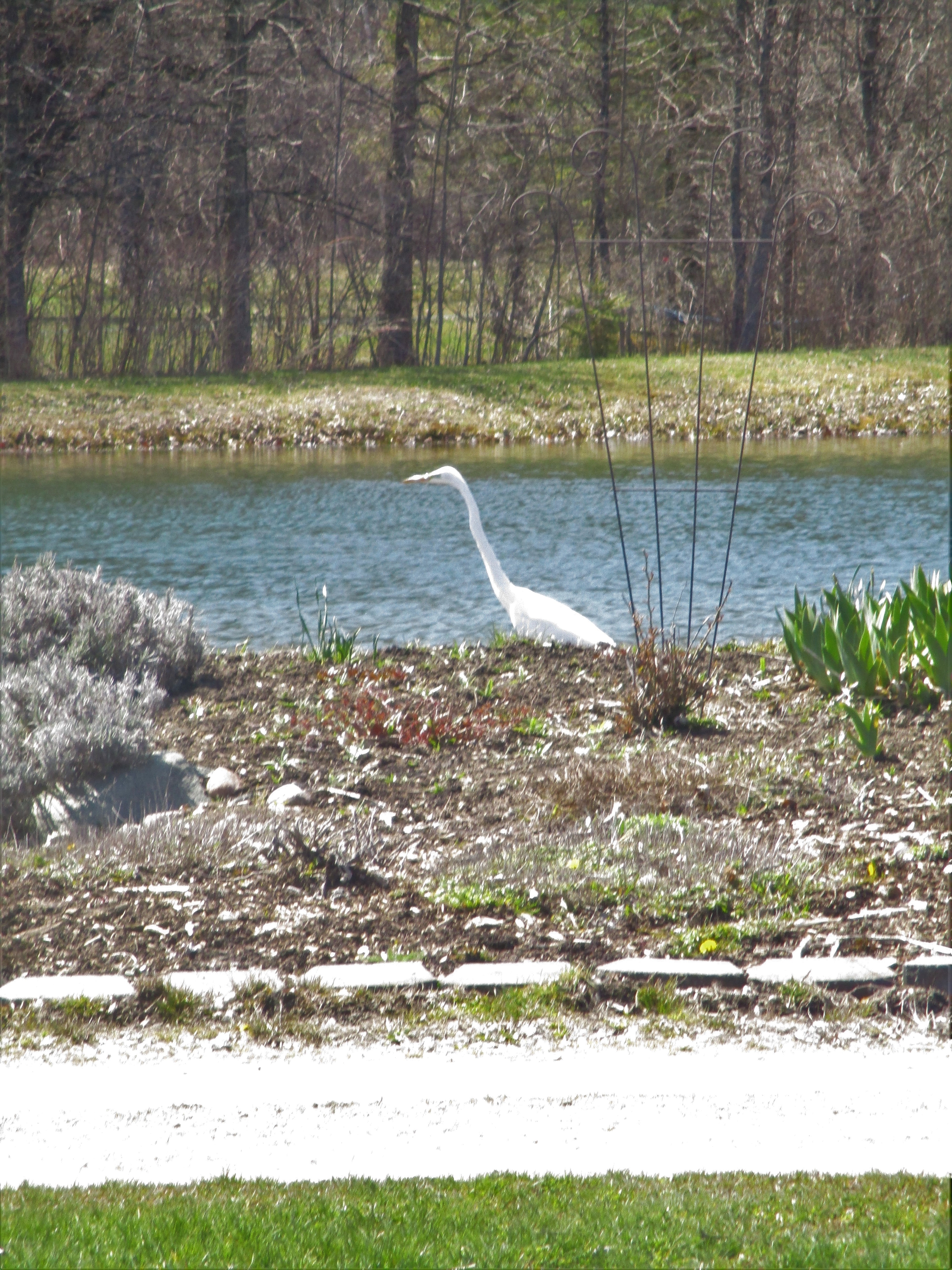
As I was working at the farm on Monday I noticed this egret land near the pond. He or she quickly swooped up a tasty treat. I’m not sure if it was a frog or a fish.
It then continued to make it’s way around the edge of the pond.
It was about 45 minutes later that I saw it fly away so I can only assume it left with a full belly.
Not everything that is happing at the farm is as passive as this appears.
On Sunday I decided it was time to start preparing the ground around the apple trees for the companion plants I am going to put in.
Since my husband was working in a different area, we put Ranger on a tie near where I was working. When he saw me digging in the dirt he decided to come and help. I have to admit that he was much more efficient digging with his paws than I was with a trowel. Unfortunately after digging for a short bit he sniffed the area and realized there were no mice hiding in that ground, so he was done.
I finished removing the grass and top layer of soil around the base of the tree – only six more to go. I will then be planting chives which are said to ward off insects and prevent apple scab and nasturtiums which are also reported to repel insects. We won’t know until summer if these methods are working but lets all hope that I’ll be posting pictures of beautiful apples later this year.
Now this post is getting long and we’re heading out to work in the asparagus patch (it should be coming up soon) so I’ll save the information about the work we are doing there for another post.
This is the final post in the series that was published in 2016. Click to see Part I or Part II. After reading it again I realized that I have discovered a few things since it was first published.
We have grown some more plants that I have observed the honey bees foraging on heavily. They include chamomile and chives which blooms in the spring, oregano which blooms throughout the summer, and spearmint, peppermint, chocolate mint and anise hyssop which all flower in late summer and fall, so these can be added to the others you will read about in the original post.
The other thing that I recently read and thought would be worth including with this post is that honey bees will only forage one type of plant during a flight. Knowing this it stands to reason that they would be foraging a type of plant that is plentiful in the area. Thus if you are planting with honey bees in mind it would be better to plant several of one type of plant than to plant only one of several types of plants.
I hope you enjoy the original post.
Since we decided to become beekeepers I have read many recommendations about what to plant for the bees including the above picture. I feel very strongly that it is important for the health of the bees that they have a variety of foods (plants) to forage. Although it is not our only consideration when deciding what to plant, planting for the bees is something that we have been doing since we bought the farm and decided to become beekeepers.
Other things we take into consideration are:
1. Is the plant annual or perennial? Except for food and herbs we usually don’t plant annuals.
2. To know if a perennial will survive it is important to know the hardiness zone that you live in. Some plants that are perennial will not survive the colder temperatures of our winter and some will not even grow long enough to blossom.
3. It is also good to know the growing conditions that the plant requires – type of soil, wet or dry, and sun or shade are all important considerations when deciding where to plant something.
4. I love things that have multiple purposes. So I consider other uses for the plant – are they edible, medicinal, a good cover crop that will nourish the soil, or simply planted for their beauty ?
5. I also have to consider what critters will eat these plants before either we or the bees can benefit from them. I have found some plants that the deer and rabbits simply don’t bother with, yet there are many others that have to be fenced in order to protect them.
6. When planting for the bees, another thing to consider is the bloom time of the plant. It is good to have plants that blossom at different times of the year. Early spring is probably the time when the bees are most in need. As they emerge from their hives in the spring, their winter food stores are running low if not depleted, they need to be able to find food in order to survive.
What we have planted:
Lavender was a plant of choice before we ever knew we were going to become bee keepers. I originally planted lavender at the house because I loved the plant, loved the fragrance, loved the dried flowers that could be made into sachets, sleep pillows, tea, or infused into oil. I also add them to my chamomile/lavender soap. It was on the plants at the house that I first observed honey bees foraging and realized what a good bee plant it was. When we bought the farm, planting lavender was a no-brainer and it is now a large part of our prayer garden. Another thing that I appreciate about lavender is that deer and rabbits leave it alone.
Our Prayer Garden
Thyme is also grown in our prayer garden. It is a low creeping plant that makes a nice ground cover. It has both culinary and medicinal uses. http://www.delallo.com/articles/thyme Last spring, when the thyme was flowering, I noticed that the honey bees were all over it. I was happy to see this because thyme essential oil is recommended as a natural treatment for varroa mites. While I haven’t seen it written anywhere, my theory is that by feeding on thyme, perhaps, the bees can extract the thymol that is reported to be effective for controlling the varroa mites, thus not requiring human intervention. Thyme is another plant that is not bothered by deer or rabbits. This year I will divide the roots and spread thyme throughout the prayer garden.
Sage and Salvia are of the same family. This link provides a growing guide for the different types. http://www.bhg.com/gardening/flowers/perennials/guide-to-salvias/ When planting sage/salvia it is important to note the hardiness zone for the variety you are planting. I have grown several varieties of sage. They grow well during the summer, and I have been able to harvest their leaves, but since they are not hardy in our (zone 6) growing area they have never blossomed and some have not survived our winters. Since they do not flower they are not useful to the bees. On the other hand I do have a salvia plant (I’m not sure what variety it is) that has beautiful purple spiked flowers in the spring and summer. I have had it for three years and the honey bees love it. Salvia and sage seem to be plants that the deer and rabbits leave alone.
Basil – I have grown basil for many years. I use it fresh during the summer and dry it to have on hand year round. I pick the leaves off before it begins to flower and continue to pick them until I want it to flower and go to seed. Late last summer, when I let the basil plants flower, I noticed the honey bees were heavily foraging them.
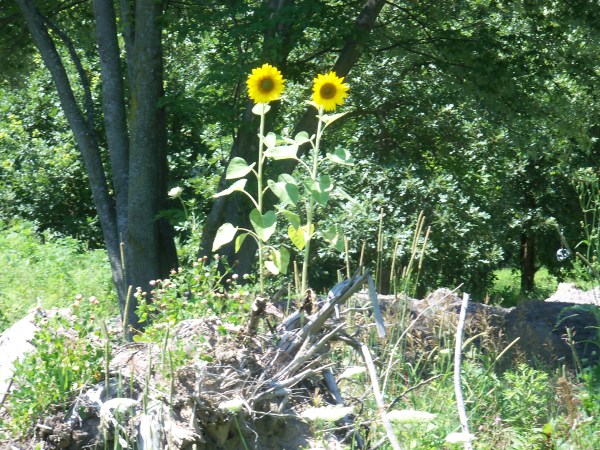
Sunflower is one of the annuals that we grow. I can not speak for all varieties of sunflowers but our bees visit the Grey Stripe Mammoth and black oil seed varieties often.
Once you plant sunflowers, don’t be surprised if they come up voluntarily the following year in surprising places as these did. They always made me smile 🙂
Asters grow wild in our field. They blossom in the late summer and fall and last year we witnessed the bees feeding heavily on them.
Clover is the one thing that we plant most often, that is great bee food. We sometimes use clover as a cover crop to nourish the soil for future crops, but most often we use it combined with grass seed when we landscape areas. Call me crazy, and you might if you’ve been paying a lawn care company to keep your lawn weed free, but I feel that white clover compliments the grass. It grows at a similar rate, it fixes nitrogen that helps the grass grow, and it is soft to walk on. I also like that if I mow the white clover when it is blossoming, it will blossom again.
Buckwheat – Another plant that we have used as a cover crop that the bees seem to enjoy. Buckwheat makes a dark honey with a strong flavor. It also makes a good cover crop as it grows fast and is said to choke out competing weeds.
Last summer my husband and I were in the garden center department of one of the local home improvement stores. I was looking for more of the salvia plant that I have, but was unable to find any. We noticed honey bees visiting several different flowering plants. You should probably know that for me going to a garden center and not buying plants is almost like going to the Dairy Queen and not buying ice cream. I absolutely hate shopping and the only exception is going to a green house or garden center. I could spend way too many hours and way too much money in these places. That being said we ended up buying some of the plants that we saw honey bees visiting.
They included a Coreopsis also known as Tickseed.
Tickseed
A Mallow
Mallow
and a Balloon Flower that I don’t have a picture of. After planting these in our prayer garden I didn’t notice any bees on them. I suspect that there were so many other things blossoming in the area that the bees did not pay any attention to these flowers. Thus, the lesson I take from this is that my focus should be on sticking to what we already have. I will add more lavender, (I started some by seed) I will divide the thyme and let it spread, and perhaps I will divide my salvia in order to have more plants. I will cherish the clover, the asters and the golden rod that grow wild in our field, and I will not curse the thistle (much).
2020 update – While the mallow plant pictured above did not come back the following year, the balloon flower has continued to grow but I have never observed bees on it. The tickseed has continued to grow and spread and last summer I often saw bees foraging it.
Will you be doing any planting this year? Have you observed bees foraging on specific plants in your area? I would love to hear from you.












 We witnessed something we have never seen before on Sunday. Honey bees were foraging in the daffodils.