Category Archives: Bees

Filtering Bees Wax

This post was originally published in 2016.

IMG_1313
Honey Comb Inside A Warre’ Top Bar Bee Hive.

To clean the bees wax that we harvest with the honey from our hives I have seen and read about several methods. I first tried what I thought would be the easiest, which involved boiling the wax in water, allowing it to cool and then scraping all of the non-wax particles off the bottom of the hardened wax, it was exactly the way I would render lard or tallow. I was not happy with the results of this method for cleaning wax. I found that scraping the particles off the hardened wax was difficult, and it took several times repeating the whole process to get the wax as clean as I wanted it. The wax also lost it’s sweet bees wax fragrance.

I next decided to try one of the filtering method that I read about. I will start by saying that all of the pans and utensils that I use when working with wax are dedicated to working with wax. Once it is there the wax is extremely difficult if not impossible to wash off.

IMG_1331

I always start by rinsing the wax. Today my husband did this for me. The wax was in a five gallon bucket that has small holes drilled in the bottom. He took it outside and ran water from the garden hose though it until it seemed like most of the honey was rinsed out. I then just let it drip for a while.

There are two important things I will point out about rinsing the wax. The first one is never rinse the wax in the house. Beeswax is a very hard substance, its melting point is about 147 degrees Fahrenheit. A drain clogged with beeswax could be a very expensive fix.  The second is that once the wax is rinsed and drained as much as possible, it should be cleaned or filtered right away. If it is not possible to filter it within a few hours, I freeze the wax. The reason for this is that the wet wax will grow mold. Unfortunately, I learned this the hard way last year and ended up throwing away quite a bit of wax.

IMG_1329

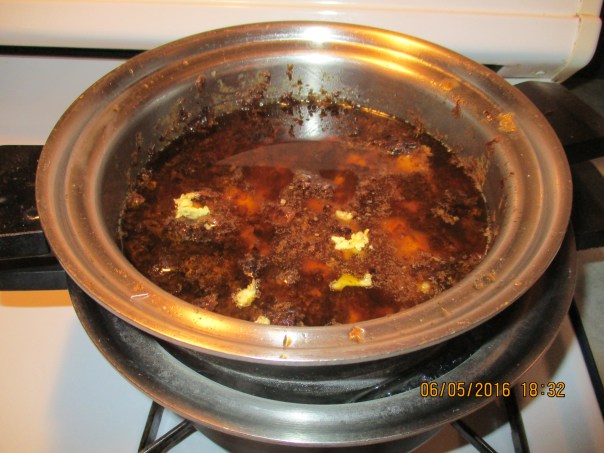
To melt the beeswax I use a double boiler or two old pans that stack together (again they are only used for this purpose). I put water in the bottom pan and the wax in the top pan. I heat the water and let it boil the water until the wax is melted.

IMG_1338When the wax is completely melted the non-wax particles can be filtered out. To do this I use a strainer lined with several layers of cheese cloth.

The strainer fits nicely into this old ceramic crockpot insert that I picked up cheaply at a Salvation Army thrift store. I pour the wax through the cheese cloth into the ceramic pot and then pour the filtered wax into some of my soap molds.

IMG_1340

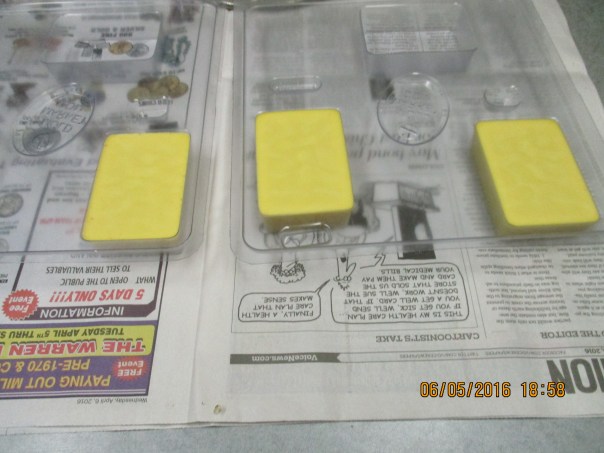
As the wax hardens it looks like this.

IMG_1341

When it is taken out of the mold it looks like this. Some of the bars may still have some dark spots in the and will go through one more cycle of melt and filter.


IMG_1342

While I always use news paper on the counter, when working with wax, I have learned that the finished bars should not be placed directly on the newspaper because the ink will transfer from the paper to the wax.

I have read that one pound of beeswax holds 22 pounds of honey. These numbers are very close to the amounts of honey that we harvested and the wax that I filtered. Most of this wax will be used to make my balms and some may be used to make candles.

Not to have any of this valuable wax go to waste, we have begun using the cheese cloth, that is now coated with a wax film, as fire starter in the fire place. It works wonderfully.

Thanks for reading. ☺

Beginning Of Summer Farm Update

It’s been just a few days since summer arrived, but for once the weather seemed to coincide with the calendar. The heat that we have been getting has served to dry things up nicely so things are looking much better at the farm.

STRAWBERRIES

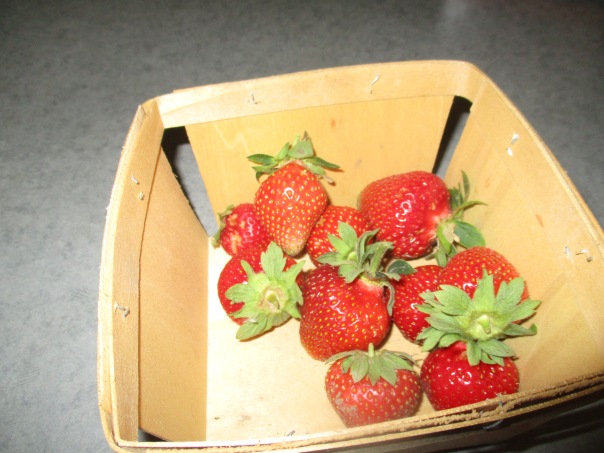
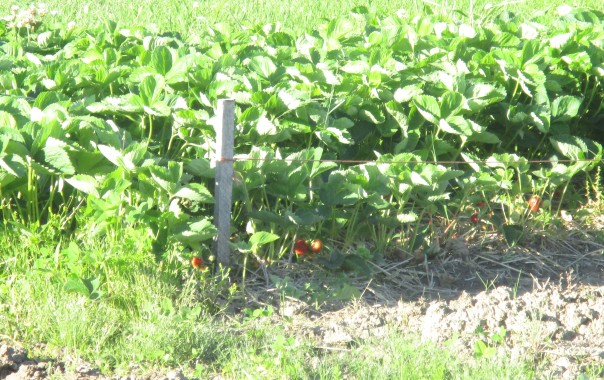
Despite the cool, rainy spring our strawberries did well. We have been picking berries for about two weeks now.

IMG_5194

These berries were from the first day we picked. Since then we have picked about 60 quarts of strawberries. They seem to be slowing down but we will probably be picking for the next couple of days at least.

IMG_5216

Besides eating fresh strawberries (even some right in the field as we pick) we have enjoyed them in fruit salad, as strawberry short cake with homemade whipped cream, I made nine pints of strawberry jam, and we have about 15 quarts in the freezer. We have also been able to share them with family and friends.

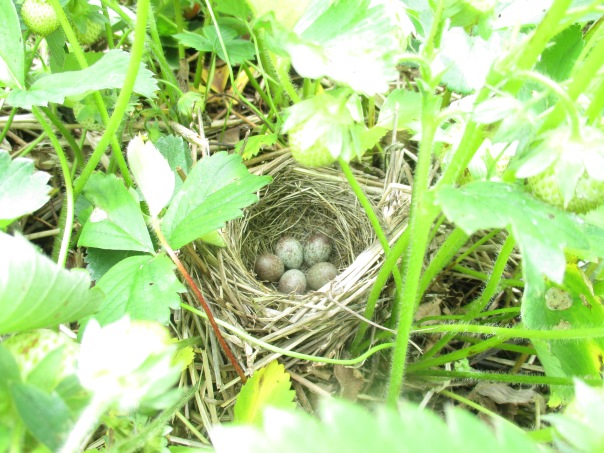
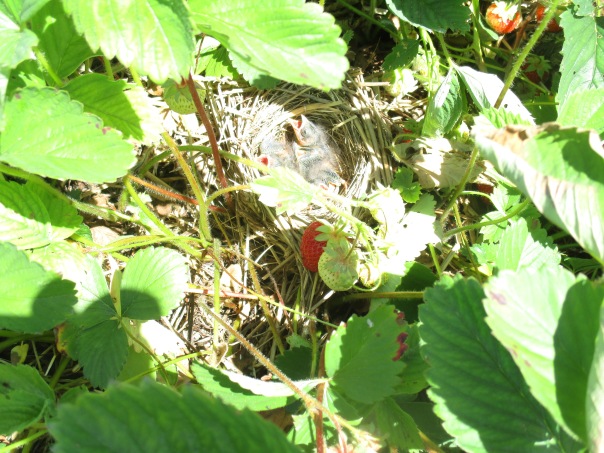
As we were picking berries on that first day we came across this well hidden nest in the middle of the patch.

IMG_5202

We had no idea what type of eggs they were and we hadn’t seen a momma bird around at all.

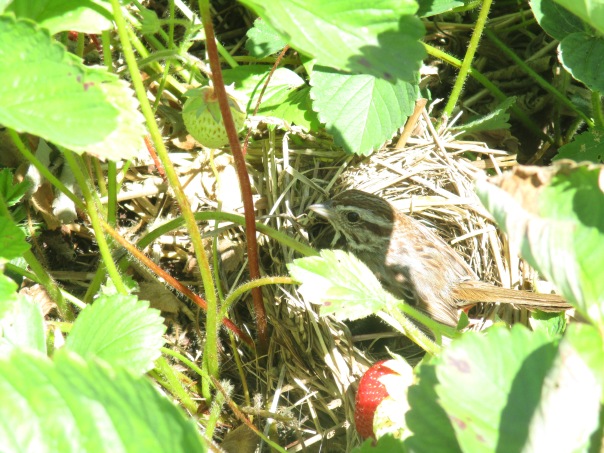
Then a few days ago when my husband was picking berries alone he called to tell me that the eggs had hatched. He also said that momma sparrow was watching him from the fence.

IMG_5249

Yesterday as we picked she stayed on the nest until I took her photo.IMG_5252

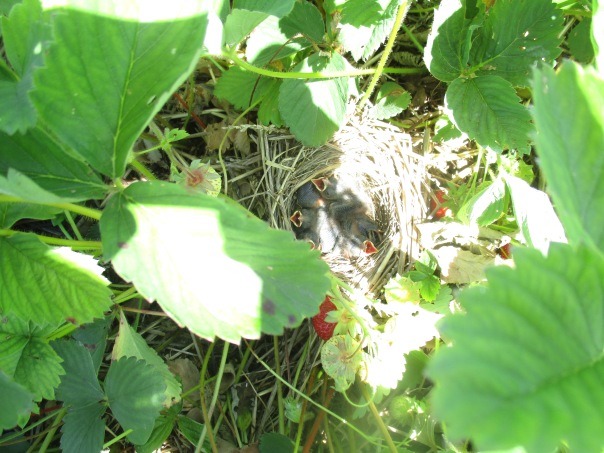
I think that startled her and she quickly flew away, so I was able to get a photo of her young.

IMG_5250

Although there were five eggs in the nest I could only make out four babies.

GARDEN

Over the last two weeks we were able to get the garden planted. Although planting conditions were less than ideal we planted cabbage, tomatoes, peppers, potatoes, squash, pumpkins, basil, parsley and more tomatoes. We also put in carrot, beet, and Swiss chard seeds.

The plants that we put in seem to be taking hold but the seeds that only went in a few days ago have yet to sprout.

IMG_5234

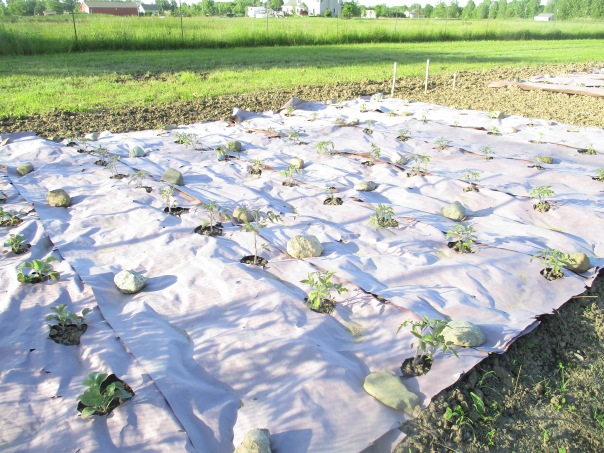
This year we decided to use weed guard around many of the plants. This product is a thick organic paper. It will help keep moisture in and weeds down. It will also break down over the course of the summer and can be tilled into the soil.

Having been unsure when or if we would be able to plant a garden at the farm this year I had planted sweet peas and pole beans in containers and they are growing on our deck.

The peas which were planted several weeks before the beans are now producing pods and the peas are growing inside of them. I picked a few of the pods that had not began to fill out and added them to my beef stew a couple nights ago.

BEES

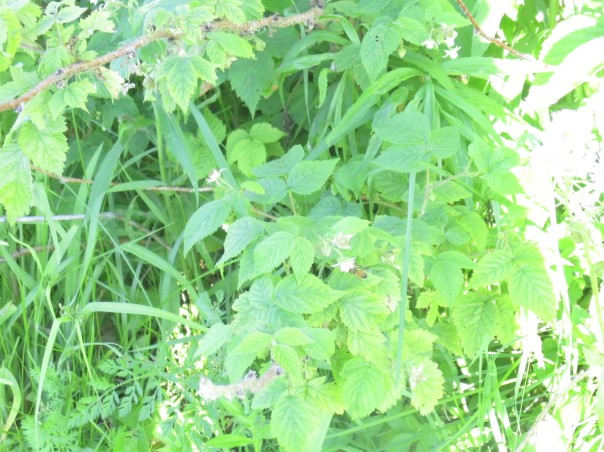
As always we have been keeping an eye out to see where the bees are foraging. We have seen them in the clover, chives, thyme, and raspberries.

IMG_5227

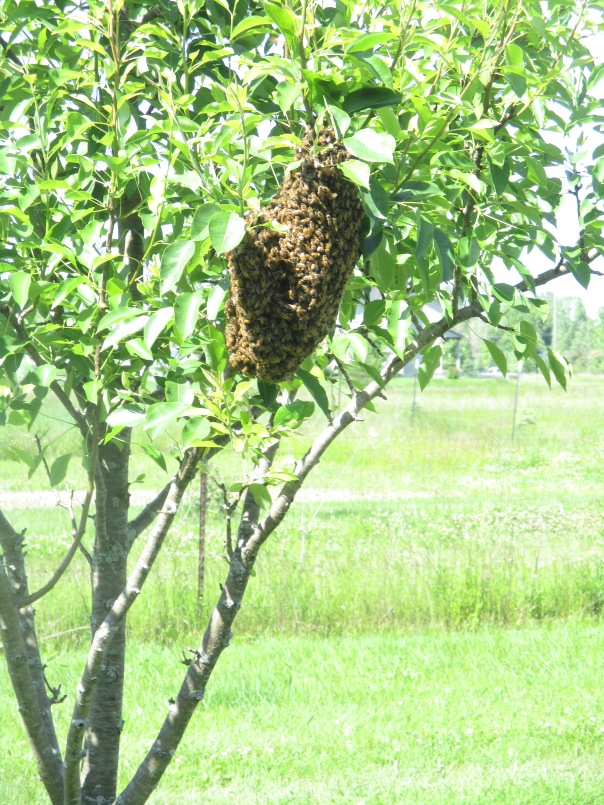
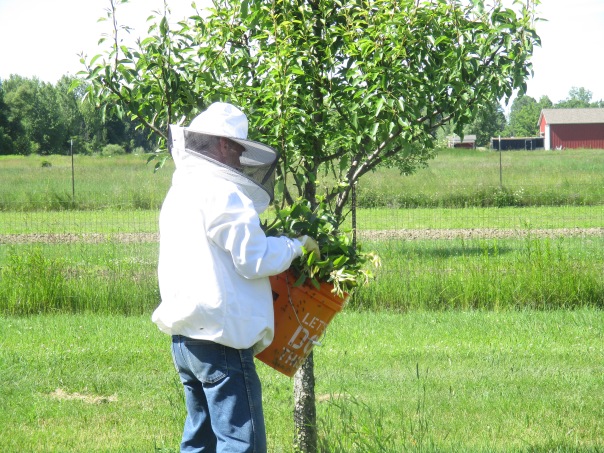
Last Saturday while my husband and son-in-law were doing some fishing I was moving some bricks with the tractor (I love driving the tractor) and I noticed this swarm of bees in a pear tree. Christmas in June! LOL!

IMG_5236

The guys finished up their fishing and my husband prepared to capture the swarm. We helped him set up the new hive and he got out all of the equipment he would need.

IMG_5238

The swarm was located within reach so he had no need for a ladder.

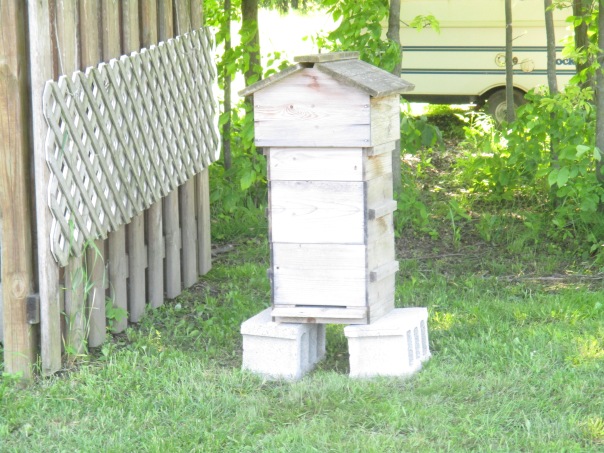
The hive these bees were placed in is a warre top-bar hive. Since there are no frames to remove and the top bars run across the top of each box it was necessary to have the box upside-down pour the bees in. Then he covered it with a piece of cardboard while he returned to the pear tree to gather the remaining bees.

The bees that did not get captured the first time around were collecting back on the tree limb so he gave them a little time to settle before shaking them into the bucket and taking them to their new home.

After pouring the remaining bees into the hive box he again covered it with the cardboard. then Ken helped him hold the cardboard in place as he flipped the box over and placed on top of the lower box. He then slid the cardboard out so the top box sat directly on the lower box.

IMG_5245

CHICKEN

I thought I would include one last picture just because I thought it was cute.

IMG_5212

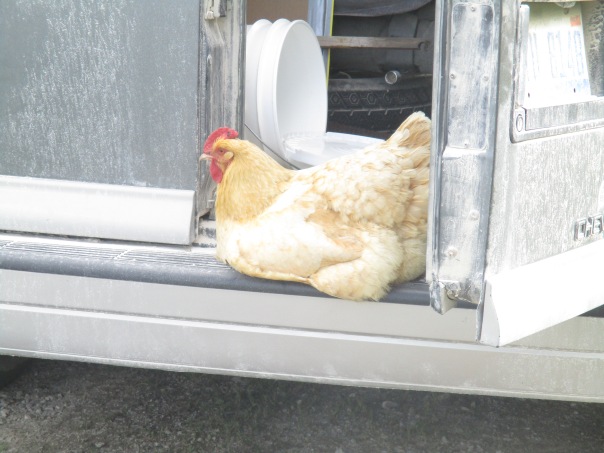
Not all of our chickens have names but there are a select group that have earned their names. This one is Honey. She is one of three surviving chickens from our very first batch of chicks in 2013. She earned her name by being friendly and lovable. She is at the top of the pecking order, and while she is rarely mean to other hens she pretty much rules the roost and the bumper as the case may be.

I will leave you with this – one of my favorite scriptures.

IMG_4033

“For we walk by faith, not by sight.” 2 Corinthians 5:7

Has summer arrived is your part of the world?

Bee Day

Today is bee day at our farm. It is the day that the honey bees that we ordered have arrived and we must set them up in their new homes (hives). This year, as in the past two, we ordered our bees from Osage Bees in Avoca, MI. Osage Bees do not raise the bees here in Michigan. Instead they take orders from local customers then travel to Georgia where they pick up the bees and bring them back to Michigan. We find this to be a great option for acquiring bees, especially after our tragic mail order experience a few years back.

Our order was for five 3 pound packages of bees.

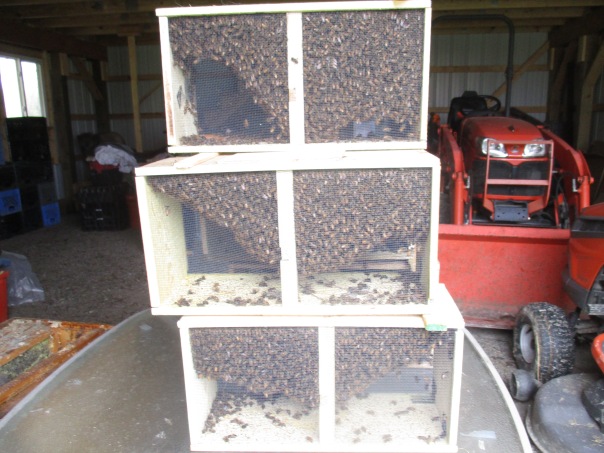
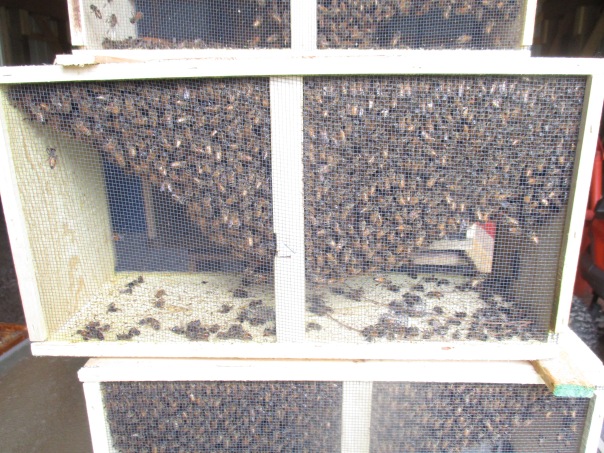
This is what three pound packages of bees looks like. There is an estimates 9000 – 12,000 bees in a three pound package.

IMG_4992

The bees are huddled together in a ball surrounding the queen cage to keep her warm and protected.

IMG_4993

There are a few dead bees in the bottom of each package but that is to be expected.

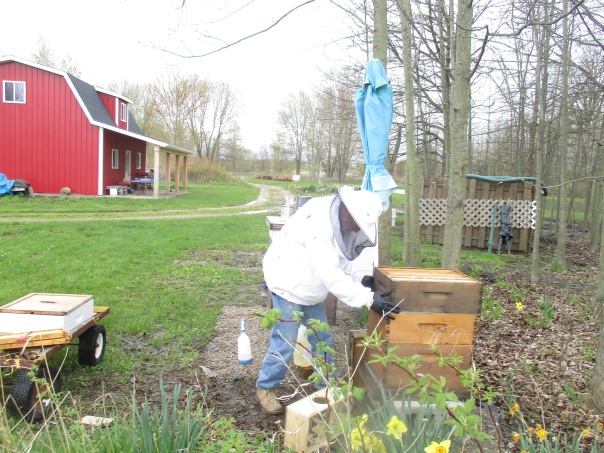
My husband did all the hiving today, but I wanted to be there to take some photos to share with my readers. You won’t see me in the photos, but in case you are wondering I was wearing a bee suit similar to the one my husband has on.

Before I get into todays activities I should mention that a lot of the prep work has been done over the last few weeks. That involved making sure that we had five hives ready (clean, assembled and set in place).

This morning when he went to pick up the bees I made syrup that we would use to feed the bees for the first week or so. We generally don’t like to feed sugar syrup because it does not have the nutrients that the bees would get from nectar or from honey.  We try to keep enough extra honey on hand to be able to feed the bees if necessary, but this year we did not have enough honey to make that happen.

I will also say that there are many methods for hiving bees and for bee keeping. What is right or wrong is largely a matter of opinion, and what works for one bee keeper may not work for another. If you have seen things done a different way or do things differently feel free to ask why we did what we did.

IMG_4996

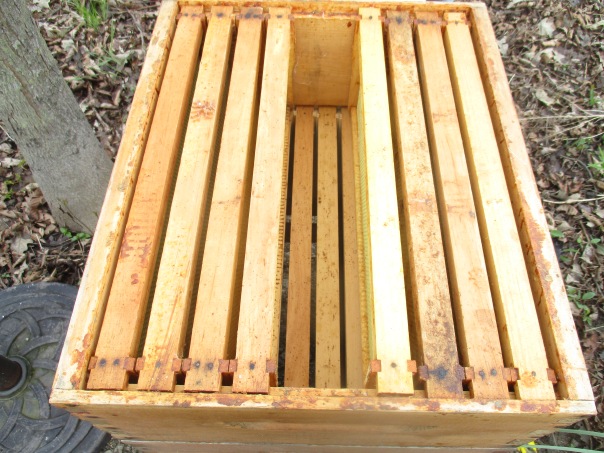
Before opening the package of bees my husband opened up the hive that he would be putting the bees in. He also removed the center two frames to make room for the bees.

IMG_4999

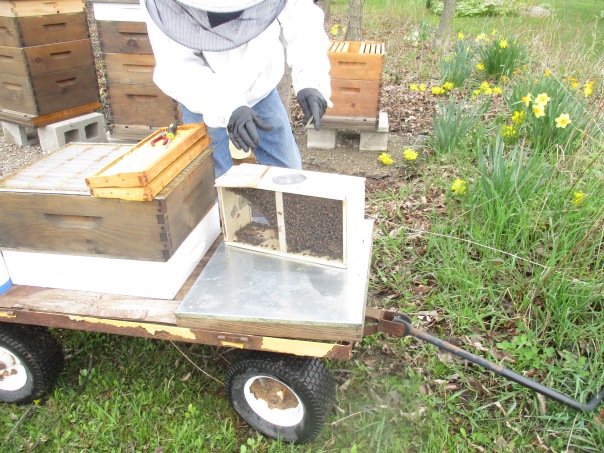
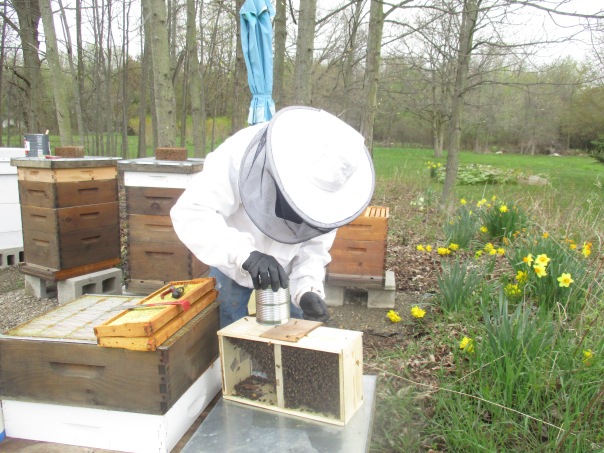
He next removed the small piece of wood that sealed the top of the package shut. Removing the piece of wood gave him access to the feeder can. The feeder can has syrup in it and small holes that the bees can suck the syrup out of. There is enough syrup in the can to keep these bees alive for several days. This can was still pretty full.

IMG_5000

As he removed the can he remembered to slide the small piece of wood over the hole because he still wasn’t ready for the bees to come out of the package.

IMG_5002

The next step was removing the queen cage. The queen cage is a very small box with screened sides that contains the queen bee and a few attendant bees. The queen is kept separate during travel to protect her. The safety of the queen is of utmost importance because a hive can not function without a queen.

You don’t get to see the actual queen cage because many worker bees were clinging to the cage. Protecting their queen is a large part of their job. Because it was chilly outside my husband held the queen cage in the hive while shaking and brushing the excess bees off.

The next thing he did is not recommended practice, but because of his schedule for the next few weeks it was necessary. He placed the queen cage in the hive and removed the screen so that the queen could get out.

Normal procedure would have been to keep the cage intact and allow the worker bees to get her out by eating the sugar candy that is used to plug one end of the cage. This process usually takes a few days but it is important to check after a few days to make sure she is out. My husband is just not going to have the time to do that check.


IMG_5005

After the queen was in the hive my husband emptied the rest of the bees into the hive. In past years when we have done this we have found that when the package is open many bees are eager to get out and bees begin flying out and around the area. Our experience today was different. Presumably because of the cool, cloudy weather the majority of the bees stayed in a ball – huddled tightly together.

IMG_5007

Shaking the package

IMG_5010

and smacking it on the bottom is what needs to be done in order to get the bees out of the package.

There are usually a few bees left in the package so he sets the package on the ground next to the hive so they will find their way in.

IMG_5012

Since we don’t like to open our hives often and disturb the bees he adds a queen excluder and a honey super (the third box). He then put the feeder on top and puts sugar syrup in it, before placing the top on the hive.

IMG_5013

This one is finding it’s new home.

IMG_5014

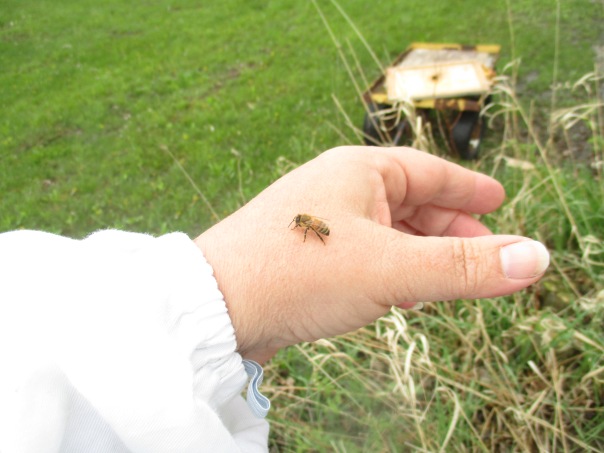
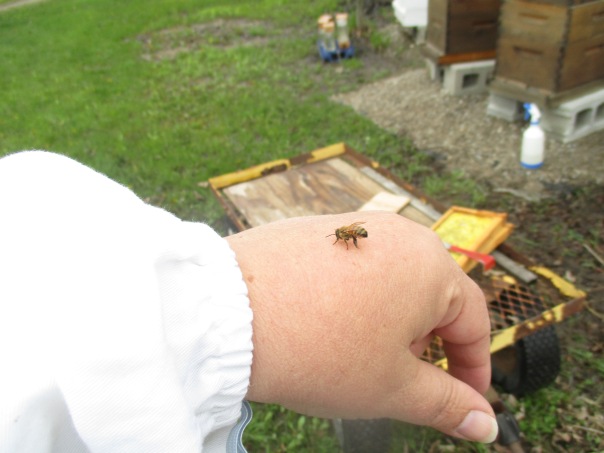
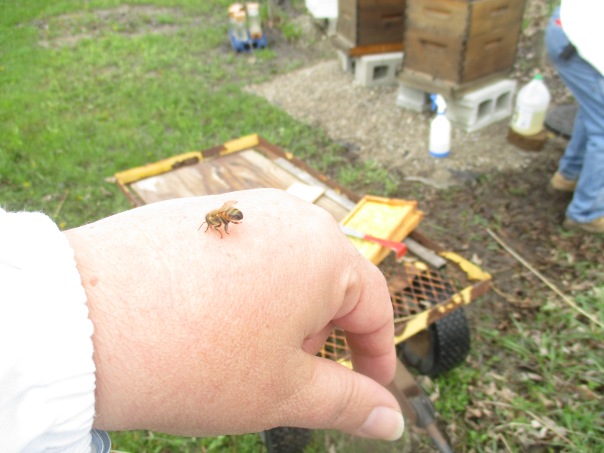
As I was taking pictures I felt something tickling my hand. I looked down and found this girl checking me out.

IMG_5015

She  seemed to be tasting my skin but certainly had no ill intentions. One of the precautions we take when working with the bees is to not wear anything scented (perfumes, deodorant, hair care products) as the bees might be attracted to it.

IMG_5016

So maybe I am just that sweet. LOL!!!

I only stayed around for the first hive but my husband repeated this with each of the other four hives.

He then reported to me late this afternoon that all of the hives were active and after the sun came out there were busy bees all over the dandelions.

This was a good day!


Life Is Happening Faster Than I Can Write

There are so many things going on that I have wanted to write about but it seems there has little time left for writing. Thankfully I have been taking some pictures along the way to remind me of what I want to write. I have decided to combine many things into this post.

BREAD BAKING

I will start with an update on my sourdough bread making. IMG_4878

This loaf was made the same as my previous breads but I reduced the oven temperature to 425 degrees F and baked it covered for 35 minutes. I then removed the cover and baked it for about 25 minutes more. I am very pleased with the results. 🙂

SPRING AT THE FARM

It seems like a slow transition into spring but it may be better that way. When warm weather comes on quickly and all the plants begin to flower there is an increased risk of losing them to a spring freeze or heavy frost.  Here are some of my observations of our world awakening from it’s winter nap.

IMG_4853

The hickory buds are swelling.

IMG_4874

The maple trees are flowering. They provide pollen for the bees.

IMG_4876

The lilac buds are getting ready to open.


IMG_4877

The garlic is about three inches high.


IMG_4863

This time of year the back corner of our farm is a swamp. It becomes the noisiest spot as the chorus of frogs announce the arrival of spring. I love to hear the frogs sing 🙂

PLANTING

While it is way too soon to do any outdoor planting. We have a lot of stuff growing indoors.

IMG_4822

My husband started two varieties of tomatoes, five varieties of peppers, cabbage, basil and parsley.

IMG_4824

Several years ago we constructed this grow shelf by attaching florescent lights to the underside of  each shelf . As the seedlings begin to sprout we place blocks or boxes underneath their trays to get them closer to the light. We then gradually lower them as the plants grow taller.

IMG_4873

Having them closer to the light helps them grow stronger stems. We also have plants growing near many of the windows in our home.

While I normally don’t plant many annual flowers this year will be different.

IMG_4825

My husband took a job at a greenhouse for the season. They are a wholesale supplier of annual flowers. For various reasons not all of the plugs make the cut, so my husband has rescued many that would have otherwise been discarded.

We shared some with neighbors and family members and even donated several flats to our friends at Special Dreams Farm. Once the weather warms I will be planting Marigolds, Geraniums, and Phlox in our flower beds.

BEES

This year our son-in-law, Ken, decided to become a bee keeper. Since he does not have property of his own to set up a hive we welcomed him and his bees to our farm. Ken said he has been reading about and studying bee keeping for a couple of years now. After doing so he decided to design and build his own hive and feeders. I can’t describe all of the bee-friendly features that this hive has, but if it works out well perhaps Ken will do a guest post to share his hive design.

image1

He decided to keep Buckfast bees, a breed that we are not experienced with. His bees arrived on Saturday, April 6 and we were blessed with perfect weather for hiving bees. Since the Buckfast bees are known to be a gentle/non aggressive breed Ken was comfortable not wearing a full bee suit. (He only got stung once.)

My husband was there and walked Ken through the process of hiving the bees. When I spoke to Ken later he said that he was thankful for the help and probably the best thing my husband told him was to take his time. I understand this because standing amidst  10’s of thousands of bees can be unnerving.  It is important to stay focused and not to rush to get things done. That is how mistakes happen.

Our hive is doing well as evidenced by the number of bees coming and going on warm days. Since there is not much in blossom for the bees to forage my husband set up an outside feeder for them.IMG_4857

He poked small holes around the bottom of the ice cream bucket. He then put honey in the bucket. The honey is thick enough that it does not run out of the holes but the bees can suck it out.

We have ordered five packages of bees. They are scheduled to arrive on May 10th so I expect I will write a post about setting up five new hives.

CHICKENS 

I saved the best story for last.

Our first batch of chicks, the ones I said won’t be with us long, have moved to the farm. We had decided that once they were out of the brooder we would get a second batch. Rather than the Cornish cross chickens that we got the first time around and are normally raised for meat birds we decided we wanted a breed that would forage for it’s own food.  Jersey Giants was the breed we selected. I had spotted some recently at our local farm store. As their name suggests Jersey Giants are said to be the largest true breed of chicken. They are know as dual purpose birds being raised for either egg laying or as meat birds.

Our plan was to go last weekend to get some but that just didn’t happen, so when Monday came around I offered to go get them, “or we can go when I get home form work” my husband suggested. We eventually decided he would stop on his way home from work to get them. “How many should we get?” he asked. “Eight?” I said. “Eight sounds right,” he agreed.

IMG_4866

When he got to the farm store and found the brooder containing Jersey Giants he discovered there were only eight left. Perfect timing!

While he waited for the customer service person to assist him, he noticed a women holding a very small chick. “The others were picking on it,” she told my husband as she showed him the sore area on it’s foot where they had been pecking at it. “My husband won’t let me rescue it,” she said.

“My wife will,” he replied as he took the tiny bantam chick from her. “Let me take this one home,” he said to the store employee. She agreed.

We have never raised bantam chickens before so I had to do a little research to find out what we had. I learned that bantam chickens are small breeds. There are several breeds that are “true” bantams but each regular breed of chicken also has a bantam variety. Other than a small incredibly cute chick I still have no idea what we have. In fact these chicks are not sexed before sale so we may even have a rooster.

IMG_4871

It seems a dichotomy that this tiny little chick that was being abused by it’s peers has been accepted by this group that is 3 or 4 times it’s size.

“You get to name it,” my husband said to me.

“That is tough,” I replied “when I don’t know if it is a male or female.”

“Pick a name that could be either or,” he said.

After a few minutes of thought it came to me…


IMG_4882

Let me introduce you to Big Bird! LOL.


Do you also feel like time is flying by?

Are you experiencing nice spring weather and the beauty that comes with it?

Please share your thoughts in the comments below.

Thanks for reading.


Welcome Spring

This post is dedicated to my friend and fellow blogger Linda who blogs at Walkin’, Writin’ Wit and Whimsy. Linda, who takes readers along as she walks at various parks in South East Michigan and introduces us to the furry and feathered friends she meets along the way, has been as eager as I have for the arrival of spring. On occasion her posts reference classic songs – oldies but goodies –  leaving me with an ear worm for the day. As we welcome spring, Linda, I thought I’d return the favor.

So let me tell ya ’bout the –

BIRDS

Sunday morning as I walked out the door on my way to open up the chicken coop for the day I was greeted by the song of a robin. It is a sound I have become quite familiar with over the past few years as each spring a robin nests in the maple tree outside our bedroom window. He or she starts singing each morning long before the sun comes up, (sometimes as early as 3:30 a.m.) and long before my husband and I are ready to awaken. If the early bird catches the worm then this is one well fed robin.

In Michigan it is said that robins are a sure sign of spring but the truth is that some robins stay in Michigan throughout the winter. Robins that migrate south for the winter are doing so because of the limited food supply available this time of year, not because of the cold temperatures. During the winter those that stay will eat fruit and berries that are left on the trees/bushes.

As I arrived at the farm to open the chicken coop two robins flew swiftly past me. 🙂

Red winged black birds are also said to be a sign of spring.


IMG_4803.JPG

I spotted this one as Trooper and I walked the back field yesterday.

Our hens have been enjoying the weather and egg laying has increased – we are now averaging about 12 eggs a day from our 23 hens.

IMG_4800

Spring is also the time of year when baby chicks show up in the farm stores. Each year that I have been blogging I have shown pictures of adorable little chicks that will be raised on our farm. Thus far we have only raised egg layer but this year is a little different. These will not be laying hens.

IMG_4799It’s ok to say “awe, they’re cute” – just don’t get attached because they won’t be with us long. (That note is as much for me as it is for you).

and the BEES
Several days last week temperatures warmed enough for the bees to come out for a cleansing flight. We had just one hive going into winter and were relieved to see that they are still alive. It is not warm enough to open the hive yet and since nothing is in bloom they are still dependent on their winter food stores.

and the FLOWERS

Even more promising than seeing robins were the daffodils that have begun to emerge from their winter sleep.

IMG_4793

Soon we will be seeing their smiling yellow blossoms at various places throughout the farm. 🙂

and the TREES:

We decided not to make maple syrup this year but if  you are interested in how we do that you can check out my posts from previous syrup seasons 2018, 2017 , 2016 and 2016. Based on temperatures that we have had last week and this week I suspect that had we tapped our trees this year we would be cooking syrup this week.

In the past few years it has been my observation that the first trees to bud in our area are the poplar trees. Their flowers, that actually look more like caterpillars, provide resin that is collected by honey bees and used to make propolis.

The maples seem to bud out next and while this triggers the end of the syrup season it is good for the bees as the flowers of the maple trees seem to be their first source of food in the spring.

and the Moon Up Above

Last night my husband mentioned that the moon was close to being full. This morning, before daybreak, the sky was clear and the moon was bright. This year spring is being ushered in by the full moon.

IMG_4805


and a Little Thing Called Mud

IMG_4792

As the snow melts and the ground thaws there is no avoiding it. When you live in the country mud is more than a “little thing”. Water + dirt = MUD. Lots of mud. You learn to deal with it. For us that means wearing a pair of rubber boots and rinsing off our boots and the boys paws with a garden hose before we go into the house.

Over the past 8 years we have learned that starting the year with this kind of moisture in the ground is more of a benefit than a nuisance. By mid June we often find ourselves in a dry spell and are using the pond water to keep our gardens alive.


If there is one this that is certain about spring in Michigan it is that the weather is extremely uncertain. Currently our day time temperatures are getting above freezing while the nights drop back below freezing. Today as I look at the 10 day forecast it shows that trend will continue for about the next week. Tomorrow when I look at the forecast that might change. It’s not surprising to have snow storms and freezing temperatures well into April and even May. On the other hand summer weather might show up at anytime and be here to stay. For better or worse the calendar says spring is here.

WELCOME SPRING! (Happy Dance 🙂 )

What is your favorite season?